




NASDPTS addresses safety vest issue
NASDPTS addresses safety vest issue In the News Alert section of the December 2001 issue of SCHOOL BUS FLEET, we published an article...

NASDPTS addresses safety vest issue
In the News Alert section of the December 2001 issue of SCHOOL BUS FLEET, we published an article about an interpretation of FMVSS 213 indicating that certain safety vests do not conform to the safety standard. Since then, the National Association of State Directors of Pupil Transportation Services (NASDPTS) has released a paper addressing this issue. (The full text of the document can be downloaded at www.nasdpts.org) The following narrative is drawn directly from the NASDPTS document, which is intended to provide guidance on how to most safely transport children who weigh 50 pounds or less. The issue — Section 5.3.1 of FMVSS 213, “Child Restraint Systems,” states: “Except for components designed to attach to a child restraint anchorage system, each add-on child restraint system shall not have any means designed for attaching the system to a vehicle seat cushion or vehicle seat back and any component (except belts) that is designed to be inserted between the vehicle seat cushion and vehicle seat back.” Thus, any safety harness (also known as restraining harness, vest or positioning vest/harness) that is secured to a school bus bench seat back solely by means of a webbing wrap (cam-wrap, adjusting strap, cam-harness) would not comply with this aspect of FMVSS 213. As explained in an August 2001 letter of interpretation, the National Highway Traffic Safety Administration (NHTSA) “adopted the prohibition against attaching child restraints to vehicle seat backs because the agency was concerned that a vehicle seat back would not be able to withstand the additional load on it from an attached child seat in a crash.” The letter was written in response to a request from a safety harness manufacturer that asked whether the device was subject to the requirements of FMVSS 213. Crash tests performed by NHTSA using pre-school age size dummies in school bus seats show children that weigh 40 pounds or less are safest when transported in child safety restraint systems which meet FMVSS 213, and are correctly attached to the seat through the use of the available belt and/or child seat anchorage systems in the vehicle. Guidance — Child safety restraint systems that meet the requirements of FMVSS 213 should be the first choice when transporting children who weigh 50 pounds or less in any motor vehicle, including a school bus. If a safety harness is used, it should be certified by the manufacturer as meeting all FMVSS 213 requirements, including those in Section 5.3.1. Any safety harness is best secured to the school bus seat with a lap belt and top tether. The top tether should be secured to the loading bar [the metal structure where the lap belts are bolted to the seat frame] of a “lap belt-ready” seat frame. This can be accomplished by either directly attaching the tether to the loading bar or by attaching the tether to the lap belts on the seat, since those lap belts are attached to the loading bar. The top tether should be secured to the loading bar on the seat behind the seat where the child is seated, not on the same seat that the child occupies. The top tether is not to be wrapped around the seat back cushion. The seat behind the passenger restrained by the safety harness should remain unoccupied. Additional information — NHTSA may delete certain information about safety vests from its publication “Proper Use of Child Safety Restraint Systems in School Buses,” which states that a safety vest “can be used with a lap belt and a strap (cam-wrap) that wraps around the back of the seat, to which the shoulder harness straps are hooked. The safety vest can also be used if no lap belt is present, in which case the vest is attached to the cam-wrap at the hips and shoulders.” This information conflicts with its August 2001 letter of interpretation. Also, NHTSA intends to review available information about real-world experiences with safety harnesses that are attached to the bus seat solely by a webbing wrap. If such a review indicates the devices do not present an unreasonable safety risk, the agency could decide to initiate a rulemaking to consider amendments to FMVSS 213.
More Safety
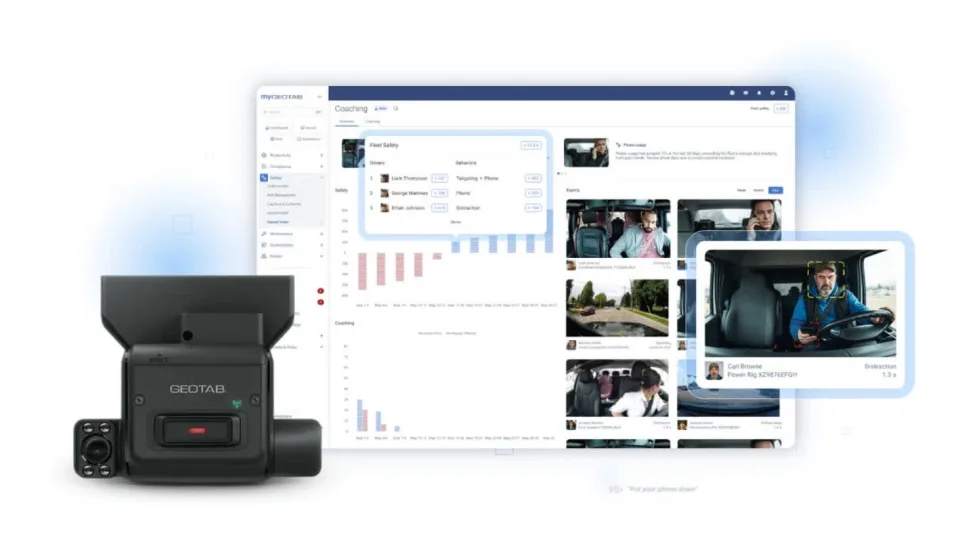
Geotab Expands Fleet Safety Tools With Video Coaching, Risk Insights
New safety and video capabilities aim to help fleet managers assess risk, support drivers, and take targeted action through video coaching, red-light violation detection, and more.
Read More →
How to Build a Better School Bus Driver Training Program
Is it time to strengthen your driver training? Here’s how to pick the right talent and improve recruitment, retention, and safety. This video is brought to you by IC Bus.
Read More →
Recent School Bus Accidents Leave 2 Dead, 2 Injured
Four school bus crashes in Florida, Illinois, and Georgia highlight risks in transportation lots, at bus stops, and during student loading and unloading.
Read More →

When Every Second Matters, Clarity Keeps Routes Moving
From routine delays to urgent incidents, strong communication practices help drivers, dispatchers, schools, and families respond with confidence.
Read More →
What Happens When a School Bus Catches Fire — and What Can Help
School bus fires are rare but can be devastating. Learn how advances in fire suppression and asset protection help fleets detect fires earlier, reduce damage, and improve safety.
Read More →
Geotab Launches Tool to Help Fleets Investigate Road Incidents
Geotab Investigations combines telematics data, video, documents, and other evidence to help fleets reconstruct incidents, resolve claims, and determine what happened.
Read More →
Texas Sixth Grader Wins 2026 National School Bus Safety Poster Contest
Sai Darshana Yekolu of Moseley Middle School in Prosper, Texas, was named the newest winner for her artwork, bringing the theme of “Safe Rides, Everyday Heroes” to life.
Read More →
Doing More With Less: How Transportation Directors Can Prioritize Safety Amid Budget Uncertainty
With diesel prices soaring and nearly one-third of transportation directors expecting budget cuts, maintaining student safety has never been more challenging. Download this guide to learn how leading districts are prioritizing risk, funding critical safety technology, and building stronger budget cases with data.
Read More →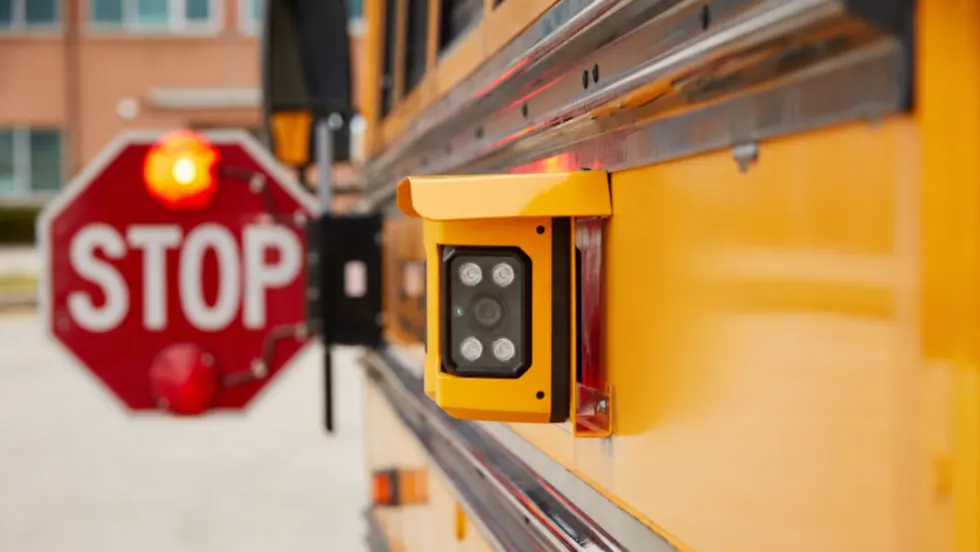
Walton County Schools Adds Gatekeeper Stop-Arm Enforcement System
The Florida district will deploy Gatekeeper’s updated Student Protector technology, which now incorporates AI to improve video evidence.
Read More →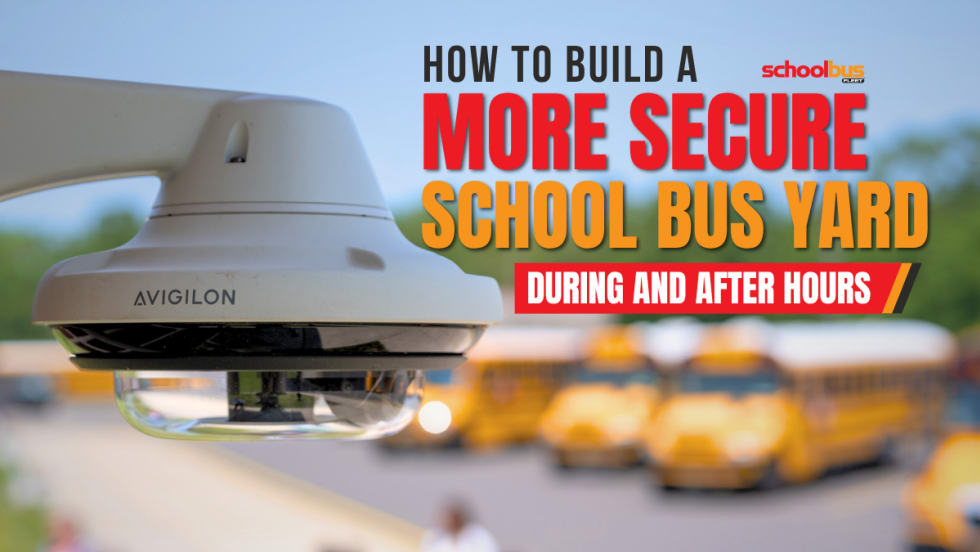
How To Build a More Secure School Bus Yard During and After Hours
As thefts and overnight security threats continue, school transportation leaders are combining stronger operational practices with AI-enabled surveillance to better protect buses, facilities, and staff.
Read More →