




NAPT Webcast debut covers 2007 emissions
Addressing concerns about the EPA’s tightened emissions standards and how they’re going to impact school bus operators was the focus of a Webcast sponsored by the National Association for Pupil Transportation (NAPT) and the Association of School Business Officials International (ASBO).

RESTON, Va. — Addressing concerns about the EPA’s tightened emissions standards and how they’re going to impact school bus operators was the focus of a Webcast sponsored by the National Association for Pupil Transportation (NAPT) and the Association of School Business Officials International (ASBO).
The Webcast, held June 13, allowed participants to listen to a group of industry experts while viewing a live PowerPoint slideshow on the Internet. It also gave participants the opportunity to ask questions over the phone or to send them through the Internet connection.
The 90-minute Webcast was moderated by ASBO’s Arlene Olkin and included presenters Jennifer Keller, program manager of the EPA’s Clean School Bus USA program; Donald Tudor, director of transportation for the South Carolina Department of Education; and David Anderson, transportation director at Adams 12 Five Star Schools in Broomfield, Colo.
The presenters gave an overview of the school transportation industry and how diesel emissions affect operations as well as their impact on passengers. Solutions to the problems, such as retrofitting or replacing equipment, burning cleaner fuels and idle reduction programs, were also discussed along with grant opportunities to fund such endeavors.
To put the school bus emissions into perspective, Keller drew comparisons to other industries. Of the 6.3 million tons of nitrogen oxides released into the atmosphere annually, school buses contribute about 1 percent, while freight contributes a whopping 56 percent. Non-port marine contributes 13 percent and construction was tagged at 11 percent.
As for particulate matter, of the 305,000 tons released, the school bus industry is responsible for about 2 percent compared to freight’s 32 percent, construction’s 21 percent and agriculture’s 19 percent.
The group suggested sources to obtain funding for retrofitting and other emissions-reduction strategies, including the EPA’s Website www.epa.gov/cleanschoolbus. The site offers information on how to submit proposals to gain access to funding for clean school bus projects as well as information on state supplemental environmental projects and private funding.
Keller said ultra-low sulfur diesel fuel should be available nationwide by October. She warned, however, that the fuel could cost as much as 12 cents a gallon more than standard diesel fuel.
More Maintenance
ASE Highlights School Bus Technician Certification Requirements
ASE is encouraging school bus maintenance professionals to maintain their certifications, highlighting seven specialized tests and five-year renewal requirements.
Read More →
International Adds E-Commerce Capabilities to Fleetrite.com
IC Bus customers can now browse, buy, and track shipments for more than 400,000 aftermarket parts online.
Read More →
The Most Expensive Thing You Do Before Selling a School Bus: Wait
When should you sell an aging school bus? Learn how maintenance, mileage, corrosion, specifications, and timing can affect resale value long before the auction.
Read More →
The Evolution of DEF Header Technology: What School Bus Operations Should Know at Replacement Time
See what school bus fleets should consider when replacing DEF headers to improve reliability, reduce repeat repairs, and control maintenance costs.
Read More →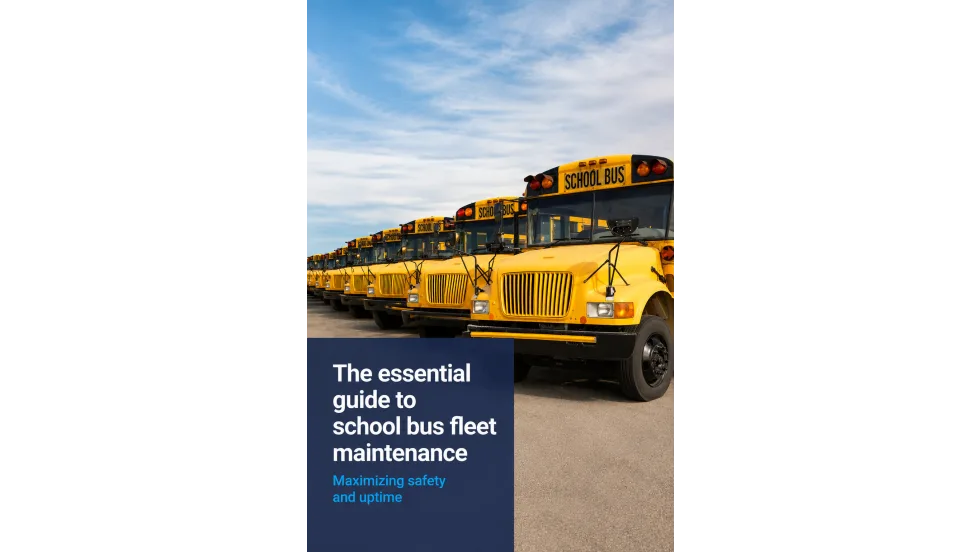
The Essential Guide to School Bus Maintenance and Student Safety
Your district's buses carry students to school every day. This guide shows how predictive maintenance powered by fleet data helps keep buses reliable, drivers accountable and students safer from the first bell to the last stop.
Read More →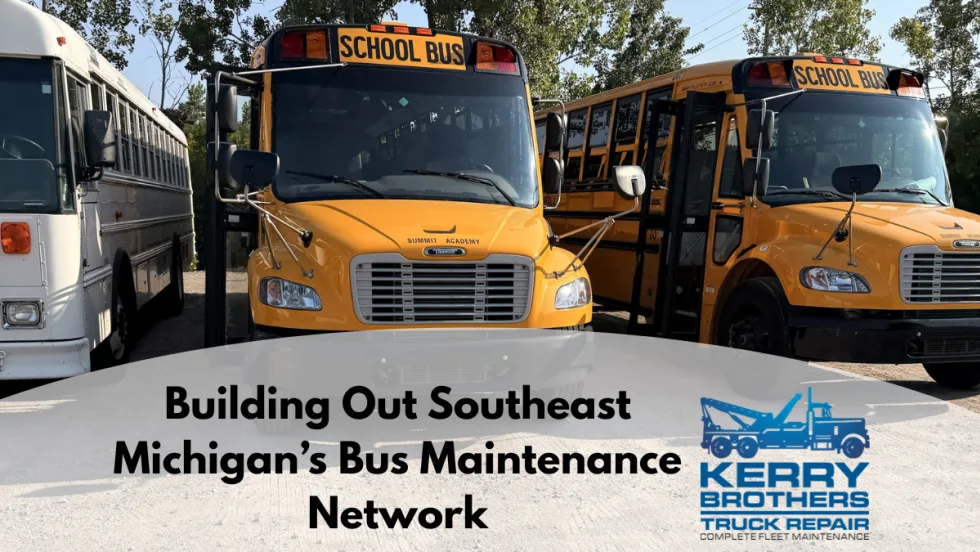
Kerry Brothers Grows Michigan School Bus Repair Network
The acquisition of Downriver Truck and Bus expands Kerry Brothers’ school bus maintenance footprint across southeast Michigan, adding repair capacity, diagnostic resources, and state inspection support.
Read More →
Noregon Introduces CAN Bus Diagnostic Tool, Expands JPRO Features
CAN Mentor and the latest JPRO update aim to simplify vehicle network diagnostics and improve repair efficiency for technicians of all experience levels.
Read More →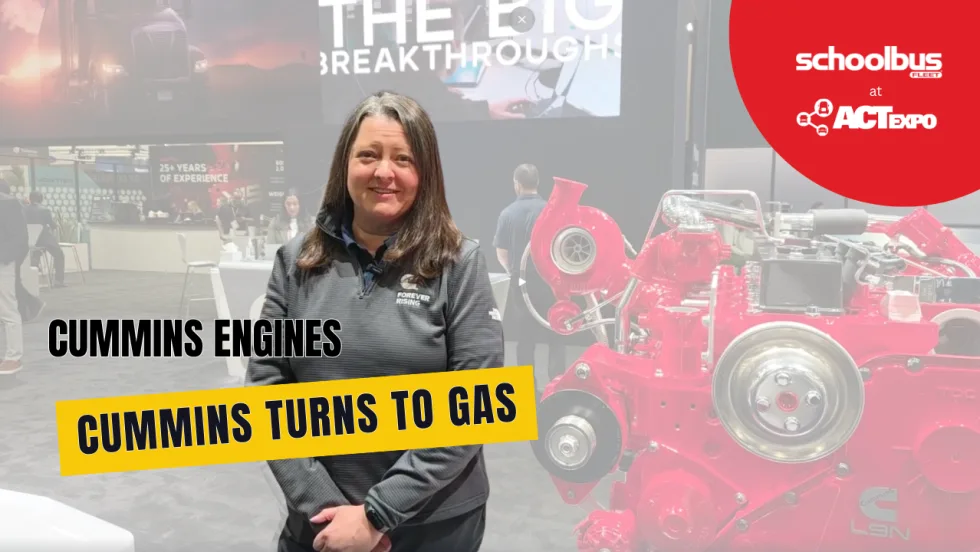
Cummins on Smarter, Simpler Engine Innovation
Cummins discusses its first-ever gasoline engine for school buses, EPA 2027, and why bus fleets still want durable, simpler internal combustion options.
Read More →
Report: 72% of Diesel School Buses Now Use Advanced Low-Emission Engines
New data shows advanced low-emission diesel technology continues expanding across school bus fleets, even as electric bus adoption gains momentum.
Read More →
Vampire Tools' CAIMAN 7.5-Inch Multi-Purpose Screw Extractor Long-Nose Pliers with Crimper
Vampire Tools introduced the VAMPLIERS Caiman 7.5-inch multi-purpose pliers, combining screw extraction, cutting, crimping, and gripping functions into a single tool designed for fleet maintenance professionals.
Read More →