




NAPT News & Views — School bus safety and security: creating the 'new normal'
Periodically in our national life, safety, security or both are compromised in ways that are profoundly impactful. These are the game-changers that invoke a shared emotional call to “do something.” The tragedy in Newtown, Conn., was such an event. After the passionate debate about school security options, a “new normal” will eventually emerge, because the status quo is no longer acceptable.
In the hierarchy of basic human needs, safety and security rank at the top for most of us.
Periodically in our national life, one or both are compromised in ways that are profoundly impactful. These are the game-changers that invoke a shared emotional call to “do something.” The tragedy in Newtown, Conn., was such an event.
The existential question always asked is, how could this happen? The answers invariably are complex and often incomplete.
As U.S. Secretary of Education Arnie Duncan said in a Jan. 16 blog post, “We will never fully understand why 20 first-graders and six educators were gunned down at Sandy Hook Elementary School — or why still more students and educators lost their lives at Columbine, Chardon or Red Lake high schools, Westside Middle School, Virginia Tech or the many other campuses and communities in our country.”
Both as individuals — parents and grandparents ourselves — and as a broader professional community dedicated to keeping children safe on their way to and from school, we feel deeply the pain of this tragedy.
Safety of children is our core charter. It’s not something brought into heightened discussion after a crisis, but what we do every single school day. After any tragedy of this magnitude, federal policymakers typically react with one-size-fits-all solutions, and then try to apply them to a nation that is anything but one size.
As the late Speaker of the House Thomas P. “Tip” O’Neill once observed sagely, “All politics is local.” We are a nation of many diverse viewpoints, and there always are significant regional and community practicalities that come into play when complicated challenges are addressed. Not surprisingly, the thousands of cities and small towns served by yellow buses are responding in their own ways.
As we write, there is an intense policy discussion occurring everywhere about school security options, including whether police, or specially trained and armed administrators and teachers, should now be routine in schools. Strong feelings abound. Then there will be the question of how to pay for it.
In Newtown, the school board voted unanimously to request an armed guard in each of the district’s four elementary schools. Virginia may require armed police at all state public schools under legislation being considered by the General Assembly.
According to a Dec. 20 Associated Press story, “lawmakers in a growing number of states — including Oklahoma, Missouri, Minnesota, South Dakota and Oregon — have said they will consider laws allowing teachers and school administrators to carry firearms at school.” Some states already allow it.
But after the passionate debate, a “new normal” will eventually emerge, because the status quo is no longer acceptable.
Pupil transportation professionals are familiar with the basics of this political dynamic, and they are practiced at both keeping apace of changes and adapting to them.
In that spirit, we encourage you to participate in local discussions. Don’t wait for an invitation — seek a seat at the table so your perspective can be heard.
Now is the time for bold thinking. Go to meetings prepared with both your experiences and new ideas. Are there policies or procedures that will enhance safety? Are there new technologies that could be applied?
At the national level, NAPT is already fully engaged, listening to all ideas, reaching out to experts for advice, and brainstorming among our team. We cannot be complacent.
At times of high public passion, it’s important to be vigilant for well-intended policy prescriptions that could lead to unintended consequences and be detrimental to pupil transportation.
We are the only ones who can a) represent our industry’s unique perspective, and b) be informative to those who will ultimately shape the new reality. We have no “political” agenda other than the safe, secure and efficient transportation of children.
Our participation in the process should not be interpreted as support for or against anything. We are there to listen, learn and contribute to policies that improve the safety and security of the educational system of which we are an integral part.
We are confident that the men and women of pupil transportation will help turn this most recent national tragedy into an opportunity to build on the excellent safety and security record we’ve achieved over the decades.
We will provide you with periodic updates on our work, and we ask that you do the same. Together, that input will help formulate planning for our October Summit in Grand Rapids, Mich., where we intend to provide you with relevant resources and education.
We encourage you to visit www.napt.org/safetyandsecurity to remain informed and involved with NAPT as we move forward.
More Safety
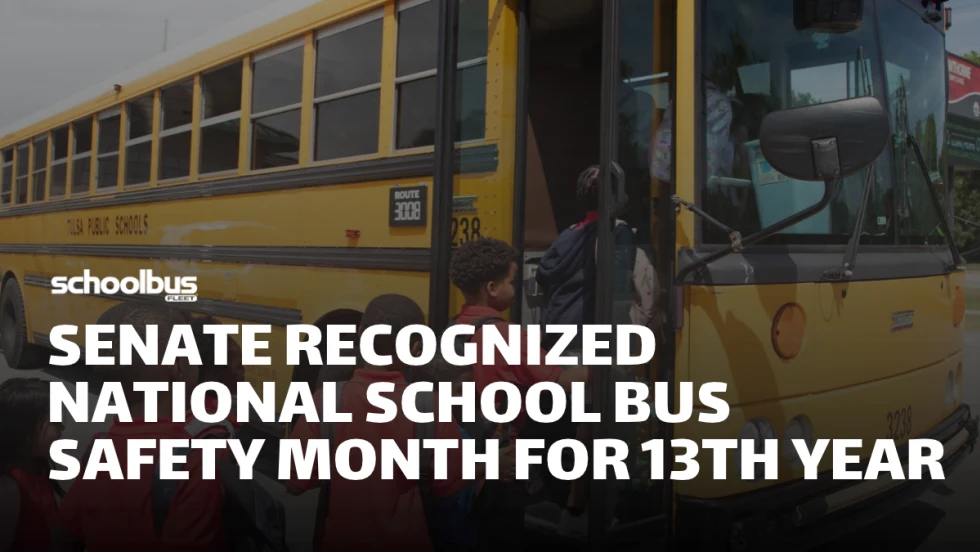
What the 2026 National School Bus Safety Month Resolution Means for Student Transportation
The bipartisan resolution highlights illegal school bus passing, student safety during loading and unloading, and the need for driver training and public education.
Read More →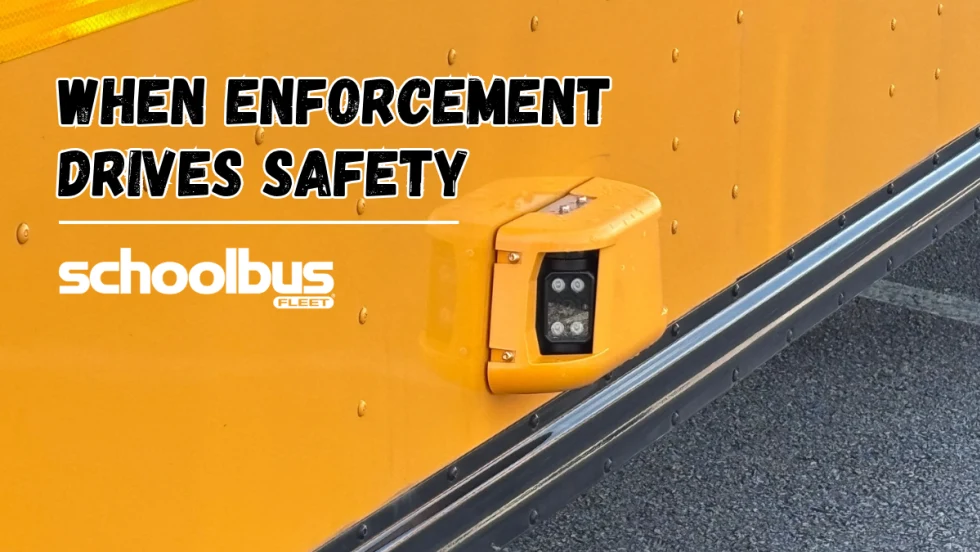
School Bus Stop-Arm Violations Decline 53% Across Verra Mobility Programs
Verra Mobility shares how school bus stop-arm cameras and school zone safety programs are changing driver behavior, reducing violations, and protecting students.
Read More →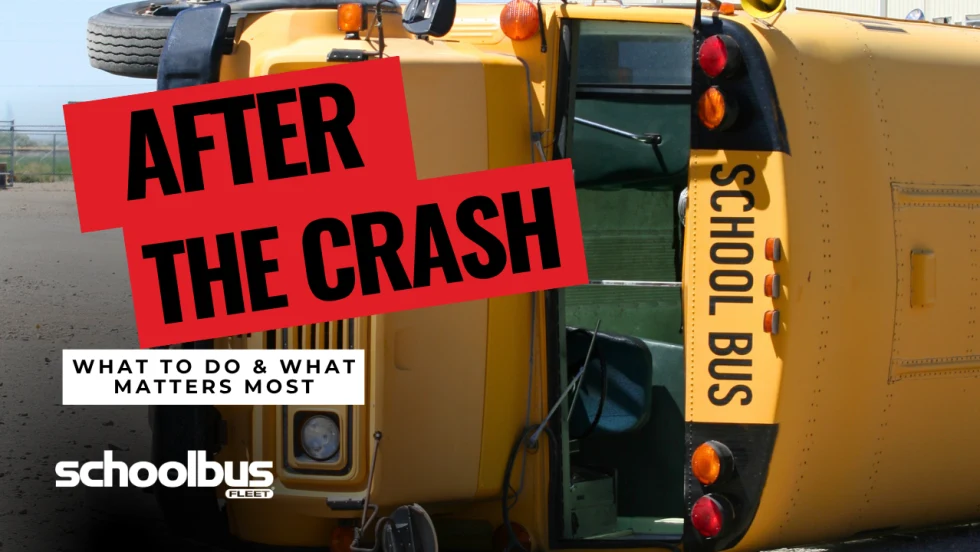
Most Bus Crashes Aren’t Your Fault. Here’s How to Prove It.
A guide for what to do in between a school bus crash and a claim: what to preserve, who to notify, and how to keep the facts available when they matter.
Read More →
National School Bus Safety Week 2026: Tips, Toolkits & Resources to Keep Students Safe
School bus safety takes more than awareness. Explore expert tips, enforcement strategies, and free resources to help protect students on every ride.
Read More →
2 Killed, Dozens Injured in Florida School Bus Crash
A multi-vehicle collision caused a Polk County school bus carrying 37 students to overturn on its way to Winter Haven High School.
Read More →
Illegal School Bus Passing Drops 24% in New York Districts
With fewer than 5% of citations involving repeat offenders, Westchester County officials said enforcement, education, and community partnerships are helping change driver behavior.
Read More →
School's Back. Here's What Happened to Traffic, Speeding & Distraction
What happens to traffic when school resumes? New data analysis examines changes in distracted driving, congestion, and speeding around schools.
Read More →
Geotab Expands Fleet Safety Tools With Video Coaching, Risk Insights
New safety and video capabilities aim to help fleet managers assess risk, support drivers, and take targeted action through video coaching, red-light violation detection, and more.
Read More →
How to Build a Better School Bus Driver Training Program
Is it time to strengthen your driver training? Here’s how to pick the right talent and improve recruitment, retention, and safety. This video is brought to you by IC Bus.
Read More →
Recent School Bus Accidents Leave 2 Dead, 2 Injured
Four school bus crashes in Florida, Illinois, and Georgia highlight risks in transportation lots, at bus stops, and during student loading and unloading.
Read More →