




NAPT News & Views — Pupil Transportation: The Learning Connection
A new study has found that students who ride the school bus in kindergarten are less likely to be chronically absent.
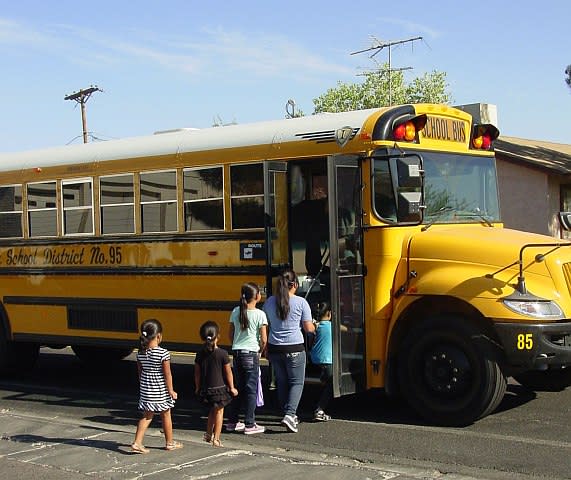
Two recent studies acknowledge the vital role that school transportation plays in education.
Two recent studies acknowledge the vital role that school transportation plays in education.
It’s pretty much an article of faith in the yellow school bus industry that there’s a direct connection between safe, reliable transportation to and from school and academic performance.
While there is no shortage of anecdotal evidence, it’s difficult to prove empirically because there’s been very little research to bolster the premise. However, nobody argues it’s not true because there’s also no research arguing against it.
What is an indisputable fact is that school bus transportation provides a necessary predictability and order to the school day. Absent this structure, school begins somewhat chaotically with children trickling into classrooms after walking, bicycling, or riding with parents who frequently want to drop them off at the front door of the school “because it’s safer.”
Nobody makes the case that this is not the best way to begin the school day, probably because nobody wants to get sideways with student health advocates. But somebody needs to say something about this issue, and that somebody is going to be me.
I understand advocates — including federal officials — who believe that “children need more exercise” and therefore encourage them to walk or bicycle to school as part of a healthy lifestyle. Who’s against that? Maybe the kids, especially on a really cold or really hot day, but even then I doubt it.
But in my view, these advocates discount the need for predictability in getting children not just to school, but also back to their homes. They also minimize compelling data from the National Highway Traffic Safety Administration documenting that these alternate means of getting to and from school — however well meaning — are just not as safe as taking a big, yellow school bus.
It’s no surprise that when districts are faced with budget pressures, the budget line item called “transportation” often ends up on the chopping block. It’s not because policymakers don’t support yellow buses, but the lack of supporting data linking transportation to educational achievement makes it an easier cut politically than the competition for education dollars.
So, it was good news indeed that two fresh studies, from California and New York, are now helping make the case for what I call the “school bus effect.”
The first, featured in EdSource, is headlined “One way to improve kindergarten attendance: Take the school bus.”
As the article reports, “Students who ride the school bus in the critical first year of formal education — kindergarten — are absent less often and have lower odds of being chronically absent, a key indicator of future academic success, according to a new study.”

Mike Martin is executive director of NAPT.
That (to date unpublished) study, “Linking Getting to School with Going to School,” was conducted by University of California Santa Barbara professor Michael Gottfried in partnership with a truancy reduction initiative by California Attorney General Kamala Harris. It used a nationally representative sample of 14,000 kindergartners drawn from U.S. Department of Education data. It is believed to be the first to quantify the countervailing effect of school bus transportation on chronic absenteeism.
According to the EdSource article, “The study highlighted the potential effectiveness of addressing the logistics of getting students to school, which include lack of bus fare, cars that don’t work and unsafe routes. Riding the school bus has the most positive effect — a 20 percent increase in kindergarten attendance.”
Entering kindergarten is a time “full to the brim with transitions,” Gottfried said, and transitions create stress. Stressed parents create stressed children, he said, and stressed children sometimes balk at going to school.
Gottfried found that the school bus provides a structure. “If parents are new at this, or uncertain,” he said, “here is something that shows up every day at your door at 7 o’clock … same place, same time, every day.”
Another interesting study was released recently: “Expanding Learning Through School-Community Partnerships in New York State.” It concluded that school-community partnership is an effective strategy in supporting school and student success. Its recommendations are intended to guide state policymakers and agencies, school districts and schools, and others to support expanded learning.
Among the key findings: “Transportation remains a critical element of expanding learning, and costs can be a serious barrier.” This premise led to the following recommendations for state policymakers:
1. Funding for expanded learning opportunities should cover any additional transportation costs.
2. Include transportation managers in planning conversations on expanded learning opportunities.
3. In areas where public transportation is available, provide passes to students who are otherwise ineligible for school transportation but are able to take public transportation home, and for field trips and other purposes involved with expanded learning opportunities.
While neither is what would be considered a “landmark” national study that will forever move pupil transportation into the sacrosanct category when budgets are in play, they are helpful and a good start. We urge you to reference the studies in local budget discussions and media interviews, along with the other reasons why the yellow school bus is the best way for children to get to and from school.
For additional information, visit www.americanschoolbuscouncil.org or www.schoolbusfacts.com.
More Management

EverDriven Launches Route Consolidation Calculator to Estimate Diesel Savings
As diesel prices hit record highs, the largest alternative transportation provider says a 10% route consolidation could save a 120-route district more than $78,000 a year in fuel alone.
Read More →
Zum Secures Continued Financing Support for School Bus Expansion
Generate Private Credit has financed approximately $75 million in school bus deployments across three states, supporting more than 500 buses as Zum expands across the county.
Read More →
Beyond Discipline: A Different Approach to Student Behavior on the Bus
After implementing a dean of students program in Oregon, North Clackamas is seeing positive improvements. Here’s how it worked. The Route is brought to you by IC Bus.
Read More →
A Dean of Transportation's Different Approach to Student Behavior on the School Bus
After implementing a dean of students program in Oregon, North Clackamas is seeing positive improvements on the bus. Here’s how it worked.
Read More →
Inside NAPT ACTS 2026: Highlights from Louisville
From federal updates and student behavior strategies to new school bus technology and industry awards, see highlights from NAPT ACTS 2026 in Louisville.
Read More →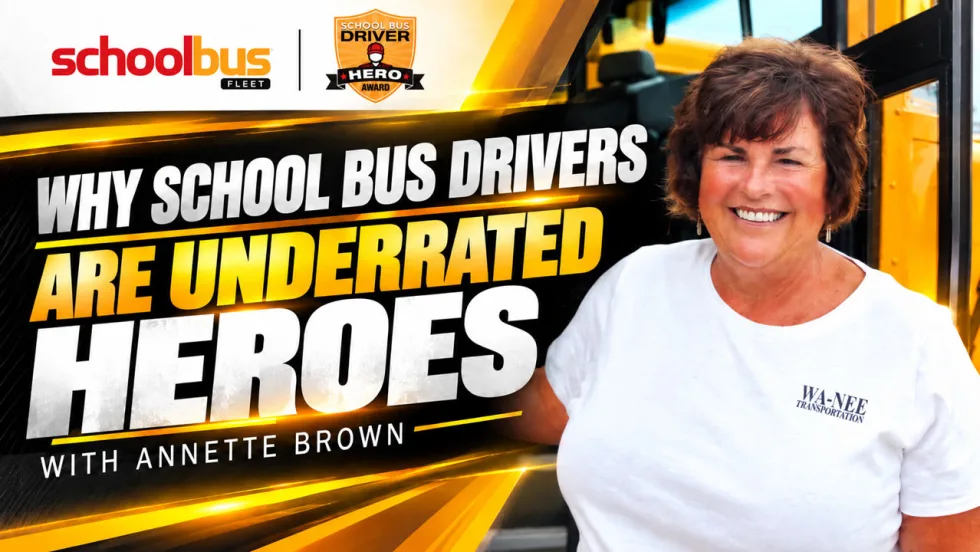
Meet the 2025 School Bus Driver Hero Winner: Annette Brown
We caught up with Wa-Nee Community Schools' Annette Brown on site at SBFX, where she was named the 2026 School Bus Driver Hero Award winner. Hear about her reaction, what she loves most about being a school bus driver, and more!
Read More →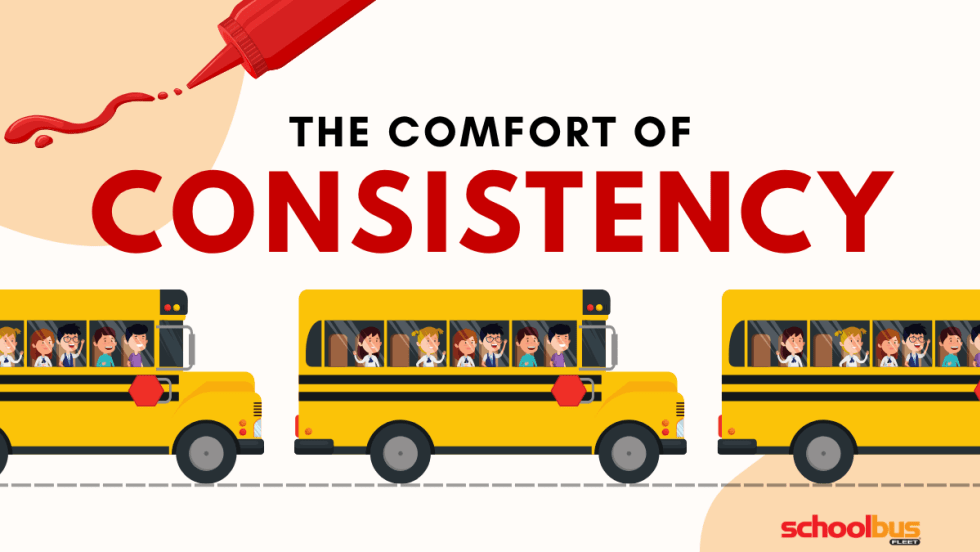
Predictability Is Like Ketchup (According to 6-Year-Olds)
To students, a different school bus can feel like a full-blown crisis. One driver reflects on why familiar routines, showing up on time, and being reliably boring matter more than we think.
Read More →
Samsara Launches Free Driver Rewards Program
The new Driver Perks program gives eligible professional drivers access to discounts and offers without adding a cost for participating fleets.
Read More →
How Tax-Exempt Municipal Leases Can Help Finance School Buses
Let’s explore school bus financing options, including municipal leases, vendor payable accounts, and balloon payments, and how they can help stretch fleet budgets.
Read More →
Nominate Rising School Transportation Pros Under 40!
We’re searching for the next generation of leaders making an impact across the K-12 student transportation industry to recognize as SBF’s 2027 Trailblazers. Nominations are open now!
Read More →