




NAPT News & Views — Federal data: an 'A' grade for school bus safety
In June, NHTSA published its latest edition of “School-Transportation-Related Crashes,” a benchmark of how the school bus industry is performing on the safety front. If this were a report card, it would be an “A” grade for our industry.

Michael Martin is executive director of NAPT.
From time to time, the data crunchers at the National Highway Traffic Safety Administration (NHTSA) update the agency’s school bus safety statistics, which means we have to fine tune our messaging.
In June, NHTSA published its latest edition of “School-Transportation-Related Crashes,” a benchmark of how the school bus industry is performing on the safety front. It’s a plain-English summary and can be accessed here. It includes 10 years of data — 2004-13.
What’s the bottom line? If this were a report card, it would be an “A” grade for our industry.
During those years, there were 340,039 motor vehicle crashes involving fatalities, and of those just 1,214 (0.4%) were considered “school-transportation related.”
Over the 10-year period, 1,344 people were killed in these school-transportation-related crashes — an average of 134 per year. Most (71%) of the fatalities were occupants of vehicles other than school buses.
The large yellow school bus consistently has the best safety record in the transportation industry, and the reasons are not happenstance.
It begins with a strong safety culture in our industry — one that actually predates the federal motor vehicle and highway safety presence (NHTSA was established in 1966). The yellow school bus industry began with the safe transportation of children as the passionate focus of the enterprise.
Today, the fundamental is the same, but there are more players with important roles in the process: states, communities, operators, other industry partners, NHTSA and the National Transportation Safety Board (NTSB).
Another key reason for the industry’s consistently good safety record is that school buses are larger than most other vehicles that share the road, and they typically operate under driving conditions that are less risky.
According NHTSA’s data, an average of five school bus drivers and six passengers are killed annually riding in school transportation vehicles.
There were also 116 school-age pedestrians killed in school transportation-related crashes over the 10-year period, an average of 12 annually. Of this average, eight are struck by school buses (and vehicles used as school buses) and four by other vehicles. Said another way, twice as many children are killed as pedestrians than as school bus passengers.
Which brings us to two issues that received attention from the feds recently: seat belts and cameras.
At a July meeting held by NHTSA, the theme was “taking [school bus] safety to a new level.” The meeting’s primary purpose was to discuss whether seat belts should be installed in large school buses, a question we have sought an answer to for at least a decade.
In our official comments, NAPT told NHTSA, “It is critically important to states, communities and school professionals that NHTSA explain with unambiguous language how the agency believes school transportation service providers ‘could take safety to a new level.’ Respectfully, if NHTSA believes there should be lap-shoulder belts on all school buses then NHTSA should plainly say that, unequivocally.
“We have been seeking scientific, test-based guidance on this subject for many years and it would be extraordinarily helpful to state and local policy makers if the outcome of this meeting provides it.”
After several participants in the meeting reminded NHTSA that loading zone safety and issues like bullying also are critically important, and in some school districts higher priorities than seat belts, NHTSA Administrator Mark Rosekind indicated that he understood the need to consider “the whole environment, including buses, pedestrians and bikes.” Dr. Rosekind promised to provide his thoughts, and hopefully his advice and guidance, sometime this fall (perhaps by the time this is published).
The other issue of increased federal interest is onboard cameras for crash reconstruction purposes. In April, NTSB issued safety recommendation H-15-2 to NAPT and others, recommending that we “[e]ncourage your members to ensure that any onboard video system in their vehicles provides visibility of the driver and of each occupant seating location, visibility forward of the vehicle, optimized frame rate, and low-light recording capability.”
In responding supportively to the recommendation, NAPT said, “Onboard cameras have become increasingly important to pupil transportation and many school districts and private operators already use them. In addition to providing a record of student and driver behavior on buses, and documenting boarding area safety, as NTSB points out these cameras are also helpful in recording crash circumstances and accident analysis.”
We are encouraging NAPT members to carefully consider this recommendation as they make decisions about the equipment they add to their buses.
The best place to learn more about the latest federal safety interest in pupil transportation is the NAPT Summit in Richmond, Virginia, Nov. 7-10. NHTSA Administrator Rosekind and NTSB Chairman Christopher Hart will be there and are expected to share their views about the items on the federal school bus safety radar screen.
More Safety

HopSkipDrive Reports Progress on Safety Advisory Council
More than a year after forming the council, independent safety experts have helped shape new rider-safety features and policy progress, with a new goal to address rider behavior.
Read More →
What the 2026 National School Bus Safety Month Resolution Means for Student Transportation
The bipartisan resolution highlights illegal school bus passing, student safety during loading and unloading, and the need for driver training and public education.
Read More →
School Bus Stop-Arm Violations Decline 53% Across Verra Mobility Programs
Verra Mobility shares how school bus stop-arm cameras and school zone safety programs are changing driver behavior, reducing violations, and protecting students.
Read More →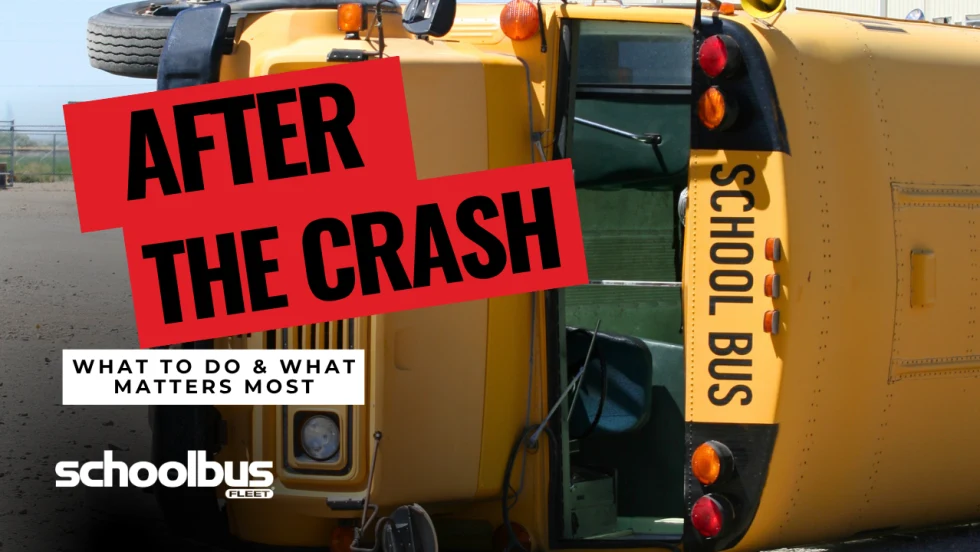
Most Bus Crashes Aren’t Your Fault. Here’s How to Prove It.
A guide for what to do in between a school bus crash and a claim: what to preserve, who to notify, and how to keep the facts available when they matter.
Read More →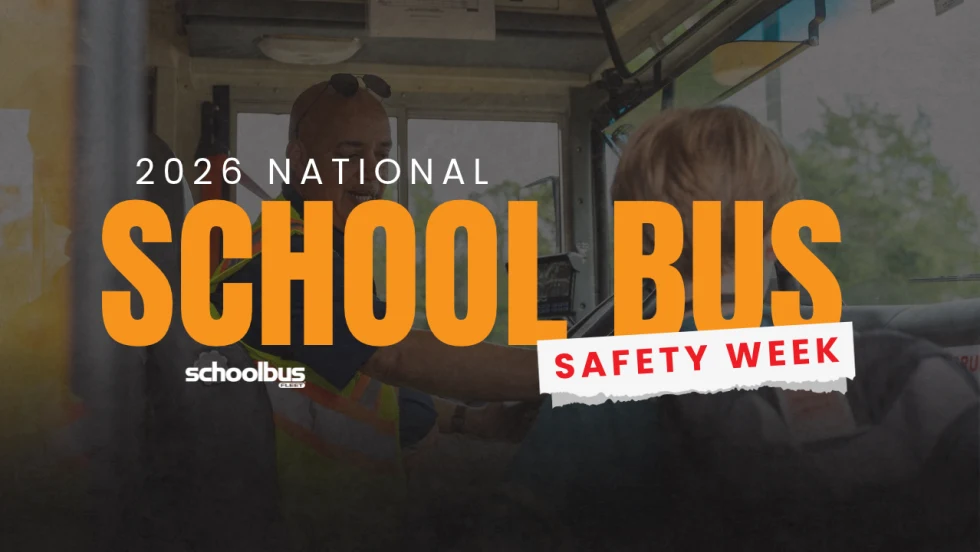
National School Bus Safety Week 2026: Tips, Toolkits & Resources to Keep Students Safe
School bus safety takes more than awareness. Explore expert tips, enforcement strategies, and free resources to help protect students on every ride.
Read More →
2 Killed, Dozens Injured in Florida School Bus Crash
A multi-vehicle collision caused a Polk County school bus carrying 37 students to overturn on its way to Winter Haven High School.
Read More →
Illegal School Bus Passing Drops 24% in New York Districts
With fewer than 5% of citations involving repeat offenders, Westchester County officials said enforcement, education, and community partnerships are helping change driver behavior.
Read More →
School's Back. Here's What Happened to Traffic, Speeding & Distraction
What happens to traffic when school resumes? New data analysis examines changes in distracted driving, congestion, and speeding around schools.
Read More →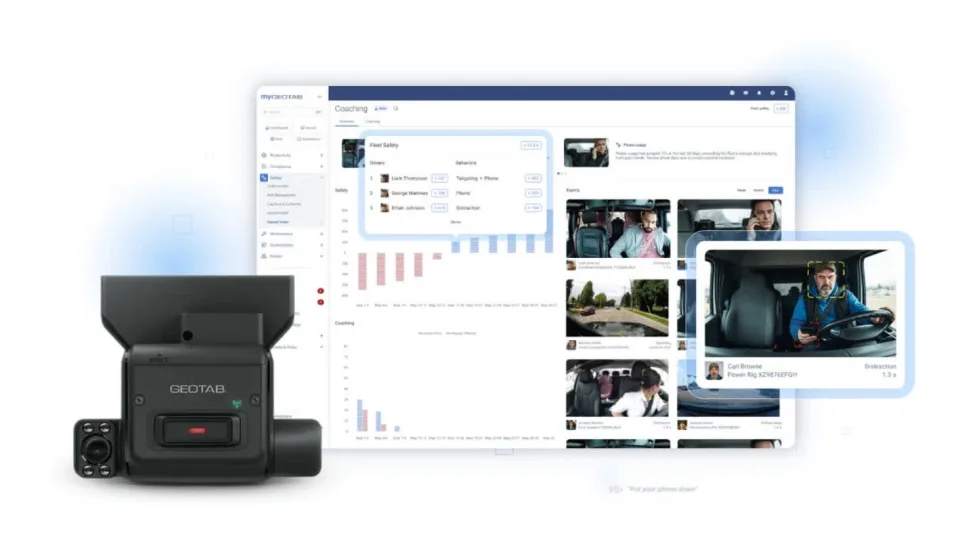
Geotab Expands Fleet Safety Tools With Video Coaching, Risk Insights
New safety and video capabilities aim to help fleet managers assess risk, support drivers, and take targeted action through video coaching, red-light violation detection, and more.
Read More →
How to Build a Better School Bus Driver Training Program
Is it time to strengthen your driver training? Here’s how to pick the right talent and improve recruitment, retention, and safety. This video is brought to you by IC Bus.
Read More →