




NAPT News & Views — Belts in buses: Will NTSB tip the scale?
The question of whether to install seat belts on large school buses has been an emotional, contentious issue for a very long time. School bus professionals with a particular interest in this issue should not miss NTSB Vice Chairman Christopher Hart’s presentation at the NAPT Summit in Memphis, Tenn., this October. When he talks, everyone should be listening carefully.
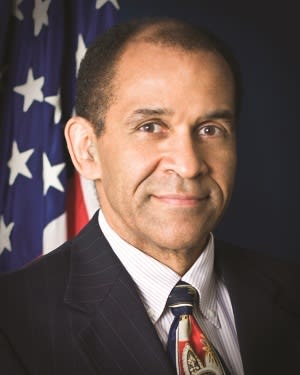
At this year’s NAPT Summit, NTSB Vice Chairman Christopher Hart will share thoughts on transportation safety generally and yellow
transportation specifically.
School transportation is almost universally acclaimed as the safest mode of transportation in America, if not the world. Without doubt, based on federal statistics, we’re the gold standard for reliably safe ground transportation.
The majority of motor vehicle crashes are not a failure of safety systems built into buses and other vehicles, but human error. That’s why as an industry, we’re never complacent. We train our people well and often. We inspect and maintain our equipment. We evaluate and explore new technology and new ideas that might make our safe record even safer.
School buses themselves meet more Federal Motor Vehicle Safety Standards (FMVSS) than any other vehicle — 37 in all. Because school buses are large and built to withstand most crash forces, fatal injuries to school bus occupants are unusual. When they happen, everyone in the industry shares in the anguish. Our children and grandchildren also ride yellow school buses.
So when tragedies occur, we commit to learning what caused the crash, and what could prevent another, similar one.
Case in point: The horrific Feb. 16 crash in Chesterfield, N.J., where a family with 11-year-old triplet daughters riding on the same bus had their world shattered when a dump truck smashed into the bus, ramming it into a utility pole.
One of the triplets died at the scene, and her two sisters were critically injured. One other student was injured seriously, and 14 suffered mostly minor injuries.
The crash immediately drew the attention of the National Transportation Safety Board (NTSB), the nation’s primo transportation investigative body that painstakingly reconstructs crashes to get at answers and eventually make recommendations for safety improvements.
The Chesterfield crash is of special interest to NTSB because despite no federal requirement for safety belts in large school buses, some states have decided to require them anyway; in fact, New Jersey was the second state that required belts to be installed on large school buses. Only four others have followed suit since.
It’s not yet known whether the children injured in the Chesterfield crash were buckled up, but this key information will be gleaned by the NTSB investigation, and the nature of the injuries analyzed carefully. This will help NTSB determine whether the vehicle’s safety belts protected more children from injury, contributed to injuries or perhaps had no measurable effect.
Why is this important?
Because in 2010 the National Highway Traffic Safety Administration (NHTSA) declined to mandate or even recommend lap-shoulder belts for large school buses. In fact, NHTSA suggested instead that states might better use available funding doing other things to promote safer pupil transportation, such as improving the safety of pedestrians around school buses, because more fatalities involve child pedestrians than school bus occupants.
By the same token, NTSB’s recommendations are always very powerful because of the board’s stellar reputation for thorough analysis and fact-driven conclusions. Remember, however, that NTSB makes recommendations but cannot order any safety correction. Their recommendations must be embraced by the affected stakeholders to have any real effect. The results of their work in Chesterfield will therefore be interesting and impactful, even if not determinative.
NTSB Vice Chairman Christopher Hart has already agreed to speak at the NAPT Summit in Memphis, Tenn., in October. He will share with us his thoughts about transportation safety generally and yellow transportation specifically. Hopefully by then he will be able to share the results from the Chesterfield crash investigation.
An attorney and pilot with commercial multi-engine and instrument ratings, Hart served in the early 1990s as an NTSB board member and then as deputy administrator of NHTSA. Subsequently, he was assistant administrator for system safety and later deputy director for air traffic safety oversight at the Federal Aviation Administration. Then the president appointed Hart to another term on the NTSB, and he was named vice chairman.
He’s experienced on both sides of the safety policy fence — investigating and recommending safety improvements, and implementing them in federal transportation agencies — making him one of the most experienced and knowledgeable professionals on the national transportation scene.
The question of whether to install seat belts on large school buses has been an emotional, contentious issue for a very long time. School bus professionals with a particular interest in this issue should not miss Hart’s presentation in Memphis this October. When he talks, everyone should be listening carefully.
Mike Martin is executive director of NAPT. Barry McCahill is president of McCahill Communications Inc. and NAPT public affairs consultant.
More Safety

How to Build a Better School Bus Driver Training Program
Is it time to strengthen your driver training? Here’s how to pick the right talent and improve recruitment, retention, and safety. This video is brought to you by IC Bus.
Read More →
Recent School Bus Accidents Leave 2 Dead, 2 Injured
Four school bus crashes in Florida, Illinois, and Georgia highlight risks in transportation lots, at bus stops, and during student loading and unloading.
Read More →
When Every Second Matters, Clarity Keeps Routes Moving
From routine delays to urgent incidents, strong communication practices help drivers, dispatchers, schools, and families respond with confidence.
Read More →

What Happens When a School Bus Catches Fire — and What Can Help
School bus fires are rare but can be devastating. Learn how advances in fire suppression and asset protection help fleets detect fires earlier, reduce damage, and improve safety.
Read More →
Geotab Launches Tool to Help Fleets Investigate Road Incidents
Geotab Investigations combines telematics data, video, documents, and other evidence to help fleets reconstruct incidents, resolve claims, and determine what happened.
Read More →
Texas Sixth Grader Wins 2026 National School Bus Safety Poster Contest
Sai Darshana Yekolu of Moseley Middle School in Prosper, Texas, was named the newest winner for her artwork, bringing the theme of “Safe Rides, Everyday Heroes” to life.
Read More →
Doing More With Less: How Transportation Directors Can Prioritize Safety Amid Budget Uncertainty
With diesel prices soaring and nearly one-third of transportation directors expecting budget cuts, maintaining student safety has never been more challenging. Download this guide to learn how leading districts are prioritizing risk, funding critical safety technology, and building stronger budget cases with data.
Read More →
Walton County Schools Adds Gatekeeper Stop-Arm Enforcement System
The Florida district will deploy Gatekeeper’s updated Student Protector technology, which now incorporates AI to improve video evidence.
Read More →
How To Build a More Secure School Bus Yard During and After Hours
As thefts and overnight security threats continue, school transportation leaders are combining stronger operational practices with AI-enabled surveillance to better protect buses, facilities, and staff.
Read More →
FMCSA Names New Chief Safety Officer: What School Bus Operators Should Know
Steve Dowling is set to lead the federal agency's efforts to advance commercial motor vehicle safety and reduce crashes, fatalities, and injuries on the nation's roadways.
Read More →