




NAPT News & Views — A New Look at Labor Trends: Maybe We Should Stand on Our Heads
NAPT's executive director says that we need more information about why people don’t take jobs as school bus drivers when part-time jobs are a transformational, growing trend across other segments of the economy.

iStock © BrianAJackson

iStock © BrianAJackson
My father used to say things to me that oftentimes left me scratching my head.
For example, I’d ask him about something that just didn’t seem right to me — like, “Why do I have to eat peas before I can have ice cream?” — and he’d say, “Change the way you look at things, and the things you look at change.”
Or, “Sometimes a problem isn’t really a problem but the solution in disguise.” Imagine you’re 7 or 8 years old and someone says that to you.
At first, I’d say what I think anyone that age would say: “What does that mean?” I learned quickly, however, that this was not a good question, because it always elicited the same answer: “If you think about it, I’m sure you’ll figure it out.”
Truth is, I didn’t figure out most of his aphorisms until I was older, a lot older. Like 25 or 30 years older. And I still haven’t figured some of them out. But one I did figure out was, “Maybe you should stand on your head” — meaning look at something from a totally different perspective, perhaps even someone else’s.
With all human enterprise, the first inclination when faced with a challenge is to opt for the familiar, or what’s been done before, rather than taking the risk of trying something new or even just “rocking the boat” a bit.
The yellow school bus industry is not immune to this, especially since we’ve been doing what we do for a very long time and by any reasonable standard have achieved a high level of success by taking the path well traveled.
A recent magazine article caused me to think more broadly about the national driver shortage and, specifically, to wonder if what we’re doing to address it reflects modern labor reality.
We’ve all begun to experience the impact of automation — Google, Amazon, Uber, and other so-called market disrupters are totally changing the landscape. But this may not be the biggest shift in the workplace. According to “The Real Future of Work” by Danny Vinik in the January/February 2018 issue of Politico, “Forget automation. The workplace is already cracking up in profound ways and Washington is sorely behind on dealing with it.”
According to Vinik, what’s happening is a shift that he calls “historic and important.” He explains that “Over the past two decades, the U.S. labor market has undergone a quiet transformation, as companies increasingly forgo full-time employees and fill positions with independent contractors, on-call workers or temps—what economists have called ‘alternative work arrangements’ or ‘contingent workforce.’” And these arrangements are expanding. In fact, according to Vinik, “all net job growth [from 2005 to 2015] in the American economy has been in contingent jobs.”
Vinik goes on to explain the far-reaching effects of this trend on workers in the U.S.:
“Workplace protections like the minimum wage and overtime, as well as key benefits like health insurance and pensions, are built on the basic assumption of a full-time job with an employer. As that relationship crumbles, millions of hardworking Americans find themselves ejected from the implicit pact. For many employees, their new status as ‘independent contractor’ gives them no guarantee of earning the minimum wage or health insurance.”
Vinik notes that these changes will impact myriad professions — “everything from janitors and housekeepers to lawyers and professors.”

Michael Martin is executive director of NAPT.
This begs several questions: Are we assuming the shortage of qualified school bus drivers is cyclical, when in reality it isn’t? What really is the impact of an improving economy and more job opportunities for potential drivers? Could the responses to our surveys reflect the status quo, rather than bigger societal trends, causing us to miss the best strategic solutions?
The facts seem to indicate that the U.S. workforce is moving more toward the very model that is prevalent in our industry: the part-time employee. It’s often reported as a negative, but “it’s only a part-time job” is becoming the preferred employment situation in many occupations.
Does this not present an opportunity for our industry if we better understand the dynamic and perhaps adapt to the trend? Would there be a benefit to branding and marketing the school bus driver occupation to this new economic paradigm?
We don’t know the answers to these questions, but shouldn’t we strive to get them?
As a first step, we need more information about why people don’t take jobs as school bus drivers when part-time jobs are a transformational, growing trend across other segments of the economy. In the coming months, NAPT will be reaching out once again to its members and collaborating with our industry partners to evaluate these issues from a totally different perspective. I promise to keep you posted on our progress.
In the meantime, maybe you should stand on your head, too.
More Management

EverDriven Launches Route Consolidation Calculator to Estimate Diesel Savings
As diesel prices hit record highs, the largest alternative transportation provider says a 10% route consolidation could save a 120-route district more than $78,000 a year in fuel alone.
Read More →
Zum Secures Continued Financing Support for School Bus Expansion
Generate Private Credit has financed approximately $75 million in school bus deployments across three states, supporting more than 500 buses as Zum expands across the county.
Read More →
Beyond Discipline: A Different Approach to Student Behavior on the Bus
After implementing a dean of students program in Oregon, North Clackamas is seeing positive improvements. Here’s how it worked. The Route is brought to you by IC Bus.
Read More →
A Dean of Transportation's Different Approach to Student Behavior on the School Bus
After implementing a dean of students program in Oregon, North Clackamas is seeing positive improvements on the bus. Here’s how it worked.
Read More →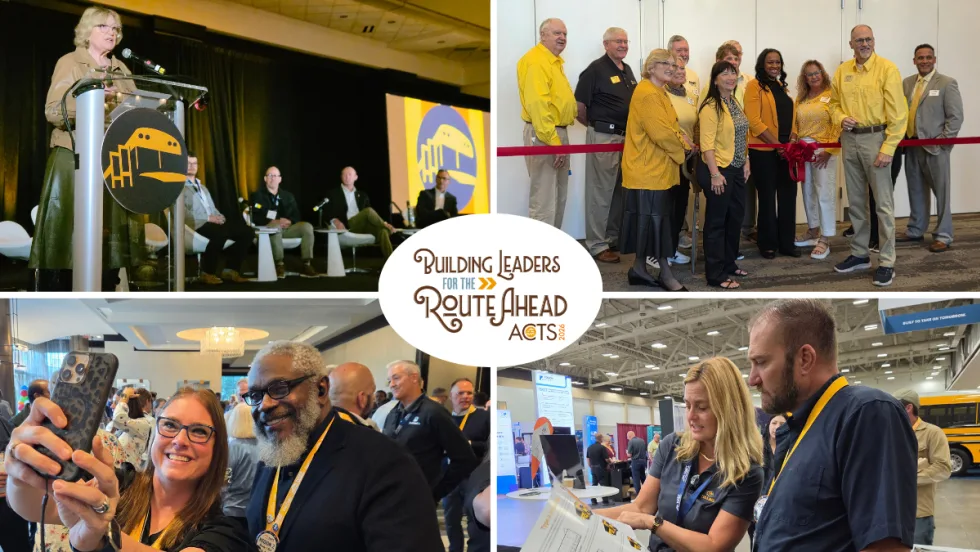
Inside NAPT ACTS 2026: Highlights from Louisville
From federal updates and student behavior strategies to new school bus technology and industry awards, see highlights from NAPT ACTS 2026 in Louisville.
Read More →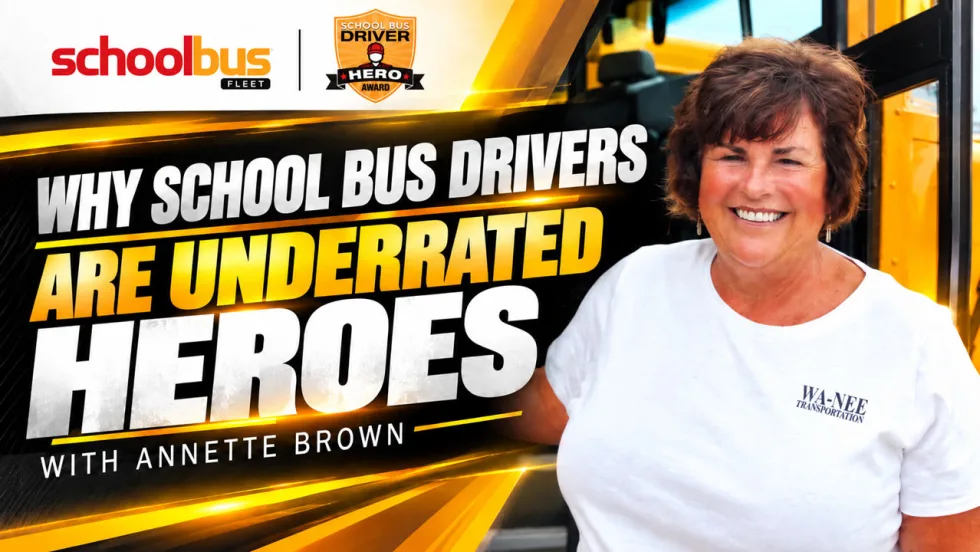
Meet the 2025 School Bus Driver Hero Winner: Annette Brown
We caught up with Wa-Nee Community Schools' Annette Brown on site at SBFX, where she was named the 2026 School Bus Driver Hero Award winner. Hear about her reaction, what she loves most about being a school bus driver, and more!
Read More →
Predictability Is Like Ketchup (According to 6-Year-Olds)
To students, a different school bus can feel like a full-blown crisis. One driver reflects on why familiar routines, showing up on time, and being reliably boring matter more than we think.
Read More →
Samsara Launches Free Driver Rewards Program
The new Driver Perks program gives eligible professional drivers access to discounts and offers without adding a cost for participating fleets.
Read More →
How Tax-Exempt Municipal Leases Can Help Finance School Buses
Let’s explore school bus financing options, including municipal leases, vendor payable accounts, and balloon payments, and how they can help stretch fleet budgets.
Read More →
Nominate Rising School Transportation Pros Under 40!
We’re searching for the next generation of leaders making an impact across the K-12 student transportation industry to recognize as SBF’s 2027 Trailblazers. Nominations are open now!
Read More →