




NAPT 2000 Focuses on Curbing School Bus Violence
Meeting in Buffalo, N.Y., delegates learned about predicting and responding to school violence, as well as handling the media, special-needs challenges and transportation funding.
An estimated 800 delegates and 700 exhibitor representatives braced for chilly weather and possible snow as the National Association for Pupil Transportation (NAPT) held its 26th annual meeting in Buffalo, N.Y. But the weather remained relatively mild throughout the five-day meeting from Nov. 5-9. Although the conference program featured a wide array of topics ranging from new technology to special-needs transportation to handling the media, the spotlight seemed to settle on the issue of school violence.
School violence concerns
Particularly compelling was a presentation by Bryan Vossekuil, co-director of the U.S. Secret Service Safe School Initiative. Vossekuil said the incidence of assassination-type attacks on school campuses is relatively low, but added that each incident has “high impact.” In trying to prevent such attacks, Vossekuil said the use of profiling is “a bad idea.” In many cases, the kinds of traits that might be used to identify a potential school shooter could cast a wide net. “You would include so many kids that it would be useless,” he said. On the other hand, it’s also possible to create a profile that’s too narrow. “We don’t think that the science is there,” he said, “given that this kind of violence occurs so infrequently.” But Vossekuil said that some of the attacks are preventable. In many cases, the attacker tells friends of his intent. “In one case, friends encouraged him not only to bring a gun to school, but to use it on the principal,” he said. Rarely are these types of attacks impulsive. “These kids do not just snap,” Vossekuill said. “Because of that, many of these attacks are preventable.” In fact, many planned attacks are headed off by students who come forward to authorities. In studying the attackers, Vossekuil found that many had indicated a need for help or behaved in ways that caused others concern. He also found that two-thirds of them had been bullied or assaulted. In some cases, the “torment had been going on for years,” he said. Another finding is that most of these attacks are resolved before police arrive on campus. This suggests that it could be “misguided” to think that rapid intervention by police is a solution to the problem.
First-hand account
In a presentation called “It Can Happen Here: Hard Lessons about School Safety,” Dr. Nancy Blackwelder, assistant transportation director for Pinellas County Schools in Largo, Fla., discussed her experience as the victim of a school shooting. In 1986, two boys opened fire in the school cafeteria, wounding Blackwelder and killing one of her fellow administrators. The campus security officer was off duty that day. Blackwelder’s description of the incident served to emphasize the importance of being prepared for, learning to respond to and, hopefully, working to prevent acts of violence in the schools. All schools should have a critical incident stress-management plan that includes, among other things, pre-incident education, on-scene support services, follow-up services and community outreach initiatives. The response plan should be practiced and copies of the plan should be posted in multiple locations, said Blackwelder. A signal to lock down should be consistent district-wide, and an alternative to the intercom system should be available as a communication tool in case that system should fail. Blackwelder recommended working in advance with the telephone company to negotiate an emergency phone bank as a public service. To facilitate law enforcement support, the agency with jurisdiction over the school should have a copy of the school’s blueprints. Law enforcement officials should conduct a safety audit of the school facilities, and a plan should be established for access of emergency vehicles, school buses, school officials and parents. Blackwelder recommended establishing a relationship in advance with the local radio, television and print media to ease interaction in the event of an emergency. Establish a spokesperson for the district and determine in advance a media staging area for each school. Train all staff and students in recognizing the early warning signs of violent behavior and in strategies for de-escalating violent behavior. Make sure that basic First Aid supplies are available in multiple locations throughout the school. Designate one office to be contacted in the event of an emergency. That office will have a list of other agencies/persons to be notified.
Teamwork emphasized
In “Learning to Think Without a Script,” keynote speaker Joel Zeff, a national performer and motivational speaker, involved audience members in games and improvisational sketches that enforced the values of teamwork and open-mindedness. In one exercise, Zeff and three attendees participated in a mock school bus ride. Each participant was assigned an attitude to adopt — angry, scared, excited or sad. As the driver, who was “angry,” picked up each passenger, that passenger’s attitude influenced everyone on the bus. When the excited passenger boarded, for example, everyone on the bus became excited. When the sad passenger boarded, it dampened everyone’s mood. Although the skit elicited roaring laughter from the audience, it also taught several important lessons — 1) Your attitude can and will rub off on others, so having a positive attitude can help you create a positive atmosphere, whether it’s on the bus, in the office or at home; 2) A positive attitude facilitates communication; 3) It’s important to be flexible. Learn to work with people who have different beliefs and attitudes. Be prepared to adapt to change.
Handling the media
Following the keynote address, Barry McCahill from Strat@comm, a Washington, D.C.-based public relations firm, mediated discussion with a panel of industry experts in “NAPT Talk Back Live.” The panel, which incorporated varying perspectives on media relations, featured Bruce Hunter, director of public affairs for the American Association of School Administrators, Jayne O’Donnell, lead transportation reporter for USA Today and Don Tharpe, executive director of the Association of School Business Officials International. McCahill cited the efforts of the California Association of School Transportation Officials (CASTO), which has put all of the National Highway Traffic Safety Administration’s (NHTSA) school bus safety data on a CD ROM to share with the public, as an example of good media relations. He also touted the creation of the School Bus Information Council (SBIC), a joint effort of the National Association for Pupil Transportation and the National Association of State Directors of Pupil Transportation Services (NASDPTS). The SBIC has a toll-free phone number and a Website for providing school bus safety data to the media. McCahill used the recent recall of Bendix’s ABS electronic control units as an example of the council’s effectiveness. “It’s a real credit to your industry that we didn’t have a shutdown of school when an incident like that happened,” said McCahill. He explained that Charlie Gauthier, executive director of NASDPTS, appeared on “Good Morning America” and CNN to provide the public with safety data. This type of efforts over the Labor Day weekend enabled the industry to bounce back by the time school reconvened, and no school days were lost.
Seeking ‘sexy’ news
Hunter, O’Donnell and Tharpe gave the often conflicting perspectives of school administrators and reporters on school transportation–related issues. Whereas reporters often seek out as much “juicy” information as possible, administrators get consistent pressure not to talk to the media. O’Donnell said her editor pushes her to get a “sexy” story that will be highly read. She emphasized the importance of giving reporters something to sink their teeth into — the “company line” will not be enough to sell newspapers. “You’re going to have to be prepared to talk. You have to give the reporter something more than what you’re pitching because the reporter has an editor to deal with,” she explained. If you don’t allow give and take, she said, no one will win. Your story will not be reported and the reporter will not get his or her byline. Tharpe explained the difficulties school transportation providers and administrators experience when faced with media scrutiny. If a child is left on the school bus, for example, the parents want to talk to the person directly responsible — the driver. However, administrators are reluctant to allow a driver to speak to the media for fear they may say the wrong thing or that they may not follow appropriate company policy. “This makes us as administrators look very inefficient in our jobs,” he said. But speaking out may very well mean risking your job, he explained. Conference attendees contributed similar sentiments, some saying that, as directors, they’re forced to refer all media inquiries to the public relations department, where people are not as informed on operational matters and where the answers will likely be less helpful. “We would like to speak, but we are not allowed to,” volunteered one audience member. “Today’s journalists ask lots of hard questions,” noted McCahill. In the event of an accident, they’re going to want to know about training practices, personal lives of drivers and other such details. This, he said, is distinctly different from the past, when personal information was considered private and off-limits. “Times have changed,” he said.
Pitch ‘good news’
O’Donnell suggested that school transportation officials offset bad publicity by going to the media with positive news stories. The trick, she said, is in making your story newsworthy. “As many good school bus stories as I have time to write, they [the editors] would probably run,” she said. But you need to give the reporter a story that will sell, so pitch it in a way that makes it interesting to the public. Budget stories are relatively dry and boring. Try to pitch your idea so that it has a human-interest angle and is people-oriented. Whether we like it or not, O’Donnell said, a school bus accident will always be newsworthy. “What people worry most about is their children. Even just the potential of danger is news,” she explained. However, even in the case of an accident, you can still use media scrutiny to disseminate a school bus safety message. Following a crash, for example, you can explain why seat belts wouldn’t have helped. Use the attention as a vessel for your positive information, she recommended.
Anger management
Jim Littlejohn of P.E.A.C.E. (People Effectively Addressing Conflict Everyday) Skills Inc., an Irmo, S.C.–based training company, presented a session on anger management. In “Getting a Grip on Life, Not Someone’s Neck,” Littlejohn explained the common causes of anger and taught a 10-step method for controlling it. He began by showing a series of slides that challenged people’s perceptions. One slide was a drawing that could be seen as either a horse or a frog, depending on how you look at it. This exercise, said Littlejohn, was a means of opening people’s minds to other ways of viewing things — an important skill when it comes to anger management. Angry people have two primary thoughts, according to Littlejohn — 1) The situation is unfair and 2) The situation is out of my control or I am losing control. These thoughts and subsequent actions are triggered by different things for different people. It is important to identify your anger triggers and learn to reduce the impact of those triggers. The first step is realizing that you control your own feelings and that you can choose not to feel angry, said Littlejohn. He provided attendees with a spreadsheet for evaluating the way they deal with anger on a daily basis. It included a list of personal anger triggers and responses, as well as an evaluation of the effectiveness of responses. If your response to anger is not effective, he said, it’s time to cultivate a new one. Littlejohn gave attendees the following 10-step method of dealing with anger:
Remain calm — “Breathe, adjust attitude and relax.”
Defuse by venting — “One minute venting.”
Be empathetic — “See their point of view.”
Listen carefully — “Don’t take the bait.”
Silence is golden — “Patiently wait for response.”
Attack the problem, not the person — “Stay in control.”
Admit mistakes — “I might be wrong, let’s see.”
Active problem solving — “Let’s make it right.”
Be safe, then de-escalate — “Take all threats seriously.”
Restore order ASAP — “Get back to normal.”
The rolling hospital
In “The Rolling Hospital: Handling Severe Medical Conditions on a School Bus,” a three-person panel of experts discussed the issues that transporters face in busing children with special needs. The panel included Margaret Kelly, nursing coordinator of Rehabilitation Inpatient Services at Children’s Hospital of Buffalo, N.Y., Alexandra Robinson, transportation director for San Diego (Calif.) Unified School District, Kathy Strotmeyer, western regional coordinator of the Pennsylvania Chapter of the American Academy of Pediatrics, and Jean Zimmerman, district resource therapist for Palm Beach County (Fla.) Department of Exceptional Students. Kelly, author of “Safe Transport of Technology-Dependent Children,” an article published in Maternal Child Nursing, noted, “It takes a group to transport these children daily.” Kelly was instrumental in the push to develop guidelines for transporting children in the Early Childhood Program at the Children’s Hospital of Buffalo. These guidelines were later modified for use in other programs, through a joint effort with the Safe Transportation Committee of the Developmental Disabilities Prevention Program. The guidelines included a plan for treating children with tracheostomies and other medical conditions while onboard. Previously, there were no guidelines for determining who would care for a special-needs child during transit or for how that caregiver would be trained. Zimmerman explained the importance of having a member of transportation at IEP meetings. You cannot guess a child’s behavior based on his or her disability. “No two children with the same disease are going to react the same,” she explained. And in an emergency situation, such as an evacuation, children will react unpredictably. She said it is important to have emergency cards for each student on the bus, with a picture of each student attached to his or her card. That way, if the driver is knocked unconscious in an emergency, the emergency personnel can identify children and learn about their special needs by reviewing the cards. There are inexpensive cameras on the market, said Zimmerman, that print photos on sticker tape, rather than on standard film. These can come in handy when preparing transportation cards. Zimmerman gave the following tips for safe transport of students who may have seizures:
• Make sure your drivers are trained in identifying seizures. Show videos so that they know what the different types of seizures look like.
• If a seizure is hard to evaluate, call 911. Don’t worry about being charged. They won’t charge unless they have to transport the child.
• Most children in wheelchairs should stay in them during a seizure.
• Climate control and tinted windows are critical. Changes in light can cause seizures. Children should be allowed to wear sunglasses on the bus to help reduce the possibility of seizures. Strotmeyer presented several child safety seats on the market and described the characteristics of each. She recommended contacting the Governor’s Highway Safety Office to talk to your child passenger safety technician if you have any questions regarding child safety seats. Strotmeyer announced that she and Zimmerman, in conjunction with Cheryl Wolf, special-needs transportation coordinator for Lafayette (Ind.) School Corporation, and NHTSA, are working to designate a school bus-specific child passenger safety technician.
Mock evacuation
Robinson and Zimmerman joined three other transportation experts — John Fairchild, transportation director for Salem (Ore.) Public Schools, Maria Palacios-Hardes of Kids Inc., a Denton, Texas–based distributor of childhood education products, and Launi Schmutz, transportation director for the Washington County School District in St. George, Utah — in performing a mock evacuation of a special-needs school bus. Robinson played the role of the bus driver, while the other panelists took on the behaviors of children with varying disabilities. Through a hectic evacuation process, the following points were made:
• Have a written plan for evacuating the bus. Practice with all students, even those with disabilities. There is a natural reluctance to practice with special-needs students for fear of hurting them, said Robinson. This fear must be overcome.
• Perform a strength test with driver and attendant applicants. It should be a part of the job description and hiring requirements. Someone who can only perform light duty cannot be a driver or attendant of any bus — not even regular education runs. In the event of an emergency evacuation, drivers and attendants needs to be strong enough to provide assistance.
• Practice cutting seat belts in training, rather than waiting until an emergency situation. They can be difficult to cut and when someone needs to be extricated quickly, it is not the time to learn this skill.
• Know your passengers for evacuation. Be aware of which ones should be taken out of their wheelchairs during evacuation and which ones should stay in them. Children who may have abnormal body movements should stay in their seats.
Transportation training
Steve Kalmes, transportation director for the Anchorage (Alaska) School District, and Deborah Lincoln, Oregon state director for pupil transportation, presented a session on new programs offered by the Transportation Safety Institute (TSI), an Oklahoma City–based training organization. The institute was established in 1971 to support the goals of the U.S. Department of Transportation, as well as other federal, state and local agencies. It trains over 40,000 people annually. Previously, the institute offered certificates in three main areas of pupil transportation — specialist, supervisor and director. Kalmes and Lincoln, however, explained that the “specialist” category has now been broadened to incorporate five specific areas — routing, dispatch, safety and training, vehicle maintenance and special education. Each area requires 20 hours of study to earn the status of specialist. There are different required and recommended courses for each area of specialization, with certain courses, such as “Dealing with Difficult People,” overlapping all categories. Five courses leading to TSI certification were offered at the NAPT show. Other courses are available at regional and state workshops. On behalf of TSI, Kalmes and Lincoln asked for assistance in the following areas: 1) Writing training curriculum, 2) Teaching training courses and 3) Serving as a subject matter expert in program development.
Next stop: Nashville
Next year’s NAPT conference and trade show will return to Nashville, Tenn., where the event drew large crowds in 1996. The annual meeting is scheduled Nov. 10-15, 2001.
More Safety

How to Build a Better School Bus Driver Training Program
Is it time to strengthen your driver training? Here’s how to pick the right talent and improve recruitment, retention, and safety. This video is brought to you by IC Bus.
Read More →
Recent School Bus Accidents Leave 2 Dead, 2 Injured
Four school bus crashes in Florida, Illinois, and Georgia highlight risks in transportation lots, at bus stops, and during student loading and unloading.
Read More →
When Every Second Matters, Clarity Keeps Routes Moving
From routine delays to urgent incidents, strong communication practices help drivers, dispatchers, schools, and families respond with confidence.
Read More →

What Happens When a School Bus Catches Fire — and What Can Help
School bus fires are rare but can be devastating. Learn how advances in fire suppression and asset protection help fleets detect fires earlier, reduce damage, and improve safety.
Read More →
Geotab Launches Tool to Help Fleets Investigate Road Incidents
Geotab Investigations combines telematics data, video, documents, and other evidence to help fleets reconstruct incidents, resolve claims, and determine what happened.
Read More →
Texas Sixth Grader Wins 2026 National School Bus Safety Poster Contest
Sai Darshana Yekolu of Moseley Middle School in Prosper, Texas, was named the newest winner for her artwork, bringing the theme of “Safe Rides, Everyday Heroes” to life.
Read More →
Doing More With Less: How Transportation Directors Can Prioritize Safety Amid Budget Uncertainty
With diesel prices soaring and nearly one-third of transportation directors expecting budget cuts, maintaining student safety has never been more challenging. Download this guide to learn how leading districts are prioritizing risk, funding critical safety technology, and building stronger budget cases with data.
Read More →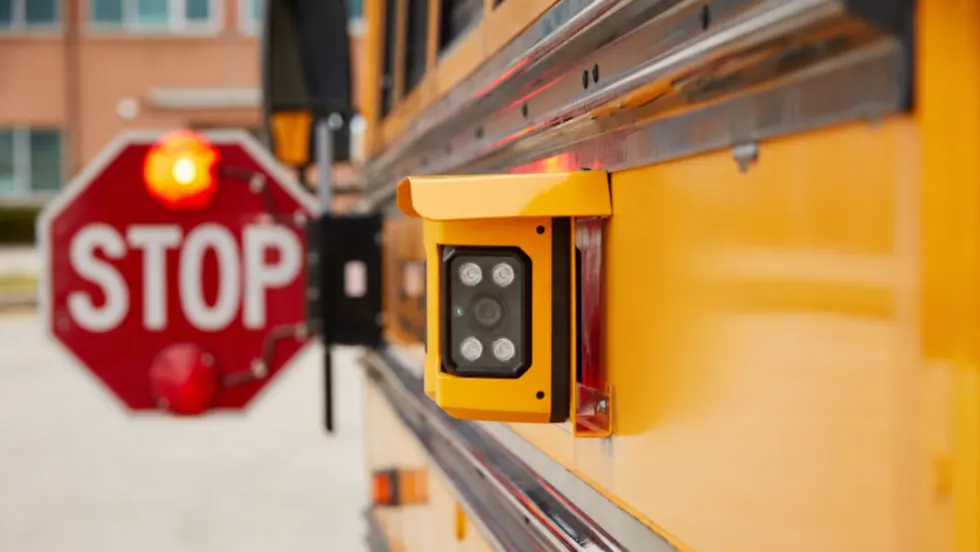
Walton County Schools Adds Gatekeeper Stop-Arm Enforcement System
The Florida district will deploy Gatekeeper’s updated Student Protector technology, which now incorporates AI to improve video evidence.
Read More →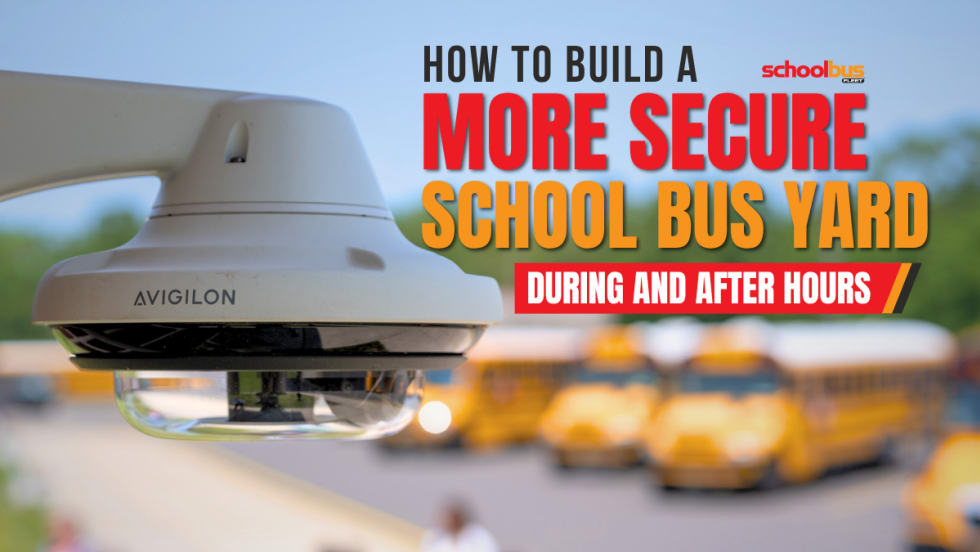
How To Build a More Secure School Bus Yard During and After Hours
As thefts and overnight security threats continue, school transportation leaders are combining stronger operational practices with AI-enabled surveillance to better protect buses, facilities, and staff.
Read More →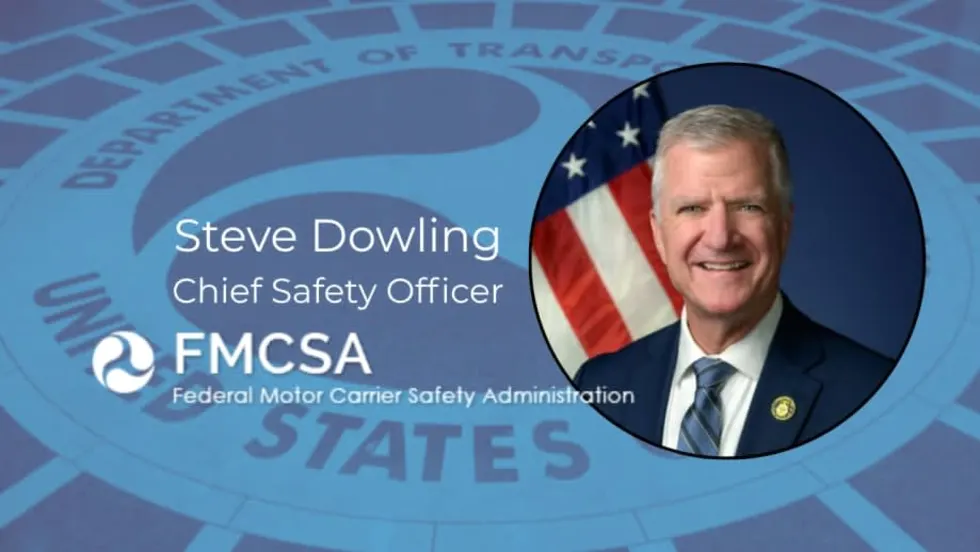
FMCSA Names New Chief Safety Officer: What School Bus Operators Should Know
Steve Dowling is set to lead the federal agency's efforts to advance commercial motor vehicle safety and reduce crashes, fatalities, and injuries on the nation's roadways.
Read More →