




Let's take the bite out of labor negotiations
Last year I found myself involved in negotiations between various groups of educators, administrators and board members for a school district in Misso...
Last year I found myself involved in negotiations between various groups of educators, administrators and board members for a school district in Missouri. During our discussions, one of the board members repeatedly asked, “How do your requests help children?” That question forced me to re-evaluate the mindset with which I enter any negotiation session. The bedrock philosophy of the association for which I work is “children first.” That phrase is on the clothing I wear and the publications our association produces for our members. “Children first” should serve as a foundation for any negotiations between any groups that interact with kids on a daily basis. I also realized that there were other basic foundations on which all parties should agree when they come to the table to negotiate. Agreement on these points will help build relationships rather than create an adversarial atmosphere. We’re all eating from the same pot
A common misconception that I deal with early in negotiations is that there are secret reserves of money, perhaps hidden away in a Caribbean bank account for one heck of a school board retreat in July. In reality, school district funds are more like a glass house than an ironclad vault. As patrons and employees of the district, we just need to know how and where to look. I work for a unique association. It is not a union, yet we represent bus drivers all over the state. I have made an assertion in many school districts that earns me looks of stunned amazement. If there is only one financial pie, I say, why don’t we all come to the table together to divvy it up? In other words, we should create and develop a negotiation team that has the best interests of the district and its students in mind. Many school districts find themselves in adversarial relationships among bus drivers, paraprofessionals, custodians, teachers, administrators and the list goes on. Not only does an “us vs. them” mentality exist, but a far more damaging “us vs. them vs. them vs. them” attitude is pervasive throughout the district. Inclusive negotiations allow everyone, not just administrators and board members, to hear the interests and needs of the transportation professionals who serve as one piece of a school district’s pie. No need for financial secrecy
District finance does not have to be a mystery. I remember the first time I learned how a district budgets for a given year. I thought for sure that I was hearing a foreign language. However, after a few hours I gained enough of an understanding to be able to explain finance to others. Unions and associations have a responsibility to empower their members with understanding so they too can be well informed when they enter into any negotiation situation. As a spokesperson for an association I have very little credibility with a school district. I am not an employee nor am I a patron of the district. An individual who serves as a representative and employee of the district should be the person who communicates any information concerning salary discussions. I want our members to have the tools they need to make negotiations not only successful but congenial as well. Often I am the white elephant looming in the corner of the room. Understanding the basics of school finance allows our members to shoo me out of the meeting and feel confident that they can proceed on their own. Negotiators, not adversaries
School districts should not espouse a one-negotiation-model-fits-all mentality. Something I appreciate about Missouri is the opportunity that school districts have to develop a negotiation model that works best in their community. Susan Moore Johnson of Harvard’s Graduate School of Education believes that many of the primary weaknesses in education contracts stem from their reliance on a model developed by factory workers decades before the first education contracts were ever designed. Johnson notes that traditional bargaining is based on the assumption that all the groups coming to the table have differing interests. Thus, an adversarial atmosphere exists before any conversation ever takes place, and the end result is a learning environment that is detrimental to children. School districts need to have the option to develop a model that works best in their community. The best structure for urban communities may not be particularly suited for rural communities. However, as is the case with the process itself, everyone should have the opportunity to develop the model. Only then will all parties involved have a true sense of ownership. Every individual employed by a school district is a part of the whole. We are all working to provide opportunities that are best for children. Many of the ideas brought to the bargaining table are ripe for interpretation and negotiation. Our children’s needs, however, are not negotiable.
More Management

EverDriven Launches Route Consolidation Calculator to Estimate Diesel Savings
As diesel prices hit record highs, the largest alternative transportation provider says a 10% route consolidation could save a 120-route district more than $78,000 a year in fuel alone.
Read More →
Zum Secures Continued Financing Support for School Bus Expansion
Generate Private Credit has financed approximately $75 million in school bus deployments across three states, supporting more than 500 buses as Zum expands across the county.
Read More →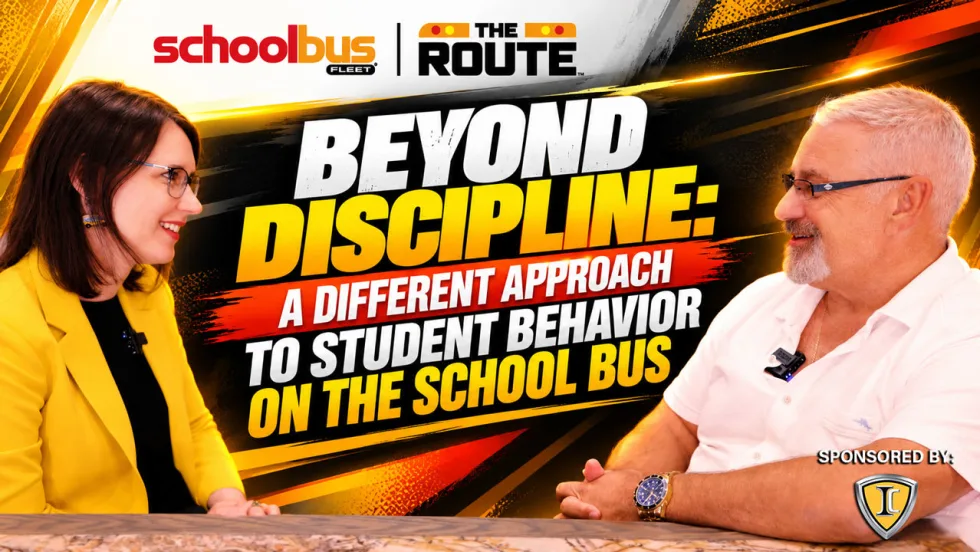
Beyond Discipline: A Different Approach to Student Behavior on the Bus
After implementing a dean of students program in Oregon, North Clackamas is seeing positive improvements. Here’s how it worked. The Route is brought to you by IC Bus.
Read More →
A Dean of Transportation's Different Approach to Student Behavior on the School Bus
After implementing a dean of students program in Oregon, North Clackamas is seeing positive improvements on the bus. Here’s how it worked.
Read More →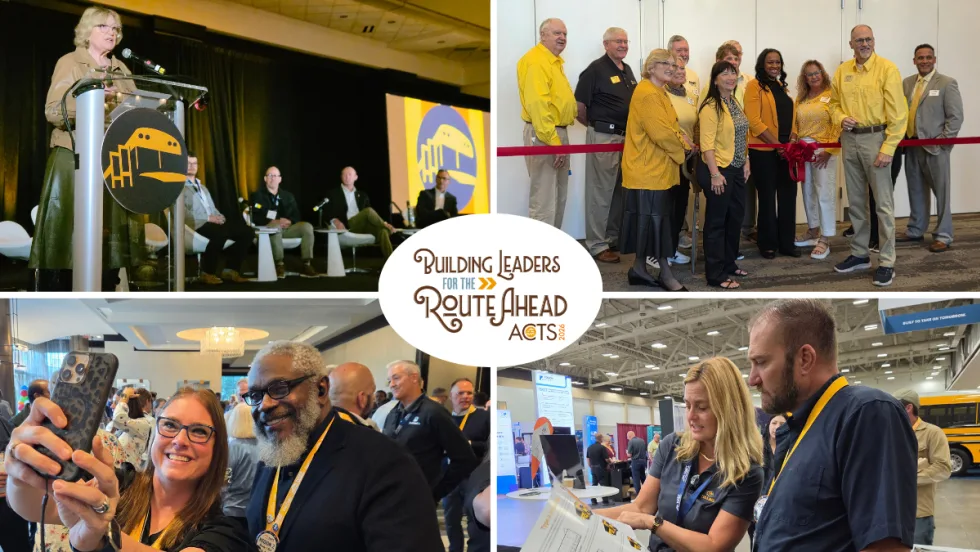
Inside NAPT ACTS 2026: Highlights from Louisville
From federal updates and student behavior strategies to new school bus technology and industry awards, see highlights from NAPT ACTS 2026 in Louisville.
Read More →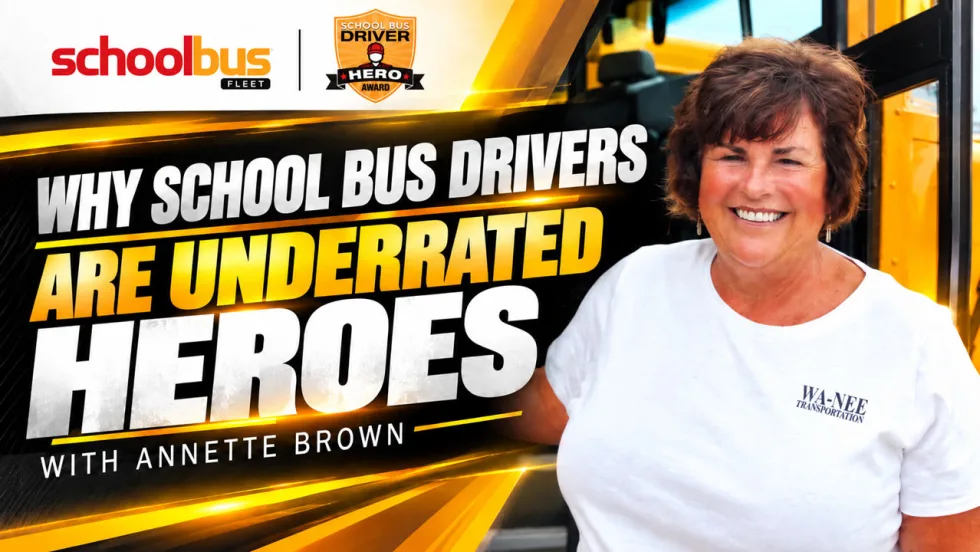
Meet the 2025 School Bus Driver Hero Winner: Annette Brown
We caught up with Wa-Nee Community Schools' Annette Brown on site at SBFX, where she was named the 2026 School Bus Driver Hero Award winner. Hear about her reaction, what she loves most about being a school bus driver, and more!
Read More →
Predictability Is Like Ketchup (According to 6-Year-Olds)
To students, a different school bus can feel like a full-blown crisis. One driver reflects on why familiar routines, showing up on time, and being reliably boring matter more than we think.
Read More →
Samsara Launches Free Driver Rewards Program
The new Driver Perks program gives eligible professional drivers access to discounts and offers without adding a cost for participating fleets.
Read More →
How Tax-Exempt Municipal Leases Can Help Finance School Buses
Let’s explore school bus financing options, including municipal leases, vendor payable accounts, and balloon payments, and how they can help stretch fleet budgets.
Read More →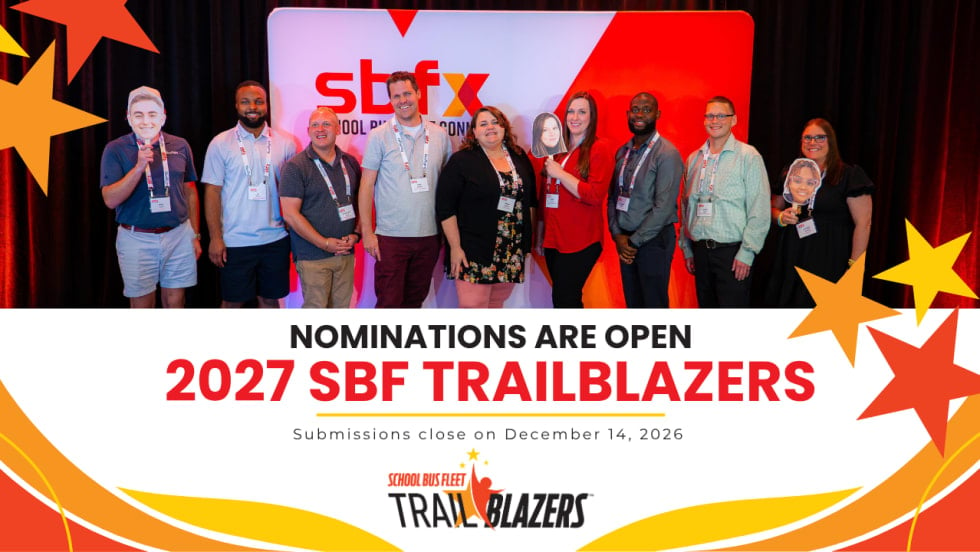
Nominate Rising School Transportation Pros Under 40!
We’re searching for the next generation of leaders making an impact across the K-12 student transportation industry to recognize as SBF’s 2027 Trailblazers. Nominations are open now!
Read More →