




Lessons in Student Behavior Management, Planning During COVID-19
The pandemic has created a rare opportunity to see what happens when students sit 6 feet apart, the total number of riders is reduced, and attendance keeping and seat assignments become critical, routine activities.
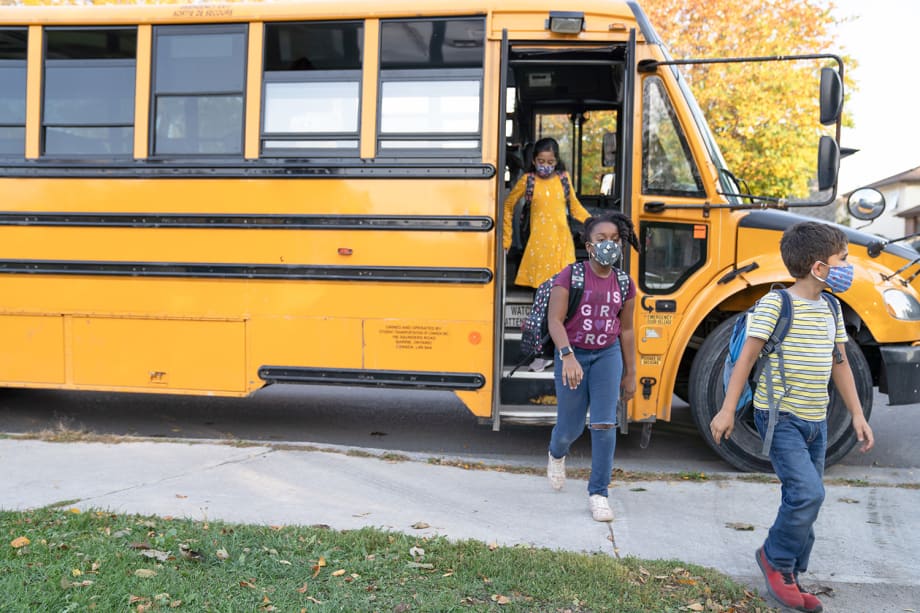
Photo courtesy FatCamera via iStock/Getty Images
From 2016 to 2018, I had the opportunity to study bullying and other forms of misbehavior on school buses under a project funded by the National Institute of Justice. The first of its kind to look at these issues within a national context, the study generated foundational knowledge on key approaches for promoting positive school bus environments and the real-world challenges transportation departments face as they transport students to and from school.
One of the most salient lessons I learned from surveys with more than 2,500 transportation staff and in-depth interviews with a subset of 39 transportation directors was that the school transportation industry is led by passionate, caring, and insightful people relentlessly invested in ensuring that students have productive experiences on the bus. Through that dedication, the transportation community thrives by being adaptable, innovative, and persistently ready to respond to new challenges.
As the COVID-19 pandemic abruptly disrupted daily life for people all around the world, in many parts of the U.S., students had to shift rapidly to remote learning or whatever type of educational environment schools could offer. As early as the fall of 2020, many school districts returned to in-person learning, raising critical questions around how students could be safely transported under unprecedented circumstances.
From working with schools over the years, I knew that transportation departments would rise to the occasion. I also knew they would face some novel challenges. At the same time, I wondered about the silver linings that would emerge from this experience, and what we could learn about creating positive bus environments when standard operating procedures are forced to change to prevent the spread of a contagious virus.
To explore this, I reached out to five transportation directors I knew from previous work, representing school districts in Indiana, Montana, New York, and Pennsylvania. My conversations with them were invaluable for understanding new challenges, how they adapted, and lessons learned along the way.
Navigating Uncertainty
One of the most commonly discussed challenges throughout the pandemic was the precariousness of the environment transportation departments suddenly had to operate within.
As cities shut down essential services at the peak of the pandemic, there was the question of how drivers would get paid when schools transitioned to remote learning. They worried about losing drivers who felt unsafe driving during a pandemic, which would exacerbate existing driver shortages.
When schools began offering onsite learning again, it would be a challenge adjusting routes to accommodate hybrid learning schedules. Keeping track of which students ride the bus on which days would require a level of organization many departments were not accustomed to.
Simultaneously, information was trickling down swiftly, and the guidance being offered for how to move forward with operations was not always consistent across federal, state, and local agencies. Ultimately, transportation departments had to reconcile a surfeit of recommendations and mandates and devise realistic operational plans. Undoubtedly, there would be logistical challenges providing transportation during a pandemic.
For each transportation director I spoke with, operating at a significantly reduced capacity to accommodate social distancing was a reality for at least some period of time. For many, this meant seating one child per seat, which equated to a fraction of the total number of riders that usually occupy a bus. Masks were mandatory. Touchable surfaces would be cleaned in between every ride and deep cleaned weekly, and to facilitate contact tracing, every bus would have assigned seating and roll call taken during every commute.
Despite this being uncharted territory, these departments executed thoughtfully developed plans that enabled them to successfully transport children to and from school, even during a global public health crisis.
Seeing the Upsides
More importantly, there were silver linings. To their knowledge, not one positive COVID-19 case was traced back to a bus in their district. The buses were cleaner than they had ever been, and driver absences for sickness were at all-time lows. Strict seating charts also created structure and helped drivers learn names and faces and form a rapport with students.
But the biggest silver lining of all? Behavioral issues declined dramatically.
For some it was a surprise — they did not know what to expect when students returned to school. For others, it was what they would anticipate when the number of kids on the bus is drastically reduced.
With fewer students, drivers can finally keep an eye on everyone, commutes are calmer, and students are not overstimulated. Thanks to seating charts and daily attendance, they know who is on their bus and where they are sitting, and students know that drivers can easily identify them.
With social distancing and hybrid schedules, students do not have the usual audience for their mischief nor do they have as many accessible targets for teasing or bullying. And in some cases, kids are just happy to be back, and maybe deep down they understand that riding the school bus is a privilege. Perhaps these factors coalesced in a unique way to promote peaceful buses during what was otherwise a period of significant upheaval.
Lessons Learned
What have we learned from this? At the most basic level, having a plan and ensuring there is clear communication between all parties will help operations to run efficiently during transitional phases. When emergencies arise, having a well-developed plan will help everyone manage stress and proceed with resilience.
Moving forward, transportation departments should document what worked and what did not along the way so that plans can be modified for the future. The directors I spoke to, and the departments they represent, also showed tremendous adaptability at a time when there were new developments almost every day, often with direct implications for transportation. Undeniably, this was vital to getting students back to school.
It is also crucial that school districts express appreciation for bus drivers and recognize that they have put themselves on the frontlines to get students to and from school. Without them, many schools could not have returned to in-person learning when they did.
The pandemic created a rare opportunity to see what happens when students sit 6 feet apart, the total number of riders is reduced, and attendance keeping and seat assignments become critical, routine activities.
For these five directors, these changes improved the climate of their buses appreciably. In a perfect world, we might leverage these experiences and sustain smaller busloads forever. But this is not a realistic remedy, and in time, all districts will return to full capacity. And with that, the behavioral issues are likely to resume.
If nothing else, knowing what we know now should affirm the importance of essential behavioral strategies many departments have used for decades. Implementing seating charts, taking attendance, greeting each rider by name, and any other efforts that make it easier for drivers and students to build rapport will help to formulate a predictable environment, reduce anonymity, and increase accountability for behavior, even in times of great duress.
Joshua Hendrix is a school safety research scientist in the Youth, Violence Prevention, and Community Justice Program at RTI International. His recent research has been published in the Journal of School Violence, Preventing School Failure, and the Journal of Experimental Criminology.
More Management

How to Build a Better Driver Training Program
Ready to boost up your school bus instructor training? Here’s how to pick the right talent and improve recruitment, retention, and safety.
Read More →
CALSTART and Forth Combine to Form Catalyst Mobility
The new name represents a renewed vision for the nonprofit focused on advancing clean, equitable, and affordable transportation solutions that move people and goods.
Read More →
What Makes a Great School Bus Driver Trainer?
Choosing the right school bus driver trainer takes more than experience. Learn six keys to selecting and developing trainers and evaluating program effectiveness.
Read More →


School Bus Contractors Expand Through New Deals, Acquisitions & Partnerships
STA's Canadian division acquires Ontario-based G&L Stevenson Transport while Durham School Services adds a new district contract in California, First Student adds a New Jersey contract, and Minnesota Coaches acquires Halo Transportation.
Read More →
Logan Bus Company Rolls Out AI Phone System for NYC School Bus Families
A summer pilot found that AI agents could handle most routine calls, freeing up time for customer service staff to focus on emergencies and complex family concerns.
Read More →
From Intent to Impact: What I Learned About Leadership from TAPT
A Texas transportation supervisor shares lessons on self-awareness, accountability, managing stress and building trust — and why investing in leadership development matters at every stage of your career.
Read More →
NAPT Names 2026 Award Recipients, Hall of Fame Inductee
Who earned national recognition for their work in student transportation? This year, NAPT named five recipients of its 2026 awards for service, safety, and leadership, plus its newest Hall of Famer.
Read More →
2026 State of Student Transportation Report
Driver shortages. Rising costs. Growing safety expectations. More data, but not enough time to act on it. The 2026 State of Student Transportation Report reveals what transportation leaders say is putting the most pressure on their operations—and where they’re investing next. See how your priorities compare.
Read More →
How to De-Escalate an Angry Person: 5 Steps for Handling Workplace Conflict
What makes emotions run high, and how should you handle an angry colleague or parent? Follow these steps for staying calm, listening, showing empathy, and resolving conflict.
Read More →
What Readiness Looks Like This School Year
Learn about the challenges shaping the 2026–2027 school year, from persistent driver shortages and budget pressure to technology and readiness gaps. See how school districts are responding and adapting in Zonar’s 2026 Back-to-School Readiness Report.
Read More →