




Keys to Running an Efficient Shop
Over the past few years, I have written a number of articles for SBF and if you’ve read at least a few of them, you’re probably aware of my int...
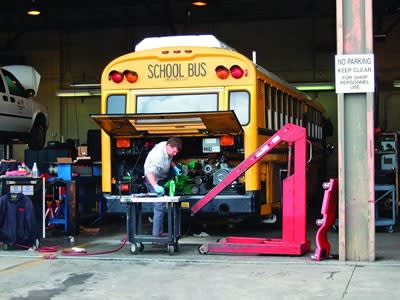
Over the past few years, I have written a number of articles for SBF and if you’ve read at least a few of them, you’re probably aware of my interpretation of the letters PM.
In case you missed it or do not remember, PM — to me — means proactive maintenance as well as preventive maintenance. Proactive maintenance differs from preventive maintenance since it goes beyond preventive maintenance to the point of analyzing the root of a problem to determine its source and cause.
Proactive maintenance means possibly disassembling a component to inspect it for wear when no wear is evident on the outside, then taking measures to reduce maintenance costs based on your findings. It also means examining the lifecycle of components to establish routine replacement cycles before the part fails.
Through proactive maintenance, one will acquire the specific data that indicate the cause of a component failure or indicate a component’s normal lifespan. A list of criteria can then be assembled to determine when it is time to replace a component. Criteria can also be used when adapting changes in the maintenance process to eliminate the cause of the failure, extend the lifespan of a component and reduce the hours spent making repairs.
The final maintenance process is the preventive maintenance portion.
Compiling data for component replacement criteria
How does one gather the information to develop the criteria? First, you must follow strict operating guidelines. A lackadaisical approach to maintaining your fleet will only result in a poorly maintained, high-maintenance operation, decreased component lifespan or malfunctioning vehicles and equipment.
You may think you do not have time to operate under strict guidelines, and perhaps under your current performance standards you do not. Some sacrifices might have to be made to get started. Some maintenance schedules may have to be pushed aside to get the ball rolling. Setting the goal, writing the plan, then working consistently toward the end may be the only way to begin. One has to set a standard and then maintain the standard that has been set. This includes — but is not limited to — following, at minimum, the manufacturer’s recommended maintenance schedule. It also includes using the recommended lubricants and fluids or a suitable alternative that meets the OEM requirements.
Purchasing and replacing parts
Quality replacement components should also be used. Price should not always be the determining factor in purchasing replacement parts, tires or lubricants.
Your geographical and climatic operating conditions will be one determining factor for replacement parts, and product testing is advisable on almost every part you use. Always record the brand of the part, the date when it was purchased, specific design characteristics, the supplier and the price paid. If you can find out where it was manufactured, record that as well. Be cautious of using nuts, bolts and components that are manufactured overseas.
When replacing a part, record the reason for replacement. Did specific wear patterns develop that led to the failure? What were the patterns? What caused these wear patterns to develop? If something could be done to decrease wear, what would it be?
If you have an idea, pursue it. Make changes in little steps, not great leaps, and record what you change and when you change it. This will give you a direction to go in if you have to backtrack and try something else.
You may need to tweak your idea a little to move forward. For instance, years ago, I found that buses in my fleet were showing premature spring pin wear. My initial examination indicated that I should try shortening the lube interval. This helped, but it did not solve the problem. I tried suspending the axles off the ground so grease could get around the entire pin. I also researched a different spring pin style and other lubricant possibilities best suited for my operating area.
After a trial period of a year, I had established the data I needed to increase the lifespan of these components, thus reducing maintenance. In the end I had a shorter service interval, a different lubricant specification and a better pin that had spiral-cut grooves encircling it so that grease could get around the entire pin. With the pin changes, I was able to modify my maintenance process and eliminate suspending the axles during the lubrication process. Labor costs were reduced and lifespan increased.
{+PAGEBREAK+} Performing service, stocking inventory
I recommend replacing both spring brake chambers on an axle, even if only one has failed. Just like brake shoes, these items should be replaced in pairs, or sets for the axle.
I found that spring brakes were failing at fairly routine intervals regardless of which brand I tried. Through an examination of past replacement histories, I was able to set a maintenance interval specifically for spring brake replacement based on an average replacement time for every bus equipped with spring brakes. Since doing so, spring brake failures on the road have all but been eliminated. We know about when they are going to fail and we replace them prior to that happening.
Hoses, belts and air dryers also fall into this category. When I service an air dryer, I do a complete service. This includes replacement of the desiccant cartridge, installing a remanufactured or new exhaust valve and a new check valve. Your geographical and climatic conditions may dictate different data for your fleet, but I have found that a full service reduces failures and saves labor.
I suggest taking the same approach with light bulb replacement. If one headlight burns out and your records indicate that the corresponding lamp is near the same age, replace it as well. I’ll bet that if one headlight burns out, the other will burn out within 30 days — I have the records to prove it.
Doing both at the same time can save you 50 percent in labor for headlight replacements. Of course, if the lamp is being replaced due to breakage and the other lamp is fairly new, just replace the damaged lamp. The same applies for taillights and dash lights. The time spent lifting the instrument panel far outweighs the cost of a few miniature light bulbs, so replace all instrument panel lamps if more than two are burned out, and make sure to discard the old bulbs so they do not get reused.
Moreover, stock a sufficient quantity of quality parts to make routine repairs in house for at least 30 days. An automated maintenance program will tell you the frequency of parts usage to help you with stocked inventory levels. Tracking parts from the cradle to grave will help you determine which work best for you and which are the most cost-effective to purchase.
Automated record-keeping
Accurate and detailed record-keeping is essential to an efficient operation. I’m not perfect at it, but I continuously try to keep detailed and up-to-date records. The shop staff that works with me will attest to the fact that our records are accurate and they appreciate having precise records that they can locate easily.
I have been using the electronic format of record-keeping for many years, and within the last year I have tried to eliminate most of the paper versions of repair work orders altogether. All appearances indicate that the shop crew is becoming well-versed in entering, editing and searching for electronic records. Each work bay has its own computer work station assigned to a technician. Once we get through the learning curve, I feel we will be able to tackle more work than ever before.
I have yet to see a manual approach that includes enough detail to provide the criteria for a proper PM program. Make every effort to purchase a good electronic maintenance program if you are not already using one.
Finally, in addition to setting and maintaining standards (as I mentioned earlier), utilize high standards. Do not give up on the goals that you have set. Using the proactive maintenance approach will improve the reliability of your fleet and increase efficiency in your shop.
Brad Barker is shop manager at Park City (Utah) School District and a member of SBF’s editorial advisory board.
More Maintenance

The Evolution of DEF Header Technology: What School Bus Operations Should Know at Replacement Time
See what school bus fleets should consider when replacing DEF headers to improve reliability, reduce repeat repairs, and control maintenance costs.
Read More →
The Essential Guide to School Bus Maintenance and Student Safety
Your district's buses carry students to school every day. This guide shows how predictive maintenance powered by fleet data helps keep buses reliable, drivers accountable and students safer from the first bell to the last stop.
Read More →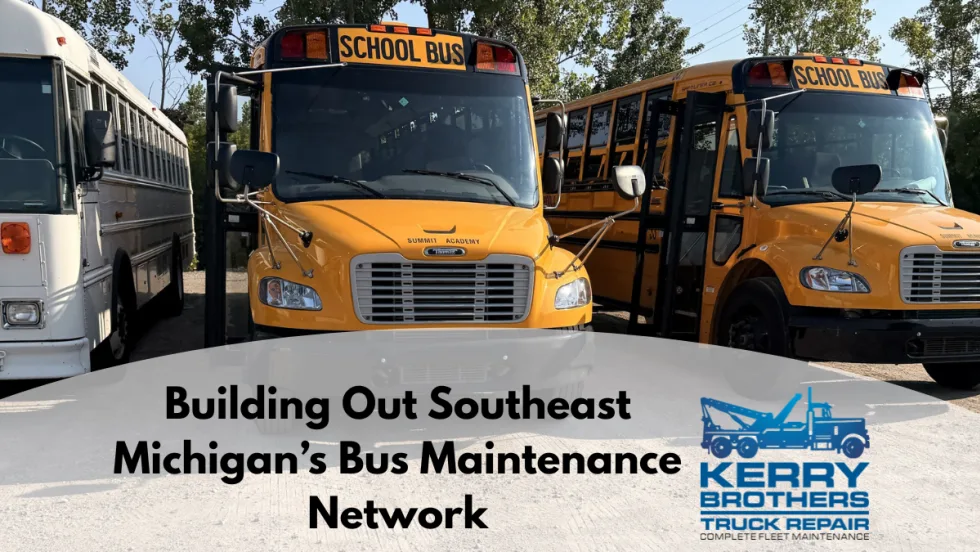
Kerry Brothers Grows Michigan School Bus Repair Network
The acquisition of Downriver Truck and Bus expands Kerry Brothers’ school bus maintenance footprint across southeast Michigan, adding repair capacity, diagnostic resources, and state inspection support.
Read More →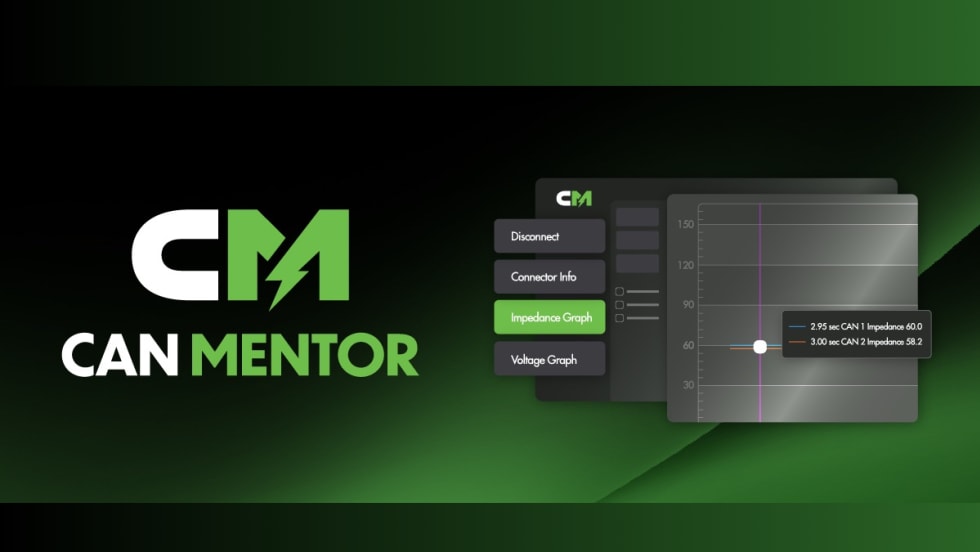
Noregon Introduces CAN Bus Diagnostic Tool, Expands JPRO Features
CAN Mentor and the latest JPRO update aim to simplify vehicle network diagnostics and improve repair efficiency for technicians of all experience levels.
Read More →
Cummins on Smarter, Simpler Engine Innovation
Cummins discusses its first-ever gasoline engine for school buses, EPA 2027, and why bus fleets still want durable, simpler internal combustion options.
Read More →
Report: 72% of Diesel School Buses Now Use Advanced Low-Emission Engines
New data shows advanced low-emission diesel technology continues expanding across school bus fleets, even as electric bus adoption gains momentum.
Read More →
Vampire Tools' CAIMAN 7.5-Inch Multi-Purpose Screw Extractor Long-Nose Pliers with Crimper
Vampire Tools introduced the VAMPLIERS Caiman 7.5-inch multi-purpose pliers, combining screw extraction, cutting, crimping, and gripping functions into a single tool designed for fleet maintenance professionals.
Read More →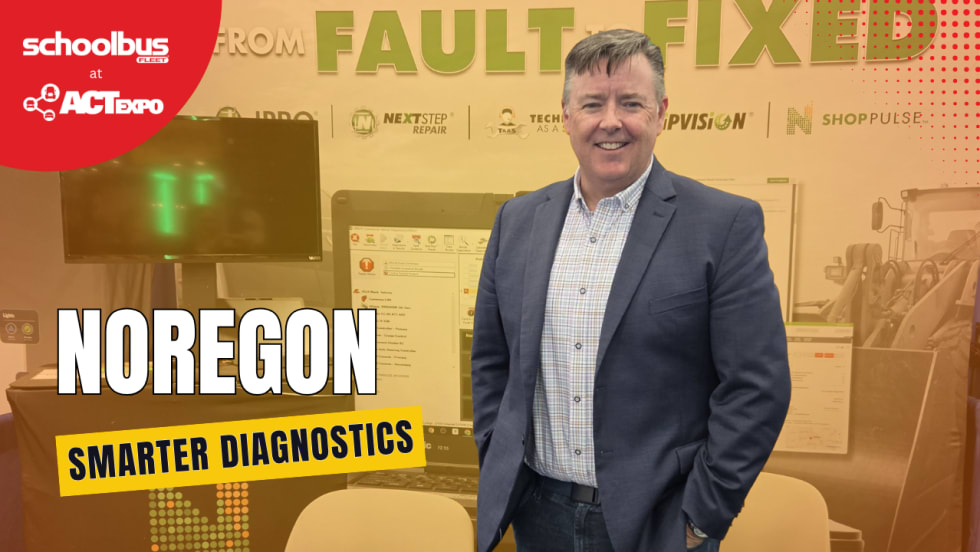
How Advanced Diagnostics Helps Bus Fleets Stay Ahead of Repairs
Chat with Noregon’s Kevin Smallhorn at ACT Expo about bus diagnostic tools, telematics integration, CNG maintenance support, and strategies to help reduce downtime and improve uptime.
Read More →
How School Bus Fleets are Getting Ahead of Breakdowns
Don’t let bus downtime wear you down. Here’s how bus operators are shifting from manual processes to AI-powered, data-driven maintenance systems for improved reliability and safety.
Read More →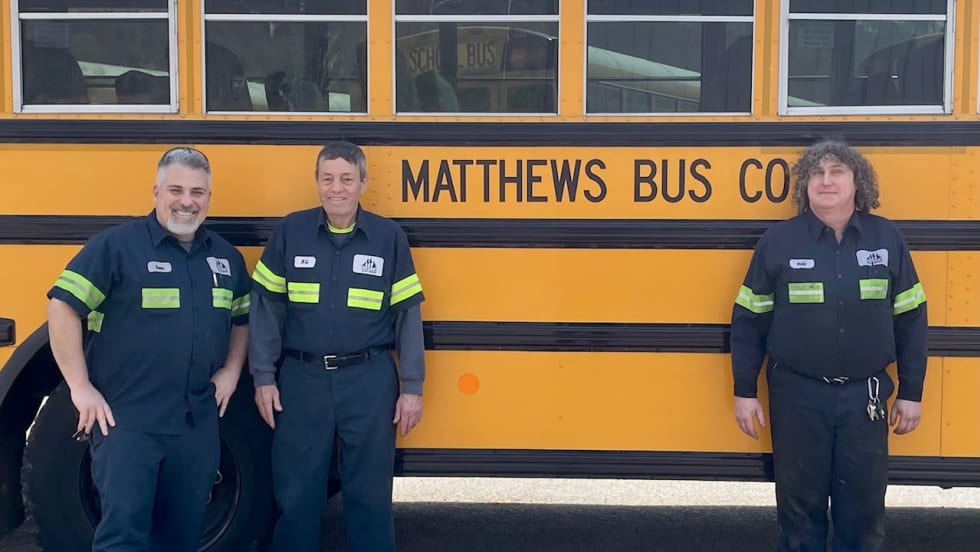
Pennsylvania School Bus Maintenance Team Praised for Dedication to Safety
Matthews Bus Company’s West Jefferson received a letter of commendation from the Pennsylvania State Police for their fleet inspections.
Read More →