




Is the Bus Depot Fit for Daycare?
When parents aren't present to receive their children, pupil transporters face a predicament. Instead of bringing students to the depot, drivers should take them back to school. Here's why.

How often does this happen to your staff?
During the afternoon elementary bus run home, one of your buses contacts your dispatcher and informs them that they have a child on the bus with no parent or guardian at home to receive them.
Your dispatcher tries all of the emergency telephone numbers, only to get answering machines, cellular voice mail or — worse — disconnected numbers.
Reluctantly, dispatch advises the driver, per your district or carrier policy, to return to the depot with the child. Your staff then has to provide childcare for the student — in a building where childcare probably should not occur — until the parent can be located.
If this scenario isn’t happening to you or your operation, you’re one of the lucky ones. Many transportation directors I have spoken with have expressed frustration at having to provide childcare during the busiest time of the day, when they are the least prepared to do so.
Many have also said that they have had little success in convincing fellow school administrators that this practice is not a good thing for the transportation department or the children involved.
In this article, I will provide you with some talking points that will hopefully give you some parameters to guide a future conversation between you and your bosses as you attempt to change this situation.
Proper supervision
It does not matter if you are a 30-bus operation or a 300-bus operation — your department’s workload is very different than that of individual school buildings, especially between the hours of 1:30 p.m. and 4 p.m. In most cases during these hours, school buildings are starting to empty, and your buses and department start to “fill up.”
Transportation departments provide a district-wide or, in some cases, a countywide function, responsible for thousands of children. A school building may be responsible for only the few hundred students who attend there. Along the same line, your business can become extremely hectic based on weather and traffic that affects your entire operation and may have little or no impact on an individual school building or its staff.
The direction I am going with this is that when a child is brought to the transportation facility, your staff is often tied up answering radios and phones, dealing with possible bus breakdowns or discipline matters or doing on-the-spot routing due to road construction, accidents or traffic congestion. The proper supervision of children by your staff is often not possible.
On the other hand, many school buildings have some sort of after-school activities going on or at least have staff cleaning the building and possibly some faculty wrapping up the day.
”You’re not my mommy”
We work in the business of children every day. We have their best interests at heart and are always concerned with their safety and feelings. I also have to say that because we are so familiar with our school district’s facilities, we adults often forget how strange a new environment feels to a child.
There are children who are frequent fliers with regards to parents or guardians not being home. However, for many children, this is a first-time experience.
Many thoughts race through their minds: “Who are you?” “Where are my mommy and daddy” “Why did they forget me?” Students are often very comfortable with their driver, but that doesn’t mean that they would be comfortable with the bus garage.
[PAGEBREAK]
It is a busy, loud environment where many people come and go. Most transportation buildings aren’t comfortable, state-of-the-art facilities.
Students would feel much more comfortable in their school building while waiting for their parent or guardian. Students recognize the surroundings — the lockers, the classrooms, the artwork on the walls, etc. This is an environment in which they spend as much as six or seven hours per day. Their own school is an environment that can help alleviate some of their fears.
Hazards everywhere
In most cases, the bus depot was designed and built to be a school services building, not a building for student occupancy.
There is high exposure to vehicle exhaust. There is petroleum stored in bulk facilities. There is often compressed gas. There is welding and cutting taking place. There is a large number of vehicles coming and going.
This is a risky place to have someone’s child. The potential of a hazardous situation developing unexpectedly is much greater at a transportation center than at a school building.
At this point in the article, some readers may be asking, “What about drivers’ children?” I know that many carriers allow drivers to bring their children back to the bus garage on their buses. This type of policy can assist drivers with childcare needs and help us in dealing with driver shortages.
The only response I have is that drivers are caring for and are responsible for their own children in these situations. Districts and carriers almost always require drivers to immediately leave the premises with their child at the end of their route. There is a big difference between this and a child ending up at the garage under the care of a driver or dispatcher in lieu of the child’s parent.
Location, location, location
Many transportation centers are located in areas central to an entire service area or school district. A child returned to the transportation center might create undue hardship for a parent who has to drive cross-town to pick up the child.
In the event that a grandparent or other relative must pick up the child, they probably know the location of the elementary school, but finding the bus garage may be a different story. For these reasons, children returned to the school building are usually picked up sooner than children returned to the bus depot. Oftentimes, the parent is almost home after being delayed by traffic or losing track of time, and the school may be a U-turn and a short drive away in their home turf.
In case of emergency
Many transportation operations I know of are very short-handed. Mechanics, secretaries and even supervisors are driving routes or working offices alone to man the phones and radios while other office staff members are out driving. To add childcare to these duties is truly inappropriate.
In the case of a school bus accident, I know of operations where the sole person in the office would have to leave and proceed to the accident scene to coordinate. Having children returned to the office only complicates your department’s readiness to respond to accidents or natural disasters.
There’s no place like…
I hope this article helps you bring this sensitive topic forward for discussion with your contract clients or superintendent. Building staff has to recognize the fast-paced environment and often-overwhelming amount of work transportation staff members face every day during the p.m. dismissal.
Transportation staff members often arrive at work earlier and leave later than school building staff. Faculty and building administrators have to give a little and work as a team for the children’s best interests.
I know that everybody likes to go home when their contract ends. However, there are many variables when working with children, and many of those variables are not the fault of the children. We must all work together to make sure that children are comfortable and cared for if this situation occurs.
As the old saying goes, “There’s no place like home.” But in this case, there’s no place like school!
More Management

Zum Reaches 19 States With New York Expansion
The addition of the Empire State to the student transportation company's roster marks a growing expansion in the Northeast as it scales its tech and school bus services.
Read More →
First Student Updates Its Parent App
First View connects both yellow bus and alternative transportation, giving families one platform to track student trips for the new school year, with 15 languages supported.
Read More →
The Back-to-School Checklist Every Director Should Complete Before the First Bell
Help your transportation team start the school year strong with these tips for contingency planning, communication, fleet visibility, technology, and trip management.
Read More →
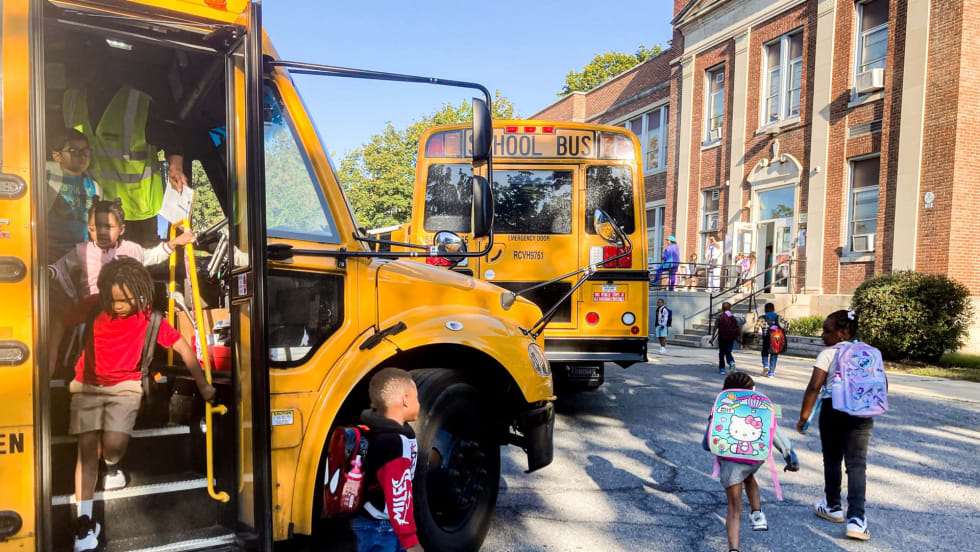
How a New York District Cut Nearly $1M in Transportation Costs While Expanding Bus Access
A data-driven overhaul with BusRight reduced Poughkeepsie City School District's planned routes from 26 to 17 while extending school bus service to about 1,200 additional students.
Read More →
Budgets Down, Enrollment Shifting: What the Data Says Districts Should Watch
School transportation departments face two converging challenges this year: tightening budgets and shifting enrollment. Most districts still address these issues separately, but the assumption that either trend will simplify operations is proving incorrect.
Read More →
These 8 School Transportation Companies Made the 2026 Inc. 5000 List
Find out which school transportation contractors, technology providers, and suppliers ranked among America’s fastest-growing private companies.
Read More →
The Link Between Emotional Intelligence and School Bus Safety
How can emotional intelligence help transportation pros navigate stress, manage change, and build stronger relationships? Listen to find out.
Read More →
What Emotional Intelligence Has to Do With School Bus Safety
In this video, discover how emotional intelligence can help transportation leaders and drivers navigate stress, manage change, and build stronger relationships. The Route is sponsored by IC Bus.
Read More →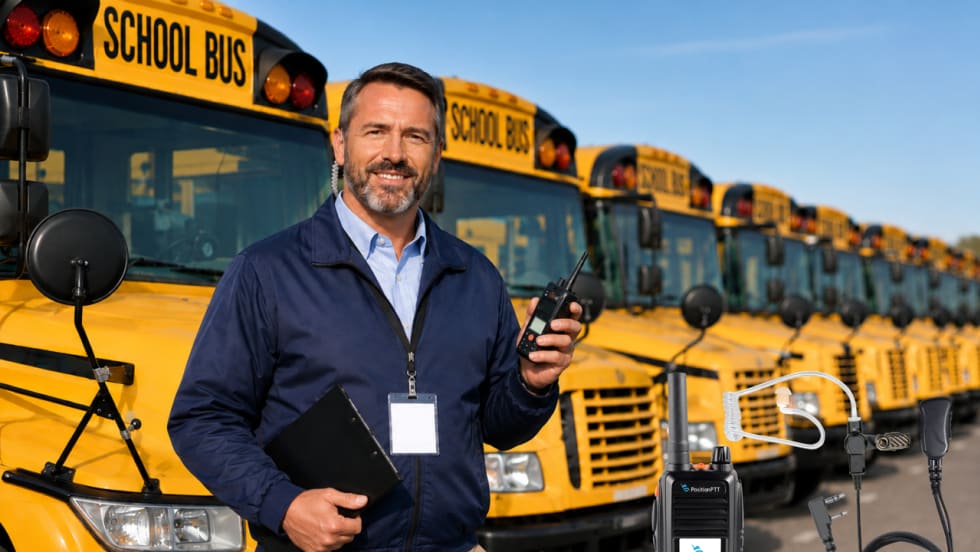
Beyond Two-Way Radios: School Bus Communications Evolve With Push-to-Talk Over Cellular
PRYME Radio and PositionPTT join forces to advance hands-free radio use and reduce distracted driving. See how PoC compares with traditional radios on range, cost, safety, and connectivity.
Read More →
Have School Districts Adapted to Bus Driver Shortages or Simply Accepted Less Service?
According to a recent report from HopSkipDrive, many districts appear to have recalibrated what "normal" transportation service looks like.
Read More →