




Innovations in Equipment Reap Major Safety Rewards
By applying modern technology to the areas of greatest concern to school transportation providers, manufacturers and operators are coming up with crea...
By applying modern technology to the areas of greatest concern to school transportation providers, manufacturers and operators are coming up with creative ways to protect children in and around the school bus. Some of the most effective safety measures used by transporters result from improvements to pre-existing school bus equipment. Other safety measures come in the form of new products. The following five safety devices represent a sampling of innovations in school bus safety equipment.
1. Stop arms
Whereas stop arms themselves are not new, the way some operators are using them is. Many operators are moving toward the use of two stop arms, and some are even using three. The states of Florida, Nevada and Louisiana all mandate the use of two stop arms - one on the front, left side of the bus and one on the rear, left side. Several other states are looking at similar legislation, while individual districts and contractors nationwide join the movement toward multiple stop arm use.
"My old bus was equipped with two stop arms," says Stephen Adamson, driver and teacher for the Forrest City (Ark.) School District. "I noticed that the two stop arms together did help to curb drive-bys, especially the add-on stop arm at the back of the bus," he says. Those motorists approaching the school bus from behind have a better view of the rear stop arm, whereas those approaching from the opposite direction have a better view of the front stop arm, explains Adamson.
Justin Wilczynski, driver trainer for Laidlaw Education Services in Mount Blemens, Mich., agrees with Adamson on the usefulness of double stop arms. "You're seeing a lot of districts right now in Michigan exceed the state law, going to two stop arms, because of the safety benefits," he says, noting that his buses are only equipped with one stop arm each. "There's no doubt in my mind that I would put one on the rear of the bus as well if I could," he says.
Buck Pearce, vice president of Specialty Mfg., a manufacturer of stop arms and other school bus safety equipment in Pineville, N.C., says that he has noted a nationwide trend toward the use of two stop arms. "The state of Arkansas is doing some testing and looking at three arms," he adds. The third arm, which is intended to prevent drivers from passing the bus on the right, is located on the right, rear side of the vehicle.
2.Crossing gates
The protection of children in the risky area directly in front of the bus has been enhanced by crossing gates. These come in two basic models - the figure-eight loop model and the bar or "stick-like" crossing gate. Specialty Mfg. has a patent on the figure-eight aluminum rod loop, but the bar design is manufactured by Specialty, Transpec Worldwide in Sterling Heights, Mich., and BMR Mfg. in Ontario, Canada. Transpec has also developed a crossing gate product for the Thomas Built Saf-T-Liner, which is a polyrod arm that operates from behind the bumper and stows into the bumper itself.
Different crossing gate models are suited for different conditions. Most operators say the loop model is preferable in windy areas because it won't bend and warp in the breeze. However, some say the loop model breaks more easily than the bar. Either way, Pearce at Specialty says he sells an equal number of each type. "The trend is toward the yellow rod, because it's more visible and it's clean looking. But in terms of effectiveness, both of them do the same thing," he says.
Specialty and Transpec have taken steps to counteract the effects of the wind on the crossing gates, by designing a method of securing the gates to the bus body during severe conditions. Specialty has installed a magnet at the end of the gate to hold it to the front of the bumper. Transpec offers a "bracket" that will hold the gate to the front bumper of the vehicle to minimize damage from vibration.
3. Tire deflectors
Manufactured by Majestic Companies Ltd. in Bakersfield, Calif., the Safe-T-Gard is a polyurethane shield that goes in front of the right, rear school bus tire to act as a "people deflector." The purpose of the deflector is to sweep any obstruction (person or object) away from the tire as the bus begins to roll. Already in use (under the name S-1 Gard) in transit buses in Washington D.C., Chicago and Santa Monica, Calif., the Safe-T-Gard is being pilot tested in school bus fleets in Michigan and Virginia.
"Typically the right rear wheel is a hotspot [for accidents]. This system makes a lot of sense, because it's passive. It's installed on the bus and the driveroesn't even need to think about it," says Charla Little, national sales manager for Majestic.
4. Roof-mounted strobes
More and more states are moving toward allowing or even mandating the use of roof-mounted strobe lights as a means of increasing a school bus' visibility to other motorists. At the same time, there is little consensus on exactly when and how to use the lights. New Hampshire is considering a bill that would make the use of strobe lights optional for school buses during loading and unloading of passengers. Proponents of the bill successfully squelched attempts to mandate use of the lights at all times the bus is in motion because this, they say, would dampen the impact of the lights.
However, Jason Paul, transportation manager at Lamers Bus Lines, in Green Bay, Wis., says that his state mandates the use of strobe lights at all times when the school bus is being used for a school function. "This law was made to try to reduce the number of rear-enders that buses were experiencing," he says. He notes that this legislation was prompted, in part, by a fatal accident in which a school bus was struck from behind by a semi truck.
5. Emergency hatches
Most operators who have been in the school bus business for a while agree that escape hatches have undergone an evolution in terms of functionality and ease of maintenance. "They've come such a long way versus some of the hatches getting stuck when you would open them. Now it's just a turn of the handle and it pushes right up. Any child could figure it out," says Wilczynski. Because the main purpose of roof hatches is to act as emergency exits, rather than to provide ventilation, it is vital that hatches be easy enough for any passenger to open.
Though most hatches are similar in design and operation, there are slight differences among the models in terms of construction materials, size and fit, functionality and cost.
The roof hatch market has recently been entered by a new player - Webasto Thermosystems, a manufacturer of auxiliary bus heaters in Lapeer, Mich. Webasto's Advantage Hatch has five open positions, a special seal to deter leaks, a recessed handle and an alarm to alert the driver when the hatch is open.
Roof hatches are often a less expensive mode of emergency exit than other options available to school bus operators. For this reason, many operators are moving toward multiple roof hatches that provide maximum emergency exit access and improved ventilation. Three hatches, instead of two, have become the norm for many large buses. "Everybody right now is exceeding state standards with the specs on their buses. Whereas Michigan doesn't require more than one hatch on the roof, you're seeing districts going from one to three," notes Wilczynski.
More Maintenance
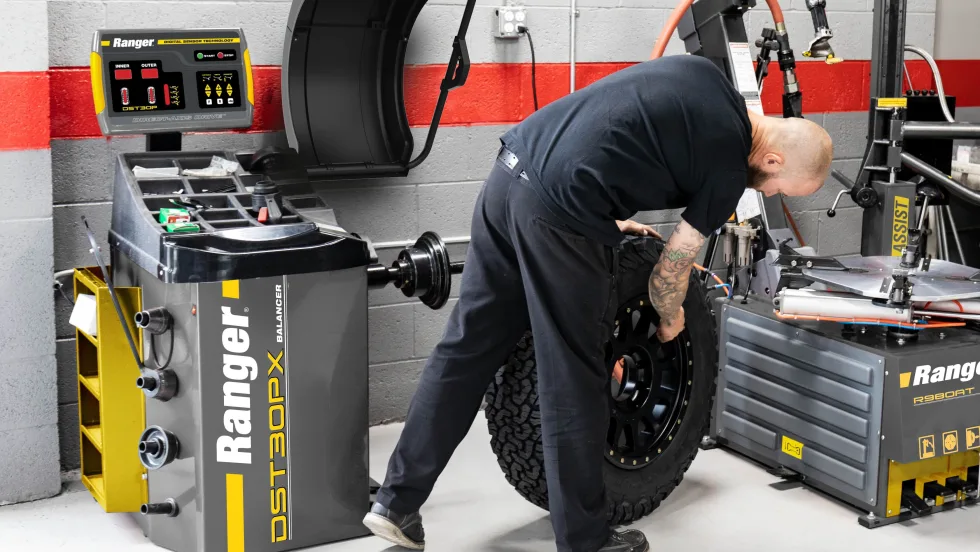
BendPak Launches Ranger DST30PX Wheel Balancer
BendPak's new wheel balancer handles tires up to 43 inches in diameter, with a reinforced design, precise weight placement, and faster service cycles.
Read More →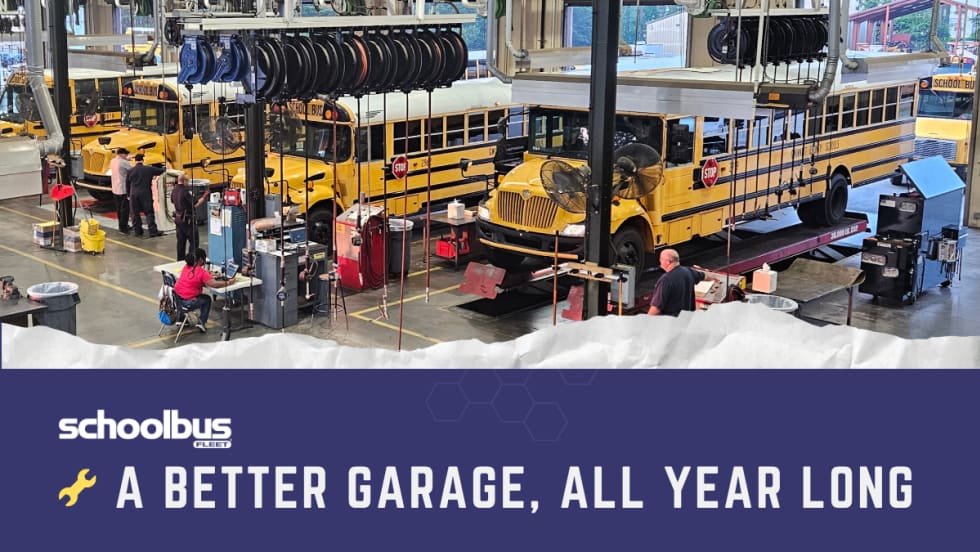
Tips for Ensuring School Bus Garages Are Safe and Warm Year-Round
Cold maintenance bays and rising heating costs? Learn how school bus garages can improve comfort with targeted heating, better airflow, and winter preparation.
Read More →
ASE Highlights School Bus Technician Certification Requirements
ASE is encouraging school bus maintenance professionals to maintain their certifications, highlighting seven specialized tests and five-year renewal requirements.
Read More →
International Adds E-Commerce Capabilities to Fleetrite.com
IC Bus customers can now browse, buy, and track shipments for more than 400,000 aftermarket parts online.
Read More →
The Most Expensive Thing You Do Before Selling a School Bus: Wait
When should you sell an aging school bus? Learn how maintenance, mileage, corrosion, specifications, and timing can affect resale value long before the auction.
Read More →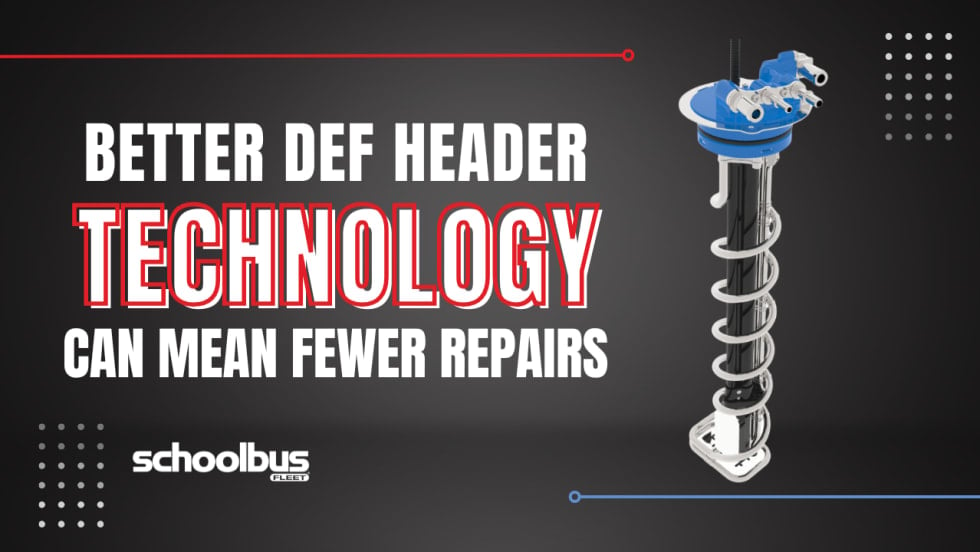
The Evolution of DEF Header Technology: What School Bus Operations Should Know at Replacement Time
See what school bus fleets should consider when replacing DEF headers to improve reliability, reduce repeat repairs, and control maintenance costs.
Read More →
The Essential Guide to School Bus Maintenance and Student Safety
Your district's buses carry students to school every day. This guide shows how predictive maintenance powered by fleet data helps keep buses reliable, drivers accountable and students safer from the first bell to the last stop.
Read More →
Kerry Brothers Grows Michigan School Bus Repair Network
The acquisition of Downriver Truck and Bus expands Kerry Brothers’ school bus maintenance footprint across southeast Michigan, adding repair capacity, diagnostic resources, and state inspection support.
Read More →
Noregon Introduces CAN Bus Diagnostic Tool, Expands JPRO Features
CAN Mentor and the latest JPRO update aim to simplify vehicle network diagnostics and improve repair efficiency for technicians of all experience levels.
Read More →
Cummins on Smarter, Simpler Engine Innovation
Cummins discusses its first-ever gasoline engine for school buses, EPA 2027, and why bus fleets still want durable, simpler internal combustion options.
Read More →