




In-Service Meetings Promote Year-Round Driver Training
School bus operations strengthen drivers’ skills and expand their knowledge of timely industry topics with these meetings. Guest speakers can enhance the value of the meetings, while auxiliary training and incentive programs help to keep drivers engaged.
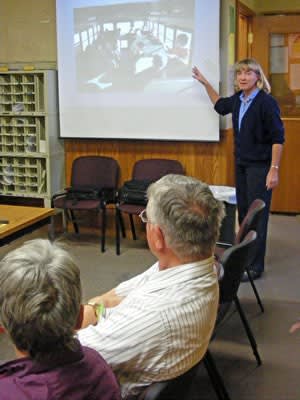
Tracie Stahl of Missoula, Mont.-based Beach Transportation Company heads monthly safety meetings for the operation’s drivers. She often surveys the drivers to find out what they would like her to cover during the meetings.
Keeping school bus drivers’ skills sharp and ensuring that they have the most current information on laws, safety measures, disabilities, school bus equipment and everything else that transporting students entails are essential for them to do their jobs well.
Many operations achieve this by offering training for their drivers throughout the year with a series of in-service meetings. Some operations also organize additional training efforts to supplement what was covered in the in-service meetings.
The frequency of the in-service meetings varies depending largely on the size of the operation and/or how much training drivers are required to receive according to state regulations.
“We’re in a rural town and we’re a smaller system, so we don’t have a monthly meeting. I hold meetings three or four times per year, and on an as-needed basis,” says Cathy Thomason, transportation director at White County Schools in Cleveland, Ga.
At the other end of the spectrum, Missoula, Mont.-based Beach Transportation Company has monthly meetings. Tracie Stahl, one of the contractor’s safety directors and a driver trainer, says each month has a different safety theme and she gives each presentation five times so that drivers can attend at times that best fit their schedules.
In-service meeting topics
As can be expected, in-service meeting topics are similar from operation to operation. At White County Schools and Liberty Local Schools in Youngstown, Ohio, for instance, drivers receive refreshers on how to use a fire extinguisher on a school bus.
This is a topic that will be reviewed during one of the latter transportation department’s three sessions this year. Charles Cera, transportation and maintenance director at Liberty Local Schools, will invite an official from the fire department to train the drivers.
Emergency preparedness is the primary safety training focus for Liberty Local Schools’ transportation department this year. During its in-service meeting in the summer, drivers learned how to work together with firefighters in the event of a fire-related accident on a school bus.
The department’s third in-service meeting will cover school bus evacuations, another common training topic among operations.
Cera says his drivers perform evacuation drills annually, but this year, he plans to change things a bit. The drill will be held at the department’s facility. While the drivers are evacuating students, Cera will time the evacuation without the drivers’ knowledge. Afterward, the drivers will attend a troubleshooting class to learn ways to improve the time.
“I got the idea from our fire department, because when we have drills at the schools, they time them,” Cera says. “We’ve always made sure that everyone understands the directive process, but I’ve never put a clock on the drivers. I may have fire captains attend. They might be able to help during the troubleshooting class.”
Illinois Central School Bus Company subsidiary Minnesota Central School Bus, based in Stillwater, Minn., has a motto: Safety First and Quality Always. As part of its mission to adhere to this motto, the company offers evacuation training for its school bus drivers during its bi-monthly meetings.
Tom Oswald, senior contract manager, says the state of Minnesota requires school bus drivers to receive at least eight hours of safety training throughout the school year, but his operation provides more than eight hours.
The contractor’s drivers also receive instruction on the components of new buses and bus safety equipment, such as child-check systems.
Where to look for inspiration
How do transportation officials come up with the topics for their in-service meetings? In addition to getting ideas from the fire department, Cera attends an annual seminar in Columbus where the latest issues in pupil transportation are addressed. He usually picks up something from the seminar and expands on it for his department’s sessions.
Eight of the topics for Beach Transportation’s monthly safety meetings are determined by the Montana Office of Public Instruction. For the two remaining months, Stahl may choose the topics.
For those meetings, Stahl says she turns to the drivers, surveying their needs and asking them what they would like to receive training on.
Moreover, browsing on the Internet and perusing magazines help Stahl not only come up with topics but also provide her with information for the meetings.
“I’m always brainstorming. I also have a file for each topic that I’ve covered or that I am going to cover and as I go through magazines and see something, I’ll copy it and put it in the file; when I get to a particular month, I can go to the file and see if there’s anything that I can use,” she says.
Jane Gerhold, operations manager for Rohrer Bus Service Inc. in Duncannon, Pa., says the company’s four in-service meeting topics vary from year to year, but the driver trainers sometimes pull topics from a previous year and elaborate on them, particularly for issues that they want drivers to keep fresh in their minds, such as the company’s accident procedures.
“We serve 14 school districts, and there is a supervisor in each district — we survey them on what they feel would be good training topics,” Gerhold adds.
Thomason uses a similar approach to come up with training session topics that fall outside of the subjects that she is required to cover. She takes note of any concerning or substantial health, safety or legislative issues that could have an impact on the drivers.
“This year, the big concern is the H1N1 virus, so I had the head of our district’s health department talk with my drivers about prevention and safety measures to help keep the flu from spreading,” Thomason says.
Guest speakers, outside agencies bolster meetings
Soliciting the expertise of individuals or groups outside of her department to enhance the value of her in-service meetings is something that Thomason does frequently.
She had a drug task force visit the department this summer to discuss drug and alcohol awareness. The task force outlined different drugs that kids experiment with, where they can obtain them and what drivers should look for if they suspect that a student is using drugs.
Thomason has also had members of the local Public Safety Coalition’s National Crime Prevention Task Force come in to teach the drivers self-defense techniques.
“I like to give my drivers access to training that will benefit them personally,” she says. “They need to be aware because they work out in the public, but they need to be aware outside of work, too.”
Thomason learned about these organizations by networking with her counterparts at other operations. She says officials at the Georgia Association for Pupil Transportation have been helpful in providing her with contacts as well.
Minnesota Central School Bus and Rohrer Bus Service also take advantage of the services that are available to them from outside agencies. Oswald says that he invites Minnesota State Patrol officers to his operation to review the rules of the road and current laws with the drivers.
Rohrer Bus Service works closely with the American Academy of Pediatrics (AAP) and the Pennsylvania School Bus Association (PSBA) to offer training for its school bus drivers. Gerhold says AAP officials have instructed the company’s driver trainers and its school bus drivers on car seat installation and special needs-related issues. In addition, the AAP and the PSBA organize and host a conference for special-needs pupil transportation every two years. Gerhold often sends the operation’s supervisors and driver trainers to the conference so that they can obtain information to use when training the bus drivers.
Supplemental training efforts and incentives
To reinforce the topics she covers during Beach Transportation’s monthly safety meetings, Stahl posts information — such as fliers, photos and catchy phrases — on a bulletin board in the drivers’ lounge each month. The information corresponds with the topic for the month, and Stahl says it supplements what she discussed during the meeting.
“Sometimes I’ll blow up balloons, write a safety word or phrase on them and put them in the lounge — that works well because it catches their eye,” she adds.
Furthermore, once a week, Stahl meets with Beach Transportation’s dispatchers, supervisors and other safety directors to discuss a safety message that will be relayed to the drivers over the radio in the dispatch office the following morning. Stahl says the messages relate to something that the drivers need to work on or be aware of, such as “Please give the right-of-way to the buses that are backing out of the bus yard because they can’t see you as well.”
In addition to her training efforts, Stahl has implemented an incentive program. This is an effective way to make certain that the drivers are engaged during training sessions, and it also rewards those who perform well.
When all of the drivers have been trained on the month’s topic, Stahl holds a drawing. The drivers who haven’t had any accidents or violations that month put their names into a hat, and they draw for gift certificates and other prizes. Rohrer Bus Service offers two incentive programs for its drivers. Gerhold says that employees accumulate a certain amount of money on an individual basis each month that they are accident-free. At the end of the school year, they receive the money they have accumulated.
“As a group, if all of the bus drivers for a particular school district are entirely accident-free for one quarter — say, September, October and November — they receive a bonus for that quarter,” Gerhold explains. “We give them a breakfast or a pizza party because they did so well.”
How to keep training sessions interesting and informative
School bus operations generally must cover the same material during their driver training sessions year after year. The Bus Lady, a regular columnist for the California Association of School Transportation Officials’ publication, CASTOways, has useful tips on how to keep in-service meetings fresh and educational.
First, she notes that it is important to take a few minutes at the beginning of a training session to review topics that were covered during the previous meeting.
“Instructors and managers need to assure their staff that they may ask questions or request additional clarification and be safe in doing so. An open learning environment is crucial to ensure that everyone feels comfortable in finding answers,” she says.
The Bus Lady also says that instructors must be open to giving presentations in new ways and they should use different mediums to present their information — do not always use PowerPoint slides.
Here are several of her suggestions for ways to organize and conduct in-service meetings to keep drivers engaged.
Move the chairs and/or tables in the room. Divide the room so that the drivers face each other instead of you.
Have the drivers research information on the meeting topic and report it to the group. This teaches them how to use available resources, and it improves their study skills. Also, having them present their knowledge in this context will bring the topic to life.
By extension, select two or three drivers to prepare in-service meetings throughout the school year. This gives them a sense of ownership, and it helps in long-term learning.
Partner with other driver trainers who you know and offer to do one-hour training sessions at their locations in exchange for them providing one-hour sessions with your drivers.
More Management

How to Build a Better Driver Training Program
Ready to boost up your school bus instructor training? Here’s how to pick the right talent and improve recruitment, retention, and safety.
Read More →
CALSTART and Forth Combine to Form Catalyst Mobility
The new name represents a renewed vision for the nonprofit focused on advancing clean, equitable, and affordable transportation solutions that move people and goods.
Read More →
What Makes a Great School Bus Driver Trainer?
Choosing the right school bus driver trainer takes more than experience. Learn six keys to selecting and developing trainers and evaluating program effectiveness.
Read More →

School Bus Contractors Expand Through New Deals, Acquisitions & Partnerships
STA's Canadian division acquires Ontario-based G&L Stevenson Transport while Durham School Services adds a new district contract in California, First Student adds a New Jersey contract, and Minnesota Coaches acquires Halo Transportation.
Read More →
Logan Bus Company Rolls Out AI Phone System for NYC School Bus Families
A summer pilot found that AI agents could handle most routine calls, freeing up time for customer service staff to focus on emergencies and complex family concerns.
Read More →
From Intent to Impact: What I Learned About Leadership from TAPT
A Texas transportation supervisor shares lessons on self-awareness, accountability, managing stress and building trust — and why investing in leadership development matters at every stage of your career.
Read More →
NAPT Names 2026 Award Recipients, Hall of Fame Inductee
Who earned national recognition for their work in student transportation? This year, NAPT named five recipients of its 2026 awards for service, safety, and leadership, plus its newest Hall of Famer.
Read More →
2026 State of Student Transportation Report
Driver shortages. Rising costs. Growing safety expectations. More data, but not enough time to act on it. The 2026 State of Student Transportation Report reveals what transportation leaders say is putting the most pressure on their operations—and where they’re investing next. See how your priorities compare.
Read More →
How to De-Escalate an Angry Person: 5 Steps for Handling Workplace Conflict
What makes emotions run high, and how should you handle an angry colleague or parent? Follow these steps for staying calm, listening, showing empathy, and resolving conflict.
Read More →
What Readiness Looks Like This School Year
Learn about the challenges shaping the 2026–2027 school year, from persistent driver shortages and budget pressure to technology and readiness gaps. See how school districts are responding and adapting in Zonar’s 2026 Back-to-School Readiness Report.
Read More →