




Identifying key challenges in special-needs transportation
In SBF’s 2004 exclusive special-needs survey (see February issue, pg. 20), transportation directors and managers from across the country were a...

In SBF’s 2004 exclusive special-needs survey (see February issue, pg. 20), transportation directors and managers from across the country were asked what their greatest challenge is in special-needs transportation. The concern named most by respondents (13 percent) was not having sufficient funding and available resources, but answers to the question came in an array of categories. Following is a list of some of the more informative and revealing responses.
The biggest challenge is handling the needs of students with inadequate information regarding the student problem.
The locations of classrooms — scattered from 14 to 55 miles from students’ homes. Most want to start and end their day at the same time. This causes us to contract several routes, because we can’t be everywhere at one time.
Lack of timely communication when a child moves.
Understanding the need of the individual student and training drivers in those needs.
We transport 134 students and adults (ages 2-78) on our buses and another 65 adults on a van shuttle service. We cover the entire county, which is the seventh largest in the state, covering over 610 square miles. It is difficult to keep the bus routes within the 90-minute ride time and have numbers on the buses to make it as cost effective as possible.
Convincing the administration that more training is needed for special-needs drivers.
This year we were short on drivers, so we have had a tough time meeting schedule. We are attempting to accelerate the acquisition process, but the struggle continues.
Not having enough opportunities to provide input into transportation’s concerns when transporting some children with very severe disabilities.
The parents can be a challenge, especially in having the students ready for the morning pickup and being at home in the evening for dropoff.
With budget constraints and reduced funding, the number of special-needs students keeps increasing.
The cost and difficulty of finding the extra buses, drivers and techs to drive and ride the special runs.
Keeping up with a transient population. Some of our students move four or more times in a school year and go to school outside of established attendance zones.
Some narrow streets in the city cannot accommodate a bus, and some private bridges in the outlying areas will not support a bus.
Finding and keeping qualified bus monitors.
Paperwork on new students, and scheduling new students in on routes.
Training for drivers, because the disabilities are so diverse.
Encouraging the diagnosticians and administrators to treat special-needs transportation as a need, not a perk.
Getting medical information that is beneficial for the drivers to them without compromising confidentiality.
Making sure the wheelchairs are secure.
It is hard to be at all the schools at the correct start/release times. If the times were staggered, it would be helpful.
Getting the initial intake information to determine services that need to be provided. We have a new form, but nobody involved with the IEPT process wants to embrace another form.
The distance we have to take a child to meet the program needs that are not offered in our district.
My greatest challenge is providing monitors with the correct attitude for the special-education students.
Continued addition of students to special-needs buses for behavior not resulting from their disabilities, simply to meet attendance laws.
The cost per vehicle for runs with small numbers of students.
Behavior management is a priority issue for this population. There are also concerns regarding responsibility of the school district and transportation in the role of providing medical services on the bus. Child restraint is another area that has come to the forefront regarding the safe transportation of our students and receiving credible training in regard to this issue.
More Special Needs Transportation
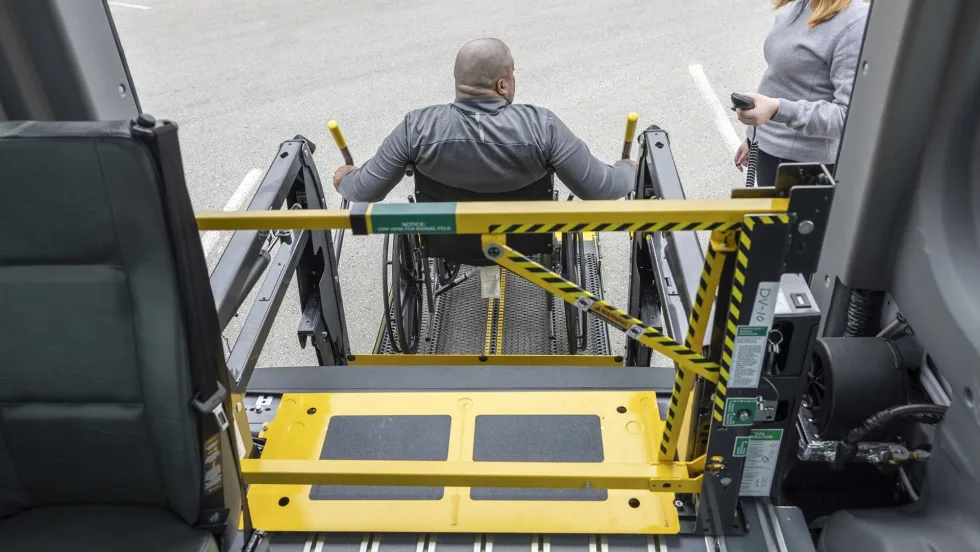
BraunAbility Introduces New Safety Barrier for Wheelchair Lifts
LiftSentinel is designed to add another layer of protection during wheelchair loading and unloading and can be retrofitted to many existing commercial lift installations.
Read More →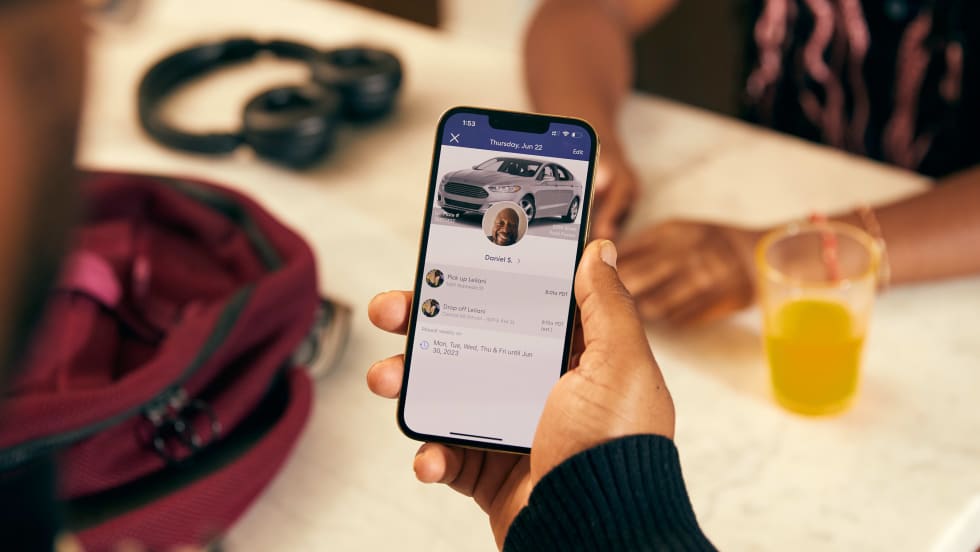
HopSkipDrive Launches New Safety, Driver Consistency Features for 2026-27 School Year
The company’s free ride recording, live ride tracking, and consistent driver assignments aim to improve safety and continuity for diverse student transportation needs.
Read More →
The Most Common Wheelchair Securement Mistakes on School Buses (and How to Fix Them)
Small missteps in wheelchair securement can have serious consequences. Here are 32 tips from experts to reduce risk and increase student safety on the bus.
Read More →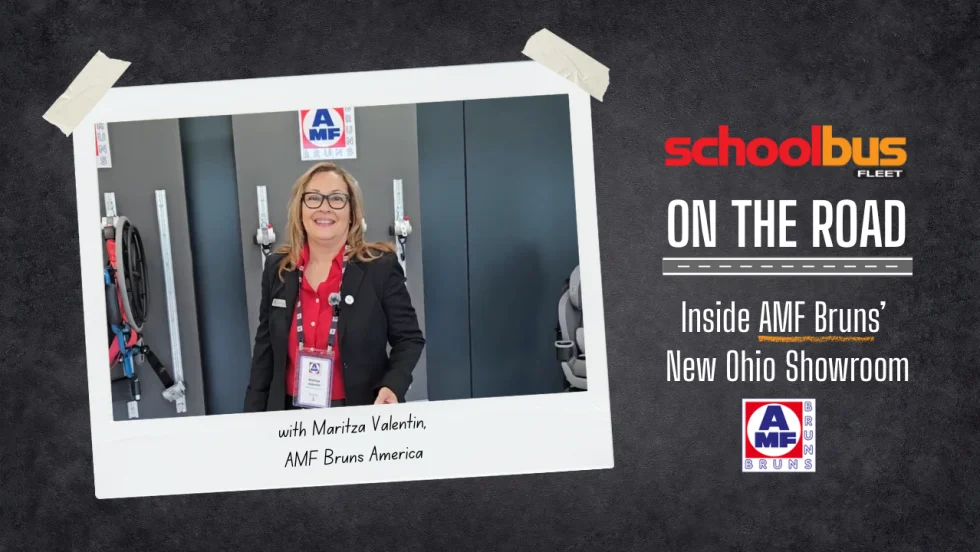
Inside AMF Bruns’ New Showroom: School Bus Securement Solutions Explained
Go inside AMF Bruns America’s new Ohio showroom with Maritza Valentin to see its FutureSafe technology, driver training tools, securement systems, and seating innovations.
Read More →
What AMF Bruns’ New Facility Means for Customers [Video]
Inside AMF Bruns’ new Stow, Ohio, operations: See how expanded space and innovation will enhance customer support and operations.
Read More →
AMF Bruns Expands in Ohio, Investing in Growth and Community
With expanded production space, local investment, and a growing workforce, AMF Bruns is scaling its U.S. presence. Here’s an exclusive first look inside the new Stow, Ohio, HQ.
Read More →
Inside AMF Bruns of America’s New Ohio Manufacturing Facility [Photos]
Take a behind-the-scenes look at AMF Bruns of America’s new 41,000-square-foot Stow, Ohio, headquarters, featuring advanced manufacturing, expanded space, and future-ready mobility solutions.
Read More →
First Student Boosts Student Support in Wichita & Texas
First Student and Wichita Public Schools are using behavioral support strategies to improve student ride experiences, while a separate initiative expands access to after-school programs through a bus donation.
Read More →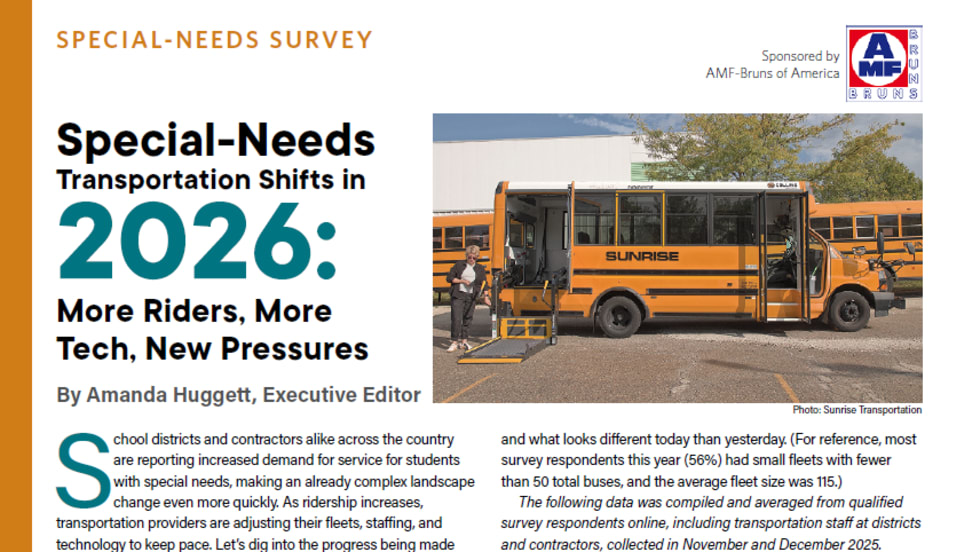
2026 Special-Needs Transportation Survey
What’s changing in special-needs transportation? This year, student transportation operators report a rising need, easing driver shortages, growing tech adoption, and evolving challenges. Sponsored by AMF Bruns of America.
Read More →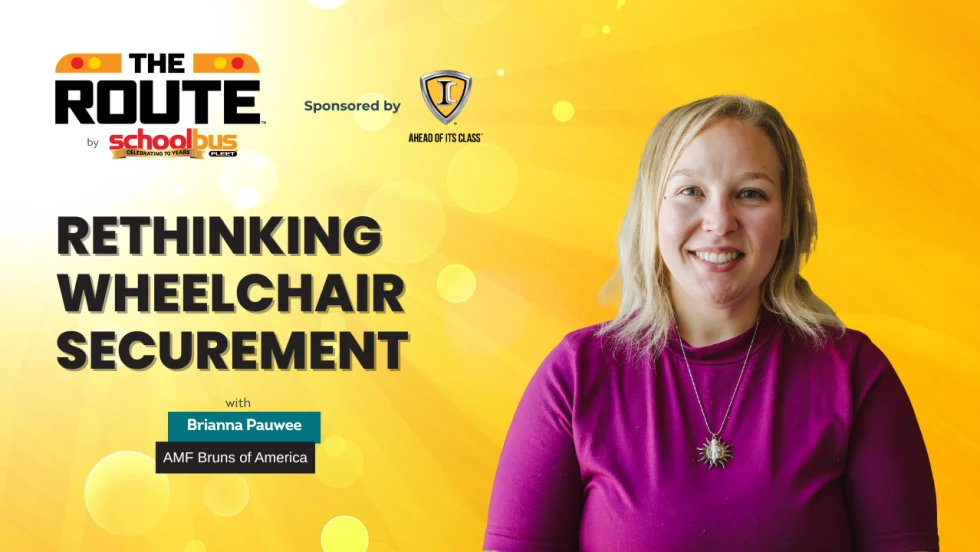
The Lived-Experience Gap in Mobility Tech: An Expert Take on Safe Student Transportation
Brianna Pauwee, a product application specialist at AMF Bruns of America and a wheelchair user, drops in to The Route to share practical securement and training insights, plus the story behind the new “Beyond Mobility” podcast. The Route is sponsored by IC Bus.
Read More →