




How Would You Respond?
Do you ever wonder why some students just don't do what you want them to do? Do you sometimes react to an upsetting event with anger? Well, there are ...
Do you ever wonder why some students just don't do what you want them to do? Do you sometimes react to an upsetting event with anger? Well, there are some things that we have learned about human behavior that you can put to work for you. Human nature is such that most of us have a tendency to react when either something negative or positive occurs. We stub our toe and say "damn!" We receive a compliment and say "thanks!" How we perceive events around us is usually based on our self-concept. Most people perceive insults as negative and compliments as positive. Some people consider the source of the comment before deciding if the insult has any value. Look inside for answers
Our perceptions are often based on our feelings about ourselves. When we stub our toe, even if it didn't hurt, it is natural to feel bothered. In the case of a compliment, we may have a warm, pleasant feeling, even if we didn't deserve the compliment. And if we like a certain feeling, then we usually will try to re-experience it. Psychologists have known for a long time that an event followed by a positive response will occur more often than an event followed by a negative response or no response at all. Thus, some students will actually seek attention by misbehaving to get the attention given them when they are scolded. However, adults should use tools such as modeling, planned ignoring and positive reinforcement in order to achieve better student behavior. How do you measure up?
To learn more about your own behavior on the bus, take a minute to complete the following test. Circle the response that best mirrors what you would do:
1. When I hear a student swear, I usually. . .
A. immediately do something to let the student know this is not acceptable behavior.
B. swear back at the student.
C. ignore the student until I get him/her alone to talk about this unacceptable behavior.
2. When two students are fighting on the bus, I usually. . .
A. let them fight it out.
B. calmly ask them to "break it up" and take their seats.
C. holler at them to stop fighting or threaten to throw them off the bus. 3. When a student makes fun of me while I am driving, I usually. . .
A. make fun of him/her back. laugh.
B. ignore the comment. 4. When students are behaving well, I usually. . .
A. don't say anything and just enjoy the ride.
B. tell them that I appreciate the way they are behaving.
C. ask them why they are behaving so well today. 5. When a student is hollering at other students, I usually. . .
A. try to shout loudly enough to be heard over the student who is hollering.
B. ignore the hollering student until I can get the student alone and talk about the necessity to lower his/her voice.
C. holler at the student to "stop hollering." Now let's correct your test.
Question #1:
Very often, students who swear are trying to get either the attention of other students or your attention by shocking you. This student is saying, "Hey, look at me, I'm important!" If you circled "C" you have learned to recognize that giving attention to swearing will reward this student. Ignoring this behavior until later will allow you to talk to the student without the audience this student wants to impress. The student has probably learned that adults or fellow students don't give them much attention unless they do certain types of negative things; and thus, in order to get the attention they crave, they exhibit these negative behaviors. Question #2:
In instances where anger is already a factor, such as in a fight, more anger from a third party can make the situation even worse. If you circled "B," then you recognize the necessity for de-escalating the situation by talking in a non-threatening tone of voice. In this way, you will not become a third combatant or otherwise present a threat to the fighting students. Question #3:
Students who either make jokes about you or who taunt you by making nasty comments are trying to find your "anger button." They want to find out just what it takes to make you mad and what you will do. If you said that you would ignore these comments, you have learned that these students eventually find out that their plan doesn't work. Also, many students are more afraid of the unknown than the known, and thus if they don't know where your "anger button" is, they will be reluctant to find it for fear of what may result. Question #4:
All students want to know that they are doing well, even on the bus. Paying attention to students when they are well-behaved is a form of reward and should result in more of this type of behavior. If you selected "B," you are able to recognize that the use of positive reinforcement is very effective in behavior management. Question #5:
Being a model of good behavior is very important if we are going to teach students how we want them to behave. If you answered "B," you recognized that it is often better to ignore non-dangerous behaviors and deal with them later. Dealing with these at the time may require your using the same behavior you are trying to stop the student from using, such as hollering. If you holler, swear, throw a temper tantrum, etc., you are only demonstrating behavior that the child will perceive as acceptable for him/her to use. Losing your temper demonstrates that you lack control of both the situation and yourself. Acting vs. reacting
Being able to sort out dangerous from annoying behaviors is an important step in learning how to effectively manage behavior on the bus. There are two ways that a driver can respond to student behavior. They can either react or act. To react means to respond based on your feelings to the action of the student. This reaction is usually exhibited by our expressing anger through shouting, threatening or physical control. To act is to respond in a preconceived fashion. You should plan how you will respond to each type of behavior. You may choose to ignore certain negative behaviors, praise other positive behaviors or remove students exhibiting dangerous behaviors. A very simple and effective behavior management technique involves listing the positive behaviors you would like to see your students exhibit and then complimenting students for using these behaviors. Most of us have a tendency to expect good behavior, and thus we ignore positive behavior when a child exhibits it. Remember, a behavior followed by a positive response will occur more often. A behavior followed by no response will occur less often. If we ignore positive behaviors, we are in effect telling students who want attention that they need to do something negative in order to get our attention. So, the trick is to learn to reinforce positive behaviors while at the same time learning to ignore negative behaviors that don't create a safety problem. You can learn how to successfully manage the behavior of children by first learning how to effectively manage your own behavior. Knowing how to apply the simple and effective techniques of behavior management such as positive reinforcement, modeling and planned ignoring will make life so much easier. Robert J. Cross is a professor of educational leadership at Grand Valley State University in Grand Rapids, Mich.
More Management

Zum Reaches 19 States With New York Expansion
The addition of the Empire State to the student transportation company's roster marks a growing expansion in the Northeast as it scales its tech and school bus services.
Read More →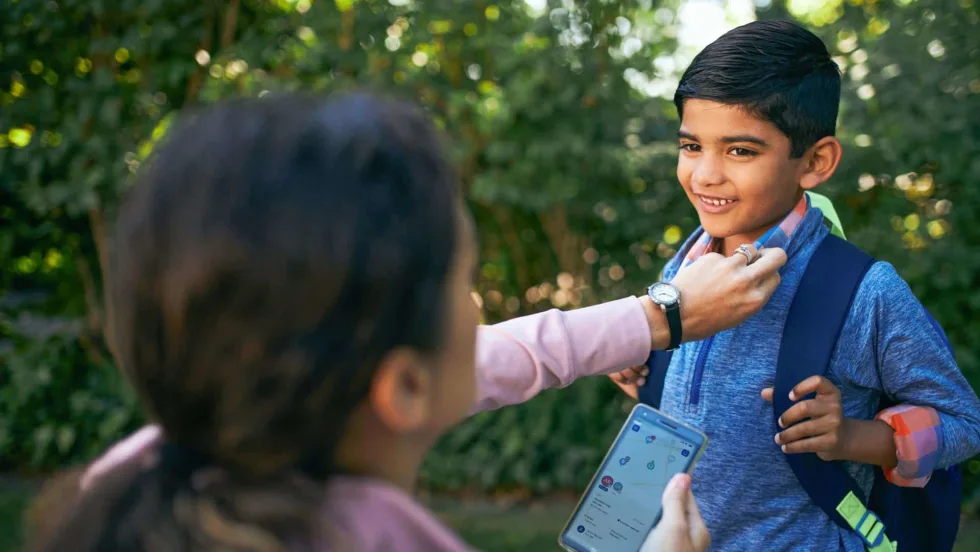
First Student Updates Its Parent App
First View connects both yellow bus and alternative transportation, giving families one platform to track student trips for the new school year, with 15 languages supported.
Read More →
The Back-to-School Checklist Every Director Should Complete Before the First Bell
Help your transportation team start the school year strong with these tips for contingency planning, communication, fleet visibility, technology, and trip management.
Read More →
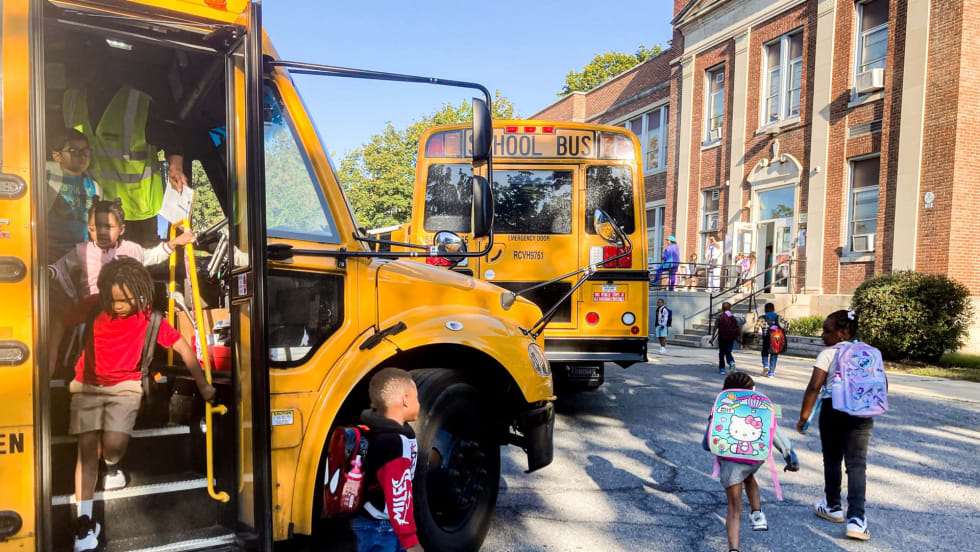
How a New York District Cut Nearly $1M in Transportation Costs While Expanding Bus Access
A data-driven overhaul with BusRight reduced Poughkeepsie City School District's planned routes from 26 to 17 while extending school bus service to about 1,200 additional students.
Read More →
Budgets Down, Enrollment Shifting: What the Data Says Districts Should Watch
School transportation departments face two converging challenges this year: tightening budgets and shifting enrollment. Most districts still address these issues separately, but the assumption that either trend will simplify operations is proving incorrect.
Read More →
These 8 School Transportation Companies Made the 2026 Inc. 5000 List
Find out which school transportation contractors, technology providers, and suppliers ranked among America’s fastest-growing private companies.
Read More →
The Link Between Emotional Intelligence and School Bus Safety
How can emotional intelligence help transportation pros navigate stress, manage change, and build stronger relationships? Listen to find out.
Read More →
What Emotional Intelligence Has to Do With School Bus Safety
In this video, discover how emotional intelligence can help transportation leaders and drivers navigate stress, manage change, and build stronger relationships. The Route is sponsored by IC Bus.
Read More →
Beyond Two-Way Radios: School Bus Communications Evolve With Push-to-Talk Over Cellular
PRYME Radio and PositionPTT join forces to advance hands-free radio use and reduce distracted driving. See how PoC compares with traditional radios on range, cost, safety, and connectivity.
Read More →
Have School Districts Adapted to Bus Driver Shortages or Simply Accepted Less Service?
According to a recent report from HopSkipDrive, many districts appear to have recalibrated what "normal" transportation service looks like.
Read More →