




How to Squeeze Every Penny From Your Bottom Line
After 16 years as a pupil transportation consultant and 23 years in student transportation, I can say that 2003 has posed the most significant budget ...

After 16 years as a pupil transportation consultant and 23 years in student transportation, I can say that 2003 has posed the most significant budget demands that I have seen in my career. It always seems that the current school year is the toughest — but this past one was really tough!
Transportation programs are being challenged to control or reduce expenses while providing greater service and meeting challenges such as changes in demographics, expansions of special-education services and transportation requirements and increasing labor, fuel and insurance costs.
Following are some ideas to consider as you explore the variables in your transportation program in search of the cost-saving method(s) that will work for you.
Evaluate routes — Although making routing changes can be time consuming and may concern some drivers, historical routes offer the greatest opportunity for change and savings. Explore route consolidation options, examine actual ridership levels and consider bus capacities assigned to the routes.
Use routing software — Most transportation programs now use, or have available, routing software programs. Unfortunately, during our program reviews we find that some departments only use the software as databases instead of utilizing the efficiency capabilities. This under-utilization may be due to poor training on the use of the software, lack of computer capacity, failure to keep the software (and maps) current or office staff resistance. Spending a little money to solve the problems with the software could result in saving one or more buses through route or bus utilization efficiency, which offers a large, and quick, payback.
Route tiering — If your program is single tripped (single tier), can you go to double tripping? If you are double tripped, what about triple tripping? Although this type of change impacts the educational program due to bell time changes, it may result in significant reductions in the number of buses utilized. We have found that evaluating and implementing this type of dramatic change takes an entire school year so now is the time to begin for the 2004-05 school year.
Track fleet maintenance — Utilize an industry standard program, or develop a solid manual tracking system, to track labor and parts costs on each vehicle in the fleet. Use this information to eliminate the most expensive buses, not just the oldest or the highest mileage buses. Fleet maintenance software can also be an invaluable aid to charge the vehicle maintenance services performed by the transportation department for other departments in the district. This will help allocate expenses properly.
Manage activity trip costs — Educational and extra-curricular trips are an important part of the education program. However, we have found that many districts have poor controls over the authorization, scope and costs. We believe that the cost of trips should be a budgeted item for the school or department requiring the trip, not just an added expense to the transportation program. The ability to contract for an outside vendor to operate a trip should fall within the transportation department so that costs can be monitored along with regulatory compliance by the vendor. A district should also consider how it compensates drivers for trips with consideration given to driving times, waiting times and the potential of doing "split trips" for events that run several hours.
Negotiate contract extensions — If your district uses outside contractors, consider discussing a long-term renewal with the contractor. Frequently, the contractors will provide incentives to secure a long-term relationship.
Consider rebidding your contract — If extending your contract is not an option, consider using the power of the marketplace to competitively bid or seek proposals for your transportation requirements. Be sure to develop quality specifications and to conduct the process early enough in the school year to maximize competition.
Evaluate sporadic work — Most programs are challenged by temporary demands for services, especially if they entail specialized services (e.g., wheelchair vehicles or aides). Consider contracting with a vendor who has the capacity and may be able to integrate your demands with other programs. This eliminates the need to invest in additional equipment or secure additional personnel.
Enforce policies — One of the most common problems that we find in evaluating programs is the difference between policy and practice. Once the district has established a policy defining the services to be offered, the practice of the district should be to enforce the policy. All too often we find exceptions are made to satisfy parents or the central office. Or, drivers sometimes take matters into their own hands and make decisions that clash with accepted policy.
Maintenance productivity analysis — Using maintenance software or scrutinizing your manual records, evaluate the productivity of your maintenance staff. Ensure that each mechanic is meeting the work demands and provide additional training as well as oversight if weaknesses are found.
Review invoices — Do not assume that a vendor’s invoice is accurate. Also, require prior authorizations for all purchases and periodically request competitive quotes or bids on all parts and supplies. Although maintaining relationships with vendors is important, so is providing cost-effective services to the district.
Reduce absenteeism — When a driver or aide is absent, the work cannot wait until tomorrow. Substitutes must be used, and frequently the missing employee is being paid for the missed day. Consider creative attendance-incentive programs, track the frequency and nature of absences, make attendance a topic of discussion at employee meetings and ensure that absence reduction is a topic in any labor negotiations.
Reduce spare buses — Many districts tend to keep spare buses around "in case they’re needed." Unfortunately, these spare buses incur additional maintenance costs and insurance premiums. In addition, their sale could provide badly needed revenue.
Consider bulk purchasing — Evaluate whether your district can participate in a municipal or regional purchasing bid for standard supplies like parts, lubricants, tires, fuel and more.
Share services — Depending on the size and location of your district, you might be able to share services with neighboring districts, transportation operators or municipal entities. Consider options to coordinate out-of-district routes, share specialized maintenance services like painting or vehicle washing, utilize centralized fueling, develop a joint maintenance facility or share substitute drivers.
Eliminate overtime — Carefully track any overtime costs and evaluate methods to reduce or eliminate this expense.
Employee input — One of the most overlooked methods of saving money in transportation is the active participation of employees. Develop an active and open program to solicit and reward employee input for cost-saving measures.
Consider a third-party review — Being too close to a program can make it difficult to look at options and new approaches. Maybe it’s time to use an outside party to evaluate the program and bring to the operation alternative methods of providing quality services.
Brainstorm — Consider gathering your staff to evaluate all the variables in your transportation operation. Why do you do certain things? Is there an alternative way of providing a particular service? Should you be providing this service? Develop an atmosphere in the program where traditional ways of providing services are challenged, and new methods of operation are encouraged and fostered.
As you consider the approaches offered here and any others, it is important that you keep in mind any labor agreement restrictions, negotiation mandates, state or federal regulations and district policies.
Win a free NAPT registration
In keeping with the practice of soliciting input and ideas, we would like to hear from you. E-mail your cost-cutting ideas to ideas@TransportationConsultants.com or mail them to SCHOOL BUS FLEET, 21061 S. Western Ave., Torrance, CA 90501. We will gather your suggestions and thoughts and use them in a future article.
To encourage your participation, SCHOOL BUS FLEET and Transportation Advisory Services will offer a prize to the person who submits the best cost-saving idea — a free conference and trade show registration to the National Association for Pupil Transportations annual conference and trade show, scheduled Nov. 9-13 in Salt Lake City, Utah. Good luck!
Mark A. Walsh is a certified management consultant and a partner in Transportation Advisory Services (TAS). Information about TAS can be found on its Website at www.TransportationConsultants.com.
More Management
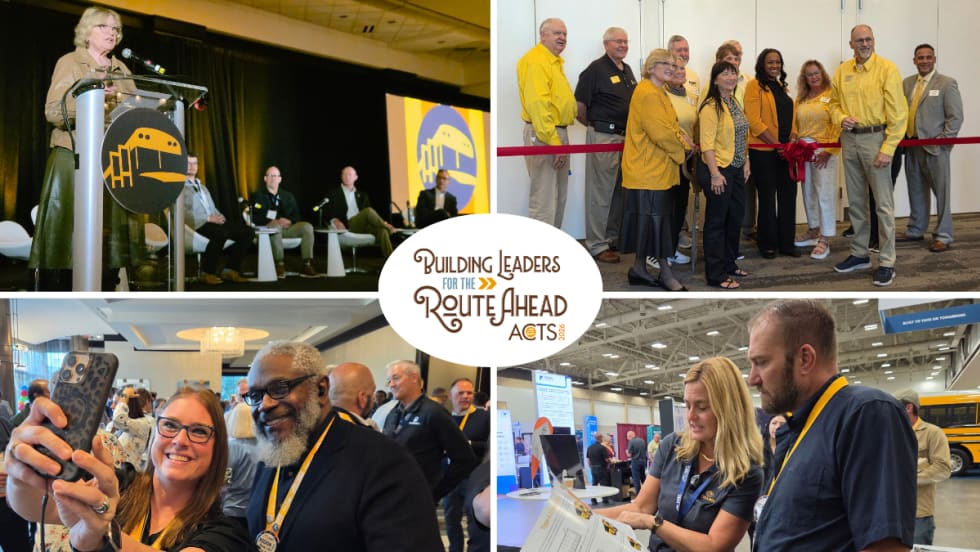
Inside NAPT ACTS 2026: Highlights from Louisville
From federal updates and student behavior strategies to new school bus technology and industry awards, see highlights from NAPT ACTS 2026 in Louisville.
Read More →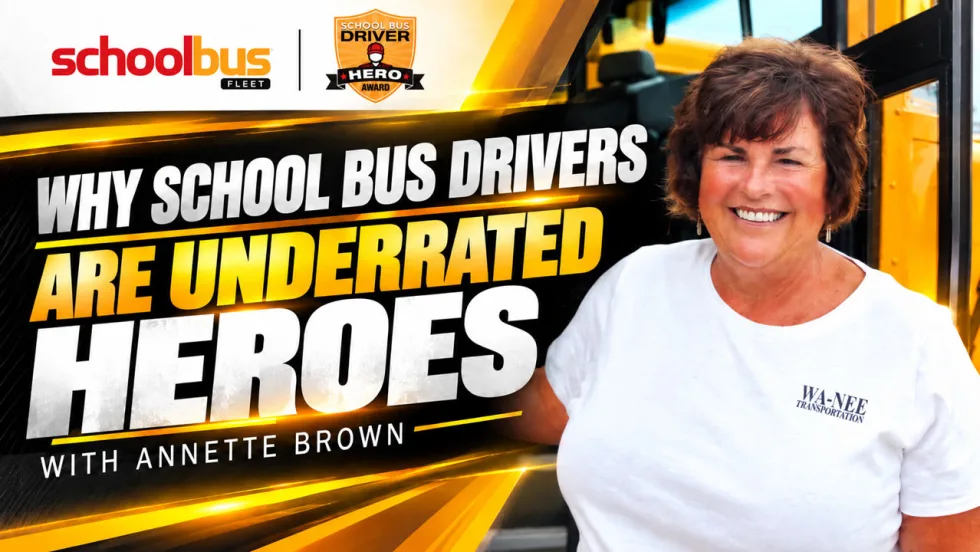
Meet the 2025 School Bus Driver Hero Winner: Annette Brown
We caught up with Wa-Nee Community Schools' Annette Brown on site at SBFX, where she was named the 2026 School Bus Driver Hero Award winner. Hear about her reaction, what she loves most about being a school bus driver, and more!
Read More →
Predictability Is Like Ketchup (According to 6-Year-Olds)
To students, a different school bus can feel like a full-blown crisis. One driver reflects on why familiar routines, showing up on time, and being reliably boring matter more than we think.
Read More →
Samsara Launches Free Driver Rewards Program
The new Driver Perks program gives eligible professional drivers access to discounts and offers without adding a cost for participating fleets.
Read More →
How Tax-Exempt Municipal Leases Can Help Finance School Buses
Let’s explore school bus financing options, including municipal leases, vendor payable accounts, and balloon payments, and how they can help stretch fleet budgets.
Read More →
Nominate Rising School Transportation Pros Under 40!
We’re searching for the next generation of leaders making an impact across the K-12 student transportation industry to recognize as SBF’s 2027 Trailblazers. Nominations are open now!
Read More →
Changing Lanes: BusWhere, EverDriven, InterMotive, Summit School Services, Switzer-Carty & Thomas Built Buses
Check out who's been hired, promoted, and appointed to leadership positions at various school transportation suppliers, contractors, and manufacturers.
Read More →
The Most Expensive Thing You Do Before Selling a School Bus: Wait
When should you sell an aging school bus? Learn how maintenance, mileage, corrosion, specifications, and timing can affect resale value long before the auction.
Read More →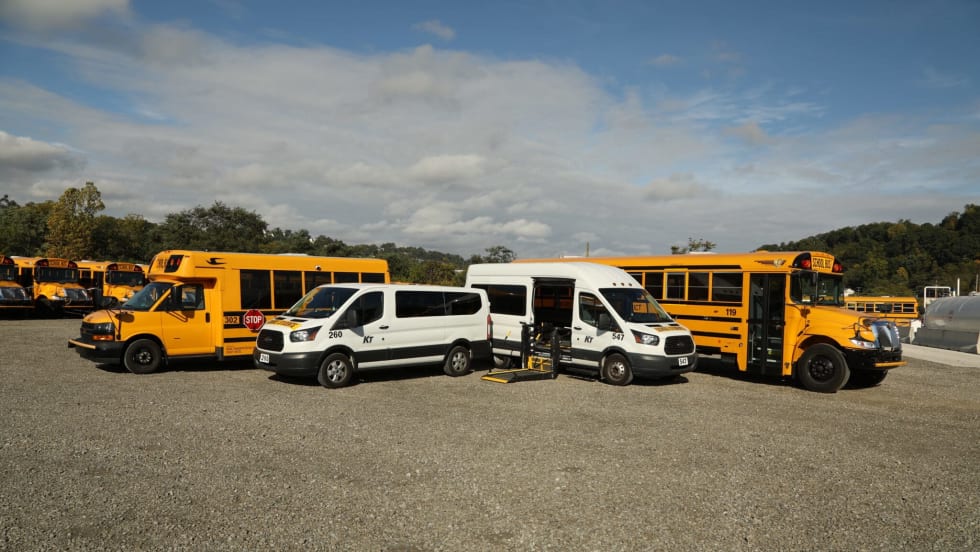
American Student Transportation Partners Acquires AJ Myers and Sons
A new deal brings a 75-year Pennsylvania student transportation provider into one of the nation’s largest private school bus contracting groups.
Read More →
What I Brought Home From SBFX: Relationships, Leadership, and Preparing What's Next
Who could lead your transportation operation tomorrow if you couldn't? Bernando Brown explores succession planning, mentorship, and preparing emerging leaders to step up.
Read More →