




How to Safely Back a School Bus
Though no one is recommending backing a school bus, there are certain conditions under which it is unavoidable. We consulted transportation experts to find out exactly when and how it should be done.
While pupil transporters have varying views on the topic of backing a school bus, there is one point on which everyone agrees — backing should be avoided at all costs. Most operations have a policy restricting backing to certain conditions (in the bus lot, on rural roads or on special-needs routes) and some states even prohibit backing on school grounds. The recent case of a Grayslake, Wis., school bus driver who backed over and killed a 22-month-old girl in her family’s driveway is reason enough to cast scrutiny on the practice.
Minimize the occurrence
Can backing be eliminated altogether? Most pupil transporters agree that it cannot. “Backing should be avoided as much as possible — but backing will still be required, if for no other reason than to get into or out of the parking spot at the bus lot,” explains Mark R. Obtinario, owner of Cowlitz Coach, a school bus operator in Castle Rock, Wash. “One year I drove a route that had seven turnarounds on the elementary run alone. All were in rural areas at the end of dead end roads,” he says. Though Obtinario succeeded in safely maneuvering that route, he doesn’t recommend routes that require backing. In urban and suburban areas, buses can be routed around the block to avoid turnarounds. The extra distance traveled is worth it, says Obtinario, considering the danger posed by the alternative. “No matter how safe one makes a turnaround, you are backing up. In other words, you cannot see what you are doing, particularly in the dark and the fog of early mornings,” he says. Arthur Dusoe, a driver trainer at Laidlaw Education Services in Worcester, Mass., agrees with Obtinario. “Backing is about the most dangerous thing you can do in a school bus. Despite the multiple mirrors and windows, children, adults, cars and anything that you can imagine can slip into the danger zone,” he says. Most of the backup accidents Dusoe’s drivers have experienced have been in the terminal yard, where a bus gets dented or a mirror gets swiped.
Use safety equipment
To protect against backing accidents, Dusoe’s buses are all equipped with backup beepers and one is even outfitted with a voice system that says, “This bus is backing up,” when the bus is put into reverse. Though his company has no turnarounds on urban routes with big buses, the special-education buses where Dusoe works often have to back up to turn around en route. “So far, no serious problems on the road, but we have had a few drivers get stuck in the winter on snow humps, raising the rear wheels off the road,” he admits. Obtinario also believes in using technology to avoid problems with backing. “All of our buses were retrofitted with reverse alarms more than five years ago. The cost of the parts and installation was less than $50 per bus — in my opinion, a very cheap investment,” says Obtinario. The next step, he says, may be to install backup cameras on buses, like the ones you see on trucks and other large vehicles. “I am thinking backup cameras would be of particular value in special-needs buses, since they go into so many places one really shouldn’t be taking a bus in the first place,” says Obtinario. Safety Vision Inc. of Houston and Superior Signals Inc. of Olathe, Kan., offer rear-vision cameras that can display the area behind the bus on a black-and-white or color monitor near the driver.
Know how to back safely
With or without technological assistance, school bus drivers need to take certain precautions when backing to reduce the possibility of an accident. The following are eight key steps all drivers should take when backing a school bus. Guidelines were compiled from J.J. Keller & Associates’ “Driving Techniques” video, Safety Vision’s “Safe Backing 101” publication, the Pupil Transportation Safety Institute’s (PTSI) New York school bus driver training manual and interviews with industry experts.
1. Adjust your mirrors
In a school bus, blind spots can be up to 20 feet in front of and 200 feet behind the vehicle. Keep in mind that your mirrors can’t give you the whole picture. In fact, if they’re not properly adjusted, they can give you a very misleading picture of the situation. “Mirrors on school buses are often out of adjustment and can result in deceptive views and blind spots leading to an accident,” explains James Kraemer, former school bus driver and manager of 2safeschools, a Website featuring information and resources for the pupil transportation industry (www.delphi.com/2safeschools). “Mirrors go out of adjustment within days, yet few transportation departments provide their drivers with a mirror check station, even though the cost is small and the check stations are easily set up.” For help in setting up a mirror check station, Kraemer recommends using the free mirror check station video available through Rosco Inc., a Jamaica, N.Y.-based mirror manufacturer.
2. Think in advance
Don’t put yourself into unnecessary backing situations. Every backing situation is new and different, even if you go to the same place several times a day. Watch for changes and new obstacles each time. Choose parking spaces that are easy to exit and don’t crowd other vehicles. Expect and prepare for challenges along the road. Be prepared, as well, for unique situations that may require backing. One such situation, according to PTSI’s Executive Director Ted Finlayson-Schueler, is at a railroad crossing when the bus cannot make it across the tracks before the train passes. In such a situation, it’s better to back into somebody than to stay on the tracks, he says. “If you plan ahead, drivers will not feel like they’re breaking the rules if they have to back up to get out of a crossing. They will be prepared,” says Finlayson-Schueler.
3. Back into, not out of
Always back into the area with less traffic or fewer objects. For example, back into a parking lot so you can later pull forward into the traffic filled street. When possible, pull your bus ahead so you can back straight into the turnaround without needing to turn as you back up. Back to the driver’s side to maximize your view of hazards behind you.
4. Scan the area
Get out of your bus and look over the area you’re about to back into before backing. Look for hazards such as children, fixed objects (light poles, trees, etc.), terrain concerns (soft or muddy areas, potholes, tire hazards) and other motorists. Check for clearance-related obstructions, such as low-hanging trees and wires. Get in the vehicle and start backing right away, so that little time is allowed for the situation to change.
5. Use a spotter
Get help with backing whenever you can by finding an adult to guide you from outside of your bus. If a transportation employee is not available, ask a parent at the bus stop or a bystander to spot for you. Make sure you and the spotter understand each other’s signals. Rely on hand signals instead of verbal ones. Don’t assume a spotter knows what to do without explaining it to them. “Many times, buses have backed into a fixed object even when a spotter was present because of communication problems,” explains PTSI’s driver training manual. Don’t have your spotter walking backward and don’t ever back when you can’t see your spotter. “We talk to the drivers about asking for help from an adult, radioing in for help from the base or another driver and then asking students last. We also teach the bus drivers to radio in, ‘Bus backing up,’ before this procedure,” says Dusoe of his operation.
6. Quiet students, tap horn
Ask passengers to be silent so that you can hear warnings before and as you back up. Turn the radio down as you prepare to back and open the window slightly so that you can hear any warnings from outside. Honk twice before you back up. Backup alarms may not be heard or understood. Pause three seconds after honking to allow someone behind you time to get out of the way.
7. Use four-way flashers
Activate your four-way flashers as you prepare to back up and leave them on throughout the backing procedure. This will warn surrounding motorists and pedestrians to stay clear of the vehicle as you back.
8. Practice backing
No amount of forward driving experience can help you in backing your bus. Become familiar with your vehicle and how it backs up. Back slowly — never faster than two to three miles per hour. Backing slowly gives someone behind you a chance to get out of the way. Use your flat driving mirrors to back in a straight light or make steering corrections as needed. Don’t try to twist around in your seat to look behind you as you back up — it’s ineffective in a school bus. Use your overhead mirrors as you back up only if you are backing up to something which is not visible in your driving mirrors, such as a light pole behind the bus. Set up a company training course to practice backing and encourage participation in school bus roadeos. Teach equipment use, hand signals and other backing tips during driver training. “New drivers have the biggest problem in regards to backing accidents. Rarely do they get enough practice in knowing the rear swing and overhang,” says Obtinario, who thinks that training in the use of mirrors and more practice in backing could help reduce these occurrences. But, he adds, “the only way to eliminate backing accidents would be to eliminate backing.”
More Safety

How to Build a Better School Bus Driver Training Program
Is it time to strengthen your driver training? Here’s how to pick the right talent and improve recruitment, retention, and safety. This video is brought to you by IC Bus.
Read More →
Recent School Bus Accidents Leave 2 Dead, 2 Injured
Four school bus crashes in Florida, Illinois, and Georgia highlight risks in transportation lots, at bus stops, and during student loading and unloading.
Read More →
When Every Second Matters, Clarity Keeps Routes Moving
From routine delays to urgent incidents, strong communication practices help drivers, dispatchers, schools, and families respond with confidence.
Read More →

What Happens When a School Bus Catches Fire — and What Can Help
School bus fires are rare but can be devastating. Learn how advances in fire suppression and asset protection help fleets detect fires earlier, reduce damage, and improve safety.
Read More →
Geotab Launches Tool to Help Fleets Investigate Road Incidents
Geotab Investigations combines telematics data, video, documents, and other evidence to help fleets reconstruct incidents, resolve claims, and determine what happened.
Read More →
Texas Sixth Grader Wins 2026 National School Bus Safety Poster Contest
Sai Darshana Yekolu of Moseley Middle School in Prosper, Texas, was named the newest winner for her artwork, bringing the theme of “Safe Rides, Everyday Heroes” to life.
Read More →
Doing More With Less: How Transportation Directors Can Prioritize Safety Amid Budget Uncertainty
With diesel prices soaring and nearly one-third of transportation directors expecting budget cuts, maintaining student safety has never been more challenging. Download this guide to learn how leading districts are prioritizing risk, funding critical safety technology, and building stronger budget cases with data.
Read More →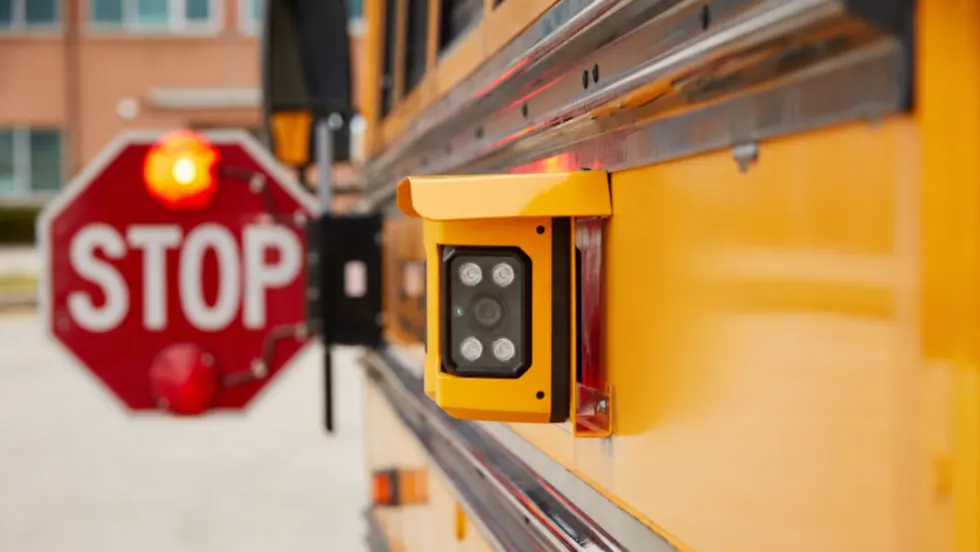
Walton County Schools Adds Gatekeeper Stop-Arm Enforcement System
The Florida district will deploy Gatekeeper’s updated Student Protector technology, which now incorporates AI to improve video evidence.
Read More →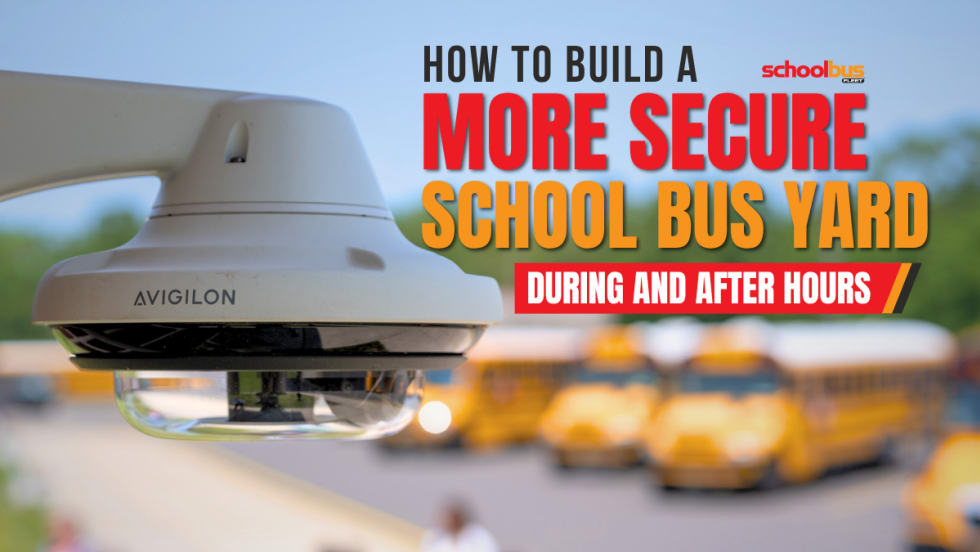
How To Build a More Secure School Bus Yard During and After Hours
As thefts and overnight security threats continue, school transportation leaders are combining stronger operational practices with AI-enabled surveillance to better protect buses, facilities, and staff.
Read More →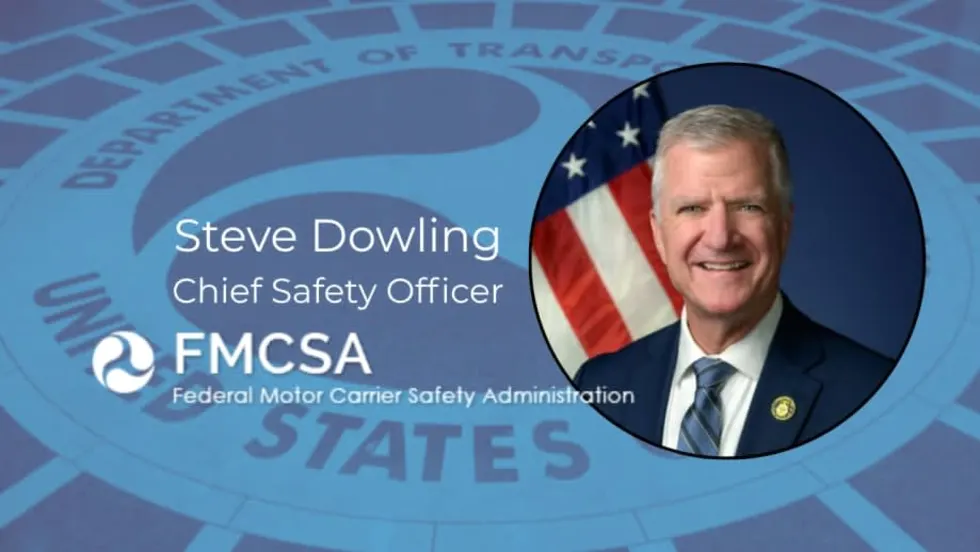
FMCSA Names New Chief Safety Officer: What School Bus Operators Should Know
Steve Dowling is set to lead the federal agency's efforts to advance commercial motor vehicle safety and reduce crashes, fatalities, and injuries on the nation's roadways.
Read More →