




How Ridesharing Can Meet a Variety of Student Needs
Children’s rideshare services can offer scheduling flexibility, quick response time, and more efficient use of resources when serving homeless, foster care, and special-needs students. Factors to consider are budget and coordination between multiple parties.
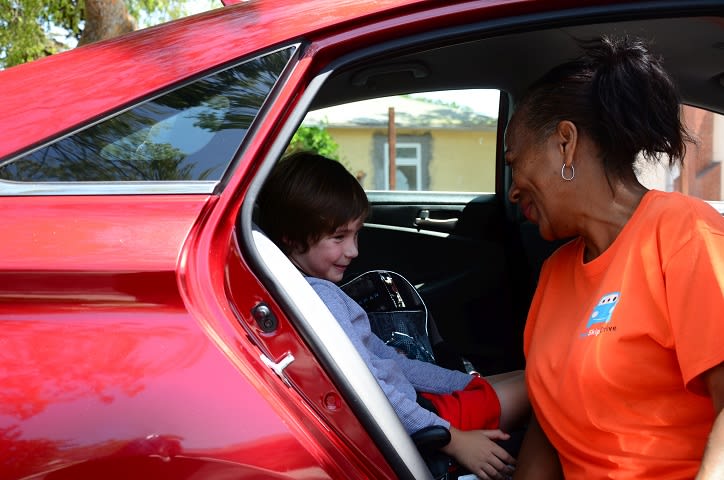
Some school transportation departments have found that children’s rideshare services, such as HopSkipDrive, can offer flexible scheduling and more efficiency when serving students with special needs, and those who are homeless or in foster care.
Some school transportation departments have found that children’s rideshare services, such as HopSkipDrive, can offer flexible scheduling and more efficiency when serving students with special needs, and those who are homeless or in foster care.
Just as ridesharing services such as Uber and Lyft have become increasingly popular, some pupil transporters are finding a variation on these services — sometimes referred to as “Uber for Kids” — to be helpful for students with a variety of needs.
Some school transportation departments are now using children’s rideshare services, a relatively new way to transport students, for those with special needs, and those who are homeless or in foster care. These services, from companies that include HopSkipDrive, Kango, and Kiddie Kab, offer a number of advantages for all: flexibility of scheduling, more efficient use of resources, quick response time, and a better alternative for some students. They also often require coordination and communication between multiple parties and perhaps some juggling of the budget, and can impact the budget, depending how — and how long — they are used.
Still, as Shawn Smith, director of transportation for Aurora (Colo.) Public Schools, points out, transporting students with such needs involves more than the bottom line.
“We need to do what is in the best interest of the kid,” Smith says. “We need to support what will make them successful as they grow older.”
Student, District Benefits
Because foster care and homeless students move frequently and with little warning, children’s rideshare services are often the best option for them, according to Smith. Not only can they pick up these students at different sites on short notice — HopSkipDrive has learned at 10 p.m. that a student needed a ride at 7 a.m. the next morning and got it done — they can also make accommodations for them, according to Joanna McFarland, CEO of HopSkipDrive. For example, Smith requests that foster students have no more than three different drivers.
“We want stability for kids who are already in a bad situation,” Smith says. “We met with HopSkipDrive and made a special request, because it was in the best interest of the kids. It hasn’t worked out perfectly, but the kids have never had more than four drivers in a week.”
Another way in which children’s rideshare services benefit foster care and homeless students is that they can get them to school faster than a bus, according to Mike Hush, transportation director for Littleton (Colo.) Public Schools.
“When a foster care or homeless student lives on the outside areas of our district or outside our district, they may be on a bus for a long time,” he says. “It seems quite impractical for a student to have to ride a bus for an hour or more.”
However, these services don’t work for all foster care and homeless students, such as a student who might wander or run off, adds Hush. That’s why he makes every effort to communicate with the state, other districts involved, and coordinators when transporting these students.
“Sometimes these students are displaced and need a ride,” he says. “Sometimes they’re displaced and need a ride but also have specific needs that makes one or another service good or not. We’re trying to get the kid to school, but we must have coordination to make sure we’re doing the right thing.”
Children’s rideshare services also make it easier on school transportation departments. In addition to their fast response time, Smith says he appreciates the fact that they allow him to transport these students to distant schools without rearranging his bus schedule.
“When a foster care or homeless student isn’t attending school in their attendance area, they may need to travel from the far southwest quadrant to the far northeast quadrant. No bus travels that route. That’s when we rely on a rideshare service.”
Accommodating Special-Needs Students
Finding the best rideshare service for special-needs students isn’t necessarily easy. Whether the student needs special equipment, whether a rideshare service is specified in a student’s Individualized Education Program (IEP), and any other specific requirements all must be considered. That’s why school districts vary in the way they determine which special-needs students will be transported via a rideshare service.
For example, Richard Jimenez, director of transportation for Placentia-Yorba Linda (Calif.) Unified School District, contracts with these services for students with issues such as severe behavior problems, or the need for a safety vest. Hush, on the other hand, generally uses rideshare services for special-needs students who are ambulatory, but not autistic, and not runners. School staff also must approve each candidate for rideshare services.
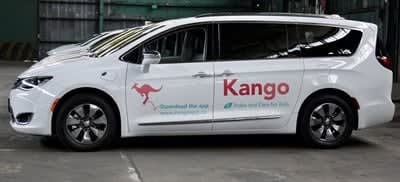
Kango, as well as other children’s rideshare services, enables drivers who have experience with homeless, foster care, and special-needs students, to allow additional time for trips, and help students into and out of the vehicle.
“It’s not a service for every student and not every service suits every student,” Hush says. “It’s what is the best fit for the student. We’ve tried it with some students and said we’re going to go back to the bus. There are other students we put on them for the remainder of the year.”
Rafael Delgado, director of transportation for Whittier (Calif.) Union High School District, also finds that children’s rideshare services can be the best way to transport special-needs students who attend schools, programs, or centers located far from their home schools or in another district.
Not only do these services help schools avoid disruptions in their regular bus schedules, they also don’t have to pay drivers overtime or invest in additional buses or drivers they may not need long term, according to Hush.
Problems, Solutions
Children’s rideshare services can be a hard sell to some parents of special-needs students, Hush adds. They’re leery of putting their child in a car with someone they don’t know, and the lack of a bus isn’t reason enough to do so. In such cases, Hush recommends explaining the situation to parents or meeting with all parties and looking at the options.
Another issue that can arise is parents asking the drivers to take a student to therapy or another destination instead of home. That can be detected and resolved by monitoring the drop off and pick up locations through GPS, Smith says.
Other potential problems include not having consistent drivers (of particular concern to parents of special-needs students), late pickups, and failure to follow loading zone protocols. The best way to deal with such issues is to have a close relationship with the account executive, Hush says.
“Most are understanding and compassionate, and want to do what’s best for the kids,” he adds.
The Financial Question
Using children’s rideshare services for foster care and homeless students who live long distances from their school often makes financial sense, according to Hush. He doesn’t have to use a bus for a student who lives far from his or her school, and they eliminate deadhead miles (the bus traveling with no passengers) for each trip.
“Sometimes on those trips you have more dead miles than you do actual mileage for the trip,” he says.
Still, there can be issues with who covers the service’s cost, especially when a foster care or homeless student moves into another district, Hush adds. Questions arise about who pays what portion and who made the decision. Additionally, one district may want to use a service and another may not.
“A lot of discussion has to occur to solve these issues, and unfortunately, you have to do it quickly,” he says.
The financial implications of using children’s rideshare services aren’t as clear-cut with students with special needs. Smith maintains that having special-needs students ride a school bus when their transportation can be worked into a route is still the most inexpensive option. However, Hush says the changes in this population make it hard to plan for their transportation. Therefore, children’s rideshare services allow him to transport special-needs students without hiring additional drivers or purchasing buses he may not use.
Jimenez also finds that children’s rideshare services can save dollars, especially when a special-needs student attends a school several miles away and there is significant travel time.
Price can be a concern for some districts. Delgado says that a children’s rideshare service shouldn’t be considered a permanent solution, because the cost of using one for a student over the long term could be excessive. However, HopSkipDrive’s McFarland notes that there are significant cost differences between providers, and that the rideshare service works to save transportation departments significant dollars.
“Not every service suits every student. It’s what is the best fit for the student.”
Mike Hush, transportation director
Littleton (Colo.) Public Schools
Service Selection
When hiring a rideshare service, it’s important to keep in mind that one size doesn’t fit all. For example, for students with severe disabilities who must be transported via a rideshare service, Jimenez only uses companies that have specialized equipment, trained paraeducators, and wheelchair capability, such as American Logistics Company. For foster and homeless youth and students with mild to moderate disabilities, he may use a regular children’s rideshare service such as HopSkipDrive.
HopSkipDrive, which is based in California and Colorado, and other children’s rideshare services, such as Kango (also in California), and New Jersey-based Kiddie Kab, agree to transport special populations and work closely with school districts. They can provide drivers who have experience with homeless, foster care, and special-needs students, allow additional time for trips, and help students into and out of the vehicle.
Other factors to consider when hiring children’s rideshare services, Jimenez says, are whether they carry high insurance limits for liability, automobiles, and abuse; allow spot-checking of vehicle maintenance records; ensure open communication; and provide a point of contact to resolve problems. They should have GPS and cameras, which can be referred to if there’s a complaint, installed on their vehicles, he adds.
Hush also stresses the importance of GPS and cameras, which he says parents as well as school administrators appreciate.
“It’s great when they have that visibility,” Hush says. “It’s further communication, and we all understand what’s happening. That’s the game-changer between services.”
More Management
How to Build a Better Driver Training Program
Ready to boost up your school bus instructor training? Here’s how to pick the right talent and improve recruitment, retention, and safety.
Read More →
CALSTART and Forth Combine to Form Catalyst Mobility
The new name represents a renewed vision for the nonprofit focused on advancing clean, equitable, and affordable transportation solutions that move people and goods.
Read More →
What Makes a Great School Bus Driver Trainer?
Choosing the right school bus driver trainer takes more than experience. Learn six keys to selecting and developing trainers and evaluating program effectiveness.
Read More →


School Bus Contractors Expand Through New Deals, Acquisitions & Partnerships
STA's Canadian division acquires Ontario-based G&L Stevenson Transport while Durham School Services adds a new district contract in California, First Student adds a New Jersey contract, and Minnesota Coaches acquires Halo Transportation.
Read More →
Logan Bus Company Rolls Out AI Phone System for NYC School Bus Families
A summer pilot found that AI agents could handle most routine calls, freeing up time for customer service staff to focus on emergencies and complex family concerns.
Read More →
From Intent to Impact: What I Learned About Leadership from TAPT
A Texas transportation supervisor shares lessons on self-awareness, accountability, managing stress and building trust — and why investing in leadership development matters at every stage of your career.
Read More →
NAPT Names 2026 Award Recipients, Hall of Fame Inductee
Who earned national recognition for their work in student transportation? This year, NAPT named five recipients of its 2026 awards for service, safety, and leadership, plus its newest Hall of Famer.
Read More →
2026 State of Student Transportation Report
Driver shortages. Rising costs. Growing safety expectations. More data, but not enough time to act on it. The 2026 State of Student Transportation Report reveals what transportation leaders say is putting the most pressure on their operations—and where they’re investing next. See how your priorities compare.
Read More →
How to De-Escalate an Angry Person: 5 Steps for Handling Workplace Conflict
What makes emotions run high, and how should you handle an angry colleague or parent? Follow these steps for staying calm, listening, showing empathy, and resolving conflict.
Read More →
What Readiness Looks Like This School Year
Learn about the challenges shaping the 2026–2027 school year, from persistent driver shortages and budget pressure to technology and readiness gaps. See how school districts are responding and adapting in Zonar’s 2026 Back-to-School Readiness Report.
Read More →