




Helpful hints on improving your school bus tire program
Helpful hints on improving your school bus tire program.
It’s amazing to see all of the different ideas and philosophies being used to run an intensive school bus tire program. Some folks tend to do only what’s necessary, while others aren’t sure what to do. Here at the School District of Palm Beach County (Fla.), we have some basic practices we follow that work for us and may work for you. I certainly don’t claim to have all the answers, but we have done a lot of research and testing to back up our theories. We have about 750 school buses in our fleet, with a mixture of makes and models. We also maintain a large fleet of support vehicles that includes 800 trucks, vans and cars. Here are some of the “best practices” that we’ve put together to maximize the safety and efficiency of our tires:
1. Never change only one steer-axle tire, except on an emergency road call basis. Even if the “good” steer tire is almost new, we replace them both. The good one can be used to match another tire that can be installed as a pair. This will maximize attainable mileage both on new and used tires.
2. Match tread on drive tires. This should be obvious, but some folks don’t take it seriously. We match the same tread pattern to within 2/32”. If both rear tires are a highway pattern, but not the same design, they can be used; however, you must measure the overall diameter, not tread depth, and match to within 1/4” for the best performance and longest life. Do not mix lug tread and highway tread tires. They wear at different rates, and one tire almost always ends up doing the work of two, and subsequently fails.
3. Remove the new tires from the rear of new buses and store them for future steer axle use. Install matching retreads on spare rims and mount them to the rear of the new buses. They last as long as original-tread tires at approximately one-fourth the cost! (We remove $840 worth of tires and install $220 worth. Now we can add four new steer tires to our inventory at no cost.)
4. We spec Michelin XZE radials on our new buses. This adds about $90 to $100 to the price of the bus (radials are standard on our bus bid) over the standard radials, but adds about 40 percent to the attainable mileage.
5. We “bit the bullet” a few years ago and specified steel disc wheels and tubeless tires. Ease of maintenance and additional miles on each tire have more than paid for this change. Also, we went to hub-piloted wheels this year in an effort to further reduce parts spending (fewer lug nuts required). Plus, these wheels are easier to install and the flanged lug nuts have better clamping power.
6. One last deal that’s going to save us money: We went to 11RX22.5 tires in lieu of the standard 10RX22.5. The reason for this is that nobody wanted the 10R casings after we were through with them, and we were forced to pay to have them hauled off. The 11RX22.5 size is used by many trucking and bus companies that will gladly pay us for good, usable casings. After our third recap wears out, we scrap the casing to ensure quality casings in our fleet. We can get $40 to $75 each for them as opposed to paying $3 to $8 to have them hauled off! Some people have looked twice at our 47-passenger conventional bus with 11RX22.5 tires on it. When I explain the program, however, most folks end up with a positive opinion of this procedure. (I haven’t mentioned air pressure as an obvious aid to increase attainable mileage because every article ever written about tire maintenance has discussed that issue at length.) Our program works for us, and we have a large, high-mileage fleet (17 million miles per year on routes alone) that demands the best. Hope these tips can help you too!
Joe Reed is assistant director of transportation/maintenance at the School District of Palm Beach County in West Palm Beach, Fla.
More Maintenance
The Essential Guide to School Bus Maintenance and Student Safety
Your district's buses carry students to school every day. This guide shows how predictive maintenance powered by fleet data helps keep buses reliable, drivers accountable and students safer from the first bell to the last stop.
Read More →
Kerry Brothers Grows Michigan School Bus Repair Network
The acquisition of Downriver Truck and Bus expands Kerry Brothers’ school bus maintenance footprint across southeast Michigan, adding repair capacity, diagnostic resources, and state inspection support.
Read More →
Noregon Introduces CAN Bus Diagnostic Tool, Expands JPRO Features
CAN Mentor and the latest JPRO update aim to simplify vehicle network diagnostics and improve repair efficiency for technicians of all experience levels.
Read More →
Cummins on Smarter, Simpler Engine Innovation
Cummins discusses its first-ever gasoline engine for school buses, EPA 2027, and why bus fleets still want durable, simpler internal combustion options.
Read More →
Report: 72% of Diesel School Buses Now Use Advanced Low-Emission Engines
New data shows advanced low-emission diesel technology continues expanding across school bus fleets, even as electric bus adoption gains momentum.
Read More →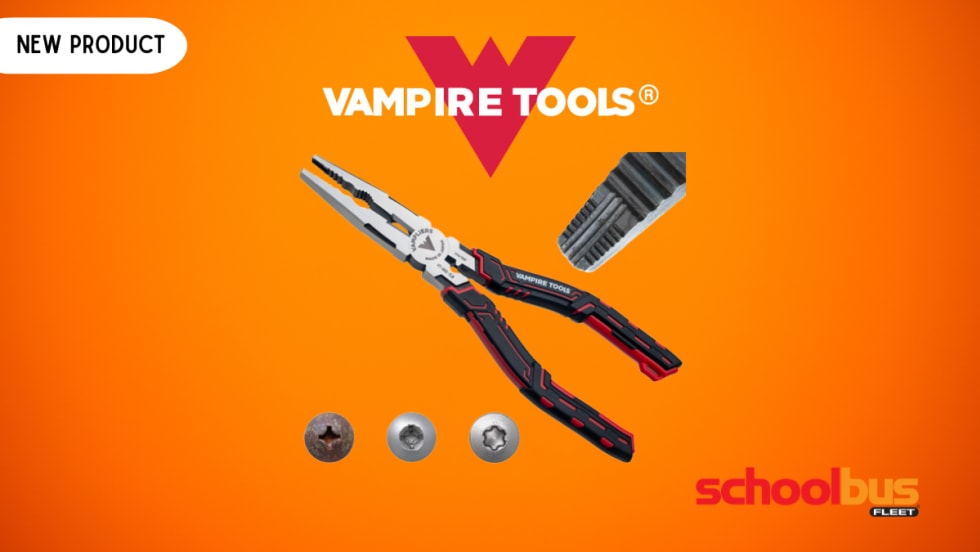
Vampire Tools' CAIMAN 7.5-Inch Multi-Purpose Screw Extractor Long-Nose Pliers with Crimper
Vampire Tools introduced the VAMPLIERS Caiman 7.5-inch multi-purpose pliers, combining screw extraction, cutting, crimping, and gripping functions into a single tool designed for fleet maintenance professionals.
Read More →
How Advanced Diagnostics Helps Bus Fleets Stay Ahead of Repairs
Chat with Noregon’s Kevin Smallhorn at ACT Expo about bus diagnostic tools, telematics integration, CNG maintenance support, and strategies to help reduce downtime and improve uptime.
Read More →
How School Bus Fleets are Getting Ahead of Breakdowns
Don’t let bus downtime wear you down. Here’s how bus operators are shifting from manual processes to AI-powered, data-driven maintenance systems for improved reliability and safety.
Read More →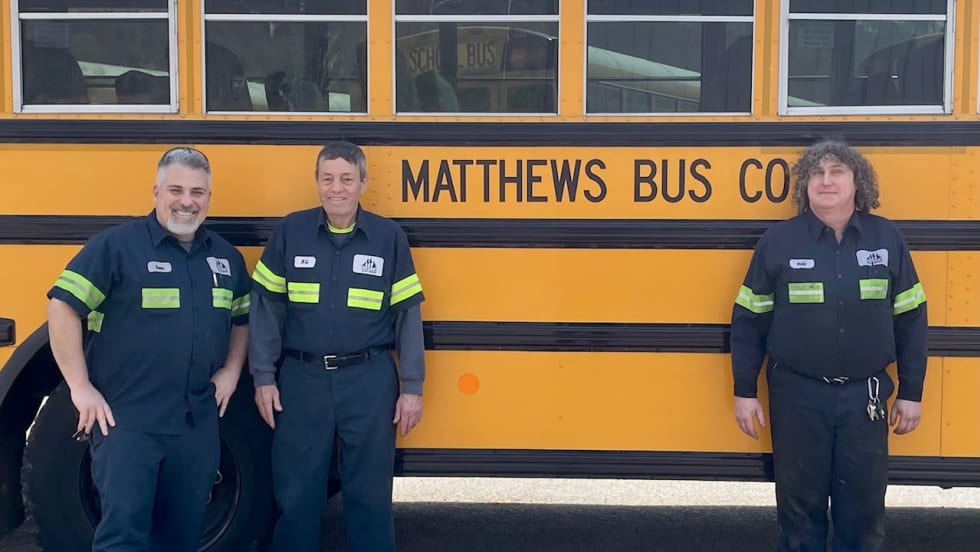
Pennsylvania School Bus Maintenance Team Praised for Dedication to Safety
Matthews Bus Company’s West Jefferson received a letter of commendation from the Pennsylvania State Police for their fleet inspections.
Read More →
From Chaos to Clarity: How School Districts Are Running Leaner Transportation Operations
Covering 38 routes on a Friday afternoon. Buses idling while routes overlap. Parents calling nonstop about late arrivals. Sound familiar? This whitepaper explores how district transportation leaders solved these exact problems — and what measurable results followed.
Read More →