




Getting the Best Deal on School Bus Insurance
Put together a marketing package that shows your commitment to safety. Develop a long-term relationship with your risk carrier.

Be as comprehensive as you can with the information provided to your insurer, and choose a company you can make a long-term relationship with.
Photo: Canva
John Shepard dreamed of driving a school bus since he was 4 years old. But he did not foresee the accompanying nightmare — insurance. “I enjoy every aspect of this business except insurance,” says Shepard, of Clintonville, Wis. Shepard established John’s Bus Service in 1997, with four years of school bus driving experience and a single 1992 71-passenger school bus. He originally took out a policy with the agent used by a trusted fellow bus contractor, at a rate he was told was the best he would find anywhere.
Luckily, in 1998, he decided to do some investigating. What he discovered was that he was paying twice as much as necessary for his insurance. That’s when he started shopping around.
Getting started
Shepard learned from the Wisconsin School Bus Association that the state requires a minimum of $500,000 combined liability coverage. Each individual contractor, however, can determine its own requirements in excess of that amount. According to Shepard, the University of Wisconsin requires coverage of $2 million, whereas smaller school districts may require only $500,000. Shepard decided on coverage of $1 million, which exceeds state standards and allows him greater market access.
Getting the bid
Before soliciting bids from insurance companies, Shepard put together a package of information to “sell” himself to insurance companies and secure a low rate. His package included, among other things, a bid sheet with specifications, detailed company information and safety records and a loss history sheet from his current insurance carrier. The information he provided was so comprehensive that it turned heads in the insurance industry. Chuck J. Ruys of The McClone Agency bid on Shepard’s operation, though he normally deals only with operators of 13 or more buses.
“He did a good sales job for himself,” he said. “He had the safety procedures in place that a larger operator has. He was well organized and a couple of exceptions were made, mainly because he had everything together as he did.”
The quotes Shepard received ranged widely in price. Ruys attributes the differences in rate to fleet size (one bus), company age (three years), intended use (field trips) and selectivity of insurance agencies. Many insurance companies do not want to deal with a single-bus operator, and the premiums tend to be higher for young companies or for those without a regular daily route.
“Charter operation is riskier than an established route,” Ruys explains. “Repetition makes a daily route safer.” In his opinion, Shepard’s rates would decrease if he had more buses and established routes.
Vehicle care is key
But all of that takes time. For now, Shepard markets himself carefully and keeps his school bus in top condition. He has earned perfect inspection reports and won safety awards three years in a row. He equipped his school bus with a strobe light, outside step light, additional brake/tail lights, “BriteLite” headlights, back-up alarm and reflective taping. He also plans to install tinted windows.
“This shows we are making efforts to improve the bus from its original condition,” Shepard says.
Long-term considerations
Shepard has shopped for insurance for two years in a row. The company he chose in 1998 raised his premium by $50 a day for hauling adults on a special trip. Then they wanted to insure him as a sightseeing bus, due to an approximate 10% use transporting adults. With his newest policy, he was careful to review the conditions thoroughly before signing.
Should he decide to “market” himself again in the insurance arena, he is considering changing the term “actual cash value” on his bid sheet to “replacement cash value.” The first term indicates the vehicle’s cost after depreciation, whereas the latter term would take into consideration all of the improvements he has made to it over the years. However, Shepard is hoping not to have to search for insurance next year. So far he is happy with his current services from Mortenson, Matzelle and Meldrum Inc., his third insurance company in three years.
“I’m looking for a company I can develop a long-term relationship with,” he says.
Ruys thinks this is a smart idea. “The person who shops for insurance every year is cutting his own throat,” he said.
For example, one of the bus carriers he represents was recently involved in a serious accident due to the intoxication of one of its drivers. The carrier had no way to predict the accident or to prevent it because there were no warning signs. Were it not for a long-standing relationship with Ruys’ company, the bus operator could have been faced with tremendous rate increases or termination of coverage.
“I was able to renew the account with the same carrier, with a modest increase, because of our relationship. I was able to make the best out of a bad situation,” says Ruys.
Harry Lange, Shepard’s current agent, agrees that it is important to develop a long-term relationship with an insurance company. He was impressed with Shepard’s organization and hopes to retain his business in the years to come. “The reason we were interested in him is because of his presentation. He impressed me as being a guy that we would take extra steps for,” Lange says.
In marketing a company to prospective insurers, Ruys, Lange and Shepard agree that the more information you can furnish the insurance provider, the better. The information must be complete, including a loss run from your current insurance agency.
Ruys believes the loss run really “tells all,” and Lange considers it the biggest factor in determining insurability. Shepard takes pride in his “marketing” package. He is careful to emphasize the safety of his operation and has simple advice for other insurance shoppers: “Think of all the good things you’ve done.” And tell about them.
More advice on insurance shopping
The following guidance comes from insurance professionals who specialize in school bus carriers — Randy O’Neill, senior vice president of Lancer Insurance in Long Beach, N.Y., and Kerry W. Hock, vice president of Amgrip in Houston.
What should a school bus operator look for when shopping for fleet insurance? O’Neill says school bus contractors should look for companies with proven financial security. “That means an A.M. Best rating of ‘A,’” O’Neill says.
In addition, he suggests that you look at the rating of the re-insurer as well. “These companies are taking a large part of the risk,” he says.
Hock agrees that the A.M. Best rating is important. He suggests that school bus operators also seek companies that have experience in writing and servicing school bus policies. “The company’s claims service and philosophy are key elements to look at,” he says.
Is it better to go with a large company or a small one? “Larger, if they have a significant book of school bus clients,” says O’Neill. He says the key is to look for companies that are committed to the school bus industry, particularly those that support local, state and national associations.
Hock says larger companies are likely to offer additional services in the claims and loss control areas. But he adds that small companies may be focused on a particular class of business like school buses. Fleet operators who collect quotes from various carriers often sign up with the lowest bidder. Is that a wise strategy? No, says O’Neill. “There’s always somebody down the block who can beat your price.”
But the essential part of an insurance program is the service that’s provided “when something bad happens,” he says. “That’s showtime for an insurance company.” Hock agrees that the lowest bid is not necessarily the best. “The insured needs an insurer to protect their assets in the event of a loss,” he says.
What can a fleet operator do to qualify for the lowest rate? “For us, it’s all about the drivers,” says O’Neill. “We find that most of the accidents are driver related.” A stable driver corps with an excellent driving record impresses an insurer, he says.
Hock agrees with O’Neill’s assessment. “The biggest factor in achieving a favorable loss history is to have good drivers,” he says. “Other safety items, such as driver-training programs and hiring standards, are also important.”
More Management

Key Moments from the 2026 NSTA Annual Meeting in the Mile High City
From federal policy updates and OEM presentations to speed networking and industry awards, see photos and highlights from the contractor association’s summer conference in Denver.
Read More →
HopSkipDrive Launches Spanish-Language App Update, Plans Additional Language Support
The update aims to improve communication with multilingual families by offering ride tracking, notifications, and support in Spanish, with more languages planned for the 2026-2027 school year.
Read More →
Where the Yellow Bus Takes Us: School Bus Fleet's 2026 Photo of the Year Winners
See the winning photos from School Bus Fleet's 2026 Photo of the Year contest, featuring stunning school bus images from across the U.S., from scenic landscapes to everyday moments.
Read More →

2026 Back-To-School Readiness Report
Staffing gaps, flat budgets, and the distance between “mostly prepared” and ready for the 2026-2027 school year.
Read More →
National School Transportation Association Presents 2026 Award Winners
Twenty-one individuals and contractor companies were recognized for excellence in student transportation at NSTA's annual meeting and convention in Denver.
Read More →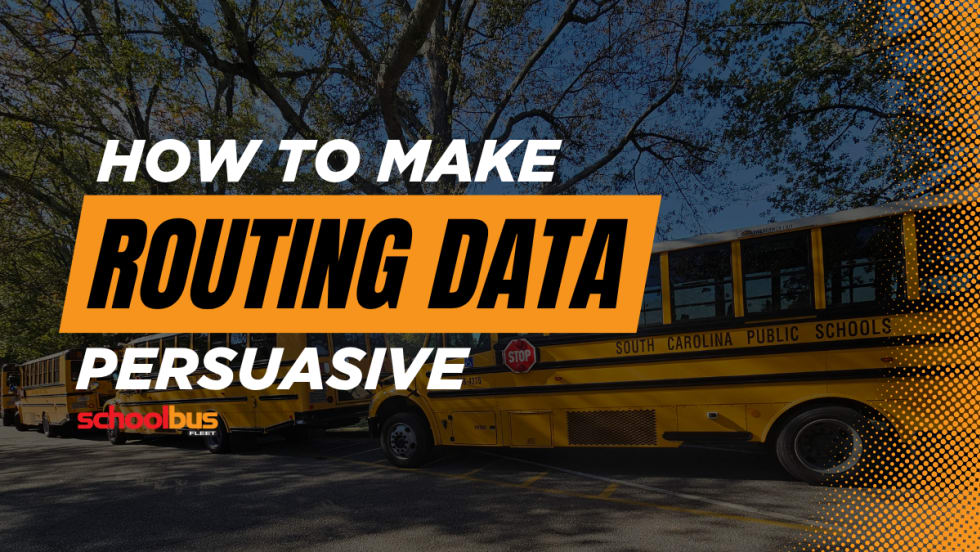
School Transportation Data Is Only as Powerful as the Story It Tells
Leaders say turning operational metrics into student-centered narratives can help districts justify investments and improve service.
Read More →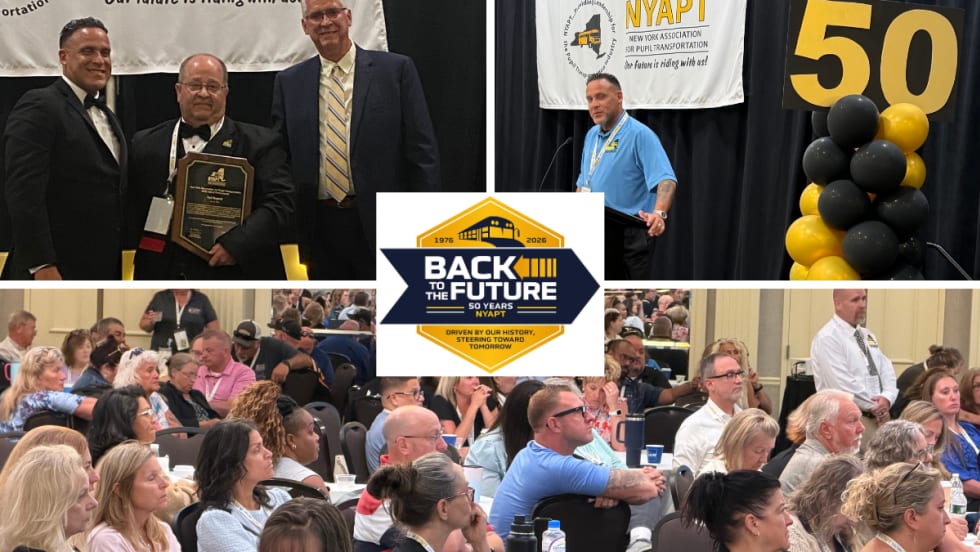
Photos: NYAPT Celebrates 50 Years at 2026 Conference & Trade Show
See highlights from NYAPT's 50th anniversary conference in Saratoga Springs, featuring educational sessions, awards, a trade show, networking, and more.
Read More →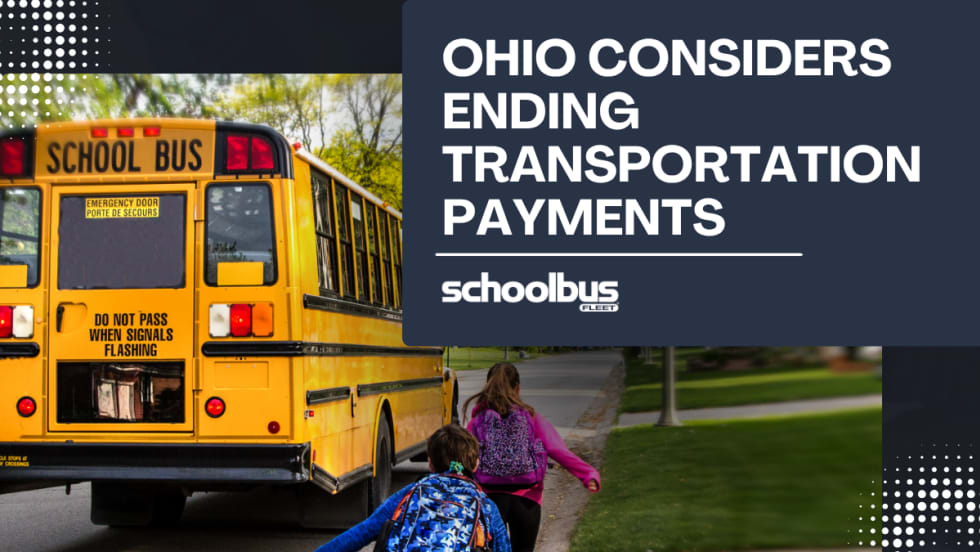
Ohio Transportation Workgroup Calls for End to 'Impractical to Transport' Payments
A final report from Ohio's Pupil Transportation Workgroup proposes ending "impractical to transport" payments and expanding transportation options through regional partnerships, but not all industry pros agree on the approach.
Read More →
Transfinder Expands California Footprint with Multiple School District Wins
Six California school districts selected the company's routing platform and related transportation technology as Transfinder continues expanding its presence across the state.
Read More →
NSTA's Curt Macysyn on Student Transportation History and What's Next
Hear from NSTA's executive director as we discuss student transportation's role in American history, federal regulation, driver recruitment, illegal passing, AI, and what might be next, in this Route interview.
Read More →