




From Minor Injuries to Major Events: Building a School Bus Medical Response Plan
When seconds count, preparation matters. Discover how to build a plan to help drivers manage medical emergencies with confidence.
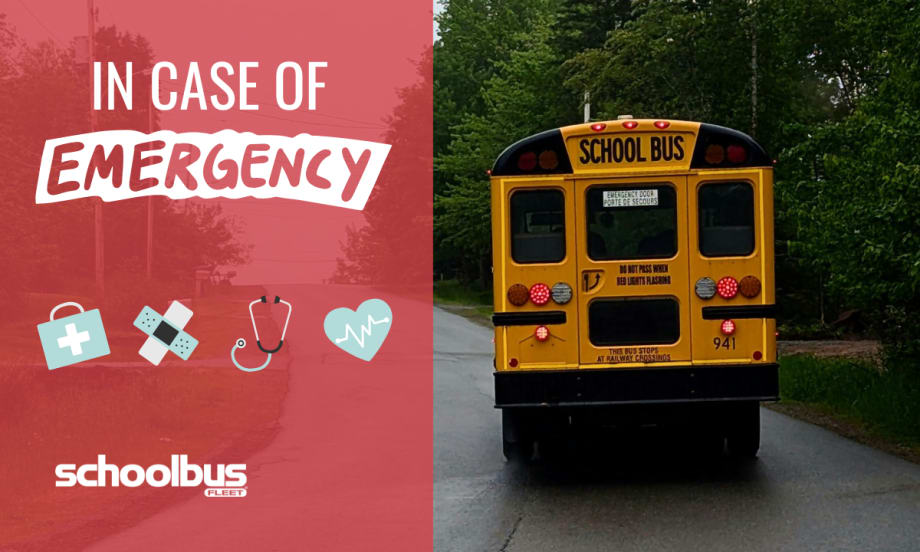
Preparation saves lives. A well-trained, well-equipped bus driver — backed by a clear medical response plan — can turn chaos into calm when every second counts.
Photo: School Bus Fleet
- Emphasizes the importance of having a well-prepared medical response plan for school bus drivers.
- Highlights the need for training drivers to manage medical emergencies effectively.
- Focuses on the significance of quick and confident responses during critical events.
*Summarized by AI
Dutiful school bus drivers take seriously the responsibility that comes with transporting students beyond getting them from point A to point B.
You’re not only steering the wheel; you’re also the person students rely on to make things right if anything goes amiss during the ride. It could be something as common as a scraped knee, as heart-wrenching as first-time fear, a serious matter where life and death is in the balance, or anything in between.
We know that this happens. In nominations for SBF’s School Bus Driver Hero Award, there were stories of drivers who helped a student choking on gum and another who found a student unconscious waiting for his bus.
If you drive a school bus long enough, your calm head and swift action will be called upon. Are you ready for the unexpected?
Planning Is Key
Make the unexpected expected. Planning for those moments when minor or major events need to be addressed is key to acting correctly in the best interests of everyone involved, including those who are indirectly affected.
This means, for example, that while you’re tending to an injured student who’s been knocked down by an irresponsible motorist while they were crossing the road, you must also manage the school kids who remain on your bus as bystanders. Add to that your responsibility for the bus itself and how it may impact the resulting traffic disruption, and you’ve got yourself an emergency situation that’s no less serious than a first responder facing situations on all fronts.
Planning is how you’re going to be able to successfully manage the situation until professional responders arrive on the scene or the student can be brought to an urgent care facility.
Start With Risk Awareness
Of course, you can’t plan for every scenario. The first trick to building a medical response plan is envisioning what kinds of incidents are most likely to occur. Drivers often must contend with minor issues, such as headaches, stomachaches, and cuts and scrapes from playground mishaps. These are relatively easy to manage.
But there are more serious possibilities that are still common. Asthma attacks, seizures, or allergic reactions require quick, confident action. There is no time to debate whether you should run and get help or if search through a backpack looking for an epipen.
Drivers must take decisive action that’s in line with state and district protocols in the given circumstances. In other words, you need to know what to do. Guessing puts lives needlessly at risk.
Training Is Called For
Bus drivers should be offered and required to take medical training. That doesn’t mean every school bus driver will also be a paramedic, but no first responders should be required to automatically know what to do when faced with a medical situation.
Sure, there are human instincts. If a person is bleeding, you know the bleeding needs to be stopped, but you may not know how exactly to achieve that. Or in what situations to keep someone still or their head or limbs elevated. This is where practical, hands-on training kicks in.
When bus drivers are taught and given the opportunity to practice responding to realistic scenarios — like a child having a seizure mid-route — they can reduce hesitation when the moment arrives. That calm, practiced response will make all the difference when every second counts.
The Importance of First Aid Kits
School buses usually have a first aid kit aboard. But there needs to be more than a variety pack of bandages in a range of comic book characters. A school bus should be stocked and maintained according to state or district requirements, with an emphasis on versatility. Essentials include gloves, gauze, antiseptic wipes, adhesive bandages, and instant cold and heat packs.
To up the ante, kits might also include specialized items approved by parents and doctors, for example, an epinephrine auto-injector. Having the right supplies ensures they can manage until emergency personnel arrive.
Editor’s Note: The updated 2025 NSTSP contains new guidance on emergency equipment that should be on-board buses, including first aid kits with suggested contents, as well as a body fluid clean-up kit. See pages 46-47 in the final October 2025 version for details.
Communication Is Critical
During any incident, communication can determine how smoothly things unfold. A solid plan outlines who needs to be contacted, in what order, and how information should be shared. For minor issues, it might mean alerting the school nurse upon arrival. For serious emergencies, drivers should know how and in what situations to radio dispatch, call 911, and notify school administrators, and in what order. Parents should also be informed promptly.
Clear communication also extends to students. Young riders can feel scared or overwhelmed if they see a peer injured. Simple, reassuring language from the driver — while delegating another adult or responsible student to keep order — helps maintain calm on the bus.
Major Emergencies Require Extra Layers
A major medical emergency on a bus is every driver’s nightmare, but preparation can make it manageable. Beyond first aid skills, drivers should be ready to:
Safely pull over in a controlled way.
Secure the bus and keep other students safe.
Assign roles, like asking a student to call for help if needed.
Stay on the line with emergency dispatchers while waiting for responders.
Learn prevention strategies to reduce the chance of further injury, for example, when not to move an injured person.
Keep Parents and Guardians in the Loop
Parents want reassurance that their children are safe when riding the bus. Part of that reassurance comes from knowing there’s a clear plan if something happens. Sharing an overview of the district’s medical response procedures shows transparency.
When incidents do occur, parents should be contacted quickly and respectfully. Consistency in how those calls are made avoids confusion and builds trust.
Documentation Protects Everyone
Documentation is essential. Drivers should complete an incident report detailing what happened, the actions taken, and who was contacted. These reports can be invaluable for accountability reasons, to communicate to professional medical staff what was done, for learning purposes for other bus drivers in the future, and yes, to protect liability for the driver.
Practice Makes Preparedness Real
Plans are only as strong as their execution. Schools should consider holding emergency drills that simulate both minor and major medical incidents on buses. These do well to make drivers more comfortable as far as what might be expected, how their training has paid off, and making a situation feel less unfamiliar when they are called upon to take action.
Drills also help reveal gaps in procedures, like unclear communication channels or missing supplies.
Updating the Plan Over Time
A medical response plan isn’t a set-it-and-forget-it document. It should be reviewed annually, with input from drivers, aides, administrators, school nurses, and local emergency responders. Regulations and best practices evolve, and so do the needs of student populations.
Regular updates ensure the plan stays relevant, effective, and responsive to current risks. They also provide opportunities to integrate new technology, such as digital communication tools or GPS systems and location sharing that speed up emergency response.
Building a Culture of Safety
Ultimately, the strength of a school bus medical response plan lies not only in its content, but in the culture that supports it. When everyone involved — drivers, aides, administrators, parents, and students — understands the value of preparation, safety becomes part of the daily routine.
Encouraging staff to speak up about concerns, providing refresher training, and treating every incident as a chance to learn helps build a stronger system overall.
A scraped knee may not seem like much, and a major emergency may feel rare, but both deserve a clear, confident response. By preparing for the full range of possibilities, school bus drivers are demonstrating their commitment to protecting every student who is temporarily in their care.
Sources
Quick Answers
A medical response plan is crucial for school bus drivers because it equips them with the necessary knowledge and procedures to efficiently handle emergencies, potentially saving lives when every second counts.
*Summarized by AI
More Safety

How to Build a Better School Bus Driver Training Program
Is it time to strengthen your driver training? Here’s how to pick the right talent and improve recruitment, retention, and safety. This video is brought to you by IC Bus.
Read More →
Recent School Bus Accidents Leave 2 Dead, 2 Injured
Four school bus crashes in Florida, Illinois, and Georgia highlight risks in transportation lots, at bus stops, and during student loading and unloading.
Read More →
When Every Second Matters, Clarity Keeps Routes Moving
From routine delays to urgent incidents, strong communication practices help drivers, dispatchers, schools, and families respond with confidence.
Read More →

What Happens When a School Bus Catches Fire — and What Can Help
School bus fires are rare but can be devastating. Learn how advances in fire suppression and asset protection help fleets detect fires earlier, reduce damage, and improve safety.
Read More →
Geotab Launches Tool to Help Fleets Investigate Road Incidents
Geotab Investigations combines telematics data, video, documents, and other evidence to help fleets reconstruct incidents, resolve claims, and determine what happened.
Read More →
Texas Sixth Grader Wins 2026 National School Bus Safety Poster Contest
Sai Darshana Yekolu of Moseley Middle School in Prosper, Texas, was named the newest winner for her artwork, bringing the theme of “Safe Rides, Everyday Heroes” to life.
Read More →
Doing More With Less: How Transportation Directors Can Prioritize Safety Amid Budget Uncertainty
With diesel prices soaring and nearly one-third of transportation directors expecting budget cuts, maintaining student safety has never been more challenging. Download this guide to learn how leading districts are prioritizing risk, funding critical safety technology, and building stronger budget cases with data.
Read More →
Walton County Schools Adds Gatekeeper Stop-Arm Enforcement System
The Florida district will deploy Gatekeeper’s updated Student Protector technology, which now incorporates AI to improve video evidence.
Read More →
How To Build a More Secure School Bus Yard During and After Hours
As thefts and overnight security threats continue, school transportation leaders are combining stronger operational practices with AI-enabled surveillance to better protect buses, facilities, and staff.
Read More →
FMCSA Names New Chief Safety Officer: What School Bus Operators Should Know
Steve Dowling is set to lead the federal agency's efforts to advance commercial motor vehicle safety and reduce crashes, fatalities, and injuries on the nation's roadways.
Read More →