




Foresight and Flexibility Help Keep Childhood Development Services Ahead of the Curve
The prevailing attitude at Childhood Development Services (CDS) in Ocala, Fla., is “We’re here for the children and not for each other,” says Neal Bea...
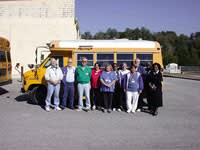
The transportation staff at Childhood Development Services in Ocala, Fla., helps to safely transport 320 students for an anuual mileage of 74,500.
The prevailing attitude at Childhood Development Services (CDS) in Ocala, Fla., is “We’re here for the children and not for each other,” says Neal Beard, transportation and facilities coordinator. As one of the first Head Start programs to service both Citrus and Marion counties, CDS knows well the level of commitment expected from the communities it serves. Beard helps ensure that the service is consistent.
CDS’ transportation program began in 1996. The program employs nine full-time drivers and operates a fleet of 30 vehicles, 11 of which are 22-passenger, Type A buses. Decisions such as procuring buses with safety belts installed and requiring a bus monitor for each bus have allowed the department to stay ahead of transportation regulations like 45 CFR Part 1310.
With no dispatch, CDS relies on Nextel cell phones to communicate with drivers. Routing is done through the Delorean Mapping System, which adjusts whenever there’s a change in ridership. The program demands a level of flexibility, which the staff at CDS welcomes.
Support community involvement
As access to transportation is limited at CDS, parental involvement with transportation decisions is imperative. “The parents have been a big help,” says Beard. “We tell them at the beginning, ‘If you don’t really need transportation, then please don’t take a seat from someone who does.’” When practicality fails, Beard relies on his parent transportation committee. “The parent transportation committee helps us write procedures and establish bus rules and regulations,” he says. At times the committee is able to establish protocol faster than the transportation department.
CDS also prides itself with volunteering its vehicles to assist public service workers with mass evacuations.
Hire the best
Applicants for driver positions at CDS must be over the age of 21 and have a CDL, Class B driver’s license and at least six months of driving experience. There’s a team interview where the potential driver receives scores for field knowledge and skills, and a thorough background check and screening. Drug testing takes place after hire along with a physical exam. Driver pay starts at $8.50 per hour.
Turnover at CDS is low. The average driver has been with the program for five to seven years.
“My first bus monitor, Ed Curtis, started the transportation program with me in ‘96 and is now my facilities supervisor,” says Beard, former safety supervisor for a road trucking company. Curtis, previously a bus driver and part-time maintenance man, has been with the company for 10 years.
Train to excel
CDS drivers safely transport approximately 320 students daily for an annual mileage total of about 74,500 miles.
Beard credits CDS’ frequent driver training sessions for its excellent safety record. “We do safety trainings in the classrooms at least three times a year and evacuation drills with the children at least four times a year,” says Beard. Although CDS doesn’t transport children to and from school at each of its sites, at different times of the year each child will ride a bus for a field trip or some other purpose. Therefore, every child at CDS participates in safety drills.
CDS contracts with the Pupil Transportation Safety Institute (PTSI) for its driver training programs. “New drivers are required to do the pre-service program before they can drive for us. It’s the same for bus monitors,” says Beard. The program averages about 40 hours of driver training. The success of the training has been phenomenal.
“In the eight or nine years that we’ve been operating, we’ve never had a child seriously hurt,” says Beard. “I think the worse case we’ve had is a scraped knee.”
Maintain your fleet
Vehicle maintenance at CDS is an overall group effort. The program does not employ a staff of mechanics. A maintenance man performs small jobs such as changing light bulbs, wipers and other small items, but the rest is contracted out to Britts Automotive in Ocala. Oil changes, lube jobs and filters take place at a local Texaco shop. Drivers have the work performed and bring back receipts for record keeping. The Texaco lube shop also has a car wash where CDS buses are cleaned weekly. CDS has a mixed fleet of 30 vehicles, including buses manufactured by Mid Bus, U.S. Bus, Blue Bird and Thomas Built Buses.
“We have two vehicles with over 120,000 miles,” says Beard. “And we have yet to have a major mechanical problem.”
More Special Needs Transportation
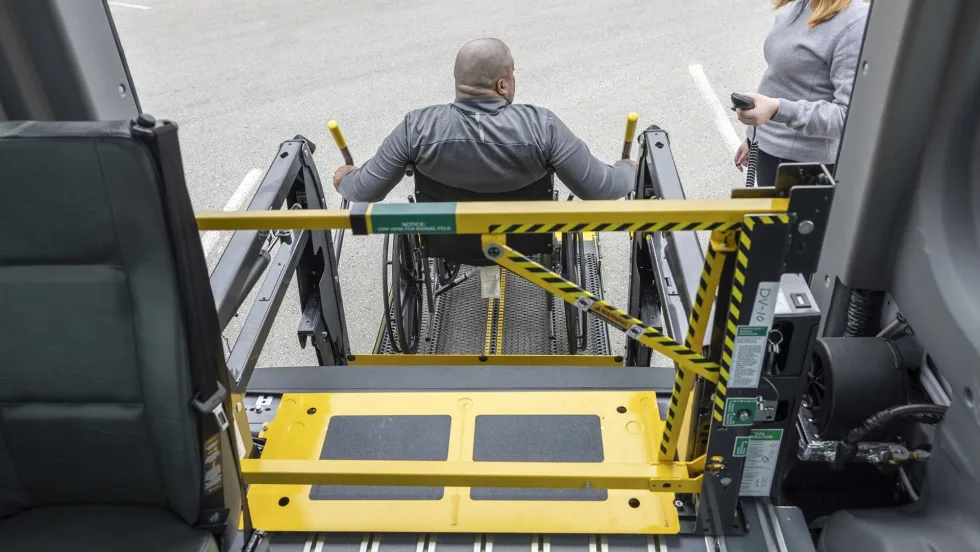
BraunAbility Introduces New Safety Barrier for Wheelchair Lifts
LiftSentinel is designed to add another layer of protection during wheelchair loading and unloading and can be retrofitted to many existing commercial lift installations.
Read More →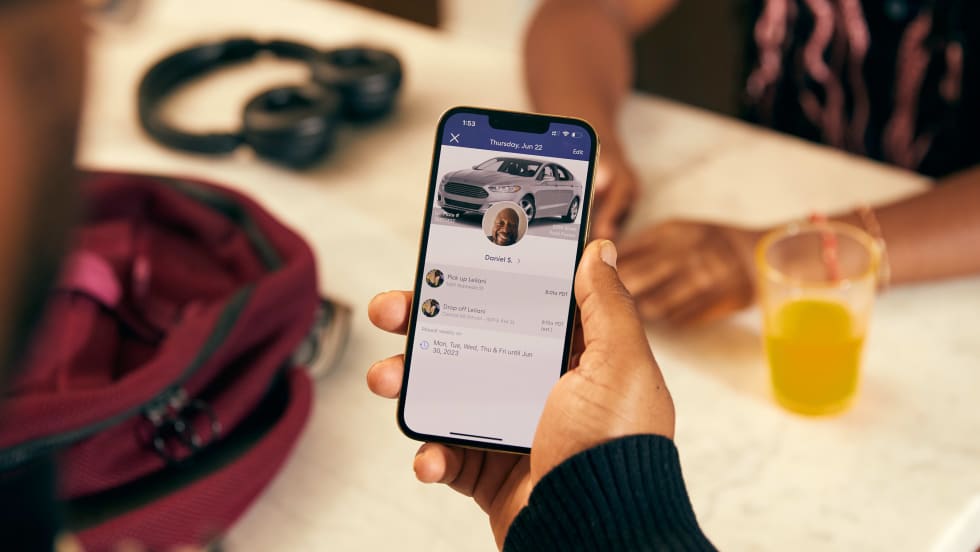
HopSkipDrive Launches New Safety, Driver Consistency Features for 2026-27 School Year
The company’s free ride recording, live ride tracking, and consistent driver assignments aim to improve safety and continuity for diverse student transportation needs.
Read More →
The Most Common Wheelchair Securement Mistakes on School Buses (and How to Fix Them)
Small missteps in wheelchair securement can have serious consequences. Here are 32 tips from experts to reduce risk and increase student safety on the bus.
Read More →
Inside AMF Bruns’ New Showroom: School Bus Securement Solutions Explained
Go inside AMF Bruns America’s new Ohio showroom with Maritza Valentin to see its FutureSafe technology, driver training tools, securement systems, and seating innovations.
Read More →
What AMF Bruns’ New Facility Means for Customers [Video]
Inside AMF Bruns’ new Stow, Ohio, operations: See how expanded space and innovation will enhance customer support and operations.
Read More →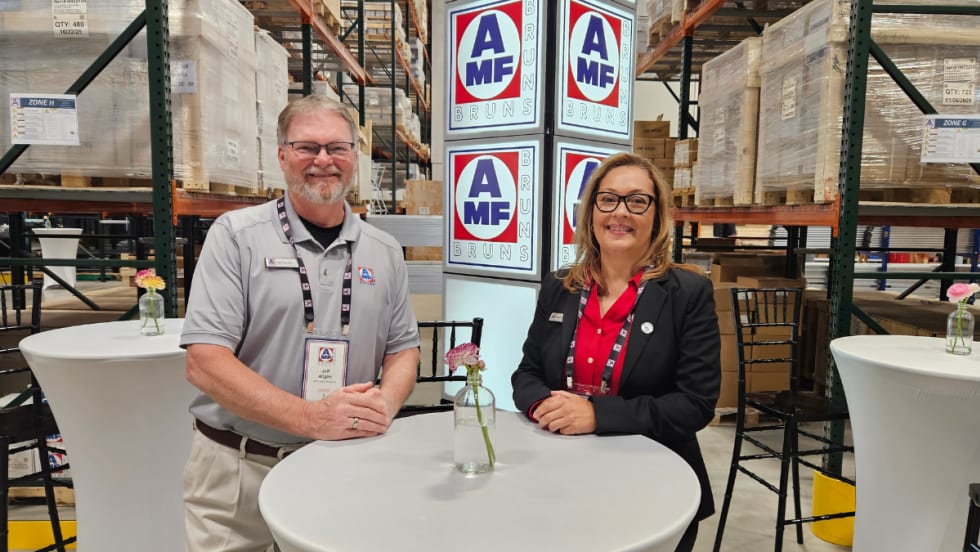
AMF Bruns Expands in Ohio, Investing in Growth and Community
With expanded production space, local investment, and a growing workforce, AMF Bruns is scaling its U.S. presence. Here’s an exclusive first look inside the new Stow, Ohio, HQ.
Read More →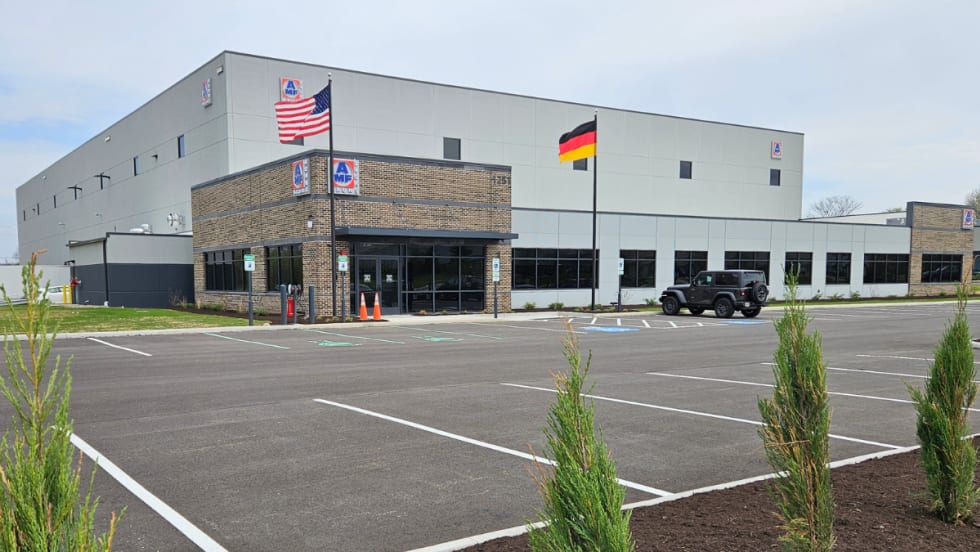
Inside AMF Bruns of America’s New Ohio Manufacturing Facility [Photos]
Take a behind-the-scenes look at AMF Bruns of America’s new 41,000-square-foot Stow, Ohio, headquarters, featuring advanced manufacturing, expanded space, and future-ready mobility solutions.
Read More →
First Student Boosts Student Support in Wichita & Texas
First Student and Wichita Public Schools are using behavioral support strategies to improve student ride experiences, while a separate initiative expands access to after-school programs through a bus donation.
Read More →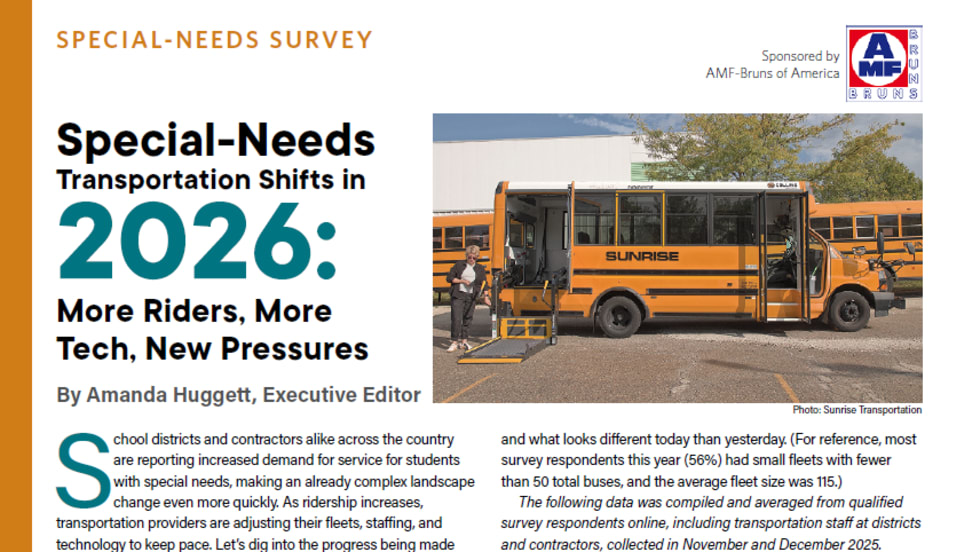
2026 Special-Needs Transportation Survey
What’s changing in special-needs transportation? This year, student transportation operators report a rising need, easing driver shortages, growing tech adoption, and evolving challenges. Sponsored by AMF Bruns of America.
Read More →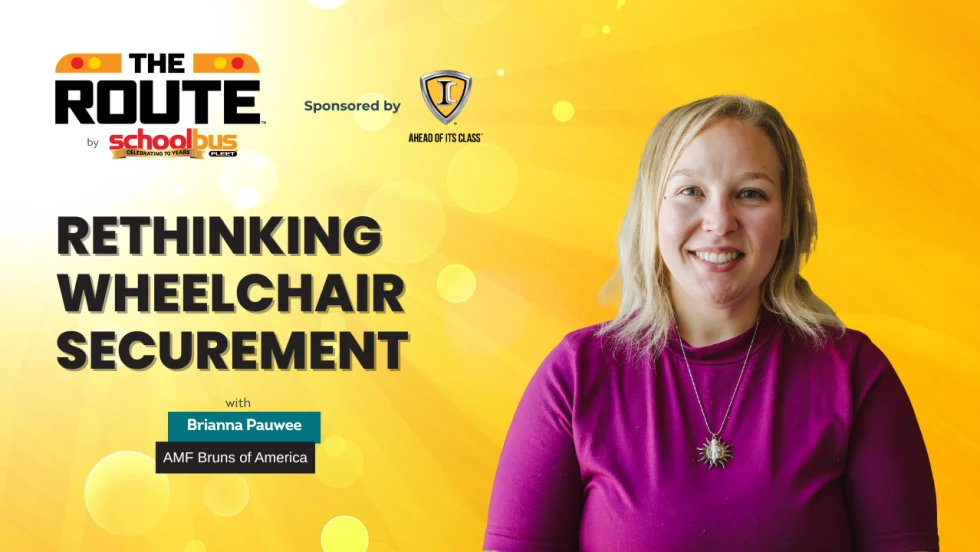
The Lived-Experience Gap in Mobility Tech: An Expert Take on Safe Student Transportation
Brianna Pauwee, a product application specialist at AMF Bruns of America and a wheelchair user, drops in to The Route to share practical securement and training insights, plus the story behind the new “Beyond Mobility” podcast. The Route is sponsored by IC Bus.
Read More →