




Focus on Safety — In and Out of the Bus
At the NASDPTS conference, state directors discuss enhancing school bus security and reducing pedestrian fatalities, among other topics.

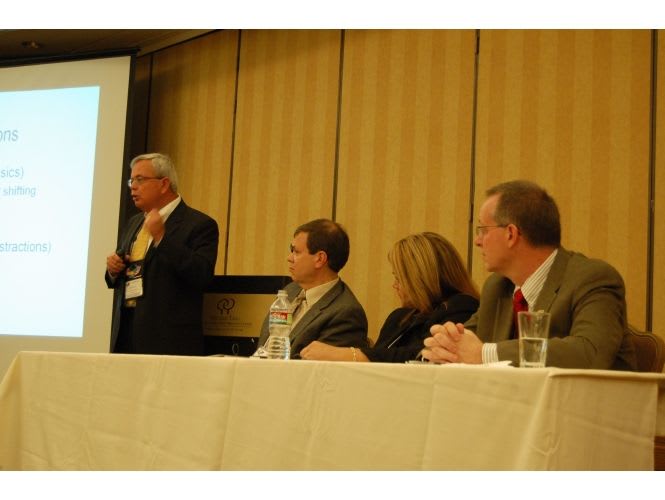
John Green (left) of California moderated a discussion on reducing pedestrian fatalities, with panelists Derek Graham of North Carolina, Anna Borges of California and Max Christensen of Iowa.
State pupil transportation directors convened in Portland, Ore., this fall to discuss a variety of vital topics, including school bus security and pedestrian fatalities.
The National Association of State Directors of Pupil Transportation Services (NASDPTS) conference, held Oct. 29 to Nov. 1, got rolling with an intriguing presentation: “Why Does an Old-Fashioned Childhood Sound So Radical?”
The speaker, Free-Range Kids founder Lenore Skenazy, argued that the world is much safer than the media leads us to believe. The New York City resident, who gained notoriety after she wrote a column about letting her 9-year-old son find his way home by himself on the subway, advocated teaching our children the skills and responsibility to be more independent.
She said that may include allowing them to walk to school or the school bus stop on their own.
Homing in on security
The conference’s next presentation provided an interesting contrast: “School Buses and Terrorism Awareness.”
FBI Special Agent Marybeth King discussed why school buses could be an alluring target for extremists. King gave insight into how terrorists work and how they aim to carry out their agendas. An attack on kids — whether at a school or in a school bus — would have a widespread impact on the public, particularly as it is covered by the media.
King stressed the importance of drivers’ pre-trip inspections and of having a secure bus facility. “If you are vulnerable to vandals, you are vulnerable to anything,” she said.
King also cautioned against making school bus route information available online. “If you post it, it takes away maybe the one chance you have of seeing someone following a bus,” she said.
Safety outside the bus
One of the more interactive sessions was a panel discussion on reducing pedestrian fatalities, moderated by California state director John Green (who announced his retirement in December — as SBF reported here). The panelists were North Carolina state director Derek Graham, Anna Borges of the California Department of Education (who succeeded John Green) and Iowa state director Max Christensen.
The dialogue, which included comments from many in the audience, centered on two pressing issues: what to do about students being struck by passing motorists, and what to do about students being struck by their own school buses.
Within the arena of passing motorists, one concept that generated much discussion was that of enforcement. Graham explained that while some call for stiffer penalties for those who illegally pass school buses, his state has seen that stiffer penalties are less likely to be enforced. Florida state director and outgoing NASDPTS president Charlie Hood added that when car seat fines were raised in his state, convictions went down.
Other ideas that were talked about included the use of surveillance cameras to catch passing motorists (and how states’ laws can affect that process) and the potential for using public awareness campaigns to make it clear that passing a stopped school bus is dangerous and unacceptable.
Regarding the problem of students being struck by their own buses, discussions covered the importance of proper mirror adjustment (industry consultant Dick Fischer said that he constantly sees crossover mirrors that are not adjusted correctly), the need in some cases for “back-to-basics” training, and having the driver get out of the bus to escort children across the street, as is done in California.
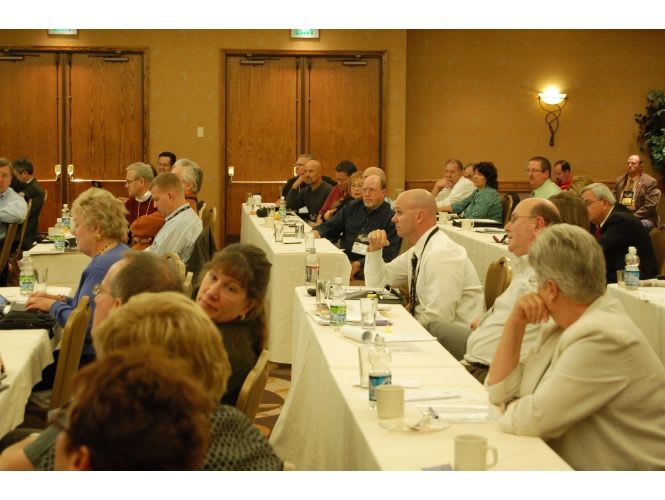
State directors saw presentations from federal agency officials, OEM executives and the leader of the Alabama school bus seat belt study.
High-profile presentations
The event also included updates from several federal agency officials, industry outlooks from executives of the three large school bus manufacturers and a presentation on the results of the Alabama school bus seat belt study (see story in our 2011 Fact Book, pg. 8).
With the Portland conference, Hood wrapped up his two-year term as NASDPTS president, handing over the reins to Arkansas state director Mike Simmons. Christensen moved into the role of president-elect.
There were a few new state directors in attendance this year. David Koskelowski of Wyoming and Carlos Santiago of New Mexico took over for Leeds Pickering and Gilbert Perea, respectively, both of whom retired in 2010. Koskelowski and Santiago had attended the 2009 conference with their predecessors.
Also, Dennis Watson, who was slated to become Alaska’s new state director in January, attended the Portland event with his predecessor, Elizabeth Sweeney Nudelman.
Next year’s conference is scheduled for Oct. 21-24 in Cincinnati.
More Safety

How to Build a Better School Bus Driver Training Program
Is it time to strengthen your driver training? Here’s how to pick the right talent and improve recruitment, retention, and safety. This video is brought to you by IC Bus.
Read More →
Recent School Bus Accidents Leave 2 Dead, 2 Injured
Four school bus crashes in Florida, Illinois, and Georgia highlight risks in transportation lots, at bus stops, and during student loading and unloading.
Read More →
When Every Second Matters, Clarity Keeps Routes Moving
From routine delays to urgent incidents, strong communication practices help drivers, dispatchers, schools, and families respond with confidence.
Read More →

What Happens When a School Bus Catches Fire — and What Can Help
School bus fires are rare but can be devastating. Learn how advances in fire suppression and asset protection help fleets detect fires earlier, reduce damage, and improve safety.
Read More →
Geotab Launches Tool to Help Fleets Investigate Road Incidents
Geotab Investigations combines telematics data, video, documents, and other evidence to help fleets reconstruct incidents, resolve claims, and determine what happened.
Read More →
Texas Sixth Grader Wins 2026 National School Bus Safety Poster Contest
Sai Darshana Yekolu of Moseley Middle School in Prosper, Texas, was named the newest winner for her artwork, bringing the theme of “Safe Rides, Everyday Heroes” to life.
Read More →
Doing More With Less: How Transportation Directors Can Prioritize Safety Amid Budget Uncertainty
With diesel prices soaring and nearly one-third of transportation directors expecting budget cuts, maintaining student safety has never been more challenging. Download this guide to learn how leading districts are prioritizing risk, funding critical safety technology, and building stronger budget cases with data.
Read More →
Walton County Schools Adds Gatekeeper Stop-Arm Enforcement System
The Florida district will deploy Gatekeeper’s updated Student Protector technology, which now incorporates AI to improve video evidence.
Read More →
How To Build a More Secure School Bus Yard During and After Hours
As thefts and overnight security threats continue, school transportation leaders are combining stronger operational practices with AI-enabled surveillance to better protect buses, facilities, and staff.
Read More →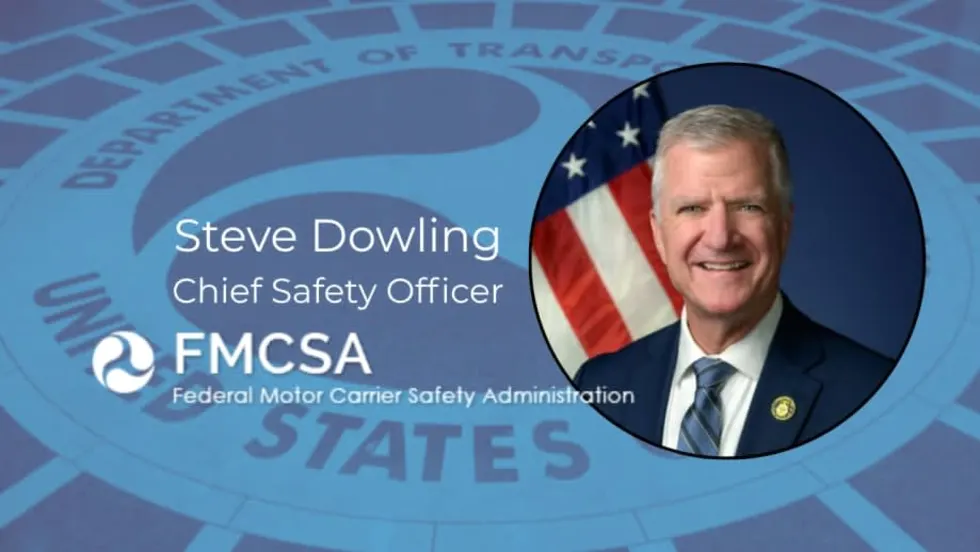
FMCSA Names New Chief Safety Officer: What School Bus Operators Should Know
Steve Dowling is set to lead the federal agency's efforts to advance commercial motor vehicle safety and reduce crashes, fatalities, and injuries on the nation's roadways.
Read More →