




Check Out: What to Keep in Mind During Pre- and Post-Trip Inspections
Flexibility and Future Planning Keys for Keeping Large School Bus Fleets
Discover how school bus companies like Kobussen Buses and Cook-Illinois Corp. navigate the complexities of fleet management, driver training, and the potential shift to electric buses. From mixed fleets to specialized training, explore their strategies for maintenance, driver retention, and the future of transportation.
by Dennis Anderson, Special to SBF
June 10, 2024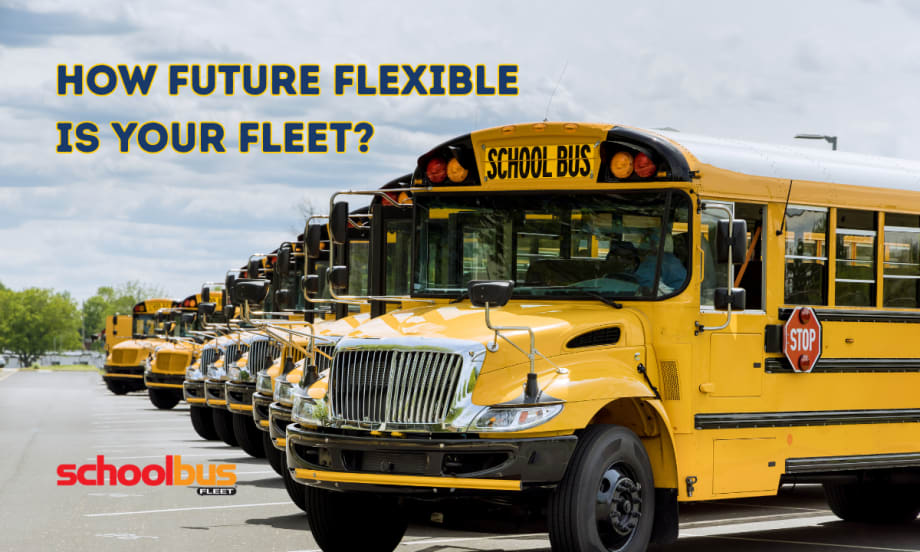
With the lifespan of a school bus about 15 to 20 years, companies such as Cook-Illinois Corp. and Kobussen Buses invest millions toward purchasing new vehicles each year.
Credit:
School Bus Fleet
6 min to read
Wisconsin-based Kobussen Buses once experimented with standardizing its vehicles when it opened a terminal with all new school buses.
“Guess what happened,” said Dan Kobussen, vice president of Kobussen Buses and president of the National School Transportation Association. “All the tires wear out at the same time. Or if there is a warranty issue with one bus, say with a door or something, there’s a similar problem with every one of them.
“Sometimes it's better to have a mixed fleet because you have more flexibility, and you don’t have the same repetitive issues or problems. The key to it is to have a network of mechanics with experience with more types of vehicles because products and needs change over time.”
It’s a common question that school transportation contractors using varied vehicle types in their fleets, like Kobussen Buses and Illinois-based Cook-Illinois Corp., must answer when it comes to maintenance and driver recruitment and training.
Kobussen Buses, established in 1938, serves 31 school districts throughout Wisconsin, with a fleet of 800 vehicles, 700 of them are school buses from Types A through D. Kobussen Buses also has vans, motorcoaches, and shuttle buses for charter and business trips as well as jaunts to Milwaukee Brewers and Green Bay Packers games.
Cook-Illinois Corp. has 2,100 vehicles serving about 150 school districts throughout Illinois as well as Indiana, Wisconsin, and metro St. Louis. President and Chief Operating Officer John Benish Jr. said Cook-Illinois also specializes in serving school districts’ special-education transportation needs.
Kobussen and Benish discuss here how they manage fleet maintenance and replacement programs, driver training, and the potential for introducing electric vehicles.
Mechanics: Keeping the Bus Fleet Running
Cook-Illinois has 130 mechanics on staff who service gasoline, diesel, propane, and biodiesel engines. The company also has two electric buses.
“We do a lot of training and after a while the mechanics graduate to different engines,” Benish said. “And the staff is evolving. In our shop, we have two or three mechanics who can do just about anything. And then we have two or three who are learning to work on just about anything, and then another two or three who are in training to do just about anything. Training remains continuous because the engines are constantly changing.”
Kobussen, meantime, said the company’s mechanics have made changes to buses to make them more comfortable and safer for drivers to use.
“We try to spec the buses in a way as they are similar to an automobile so we put power mirrors on them so the drivers can adjust the mirrors from their seat. And for years buses had the old style air brakes where the pedal itself levered down instead of hanging from under the dash like a car. Air brakes in general just feel differently than hydraulic brakes on a car. We went with hydraulic brakes as much as possible. However, air disc brakes have the feel of hydraulic brakes but it’s a better product, so we have also switched some to air disc brakes.”
And Kobussen said: “We have a network of mechanics, and have experts in particular buses. And as buses get more and more technical, it could have an impact on the amount of training we have to do regarding the equipment the drivers are using.”
Drivers: Keeping the Bus Fleet Moving
Cook-Illinois has 2,800 drivers, including paraprofessional workers assisting special needs students. Because serving special needs students is about 60% of Cook-Illinois Corp.’s business, the additional training is paramount, Benish said.
“After licensing and the related training for our drivers and support staff we then have another three to five more days of training related to working with special needs students, such as IEPs (Individualized Education Programs), special seats and special equipment. If you are going to do any special-needs transportation, you really need to go above and beyond to make sure your drivers are prepared, and they should know what the child’s IEP is.”
Kobusses said it’s important for drivers to feel secure.
“We try to keep drivers on the same bus so they are comfortable,” Kobussen said. “But if their bus is in for service, we try to put them in a similar bus. If we can't, we spend more time with drivers to train them on a similar bus, so they understand what’s different between this bus and another bus.
“We also have monthly meetings with the drivers so we’re always making sure they are comfortable with where they are.”
Recruiting and retention are important for larger fleets.
Kobussen said: “Drivers for a smaller bus are easier to recruit but nine times out of 10 we try to convince them to experience driving the big bus. We try to get every driver licensed to drive the big bus, even if they are going to drive the small bus. Because at some point they might grow into a big bus and why would you want to pay for the CDL license twice?
“I think a lot of times a driver might prefer at first to drive the smaller bus because it’s similar to a car. But the larger bus could be better to drive because you sit up higher and can see all the traffic and all around you. It’s not super difficult.”
Benish added: “Some people just like driving big buses and some just like doing smaller groups of children and smaller buses and house-to-house pickups. We’ve been lucky to find people who want to do it. Sometimes trying to find people with a passion to serve students with special needs is a little bit harder.”
Purchasing: Keeping the Bus Fleet Evolving
With the lifespan of a school bus about 15 to 20 years, companies such as Cook-Illinois Corp. and Kobussen Buses invest millions toward purchasing new vehicles each year.
Benish said introducing new buses into the fleet is about consistency and safety. Cook-Illinois buys about 100 to 200 buses each year.
“We have to keep the buses up to speed,” he said. “The state of Illinois makes it a little easier for us because every school bus has to be inspected every 10,000 miles or every six months, whichever comes first. The state is doing the inspections through its Safety Lane. They go through the entire bus inside and out. The bus has to be running perfectly. It's good because it’s a third party doing the inspection.”
Kobussen Buses buys about 25 buses each year.
“School districts have influence in what types of buses we purchase,” Kobusses said. “For the most part they were happy when we brought in propane, but some have started asking about electric vehicles.”
Looking to an Electrified Future
Electric vehicles may be the future of the school bus industry, but that transition could come with some trepidation.
“It’s similar to how the average consumer may feel about getting an electric car or SUV,” said Kobussen. “There are lots of electric buses out there. We don’t have any now. We just haven’t gotten there yet. We jumped headfirst into propane and we’re comfortable there for now.
“You need to feel comfortable with that kind of investment. We have to have the infrastructure ourselves. When we buy a school bus you’re going to own it for 15 years. Fifteen years is a long time if it’s not a good product. We’re super conservative when it comes to making those choices.”
Benish said Cook-Illinois Corp. is pleased with the two Lion electric buses it received in 2018 through a grant from Volkswagen. The company is on schedule to get another 20 to 30 more electric buses through an Environmental Protection Agency grant.
“Some school districts are very interested in getting electric buses,” Benish said. “Those districts are hearing that electric buses are more efficient and are the future. And there is a lot of free money available through grants, if you want to pursue it. The EPA grants could pay for up to 80% of the total cost of the electric buses. If you get the grant, the buses are basically free.”
Quick Answers
These companies manage large fleets by employing strategies such as maintaining mixed fleets, which allows for better flexibility and cost efficiency. They also focus on specialized training for drivers to ensure safety and reliability.
*Summarized by AI
Subscribe to Our Newsletter
More Maintenance
Sponsored•September 8, 2026
The Essential Guide to School Bus Maintenance and Student Safety
Your district's buses carry students to school every day. This guide shows how predictive maintenance powered by fleet data helps keep buses reliable, drivers accountable and students safer from the first bell to the last stop.
Read More →
Kerry Brothers Grows Michigan School Bus Repair Network
The acquisition of Downriver Truck and Bus expands Kerry Brothers’ school bus maintenance footprint across southeast Michigan, adding repair capacity, diagnostic resources, and state inspection support.
Read More →
Noregon Introduces CAN Bus Diagnostic Tool, Expands JPRO Features
CAN Mentor and the latest JPRO update aim to simplify vehicle network diagnostics and improve repair efficiency for technicians of all experience levels.
Read More →
Cummins on Smarter, Simpler Engine Innovation
Cummins discusses its first-ever gasoline engine for school buses, EPA 2027, and why bus fleets still want durable, simpler internal combustion options.
Read More →
Report: 72% of Diesel School Buses Now Use Advanced Low-Emission Engines
New data shows advanced low-emission diesel technology continues expanding across school bus fleets, even as electric bus adoption gains momentum.
Read More →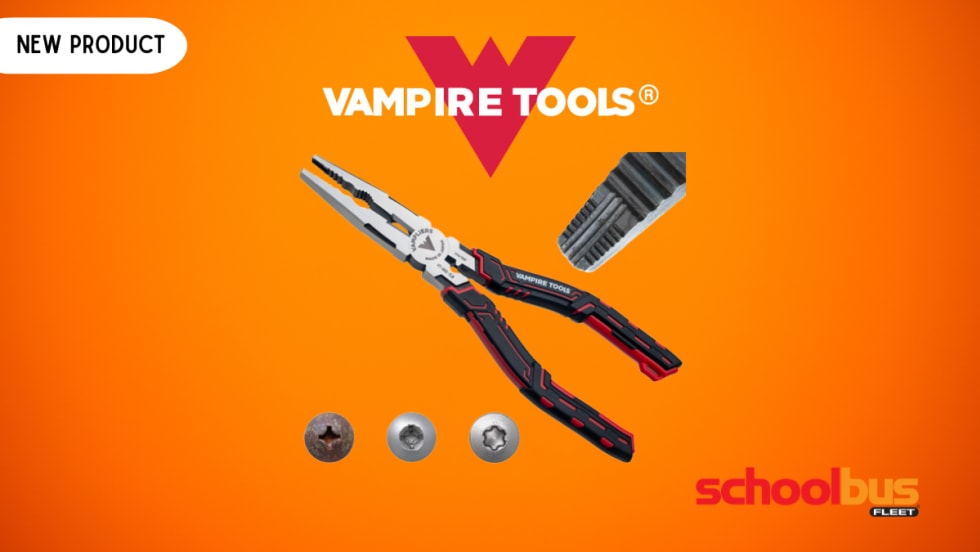
Vampire Tools' CAIMAN 7.5-Inch Multi-Purpose Screw Extractor Long-Nose Pliers with Crimper
Vampire Tools introduced the VAMPLIERS Caiman 7.5-inch multi-purpose pliers, combining screw extraction, cutting, crimping, and gripping functions into a single tool designed for fleet maintenance professionals.
Read More →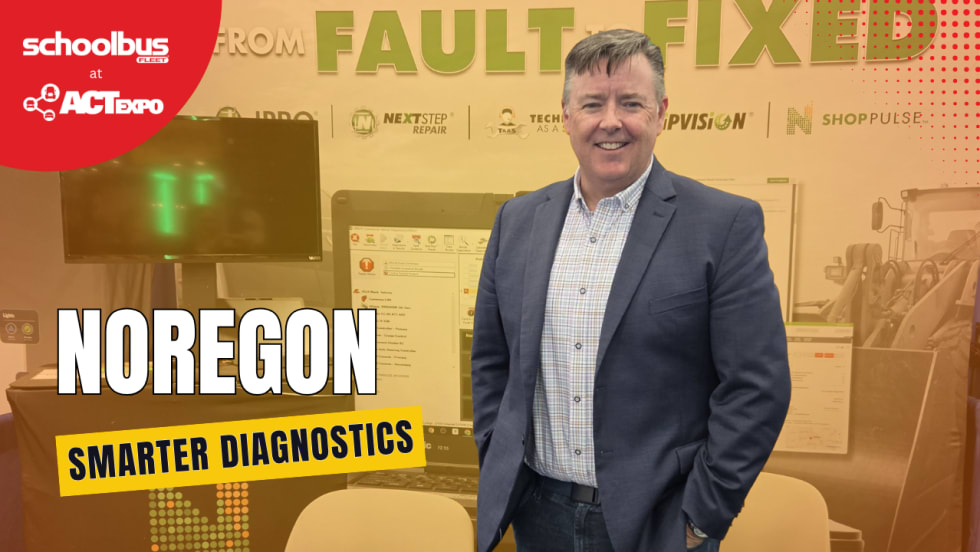
How Advanced Diagnostics Helps Bus Fleets Stay Ahead of Repairs
Chat with Noregon’s Kevin Smallhorn at ACT Expo about bus diagnostic tools, telematics integration, CNG maintenance support, and strategies to help reduce downtime and improve uptime.
Read More →
How School Bus Fleets are Getting Ahead of Breakdowns
Don’t let bus downtime wear you down. Here’s how bus operators are shifting from manual processes to AI-powered, data-driven maintenance systems for improved reliability and safety.
Read More →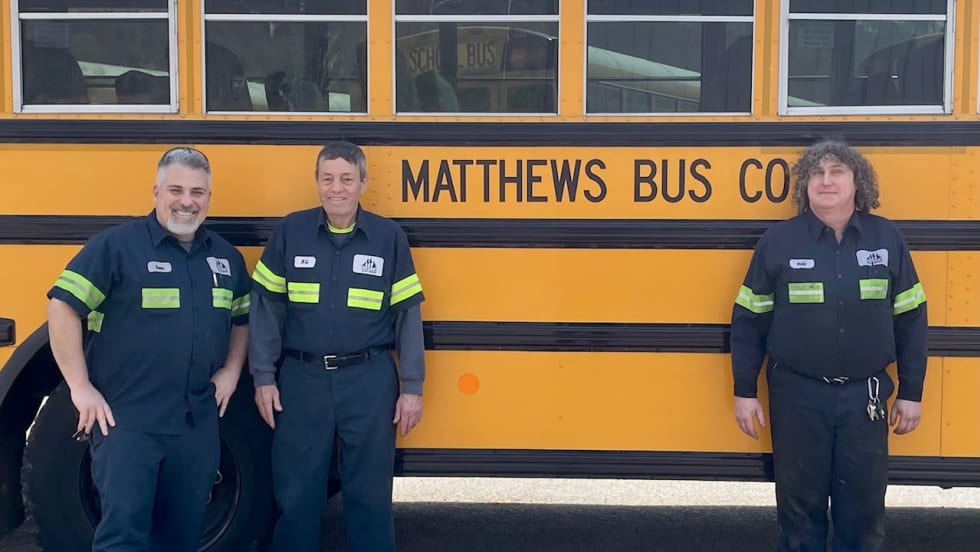
Pennsylvania School Bus Maintenance Team Praised for Dedication to Safety
Matthews Bus Company’s West Jefferson received a letter of commendation from the Pennsylvania State Police for their fleet inspections.
Read More →
Sponsored•April 16, 2026
From Chaos to Clarity: How School Districts Are Running Leaner Transportation Operations
Covering 38 routes on a Friday afternoon. Buses idling while routes overlap. Parents calling nonstop about late arrivals. Sound familiar? This whitepaper explores how district transportation leaders solved these exact problems — and what measurable results followed.
Read More →