




Optimizing Driver Views for Enhanced School Bus Safety
Having a clear view in and around the bus is critical for ensuring rider safety. The latest products to help include high-definition camera systems, stop arms equipped with radar and artificial intelligence, and LED mirrors.

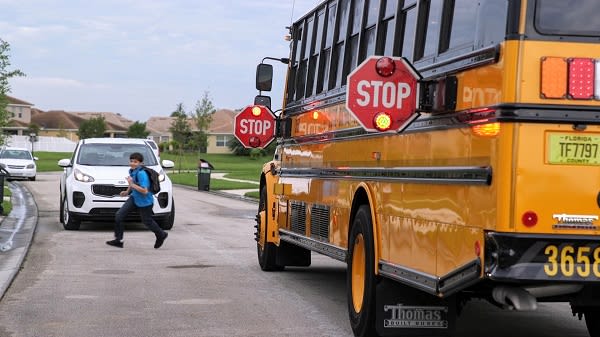
Photo courtesy Safe Fleet
File photo courtesy Mitzi Bowers
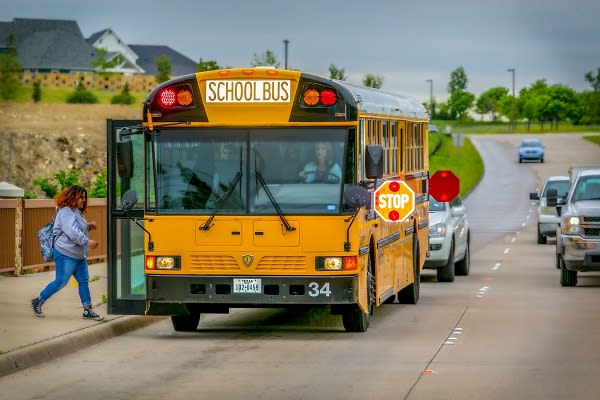
Keeping students safe in and around the school bus can be a challenge — pandemic or not. And now, with more students back on board, school bus drivers are being reminded to keep an extra eye on the potential dangers around the bus — from stop-arm violators to students running in and out of the danger zone.
School Bus Fleet reached out to several visibility technology suppliers to find out about some of the latest offerings to enhance driver and student safety from all angles. Those include high-definition camera systems, stop arms equipped with radar and artificial-intelligence technology, and LED cross-view mirrors.

Photo courtesy AngelTrax
Exterior Camera to Increase Driver’s Field of View
Capture traffic coming, going, and beside the bus with AngelTrax’s patent-pending exterior Parallax camera’s 210-degree field of view. Mounted to the bus’s driver side or passenger door side, each EXTPARLX4K camera captures a view wide enough to include even the exterior sidewall of the bus, from front bumper to back bumper, according to the supplier. With a 4MP lens, the EXTPARLX4K camera exceeds cinema 4K resolution without the fisheye effect of wide-angle lenses. The exterior Parallax camera has a waterproof rating of IP67 and an impact resistant rating of IK08. The camera is also compatible with AngelTrax’s Vulcan Series mobile digital video recorders and Vulcan Series Hybrid Component mobile network video recorders.
AngelTrax
www.angeltrax.com/parallax
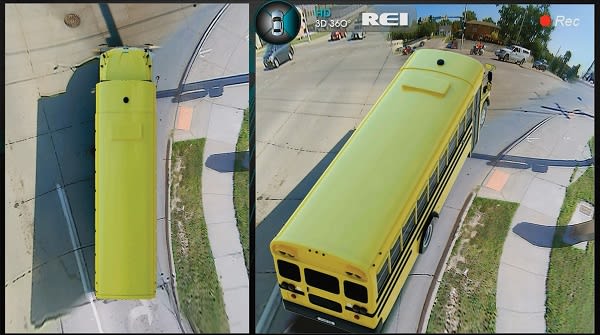
Photo courtesy REI
Advanced Technologies for Protecting Bus Danger Zones
REI’s surveillance and driver assistance solutions integrate advanced technologies, such as radar and lidar sensors, artificial intelligence, and high-definition cameras, to elevate student transportation safety. These advancements assist drivers to better understand the environment and enable quick, mitigative responses to potential hazards around them. Among REI’s solutions:
Automated Stop-Arm System – integrates HD cameras and radar to detect the illegal passing of school bus stop arms, day or night, and auto capture images of violators’ license plates.
3D 360˚ System – integrates HD cameras and lidar to provide three-dimensional, panoramic, and bird’s-eye views of bus danger zones and assist drivers during parking and lane changes with views of blind spots and around corners.
Mobileye Collision Avoidance System – integrates artificial intelligence with radar and lidar to trigger pre-emptive warnings to drivers and vehicles about speeding, lane departures, unsafe following distances, and potential collisions with pedestrians, cyclists, etc.
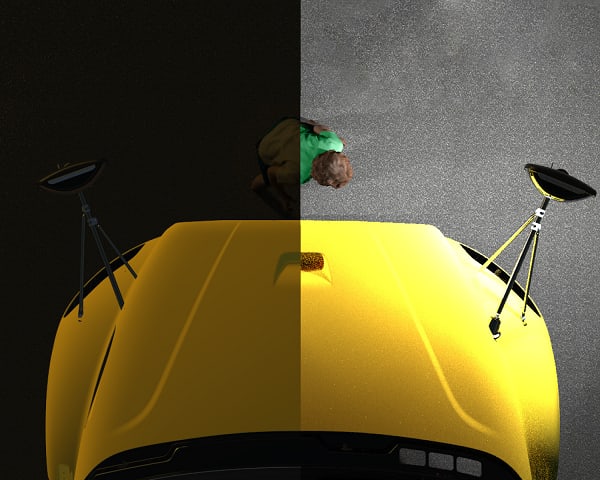
Photo courtesy Rosco Vision Systems
LED Mirrors to Boost Visibility in Low-Light Conditions
Rosco Vision Systems’s Eye-Max LED offers improved visibility at the front of the school bus during low-light loading and unloading conditions. By integrating four ultra-bright downward facing LEDs within each head of the Eye-Max cross-view mirrors, a “cast-net of visibility” is added to both the cross-view mirror lenses and to the direct eye-level viewing of the bus driver, according to the supplier.
How it works: when the bus’s front door opens, the front of the bus apron and front wheel locations are automatically illuminated, thus enabling the use of the cross-view mirrors in the dark. The system automatically times out 10 seconds after the bus’s door closes, providing the driver adequate time to survey the danger zone under optimal lighting conditions before driving away. The mirror’s downward facing LEDs are set at precise angles that will not be blinding to the driver, students, or other roadway traffic, according to the supplier.
Available as a new bus option, the Eye Max LED can also be retrofitted on any school bus with existing Eye-Max 5360 cross-view mirrors by purchasing a new kit P/N: KIT5360LEDH.
Rosco Vision Systems
www.roscovision.com
Stop Arm Equipped with Artificial-Intelligence Technology
Safe Fleet’s Predictive Stop-Arm couples sensors and artificial intelligence to proactively notify oncoming motorists, bus drivers, and students of potential dangers around the school bus.
The system detects vehicles that it deems unlikely to stop when the school bus stop arm is deployed, and then provides audio and visual warnings inside and outside the vehicle. The intent is to prevent a potential accident before it happens, according to Safe Fleet.
The Predictive Stop Arm includes the following components:
A controller unit, called the Safety Alert Module (SAM), mounted inside the vehicle.
Two externally-mounted 24GHz doppler radar modules on the vehicle, which are usually mounted directly below the stop arm. One radar monitors traffic approaching from the front of the bus; the other radar monitors traffic approaching from the rear of the bus.
Visual warnings/alarms are signaled via the SAM display module. This auto-light-sensing unit provides a tri-color visual warning: green for normal, amber for warning, and red for alarm.
Two external horn speakers provide audible alerts to students and the bus operator.
Safe Fleet
www.safefleet.net
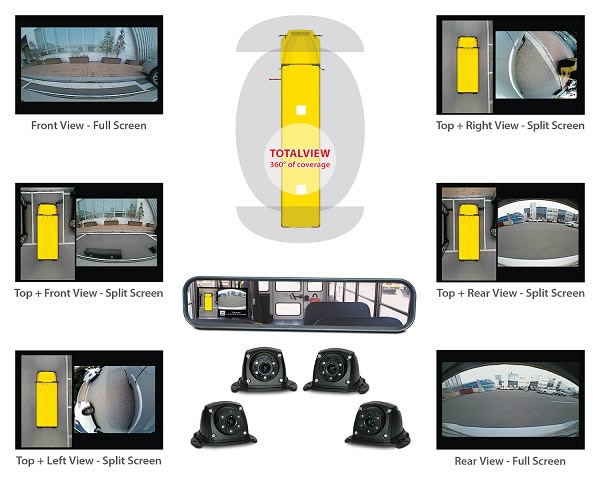
Photo courtesy Safety Vision
School Bus Mirror Monitor Offers High-Definition Views
Similar to the concept of backup cameras, Safety Vision’s HD School Bus Mirror Monitor covers a 360-degree view around the bus for the driver. Equipped with four HD cameras strategically placed around the vehicle, the solution also has the ability to integrate with Safety Vision’s On-Board Recorder, which supports up to 12 additional vehicle cameras, according to the supplier. The additional camera inputs allow school districts to equip their buses with stop-arm cameras and take advantage of Safety Vision’s citation services, according to the supplier. The solution is also upgradeable to add on-board Wi-Fi.
Safety Vision
www.safetyvision.com
More Safety
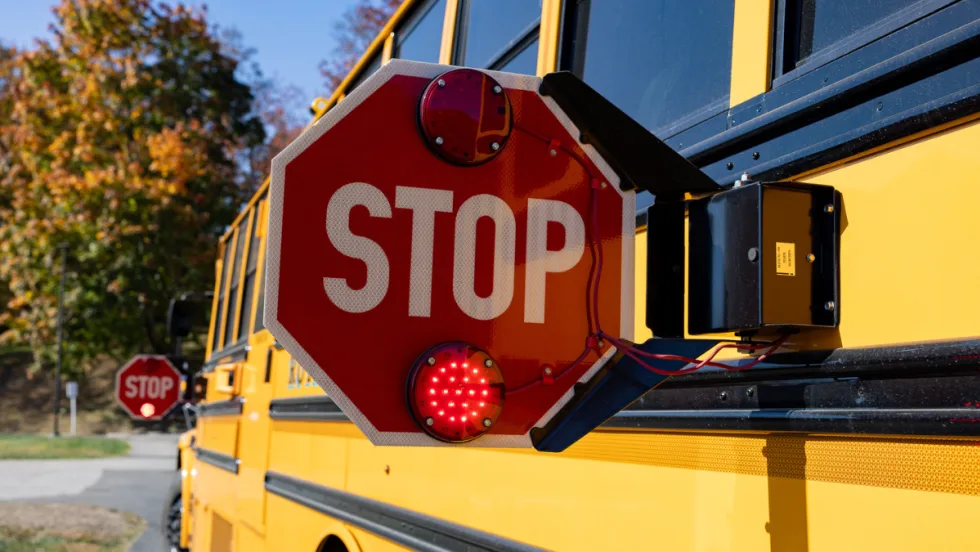
Illegal School Bus Passing Drops 24% in New York Districts
With fewer than 5% of citations involving repeat offenders, Westchester County officials said enforcement, education, and community partnerships are helping change driver behavior.
Read More →
School's Back. Here's What Happened to Traffic, Speeding & Distraction
What happens to traffic when school resumes? New data analysis examines changes in distracted driving, congestion, and speeding around schools.
Read More →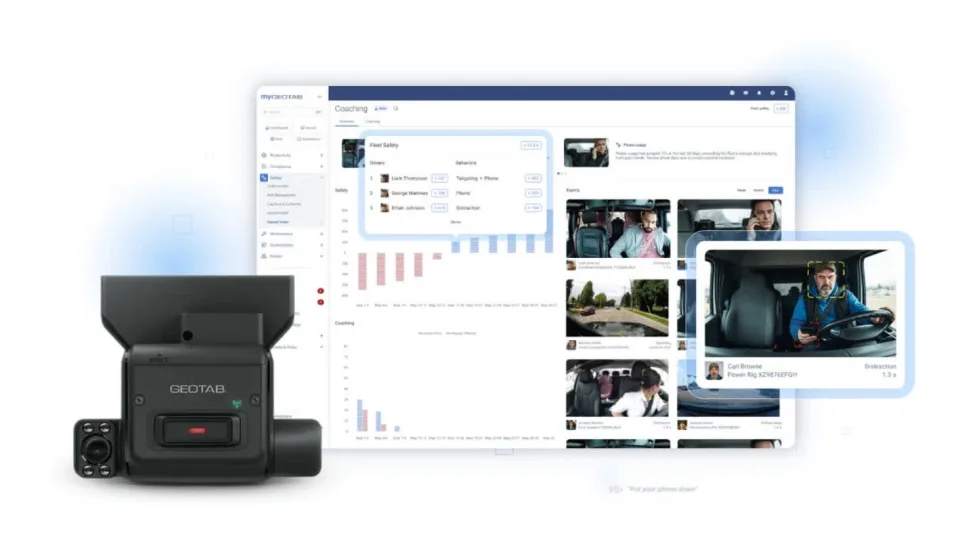
Geotab Expands Fleet Safety Tools With Video Coaching, Risk Insights
New safety and video capabilities aim to help fleet managers assess risk, support drivers, and take targeted action through video coaching, red-light violation detection, and more.
Read More →

How to Build a Better School Bus Driver Training Program
Is it time to strengthen your driver training? Here’s how to pick the right talent and improve recruitment, retention, and safety. This video is brought to you by IC Bus.
Read More →
Recent School Bus Accidents Leave 2 Dead, 2 Injured
Four school bus crashes in Florida, Illinois, and Georgia highlight risks in transportation lots, at bus stops, and during student loading and unloading.
Read More →
When Every Second Matters, Clarity Keeps Routes Moving
From routine delays to urgent incidents, strong communication practices help drivers, dispatchers, schools, and families respond with confidence.
Read More →
What Happens When a School Bus Catches Fire — and What Can Help
School bus fires are rare but can be devastating. Learn how advances in fire suppression and asset protection help fleets detect fires earlier, reduce damage, and improve safety.
Read More →
Geotab Launches Tool to Help Fleets Investigate Road Incidents
Geotab Investigations combines telematics data, video, documents, and other evidence to help fleets reconstruct incidents, resolve claims, and determine what happened.
Read More →
Texas Sixth Grader Wins 2026 National School Bus Safety Poster Contest
Sai Darshana Yekolu of Moseley Middle School in Prosper, Texas, was named the newest winner for her artwork, bringing the theme of “Safe Rides, Everyday Heroes” to life.
Read More →
Doing More With Less: How Transportation Directors Can Prioritize Safety Amid Budget Uncertainty
With diesel prices soaring and nearly one-third of transportation directors expecting budget cuts, maintaining student safety has never been more challenging. Download this guide to learn how leading districts are prioritizing risk, funding critical safety technology, and building stronger budget cases with data.
Read More →