



Expect a juggling act as school choice widens
With the opening of the 2002-03 school year just a few weeks in the offing, most school transportation managers are busy prepping their drivers and ro...
With the opening of the 2002-03 school year just a few weeks in the offing, most school transportation managers are busy prepping their drivers and rolling stock, putting the finishing touches on their routing and scheduling and girding themselves for the predictable mass confusion of the first few days of school. But some managers face a greater-than-usual challenge this year. That's because the federal government's No Child Left Behind Act, signed into law by President Bush earlier this year, mandates a school-choice option for children attending schools that fail to meet minimum standards. The education reform package requires school districts to offer transfers to students at low-achieving schools and mandates that transportation be provided. To that end, Education Secretary Rodney Paige has identified 8,600 schools nationwide that fall into the under-achieving category. These schools must offer parents the opportunity to transfer their children to higher-performing schools in the district or outside the district beginning this year. (For more information on the No Child Left Behind Act, see News Alert in this issue.) Impact hard to gauge
It's too soon to judge how many parents will switch schools. Wholesale transfers of students are unlikely. According to one news report, informal surveys of parents in affected districts found that few are planning to move their children to other schools. But many parents still are unaware of their options. The newness of this law and the confusion among administrators about its implementation could create a delayed reaction. The transfer rate may be slow this year, but take off next year. Logistical problems are already cropping up. At one Mississippi school district, so many of the schools are low-achieving that a high school student would be forced to travel 50 miles to reach the closest school that isn't on the unsatisfactory list. The problem is, state law prohibits students from traveling more than 30 miles on the bus. As you might expect, the cost of transporting school-choice students is a major concern at affected school districts. Under the new law, some of the funding for choice-related transportation can be siphoned from Title I funds (federal dollars earmarked for schools with disadvantaged students), but there's still much uncertainty about how much this extra busing will cost and where additional funding will be drawn from. Hardest hit, of course, will be states that identified large numbers of non-performing schools. Apparently, the bar was set at different heights in each state. Michigan, for example, identified more than 1,500 non-performing schools, while Arkansas identified none. Can you guess which state will have a tougher time dealing with transportation of school-choice students? Flexibility is key
School bus operators who work in affected school districts will have to be flexible as they prepare to take on this additional challenge. Depending on how the law is interpreted in each state or each local district, there may be permissible restrictions that soften the impact, such as geographical limits on the choice school. At one Maryland school district, low-achieving and higher-performing schools were paired, creating a more structured transportation scenario. Other districts are offering only a few school-choice options because of transportation concerns. Transportation is a critical factor in the success of this ambitious educational reform plan. Transportation managers should insist on being part of the decision-making process as administrators implement the program. Although it will be years before we can gauge the educational impact of the No Child Left Behind Act, the immediate impact on transportation programs needs to be minimized in light of ongoing budget concerns.
More Management
The Back-to-School Checklist Every Director Should Complete Before the First Bell
Help your transportation team start the school year strong with these tips for contingency planning, communication, fleet visibility, technology, and trip management.
Read More →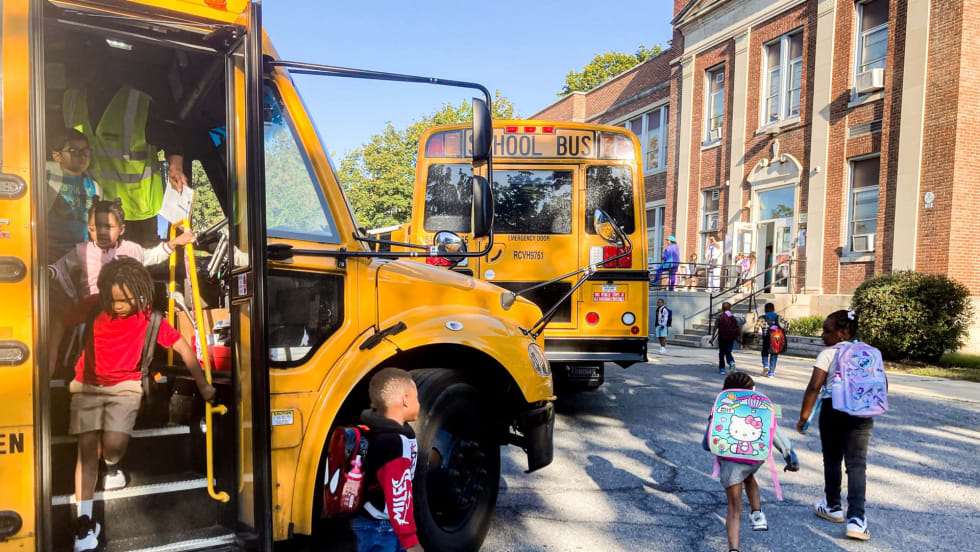
How a New York District Cut Nearly $1M in Transportation Costs While Expanding Bus Access
A data-driven overhaul with BusRight reduced Poughkeepsie City School District's planned routes from 26 to 17 while extending school bus service to about 1,200 additional students.
Read More →
Budgets Down, Enrollment Shifting: What the Data Says Districts Should Watch
School transportation departments face two converging challenges this year: tightening budgets and shifting enrollment. Most districts still address these issues separately, but the assumption that either trend will simplify operations is proving incorrect.
Read More →
These 8 School Transportation Companies Made the 2026 Inc. 5000 List
Find out which school transportation contractors, technology providers, and suppliers ranked among America’s fastest-growing private companies.
Read More →
The Link Between Emotional Intelligence and School Bus Safety
How can emotional intelligence help transportation pros navigate stress, manage change, and build stronger relationships? Listen to find out.
Read More →
What Emotional Intelligence Has to Do With School Bus Safety
In this video, discover how emotional intelligence can help transportation leaders and drivers navigate stress, manage change, and build stronger relationships. The Route is sponsored by IC Bus.
Read More →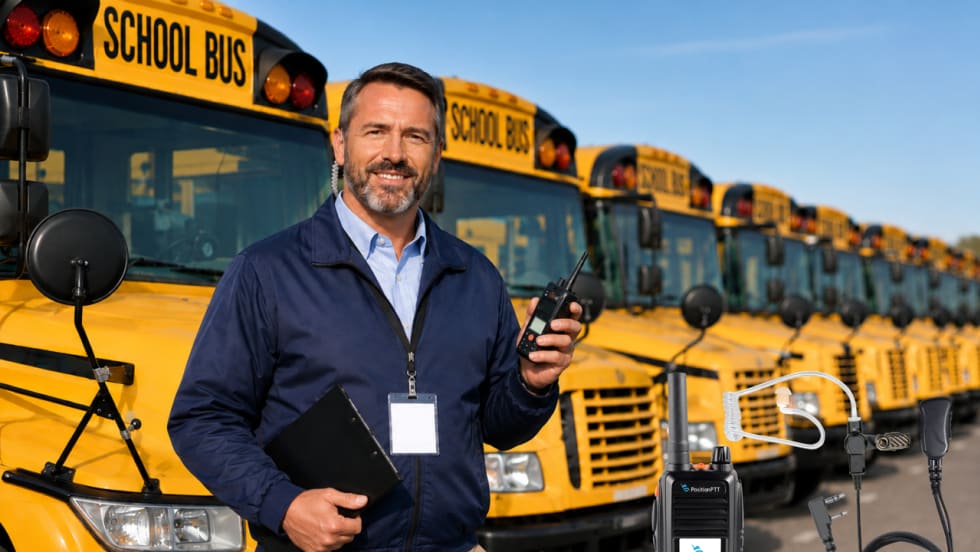
Beyond Two-Way Radios: School Bus Communications Evolve With Push-to-Talk Over Cellular
PRYME Radio and PositionPTT join forces to advance hands-free radio use and reduce distracted driving. See how PoC compares with traditional radios on range, cost, safety, and connectivity.
Read More →
Have School Districts Adapted to Bus Driver Shortages or Simply Accepted Less Service?
According to a recent report from HopSkipDrive, many districts appear to have recalibrated what "normal" transportation service looks like.
Read More →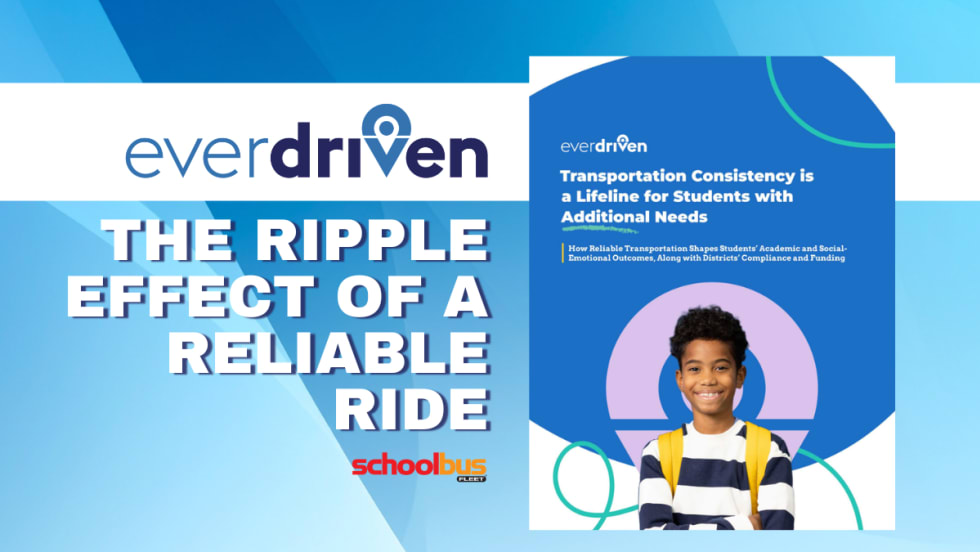
Reliable Transportation Linked to Better Student Outcomes, New EverDriven Study Finds
See why new research suggests transportation consistency improves student outcomes while influencing attendance, funding, IEP compliance, and family trust.
Read More →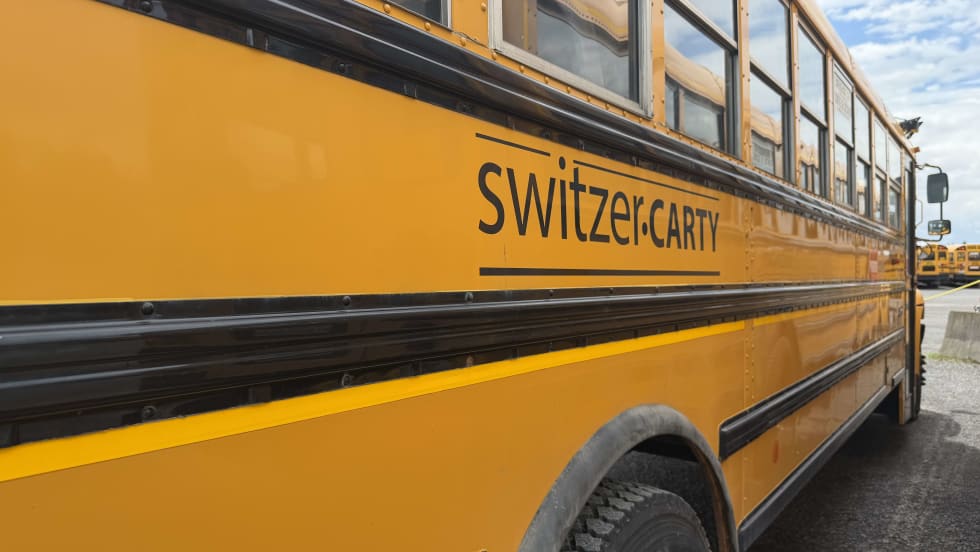
Switzer-CARTY Enters the U.S. with New Acquisition
The Canadian contractor’s acquisition of Minnesota-based Agnes Corporation marks its first cross-border expansion into the United States and adds 350 vehicles.
Read More →