




Even 'Great Fleets' are desperate for drivers
Putting together the “Great Fleets” section of this issue was a great learning experience for me and my staff. We spoke with dozens of transportation managers in preparing this article.
Putting together the “Great Fleets” section of this issue was a great learning experience for me and my staff. We spoke with dozens of transportation managers in preparing this article. Though it was the busiest time of their year, they graciously donated precious minutes of their day to answer our questions and dig through their photo collections for something publishable. As always, I learned something new from every conversation. At Corpus Christi Independent School District in Texas, the transportation department sends a mechanic’s helper in a golf cart stocked with lights and fluids through the parking lot to make minor repairs while drivers pre-trip their buses. At Tulsa Public Schools in Oklahoma, the special-needs buses are being equipped with GPS systems and laptop computers. And, at Aurora Public Schools in Colorado, school buses are equipped with blue-light alarms that can be secretly activated to alert other drivers or police of a hostage or weapons situation on the bus.
Not immune from shortage
One thing, perhaps, that wasn’t new — yet was still surprising — was the constant reference to the driver shortage. Except for a few lucky fleets, nearly every “Great Fleet” operator cited a problem with finding and keeping drivers. “Absolutely horrendous” was how one transportation manager phrased it. Several others said, “It’s our biggest challenge.” We all know that the driver shortage is not new. Depending on the health of the economy and the level of unemployment, the driver shortage ranges from merely aggravating to nearly debilitating. Right now, it’s beyond nearly debilitating at many school bus operations. At Shawnee Heights School District in Kansas, the transportation department began the school year by advising schools that buses won’t be available for activity trips — because of the driver shortage. To meet the needs of regular routes, the district has conscripted custodians, mechanics and building and grounds employees to drive school buses. This practice, of course, leaves gaping holes in their other assigned areas. More importantly, these people are not as thoroughly trained as regular drivers. The bottom line is that safety is compromised when other district or contractor employees have to substitute as drivers. Now the difficult part — outlining a solution to this problem. On the face of it, school bus driving is a tough sell. You can tick off a laundry list of potential obstacles, including low pay, licensing, split shifts, tremendous responsibility and passenger management problems. When you consider the width and height of all these barriers combined, it makes you wonder how school transportation managers find any drivers.
Keep your drivers happy
Because the unemployment rate is so low — and so many “simpler” full-time jobs are available — you may want to focus as much on retention as recruitment. Here are a few suggestions that I’ve borrowed from our “Great Fleets” on retaining drivers, the “antidote” to a bad case of the driver shortage blues.
Create a family atmosphere that allows the drivers to feel comfortable.
“Personalize” them in the department or company newsletter.
Train them until they’re fully competent, then train them some more.
Seek their input through committees.
Entrust them with decision-making responsibilities.
Fight for higher wages.
Talk to them.
Listen to them.
Praise them constantly. Here’s my final word of advice: Never forget how difficult their job is. That’s easy to do when your own job is so demanding.
More Management

Annette Brown Always Takes the Extra Time: Meet Our 2026 School Bus Driver Hero
For more than 30 years, the Wa-Nee Community Schools driver has treated students like family, combining safety, compassion, and servant leadership to make a lasting difference on and beyond the school bus.
Read More →
How to Build a Better Driver Training Program
Ready to boost up your school bus instructor training? Here’s how to pick the right talent and improve recruitment, retention, and safety.
Read More →
CALSTART and Forth Combine to Form Catalyst Mobility
The new name represents a renewed vision for the nonprofit focused on advancing clean, equitable, and affordable transportation solutions that move people and goods.
Read More →

What Makes a Great School Bus Driver Trainer?
Choosing the right school bus driver trainer takes more than experience. Learn six keys to selecting and developing trainers and evaluating program effectiveness.
Read More →
School Bus Contractors Expand Through New Deals, Acquisitions & Partnerships
STA's Canadian division acquires Ontario-based G&L Stevenson Transport; Durham School Services adds a new district in California; First Student expands in New Jersey; and Minnesota Coaches rebrands and acquires Halo Transportation.
Read More →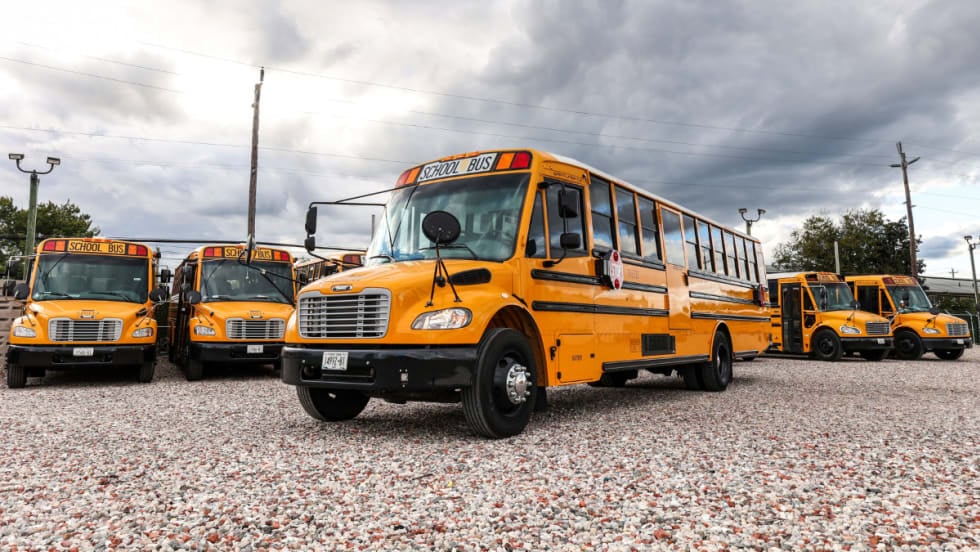
Logan Bus Company Rolls Out AI Phone System for NYC School Bus Families
A summer pilot found that AI agents could handle most routine calls, freeing up time for customer service staff to focus on emergencies and complex family concerns.
Read More →
From Intent to Impact: What I Learned About Leadership from TAPT
A Texas transportation supervisor shares lessons on self-awareness, accountability, managing stress and building trust — and why investing in leadership development matters at every stage of your career.
Read More →
NAPT Names 2026 Award Recipients, Hall of Fame Inductee
Who earned national recognition for their work in student transportation? This year, NAPT named five recipients of its 2026 awards for service, safety, and leadership, plus its newest Hall of Famer.
Read More →
2026 State of Student Transportation Report
Driver shortages. Rising costs. Growing safety expectations. More data, but not enough time to act on it. The 2026 State of Student Transportation Report reveals what transportation leaders say is putting the most pressure on their operations—and where they’re investing next. See how your priorities compare.
Read More →
How to De-Escalate an Angry Person: 5 Steps for Handling Workplace Conflict
What makes emotions run high, and how should you handle an angry colleague or parent? Follow these steps for staying calm, listening, showing empathy, and resolving conflict.
Read More →