




Emergency preparedness: How’s your department’s ‘C3’?
Developing an emergency preparedness plan based on command, control and communication can help to reduce injuries and potentially save lives. Building relationships with first responders can ensure your operation’s viability in the emergency response cycle by bringing awareness of what it has to offer during crises.
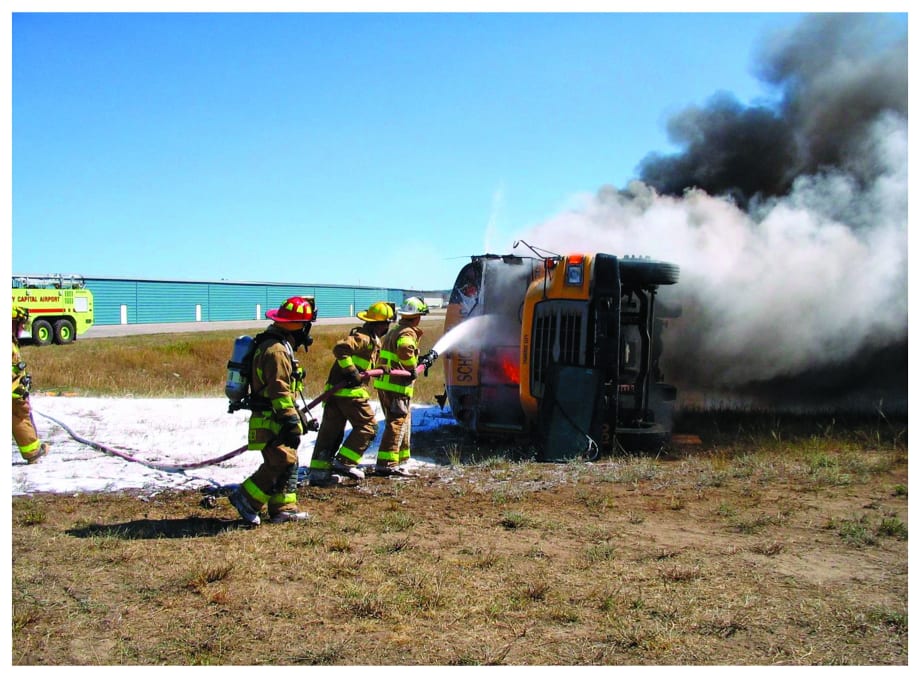
Photo by Lt. Theo Webber of the Traverse City Fire Department
Back when I served as a commander in the U.S. Air Force, “C3” was a term that was used a lot, especially when involved in special ops missions. Unlike C4, C3 is not a form of plastic explosive, but military jargon referring to “Command, Control and Communication.” During those interesting times when the battle staff was assembled in our locked, guarded and windowless room, we relied heavily on C3 as we made decisions under duress, some of which involved life-or-death emergencies occurring on the other side of the world that depended heavily on having a robust C3 system in place.
While we may never be involved with anything that dramatic as school transportation professionals, we could be called upon to assist local municipalities, or even deal with a school-related emergency for which we as a component and extension of the school system should be prepared to react quickly.
In such times, a well-developed C3 plan could mitigate potential injury and suffering, or even save lives, by streamlining what we do and how we do it in terms of developing an organized, speedy response. Enter ICS: a nationally recognized “Incident Command System.”
The role of the Incident Command System
According to the Federal Emergency Management Agency, the ICS “is a standardized, on-scene, all-hazards incident management approach that:
● allows for the integration of facilities, equipment, personnel, procedures and communications operating within a common organizational structure;
● enables a coordinated response among various jurisdictions and functional agencies, both public and private; and
● establishes common processes for planning and managing resources.”
The neat thing about ICS is that it is flexible by design, and it can be deployed on any kind of incident, from simple to complex, from a school bus crash with minor injuries to a plane crash where potentially dozens of survivors might need immediate transportation away from an accident scene.
Communication is essential to effective emergency response
Since the use of an ICS is expanding rapidly across the country — at all levels of government and the private sector, including education — it helps immensely if all the players in a response scenario use the same language relative to a coordinated emergency response.
The emergency response management cycle is made up of five basic parts: prevention, mitigation, preparedness, recovery and response, though not all of these may be used with every incident — it depends on the needs of the moment. The glue that holds all this together is communication. Having a solid plan in place ahead of time can save you and your department a lot of grief when the bell goes off.
One of the best ways to ensure your department’s viability in the response cycle is to befriend your school’s emergency response personnel, many of whom have already established key communication protocols and developed relationships with your community’s emergency first responders.
Police, fire, EMS and other emergency service providers often meet regularly to discuss potential response scenarios, as well as to use their time to creatively network with others and freshen up mutual aid agreements for when they are needed. You should be a part of those meetings — emergency managers need to know your name and what you have to offer the community in the event of an emergency.
Working with first responders provides real-world training
According to Michael Coleman, vice president of business development at QDS Communications, public safety response to schools is on the rise across the country. For one of the latest years for which hard data were available, 2007, the U.S. Department of Education noted 684,100 incidents of violent crime occurring at school, while in 2003, there were 36,000 reported cases of chemical exposure for which separate masses of students had to be evacuated from the scene of the emergency. For those incidents, mass transportation was and continues to be a vital component of any school or community’s emergency response plan.
The best part about developing this kind of operability with each other is that it is generally revenue neutral; that’s important as we continue to struggle through the fog and friction of our states’ austere budgetary environments.
In addition, think of the value-added potential of allowing your local first responders the use of an old school bus to practice their skills in. For them, real-world training environments are not only expensive, they are scarce; many first responders never see the inside of a burning bus, for example, until they’re faced with a real one on the street, with kids inside.
[PAGEBREAK]

Phillip Haldaman is transportation supervisor at Dean Transportation Inc. in Traverse City, Mich. He is also the Region 5 representative for the Michigan Association for Pupil Transportation.
When I served our local school district as transportation director, I often made old school buses available to our police, fire and EMS personnel to train on. Because our local airport handles a number of smaller commuter flights, even its fire response personnel wanted to get in on the act since the interior of a school bus closely resembles the interior of smaller planes that operate out of the airport. That, in turn, attracted the attention of our local Transportation Security Administration, which used that environment for counter-terrorism training.
Dean Transportation Inc., through the auspices of the Traverse Bay Area Intermediate School District in Traverse City, Mich., continues to embrace the value of such relationships, having recently donated another school bus to a fire department for use in its emergency response training. Once these assets are used up, they’re sold for their scrap value, with the sale proceeds returned to the general fund — that’s a win-win for all concerned.
Share your plans with district administrators
So how’s your department’s C3 relative to emergency/crisis management? Hopefully you have active response plans and mutual aid agreements in place and practice using them at least annually to ensure success if ever faced with an emergency for which you need to quickly deploy your available “yellow iron.”
As school districts across the country are being asked to invest in their readiness by institutionalizing sound C3/ICS principles, it makes sense to start now by having well thought out plans in place to help reduce/mitigate risk, and to identify or remove potential barriers to the operational success of our respective transportation departments.
Once those plans are in place, share as much up and down your school district’s chain of command — you can’t over-communicate that kind of critical intelligence with school administrators and stakeholders, who will probably thank you for the effort.
Could it be that the yellow school bus will then be seen as not only the vital extension of the educational process that it is, but as an indispensible part of your school’s emergency response plan? That would be a win-win for your department and the community that you faithfully serve.
For more information on how schools can become more progressive in establishing effective emergency response plans, go to “MI-TRAIN” at https://mi.train.org/DesktopShell.aspx, run jointly by the Michigan State Police and the Michigan Department of Community Health, Office of Public Health Preparedness.
More Safety
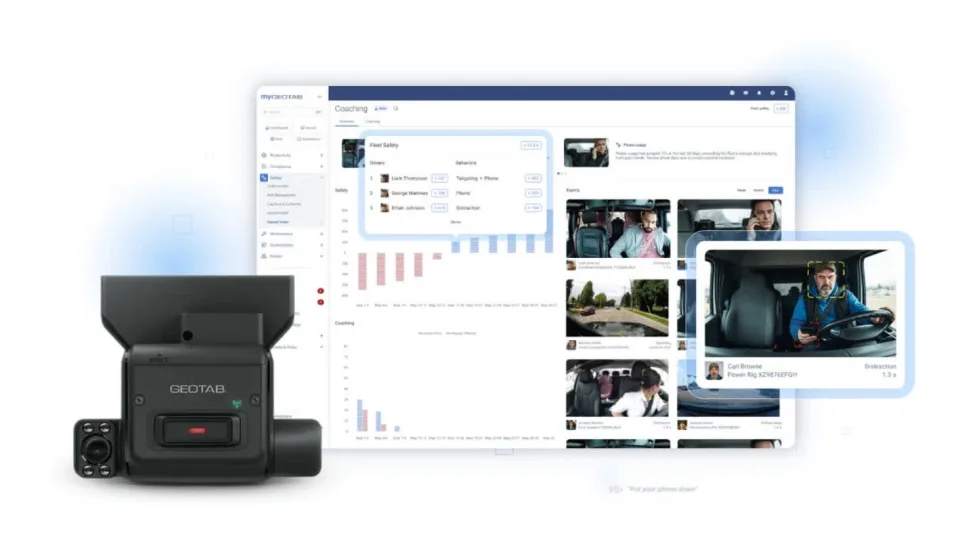
Geotab Expands Fleet Safety Tools With Video Coaching, Risk Insights
New safety and video capabilities aim to help fleet managers assess risk, support drivers, and take targeted action through video coaching, red-light violation detection, and more.
Read More →
How to Build a Better School Bus Driver Training Program
Is it time to strengthen your driver training? Here’s how to pick the right talent and improve recruitment, retention, and safety. This video is brought to you by IC Bus.
Read More →
Recent School Bus Accidents Leave 2 Dead, 2 Injured
Four school bus crashes in Florida, Illinois, and Georgia highlight risks in transportation lots, at bus stops, and during student loading and unloading.
Read More →

When Every Second Matters, Clarity Keeps Routes Moving
From routine delays to urgent incidents, strong communication practices help drivers, dispatchers, schools, and families respond with confidence.
Read More →
What Happens When a School Bus Catches Fire — and What Can Help
School bus fires are rare but can be devastating. Learn how advances in fire suppression and asset protection help fleets detect fires earlier, reduce damage, and improve safety.
Read More →
Geotab Launches Tool to Help Fleets Investigate Road Incidents
Geotab Investigations combines telematics data, video, documents, and other evidence to help fleets reconstruct incidents, resolve claims, and determine what happened.
Read More →
Texas Sixth Grader Wins 2026 National School Bus Safety Poster Contest
Sai Darshana Yekolu of Moseley Middle School in Prosper, Texas, was named the newest winner for her artwork, bringing the theme of “Safe Rides, Everyday Heroes” to life.
Read More →
Doing More With Less: How Transportation Directors Can Prioritize Safety Amid Budget Uncertainty
With diesel prices soaring and nearly one-third of transportation directors expecting budget cuts, maintaining student safety has never been more challenging. Download this guide to learn how leading districts are prioritizing risk, funding critical safety technology, and building stronger budget cases with data.
Read More →
Walton County Schools Adds Gatekeeper Stop-Arm Enforcement System
The Florida district will deploy Gatekeeper’s updated Student Protector technology, which now incorporates AI to improve video evidence.
Read More →
How To Build a More Secure School Bus Yard During and After Hours
As thefts and overnight security threats continue, school transportation leaders are combining stronger operational practices with AI-enabled surveillance to better protect buses, facilities, and staff.
Read More →