




Districts Help School Bus Drivers Climb the Career Ladder
As Baby Boomers leave the workforce, other pupil transportation staff will have more opportunities to advance. Many school districts provide education, training, and mentorship; investments that pay off in employee retention and satisfaction.

Pam McDonald, director of transportation for Orange (Calif.) Unified School District, shown second row wearing purple, is in the midst of succession planning. She expects all staff members to mentor promising employees.
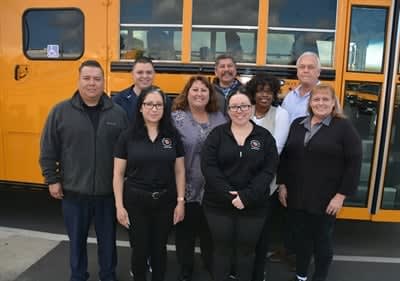
Pam McDonald, director of transportation for Orange (Calif.) Unified School District, shown second row wearing purple, is in the midst of succession planning. She expects all staff members to mentor promising employees.
Pupil transportation offers numerous opportunities for staff members to do a job they love. While some bus drivers prefer to continue transporting students, others move into mid-level jobs or management and leadership.
As Baby Boomers leave the workforce, other pupil transportation staff will have more opportunities to advance. To help them achieve their career goals, many school districts provide education, training, and mentorship — investments that pay off in employee retention and satisfaction.
“Other than transporting students safely, helping people be successful is our number one goal,” says Bill Powell, assistant superintendent of support services for Cypress-Fairbanks Independent School District in Houston, Texas.
Driver Opportunities
At Volusia County (Fla.) Schools, bus drivers have multiple opportunities to climb the career ladder.
“Drivers can move into any position within transportation if they’re willing to get some additional education,” says Greg Akin, the school district’s chief operating officer. “We always encourage growth and movement with all our staff.”
Drivers who want to advance first become a driver mentor and/or driver trainer. The drivers get additional training and work more hours in each of these positions, Akin adds.
After serving in those jobs, more doors open: they can become a lead driver trainer, dispatcher, or router. The next step from these positions is area manager.
Alternately, school bus drivers can move into maintenance and advance from mechanic’s helper to mechanic to lead mechanic to shop manager.
Finally, drivers who have a bachelor’s degree can become an assistant director, and, if they have a master’s degree, a director.
Akin’s school bus drivers can also transition to jobs outside pupil transportation, moving into positions as varied as secretaries, special-needs aides, and teachers.
For school bus drivers who stay in the department, the district offers extensive in-house training, including certification courses and classes in communications and management. The drivers receive a salary increase for each certification they earn. To ensure all the drivers can attend, classes are offered between runs.
Learning on the Job
To help his drivers advance, Powell offers informal internships. When the charter drivers, who are full-time substitutes, aren’t on the road, they’re assigned to the office. There, they work with routers, dispatchers, mechanics, trainers, or a supervisor, depending on their interests and skills. While learning, they may be given special projects to demonstrate their prowess, such as routing for summer school or pre-K, Powell says.
Drivers are also encouraged to earn the appropriate certifications. Certification classes put on by the Texas Association of Pupil Transportation (TAPT) are offered on weekends, and the school district pays travel expenses for TAPT classes and conferences.
“On-the-job training and certifications prepare drivers to step into positions when openings occur,” Powell says.
He adds that this system can lead to management: every supervisory position in his district is filled by a driver who moved up.

Volusia County (Fla.) Schools offers training and mentoring to staff transitioning into management positions, such as area manager, assistant director, or director, through its Leadership Academy.
Long-Term Driver Career Ladder
David Pace, executive director of the Virginia Beach (Va.) City Public Schools’ Office of Transportation, is developing a career ladder for drivers who stay behind the wheel. His tiered system, which rewards drivers for longevity, safe driving, and good attendance, includes Bus Driver I, Bus Driver II, and Lead Driver. The Lead Drivers, who are responsible for multiple schools, will be drawn from the Bus Driver II group, the most skilled and experienced drivers.
“We’re trying to encourage drivers to stay,” Pace says. “Many of our drivers don’t want to stop driving, but they’d like to have a career path that distinguishes them among their peers and allows them to move up in a job they love.”
Moving Into Management
Akin’s district offers training and mentoring to staff members transitioning into management positions such as area manager, assistant director, and director. Staff can, if selected, attend the school district’s year-long Leadership Academy. The Academy, which holds classes at night, gives students an overview of the school district’s departments and teaches management and leadership skills. Students also give presentations and perform other leadership functions.
Alternatively, or in addition to the Academy, upcoming managers can take classes online in leadership and/or their area of interest, or attend conferences held by the Florida Association of Pupil Transportation, Florida Association of Superintendents, and Central Florida Consortium. (The district pays for managers to attend.)
Senior management also meets with new managers monthly to guide them and help them achieve their goals, Akin says.
Executive Leadership Prep
Akin’s preparation for chief operating officer started long before he was offered the job. He has continually increased his knowledge and skills by attending conferences and other trainings, some of which were paid for by his school district and others by him. Akin also took on extra duties that demonstrated his abilities, such as assuming the directorship of safety and security during the 2008 economic decline.
In addition, Akin says his mentors played a central role in helping him develop and showcase his skills. Not only did they provide guidance, they also asked him to assist them on major projects, such as implementing bell time changes and establishing a centralized purchasing system.
“Each of these responsibilities gave me the opportunity for growth and showed how I handled different situations,” he said. “They knew I could do the job.”
Akin continues to upgrade his knowledge base by taking courses, including those that staff members in each of his departments recommend.
Gearing Up for the Future
Planning for the future is up front and center for Pam McDonald, director of transportation for Orange (Calif.) Unified School District. She’s determining who will take her position, as well as those of several additional staff who will retire in the next two to five years. As Baby Boomers age out of the workforce, it’s a phenomenon Powell faces as well.
For McDonald, succession planning is a department-wide issue. Therefore, all her staff members are expected to mentor promising employees.
“I tell them to pick the shiniest one,” McDonald says.
McDonald is grooming three contenders for her job — she says there’s nothing wrong with competition — and sets the example for staff to follow. Mentoring involves hands-on training and sending mentees to conferences, in-services, and trainings, such as the California Association of School Business Officials Transportation Leadership Academy, to help them grow and establish networks.
Powell anticipates that as Baby Boomers age out of the workforce, up to 30 people from his department will retire every year. While he first looks at current staff to fill upcoming vacancies, he goes outside for talent when necessary. One resource is TAPT.
“You get to know people in other districts who may be relocating,” he says. “They move into the area, and we have a job for them.”
In addition, Powell’s partnership with local high schools and Automotive Youth Excellence Service provides qualified staff. Students work part-time as drivers or mechanics and become full-time if there’s an opening when they graduate.
“We’ve been very successful with those who stay with us,” Powell says. “Some have advanced to assistant foreman.”
More Management

5 Questions: How CharterUP Brought a Marketplace to Student Transportation
What does it take to bring a transportation marketplace into K-12? Hear firsthand what CharterUP has learned about the unique needs of schools and bus operators.
Read More →
EverDriven Expands TripCentral Transportation Management Platform to All Partner Districts
The platform provides school districts with real-time trip tracking, student transportation scheduling tools, and pickup and drop-off management capabilities.
Read More →
6 School Transportation Trends to Watch: 2026 District Survey Results
School bus buying is up, fuel choices are shifting, and driver shortages persist. This and more in the latest K-12 public school survey, plus the largest fleets in the U.S.
Read More →
The 100 Largest School Bus Fleets in America: 2026 Rankings
Which public K-12 school districts are the largest in the nation in terms of bus fleet size? Here are the new standings of the top 100 district fleets.
Read More →
EverDriven Launches Route Consolidation Calculator to Estimate Diesel Savings
As diesel prices hit record highs, the largest alternative transportation provider says a 10% route consolidation could save a 120-route district more than $78,000 a year in fuel alone.
Read More →
Zum Secures Continued Financing Support for School Bus Expansion
Generate Private Credit has financed approximately $75 million in school bus deployments across three states, supporting more than 500 buses as Zum expands across the county.
Read More →
Beyond Discipline: A Different Approach to Student Behavior on the Bus
After implementing a dean of students program in Oregon, North Clackamas is seeing positive improvements. Here’s how it worked. The Route is brought to you by IC Bus.
Read More →
A Dean of Transportation's Different Approach to Student Behavior on the School Bus
After implementing a dean of students program in Oregon, North Clackamas is seeing positive improvements on the bus. Here’s how it worked.
Read More →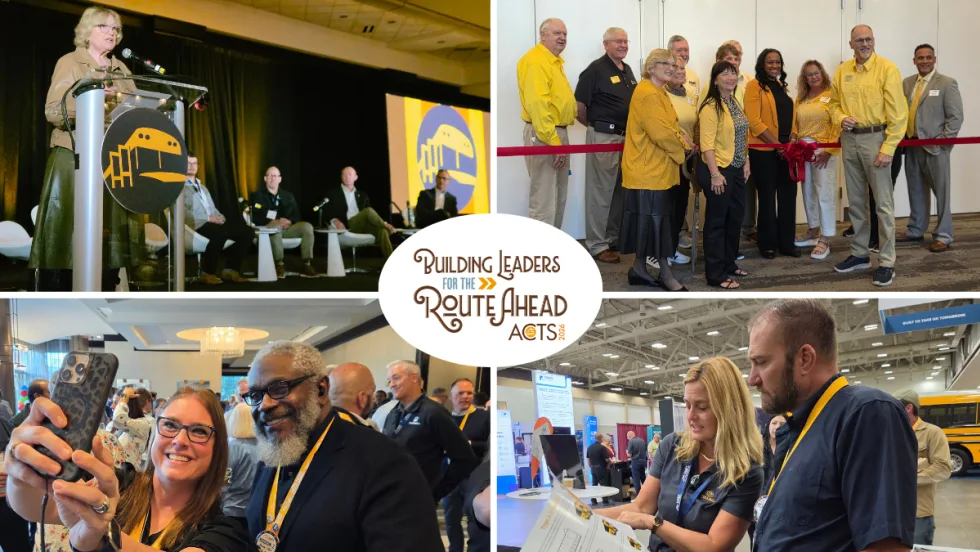
Inside NAPT ACTS 2026: Highlights from Louisville
From federal updates and student behavior strategies to new school bus technology and industry awards, see highlights from NAPT ACTS 2026 in Louisville.
Read More →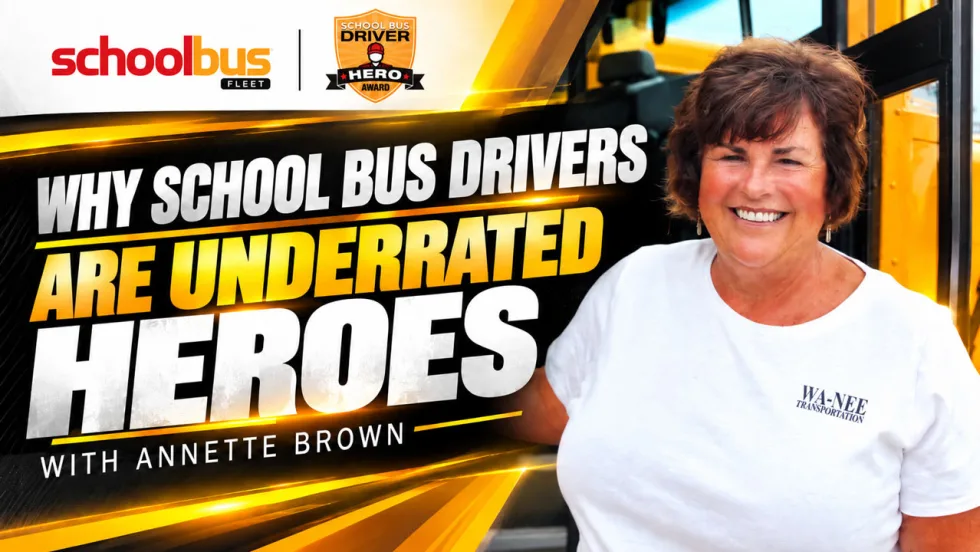
Meet the 2026 School Bus Driver Hero Winner: Annette Brown
We caught up with Wa-Nee Community Schools' Annette Brown on site at SBFX, where she was named the 2026 School Bus Driver Hero Award winner. Hear about her reaction, what she loves most about being a school bus driver, and more!
Read More →