




Districts are in the transportation business
School districts’ primary responsibility is to educate children. But that doesn’t mean it’s their only responsibility. Pupil transportation is still a part of the overall service that the district provides for the public.

“We are not in the transportation business. We are in the education business.”
That bold statement, by a school board member at a Virginia district, was in a Washington Post article that I came across online last year.
The story described the school board’s decision to cut costs by more uniformly enforcing the district’s existing walking distances, which meant that about 4,000 students would no longer be provided with school bus service because they lived within the walking distances of their schools. (Those students may have been bused in the past due to construction zones or other safety concerns.)
The board member quoted above told the Washington Post that the school board’s priority is to focus resources on the classroom. While that may be true, the statement that the district is “not in the transportation business” seems misguided and even unsettling.
Multiple businesses
Yes, school districts’ primary responsibility is to educate children. But that doesn’t mean it’s their only responsibility.
Keeping kids safe and secure is equally important. In light of the 2012 Sandy Hook Elementary School massacre and other deadly school shootings, can a school district say that it is not in the safety and security business? Certainly not. Furthermore, keeping kids safe and secure extends beyond the classroom, to the playground, the school loading zone, the school bus, etc.
What about making sure that students get a good breakfast and lunch? When many kids don’t get enough to eat at home, can a school district say that it’s not in the nutrition business?
I’ve heard some school bus contractors, in making a case for districts to outsource their school bus service, use lines that are similar to what that Virginia board member said — that school districts should be in the education business, not the transportation business.
But even if a district decides to outsource all of its bus service to a private company, it’s still the district’s responsibility to make sure that the contractor is keeping the district’s students safe, properly maintaining the buses and meeting other requirements.
Pupil transportation — in other words, making sure that students can actually get to school so the teachers can teach them — is still a part of the overall service that the district provides for the public, even if someone else is running the buses for the district.
Parents’ perspective
In the case of the Virginia school district, parents did not agree that the district is “not in the transportation business.” The Washington Post reported that about 100 parents had filed appeals because their children would not be able to ride the school bus anymore.
One local mother put the issue into harsh words when she told the newspaper, “The school system has washed its hands of the responsibility for my kids’ safety” in getting to and from school.
Clearly, parents expect school districts to be in the transportation business, and they’re not going to let that business go without a fight.
In my next editorial, I’ll discuss a related topic: the problems that arise when school bus service is cut.
More Management
How to Build a Better Driver Training Program
Ready to boost up your school bus instructor training? Here’s how to pick the right talent and improve recruitment, retention, and safety.
Read More →
CALSTART and Forth Combine to Form Catalyst Mobility
The new name represents a renewed vision for the nonprofit focused on advancing clean, equitable, and affordable transportation solutions that move people and goods.
Read More →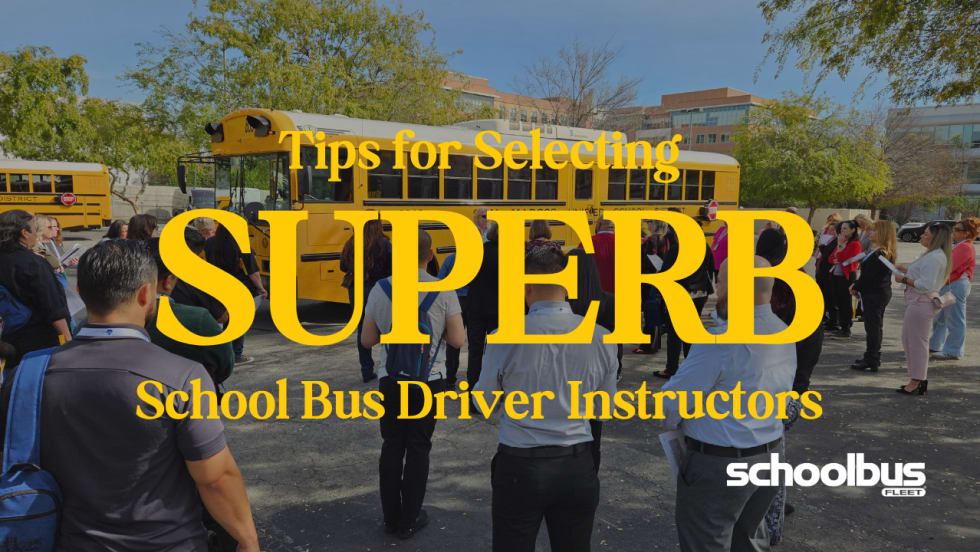
What Makes a Great School Bus Driver Trainer?
Choosing the right school bus driver trainer takes more than experience. Learn six keys to selecting and developing trainers and evaluating program effectiveness.
Read More →


School Bus Contractors Expand Through New Deals, Acquisitions & Partnerships
STA's Canadian division acquires Ontario-based G&L Stevenson Transport while Durham School Services adds a new district contract in California, First Student adds a New Jersey contract, and Minnesota Coaches acquires Halo Transportation.
Read More →
Logan Bus Company Rolls Out AI Phone System for NYC School Bus Families
A summer pilot found that AI agents could handle most routine calls, freeing up time for customer service staff to focus on emergencies and complex family concerns.
Read More →
From Intent to Impact: What I Learned About Leadership from TAPT
A Texas transportation supervisor shares lessons on self-awareness, accountability, managing stress and building trust — and why investing in leadership development matters at every stage of your career.
Read More →
NAPT Names 2026 Award Recipients, Hall of Fame Inductee
Who earned national recognition for their work in student transportation? This year, NAPT named five recipients of its 2026 awards for service, safety, and leadership, plus its newest Hall of Famer.
Read More →
2026 State of Student Transportation Report
Driver shortages. Rising costs. Growing safety expectations. More data, but not enough time to act on it. The 2026 State of Student Transportation Report reveals what transportation leaders say is putting the most pressure on their operations—and where they’re investing next. See how your priorities compare.
Read More →
How to De-Escalate an Angry Person: 5 Steps for Handling Workplace Conflict
What makes emotions run high, and how should you handle an angry colleague or parent? Follow these steps for staying calm, listening, showing empathy, and resolving conflict.
Read More →
What Readiness Looks Like This School Year
Learn about the challenges shaping the 2026–2027 school year, from persistent driver shortages and budget pressure to technology and readiness gaps. See how school districts are responding and adapting in Zonar’s 2026 Back-to-School Readiness Report.
Read More →