




Related: The Science Behind Improving Student Behavior on the School Bus
District, Contractor Partner for Behavior Support Success on the School Bus
Wausau (Wis.) School District and First Student work together to bring Positive Behavior Interventions and Supports to the school bus. Driver-student relationships improve considerably as well as communication between the district and bus company.
by Bob Tess
June 17, 2019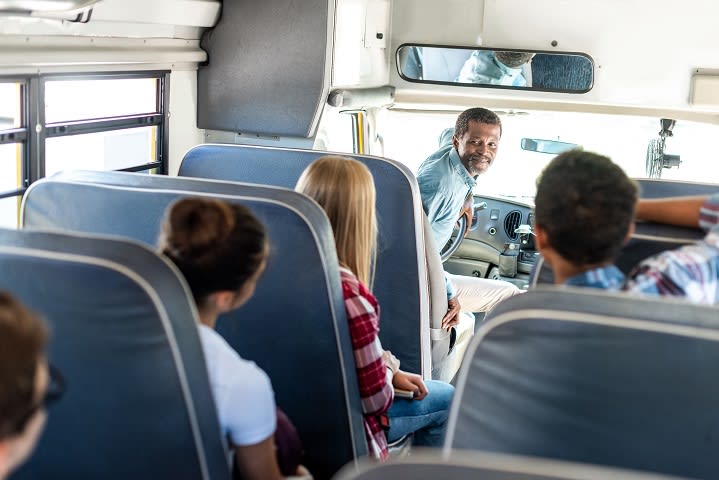
Many drivers are well-trained the operation of a heavy-duty bus, but not as many are trained in student behavior.
Credit:
Light Field Studios, Getty Images
6 min to read
Over the last several years, many school districts nationwide have spent considerable time, energy, and resources on Positive Behavior Interventions and Supports (PBIS) in their schools, and the Wausau (Wis.) School District is no different.
The district introduced PBIS, which focuses on acknowledging desired rather than problematic behavior, in its elementary schools in 2008, with statewide recognition given to various schools for their success that year and each year since.
The essential tenets of PBIS include systematic implementation of a three-tiered structure: I, II, and III. Tier I often covers the majority of students, who don’t typically demonstrate significant behavior issues. This tier provides the foundation for a positive, supportive climate for the students. Tiers II and III are additional interventions for students who need more behavior support. These tiers rely on a behavior assessment to identify the student’s needs and the type of intervention that will support them.
The structure benefits from use of data-driven decision making, evidence-based practices, family and community engagement, and a strong universal level of supports to build a positive culture. Failing to attempt implementation of these same proven strategies to improve student behavior on school buses would be most unfortunate and an oversight. Everywhere else in education, we go to great lengths to identify clear expectations and then reward those who meet those expectations, so why should the school bus, which may be considered an extension of the classroom, be any different?
In 2013, the Wausau School District began a joint venture with school bus contractor First Student to bring the language and practices associated with PBIS from the classroom to the school buses and further establish a common standard for behavior regardless of the setting.
The underpinning for this work included establishing a committee of First Student drivers, bus monitors, and management, along with district representation of teachers, PBIS coaches, building administrators, and district-level administrators. This joint effort would benefit from district personnel already speaking the PBIS language and having the necessary structure in place, including the use of a behavior tracking software called BusConduct.
To give focus for this work, the PBIS Transportation Committee — as it became known — developed a vision statement that dovetailed with existing district interests.
The vision of the committee is a commitment to excellence in safely transporting students and encouraging respectful and caring behavior while supporting district Shared Key Interests. (We on the committee strive to encourage collaboration between First Student and the district for proactive communication with mutual respect.)
The Transportation Committee quickly realized that what was already seen as a valuable tool for managing behavior in classrooms would translate well into other settings, such as the school bus.
Research revealed that although bus drivers often benefit from professional development in the safe operation of a large vehicle, passenger behavior management is often neglected. Bus drivers have indicated a desire for this type of training as many feel unprepared for the challenges that come with managing student behavior.
The committee recognized that, although difficult to manage the behavior of a group of 25 students in one classroom when that is a top priority, it may be considerably more difficult to manage the behavior of 50 students when the top priority is what is occurring outside the bus, where the driver’s focus should remain.
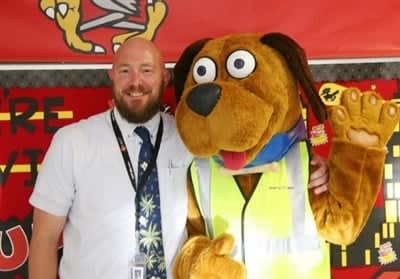
Andy Place, one of the school district’s principals, is a member of the PBIS Transportation Committee. He is shown here with Safety Dog, First Student’s mascot.
Bus Rollout
To implement the program, all First Student drivers, monitors, and dispatchers were provided professional development from a regional PBIS expert on the PBIS model and strategies for implementation.
The committee developed clear expectations for student behavior. These expectations were communicated through behavior matrix signs posted in all buses and verbalized to students. A flow chart defining communication between drivers, First Student management, school principals, and parents, as well as follow-up expectations for drivers and principals, was also created and implemented to close any gaps in communication.
Meanwhile, student behaviors requiring follow-up were reported using BusConduct. These efforts have resulted in more useable data available through the behavior tracking software. Students’ positive behavior was supported through the use of Bus Bucks, a system that rewards students for behaviors such as staying seated and talking quietly on the bus. The system was jointly administered by the drivers and the schools.
Driver Response
The drivers who embraced PBIS are optimistic and feel it is working.
Timely and accurate reporting by the drivers and principals has allowed the drivers to receive more quality feedback, which they felt they needed.
Members of the Transportation Committee have attended most First Student safety meetings over the past school year. Our presence makes the drivers feel like the district cares about them and values what they have to say, thus making them feel more like one unit rather than two separate organizations. It also lets the drivers know that safety and PBIS represent priorities for the district, rather than just a casual initiative.
Moreover, as a result of the Transportation Committee’s efforts, there has been increased communication and an overall improvement in the relationship between First Student and the district.
Evidence of Success
District-wide data suggests that PBIS is working, as the number of behavior referrals has initially decreased. Behavior incidents have increased recently, but the quality of referrals, in terms of depth and use of PBIS terminology, has increased and principal response time on referrals has improved.
Two years after implementing PBIS on the bus initiatives, we are seeing evidence that suggests our efforts are paying off. Student data on bus behavior incidents gathered through BusConduct reveal encouraging trends on the reporting and addressing of issues that previously may have been ignored.
To further evaluate the efficacy of our initiatives, all bus drivers were given a brief survey asking their opinions on the value of the tools and strategies with which they were armed. When the drivers were asked if their knowledge of PBIS has improved relationships with students on their buses, 83% of the 74 drivers responding said they agreed or strongly agreed. Of the same 74 drivers, 70% either agreed or strongly agreed that their communication with building principals has improved since PBIS has been implemented. When asked if their ability to address challenging behavior on their bus has increased since PBIS training, 75% agreed that it has, while 78% agreed that the presence of district personnel has made them feel more supported.
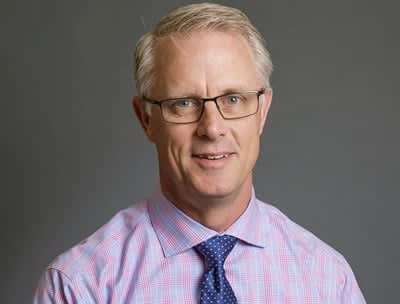
Bob Tess is the chief finance and business services officer at Wausau (Wis.) School District.
Next Steps
The Transportation Committee will continue to meet several times per school year to improve and advance our efforts, as well as advocate for this initiative in other districts.
Eventually, the full PBIS Transportation Committee began meeting less frequently than its usual once per month. However, subgroups of the committee, led by the district PBIS External Coach, meet more often to work on specific projects. These include development of a district-wide plan to re-teach universal expectations in the area of buses, develop videos to assist in teaching appropriate bus behavior, data analysis, and improving communication.
Subscribe to Our Newsletter
More Management
Nominate Rising School Transportation Pros Under 40!
We’re searching for the next generation of leaders making an impact across the K-12 student transportation industry to recognize as SBF’s 2027 Trailblazers. Nominations are open now!
Read More →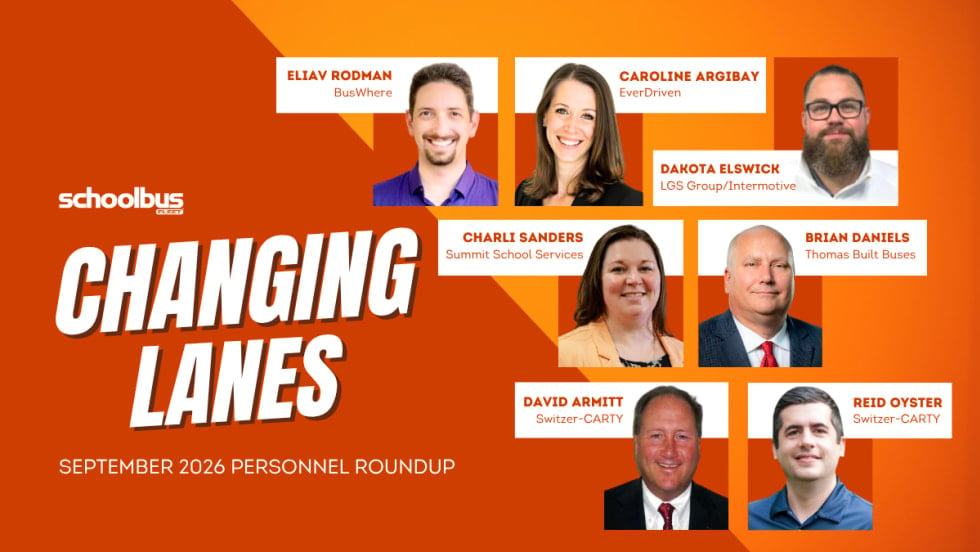
Changing Lanes: BusWhere, EverDriven, InterMotive, Summit School Services, Switzer-Carty & Thomas Built Buses
Check out who's been hired, promoted, and appointed to leadership positions at various school transportation suppliers, contractors, and manufacturers.
Read More →
The Most Expensive Thing You Do Before Selling a School Bus: Wait
When should you sell an aging school bus? Learn how maintenance, mileage, corrosion, specifications, and timing can affect resale value long before the auction.
Read More →
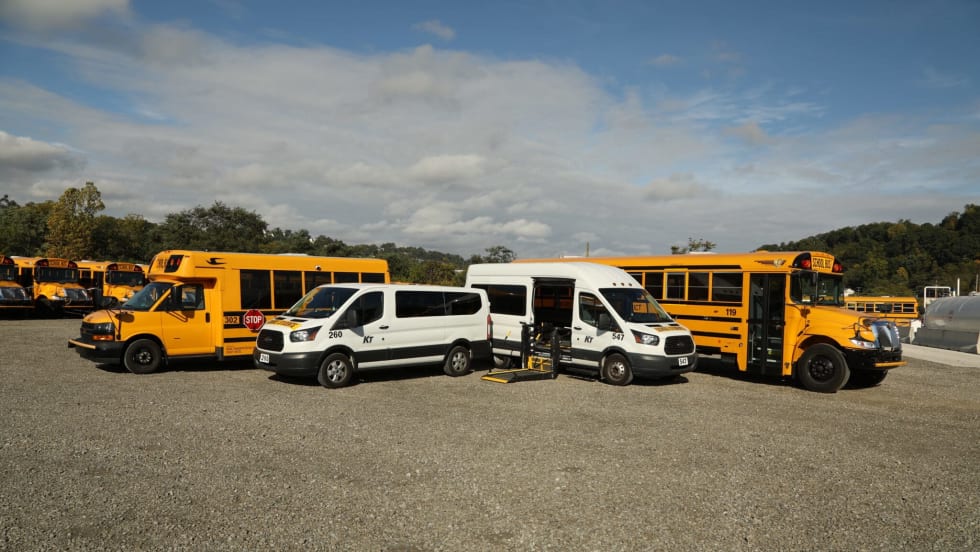
American Student Transportation Partners Acquires AJ Myers and Sons
A new deal brings a 75-year Pennsylvania student transportation provider into one of the nation’s largest private school bus contracting groups.
Read More →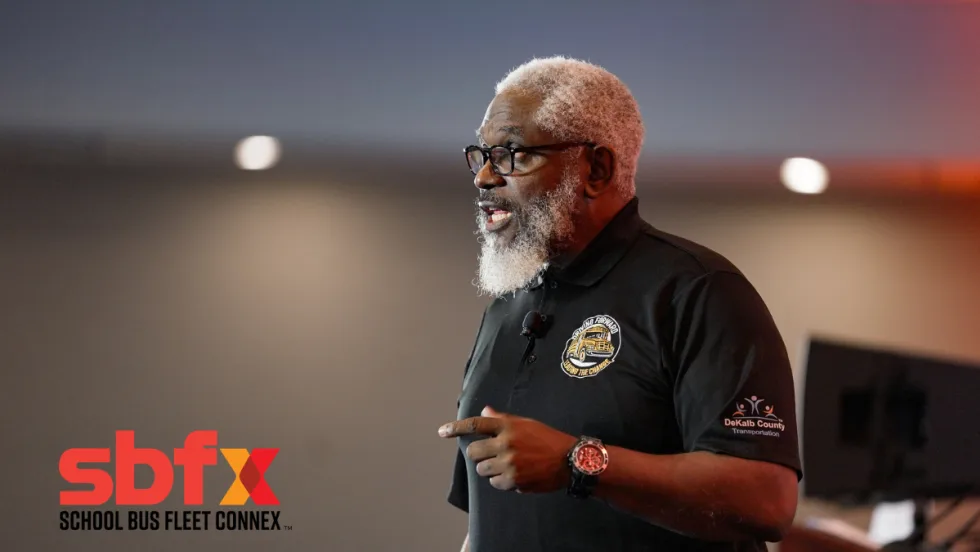
What I Brought Home From SBFX: Relationships, Leadership, and Preparing What's Next
Who could lead your transportation operation tomorrow if you couldn't? Bernando Brown explores succession planning, mentorship, and preparing emerging leaders to step up.
Read More →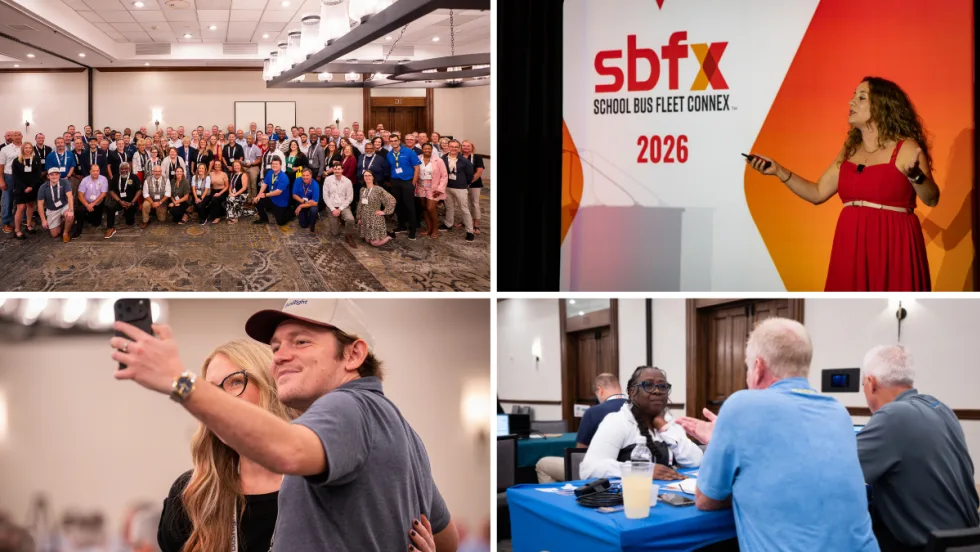
Inside School Bus Fleet ConneX 2026: Industry Leaders Connect in Scottsdale [Photos]
See highlights from SBFX 2026 in Arizona, where school bus operators and suppliers gathered for meetings, education, networking, awards, and more.
Read More →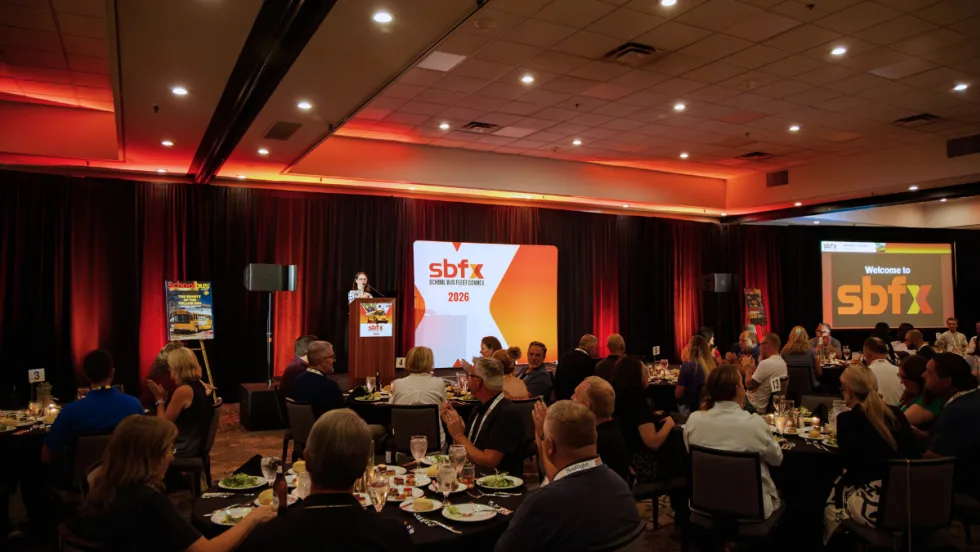
School Transportation’s Biggest Pressures and Opportunities: SBFX Attendees Weigh In
School bus operators point to rising costs, staffing, and vehicle prices as immediate pressures while identifying technology, training, and routing as opportunities for growth.
Read More →
STA Acquires Sunrise Transportation
Student Transportation of America expands in Illinois and Connecticut through Sunrise's fleet of nearly 1,000 vehicles.
Read More →
EPA Opens $180M DERA Funding Round for Diesel Upgrades
The 2026 Diesel Emissions Reduction Act program seeks applications from eligible organizations to accelerate the retirement of legacy diesel vehicles.
Read More →
HopSkipDrive’s CareEngine Targets the ‘Exceptions’ in Student Transportation
The new platform works alongside districts’ existing transportation management systems to coordinate specialized rides, automate last-minute changes, and turn ride data into operational improvements.
Read More →