




Dealer Service Can Make or Break Relationships with Buyers
School bus operators share their positive and negative experiences in dealing with chassis and body manufacturers.
If given a choice, a consumer will normally purchase goods and services from a company that offers a quality product at a fair price with good customer service. Some companies, such as the Saturn Corp., Alaska Airlines and Nordstrom, have built their reputations on their ability to satisfy their customers' needs in these three areas.
School bus buyers are looking for the same three elements - quality, price and service - when they're expanding or replacing their rolling stock. Sometimes they get all three, sometimes two, sometimes one and, on a rare occasion, none.
Much of their satisfaction depends on their local school bus dealers, who are responsible for a good measure of the success of the transaction. For this article, we interviewed several bus buyers, public and private, to explore the good, the bad and the ugly of dealer service.
Let's start with the good
"The dealers in our area are very helpful and very supportive of our needs," says Roosevelt Carter, transportation director at Madison County Schools in Huntsville, Ala. His district operates 140 buses, including 119 large buses and 21 buses for transporting special-needs students.
Rick Hoskins, fleet manager at Northmont (Ohio) City Schools, says dealers in his area will help write the specs and bring demos to the district. "We have a good rapport with all of our local dealers," he says. "What it comes down to now is, who gives you the best trade-in and who gives you the best price and, at the same time, meets the specifications."
Some school districts expect more from their dealers. "If you're converting your fleet from non-electronic diesel engines to electronic diesel engines, then you're looking for someone to provide you not only with a good product, but also training for your mechanics," says Mike Simpson, transportation director at Shelby County (Tenn.) Schools. "Most of the dealers are interested in maintaining a good relationship with you."
Shelby County's fleet comprises 260 buses, and a typical order is for 15 to 20. "When you write a check for that many buses, it's a large sum," he says.
However, Simpson doesn't believe that the dealers in his area treat customers differently based on the volume of their orders. "But maybe I've just been very fortunate with the people we've dealt with," he says.
Contractors have edge
School districts, of course, are different from contractors, who don't have to go out to bid for their buses. Because of this, they have more clout when it comes to demanding service.
If the dealers don't deliver on time or don't provide parts and warranty service in a satisfactory manner, contractors can take their business elsewhere. This gives them more power, especially if they order a large quantity of buses.
"All vendors react to volume," says Pat Settle, area maintenance manager for Laidlaw Transit.
Based in Cincinnati, Settle oversees maintenance in Ohio, Indiana and Michigan. "The question is: How much are you buying from me?"
Settle says Laidlaw, with its 38,000 school bus fleet, generally buys through the factory. It helps, he adds, that Laidlaw's maintenance facilities are authorized to do warranty work.
"A lot of the smaller operations never get their warranty dollars back because they don't have time to take it to the dealer and end up fixing it themselves," he says. "We try to maximize and make sure that we get everything that we have coming to us."
"That would be a valid assumption," says Bob Williams, transportation director at Shawnee (Okla.) Public Schools. "More volume, better service."
Williams, who oversees the operation of 30 school buses, says he tries to maintain a good relationship with the two major body dealers in his area. "We make contact at least once a month by phone," he says. "They'll stop by once a year, and if I'm in their area, I'll stop by just to touch base."
Warranty service is key
"Service after sales is a major concern," says Mike Kennedy, owner of Goffstown Truck Center in New Hampshire. His company operates 125 school buses for five school districts.
Kennedy said his problems in trying to get reimbursed for warranty work that was more than a year old has soured him on one local dealer. "We have not bought any equipment from that dealer since that time," he says. "This person focuses on selling and doesn't think about service."
"Parts and service availability means a lot," says Tony Paglia, transportation director at Park R-3 School District in Estes Park, Colo. His experience with some dealers has been negative. They don't stock enough parts and don't seem to work well with the factory in acquiring them.
One particular dealership was noticeably uncooperative. "They didn't have the part and they wouldn't get it for me," Paglia says. "These dealerships can make or break the companies."
Now for the ugly
Floyd Palmer, owner of Palmer Bus Service in St. Clair, Minn., says he gets riled by the service he receives at some dealerships. "We take in the bus and tell them what's wrong," he says. "A lot of times we just get blown off by the service department."
Palmer operates approximately 210 buses in Minnesota and Wisconsin. He says mom-and-pop operators receive even worse treatment. "They get lost in the shuffle," he says. For example, he says an operator of three school buses in Janesville, Minn., literally couldn't buy a bus. "He couldn't get anyone to return his phone calls," Palmer says.
More Management

Changing Lanes: BusWhere, EverDriven, InterMotive, Summit School Services, Switzer-Carty & Thomas Built Buses
Check out who's been hired, promoted, and appointed to leadership positions at various school transportation suppliers, contractors, and manufacturers.
Read More →
The Most Expensive Thing You Do Before Selling a School Bus: Wait
When should you sell an aging school bus? Learn how maintenance, mileage, corrosion, specifications, and timing can affect resale value long before the auction.
Read More →
American Student Transportation Partners Acquires AJ Myers and Sons
A new deal brings a 75-year Pennsylvania student transportation provider into one of the nation’s largest private school bus contracting groups.
Read More →
What I Brought Home From SBFX: Relationships, Leadership, and Preparing What's Next
Who could lead your transportation operation tomorrow if you couldn't? Bernando Brown explores succession planning, mentorship, and preparing emerging leaders to step up.
Read More →
Inside School Bus Fleet ConneX 2026: Industry Leaders Connect in Scottsdale [Photos]
See highlights from SBFX 2026 in Arizona, where school bus operators and suppliers gathered for meetings, education, networking, awards, and more.
Read More →
School Transportation’s Biggest Pressures and Opportunities: SBFX Attendees Weigh In
School bus operators point to rising costs, staffing, and vehicle prices as immediate pressures while identifying technology, training, and routing as opportunities for growth.
Read More →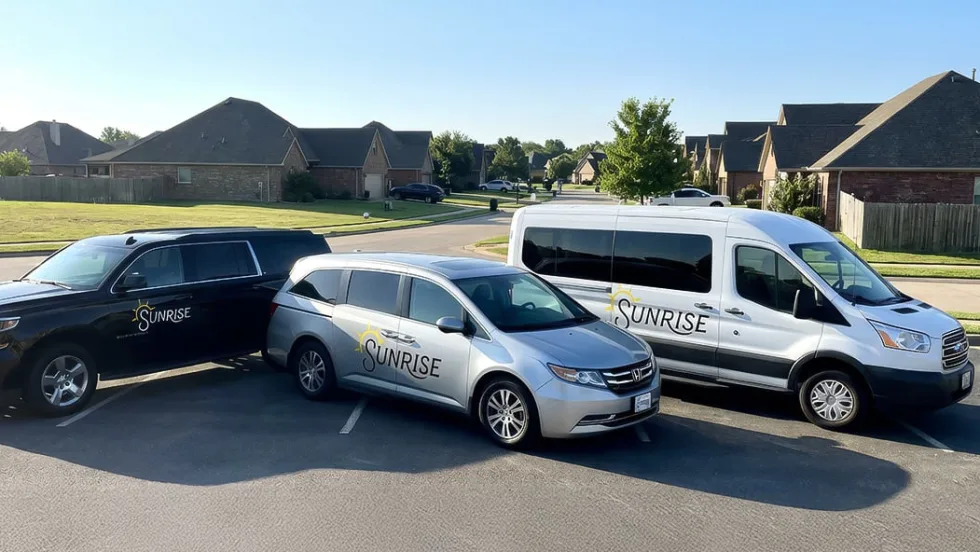
STA Acquires Sunrise Transportation
Student Transportation of America expands in Illinois and Connecticut through Sunrise's fleet of nearly 1,000 vehicles.
Read More →
EPA Opens $180M DERA Funding Round for Diesel Upgrades
The 2026 Diesel Emissions Reduction Act program seeks applications from eligible organizations to accelerate the retirement of legacy diesel vehicles.
Read More →
HopSkipDrive’s CareEngine Targets the ‘Exceptions’ in Student Transportation
The new platform works alongside districts’ existing transportation management systems to coordinate specialized rides, automate last-minute changes, and turn ride data into operational improvements.
Read More →
The Right Ride for Every Student: Navigating the New Student Transportation Ecosystem
How should districts blend school buses with small-vehicle transportation and other options? EverDriven CEO Mitch Bowling discusses safety, costs, partnerships, and strategy.
Read More →