




David Duke Sees Growth in School Bus Technology, Education Funding
Wi-Fi and bus tracking apps are playing an increasing part in pupil transportation, according to the National Express CEO. Meanwhile, state education funding is projected to recover in the coming years.

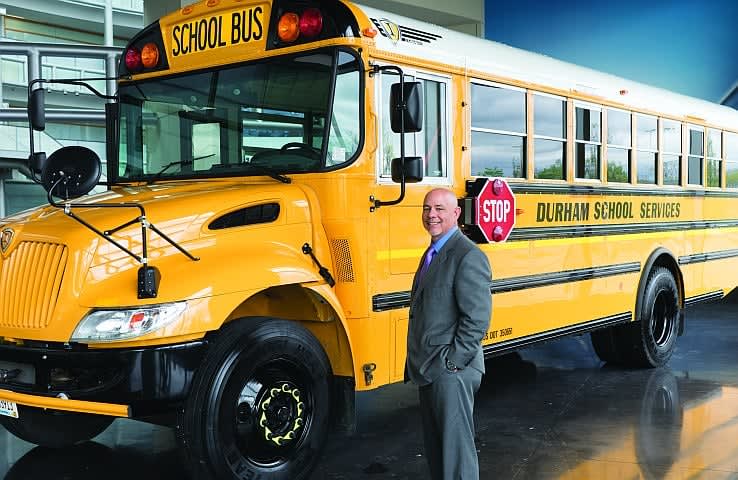
National Express LLC’s operations, including Durham School Services, transport more than 1 million students daily with 21,500 school buses. CEO David A. Duke is seen here with a new IC Bus model.
National Express LLC’s operations, including Durham School Services, transport more than 1 million students daily with 21,500 school buses. CEO David A. Duke is seen here with a new IC Bus model.
Technology will continue to play a bigger role in pupil transportation in the coming years, facilitating e-learning for students and providing up-to-date information for parents.
That’s part of the industry outlook for David A. Duke, CEO of contracting firm National Express LLC. The company’s operations — including Durham School Services and Petermann in the U.S. and Stock Transportation in Canada — transport more than 1 million students daily with 21,500 school buses.
Duke also points to projections that state education funding will improve over the next five years.
Meanwhile, National Express has boosted its school bus driver recruiting efforts across the country to mitigate driver shortages that have taken root in many areas.
In this interview, Duke also discusses school bus spec’ing trends, alternative fuels, and community service.
SBF: School districts have gone through some tough years, from a financial perspective, since the recession. What’s your assessment of the current economic situation for school districts?
DAVID A. DUKE: Over the next five years, the federal government is expected to push for pay-for-performance programs, quantitative evaluation metrics, and other education reforms. In exchange for implementing new reforms, the District of Columbia and 43 states have received Department of Education waivers for No Child Left Behind requirements. As state budget deficits narrow as we move to 2021, state education funding is projected to recover steadily. The federal government is also anticipated to maintain strong support for public schools.
The struggling economy significantly dampened state funding for education for the past five years, especially as rising unemployment hampered tax revenue. This was particularly damaging for state and local governments because, unlike the federal government, they cannot run deficits.
We’ve seen a severe school bus driver shortage across the nation in the past couple of years. How has that impacted the National Express operations, and how are they dealing with it?
We certainly have seen areas with increased challenges in driver staffing. With the economy on the upswing, we have increased our recruiting efforts throughout the country. This includes having full-time corporate, regional, and in some cases local HR team members on the ground.
We utilize social media, advertising, and hosting and attending job fairs. We also partner with local employment agencies, chambers of commerce, and other nonprofit organizations to enhance the applicant pool.
Last year, Durham launched a new app, Durham Bus Tracker, which gives parents updates on their child’s bus. What have been the results with the app so far?
We are proud of our app and very pleased to provide it to our customers for increased peace of mind. There is no charge to parents or school districts that contract with us for home-to-school services. We provide track-ability, security, and near real-time bus location. Currently, we cover more than 9,000 school bus routes. Parents know where the bus is on the route, the scheduled stop time, and when it will arrive at their children’s stop.
Feedback from our customers has been very positive. Our school district parents and administrative school district team members find the Durham Bus Tracker App very valuable. It provides a sense of security and safety — since children and parents do not have to guess when the bus is arriving. Many parents need to leave for work prior to their children getting on the bus. With the app, children can leave their home and only be outside for a short period of time.
Are there any other new or upcoming technologies that you see playing a bigger role in school transportation in the coming years?
An area of technology that we see playing a bigger role in student transportation will be connected vehicles. More of our buses will have Wi-Fi capabilities to support e-learning as well as ability to transfer vehicle performance data to a central database where it can be studied to improve vehicle reliability and performance.
Also, our intense focus on safety includes expanding our use of technologies such as DriveCam.
In spec’ing and purchasing new school buses, are there any recent trends for National Express?
We periodically review our specs and identify areas where we could improve them so that it improves safety, reliability, driver comfort, and flexibility. For example, we specify high-quality suspension seats for drivers, white roofs where permissible, remote mirrors, auxiliary fuel-fired heaters, and higher output alternators, etc. We are always evaluating how new product offerings can improve safety, reliability, and total cost of ownership so we remain at the forefront of providing the highest quality service to our customers.
“We certainly have seen areas with increased challenges in driver staffing. With the economy on the upswing, we have increased our recruiting efforts throughout the country.”
Has National Express seen an increase in school districts requesting alternative fuels in recent years? If so, what is driving their interest?
Yes, there is a push for alternative fuels in some contracts due primarily to being environmentally responsible and/or fuel prices for alternative fuels (predominantly propane) making alternative fuels a viable option, price-wise.
We have seen some select interest in propane-powered buses driven primarily through the fuel industry and manufacturer initiatives. Higher acquisition cost is still a major consideration to adoption, including setting up fueling infrastructure.
What are some other key priorities for school districts that contract out their transportation service?
A significant reason districts contract out their transportation services is because it is more cost effective; we allow them to put the savings back into the classroom. It also lets the district focus on the students by eliminating the time and effort it takes them to purchase buses, maintain the buses, and hire bus drivers, monitors, maintenance, and administrative staff.
Is there anything else you’d like to discuss?
We are proud of the relationships we have built in the communities where we live and work. Being a good neighbor is a key component of being a good service provider. Throughout the country we have partnered with local fire departments and first responders by donating buses so that they may practice crisis evacuations, we have donated wrapped buses to nonprofit organizations that have a focus on the students we serve, and we work with local chapters of national organizations to support their local causes.
Beyond that we hold ‘stuff the bus’ events for food, coat, and school supplies drives. I am continually impressed with National Express’ local teams; they volunteer on their own accord — reading to children at the local schools and libraries, teaching school bus safety to preschool and kindergartners, and volunteering at local homeless shelters. Our drivers donate their time to transport people to and from community events, such as giving senior citizens the opportunity to see Christmas lights or get to the grocery store. While the causes may vary across the 34 states in which we operate, all of our team members are united by a passion to support the neighborhoods in which we live, work, and serve.
More Management
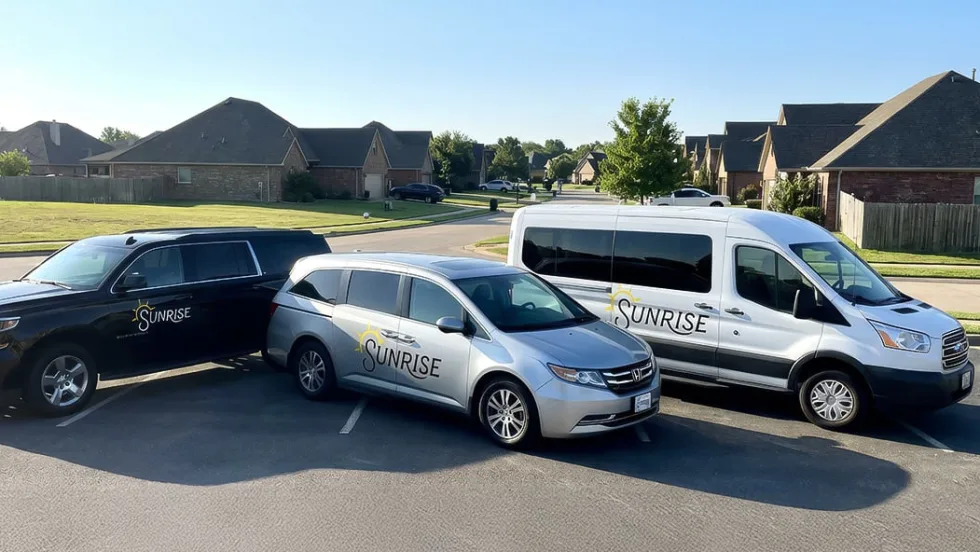
STA Acquires Sunrise Transportation
Student Transportation of America expands in Illinois and Connecticut through Sunrise's fleet of nearly 1,000 vehicles.
Read More →
EPA Opens $180M DERA Funding Round for Diesel Upgrades
The 2026 Diesel Emissions Reduction Act program seeks applications from eligible organizations to accelerate the retirement of legacy diesel vehicles.
Read More →
HopSkipDrive’s CareEngine Targets the ‘Exceptions’ in Student Transportation
The new platform works alongside districts’ existing transportation management systems to coordinate specialized rides, automate last-minute changes, and turn ride data into operational improvements.
Read More →


The Right Ride for Every Student: Navigating the New Student Transportation Ecosystem
How should districts blend school buses with small-vehicle transportation and other options? EverDriven CEO Mitch Bowling discusses safety, costs, partnerships, and strategy.
Read More →
Annette Brown Always Takes the Extra Time: Meet Our 2026 School Bus Driver Hero
For more than 30 years, the Wa-Nee Community Schools driver has treated students like family, combining safety, compassion, and servant leadership to make a lasting difference on and beyond the school bus.
Read More →
How to Build a Better Driver Training Program
Ready to boost up your school bus instructor training? Here’s how to pick the right talent and improve recruitment, retention, and safety.
Read More →
CALSTART and Forth Combine to Form Catalyst Mobility
The new name represents a renewed vision for the nonprofit focused on advancing clean, equitable, and affordable transportation solutions that move people and goods.
Read More →
What Makes a Great School Bus Driver Trainer?
Choosing the right school bus driver trainer takes more than experience. Learn six keys to selecting and developing trainers and evaluating program effectiveness.
Read More →
School Bus Contractors Expand Through New Deals, Acquisitions & Partnerships
STA's Canadian division acquires Ontario-based G&L Stevenson Transport; Durham School Services adds a new district in California; First Student expands in New Jersey; and Minnesota Coaches rebrands and acquires Halo Transportation.
Read More →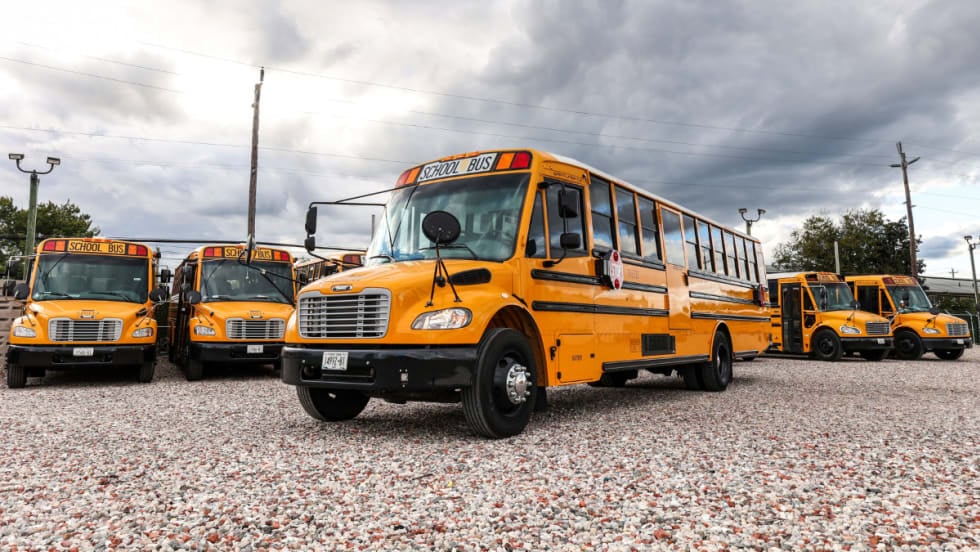
Logan Bus Company Rolls Out AI Phone System for NYC School Bus Families
A summer pilot found that AI agents could handle most routine calls, freeing up time for customer service staff to focus on emergencies and complex family concerns.
Read More →