




Cost Accounting
Transportation manager for the New Orleans Public Schools, New Orleans, Louisiana, recommends that cost records be used internally as a guide for cutting down operating expenses.

EVERY SCHOOL district wants its bus transportation department to be extremely cost conscious and requests an accounting of virtually every expense item. A lot of time and energy is used up in keeping a volume of records, most of which are never even used. Yet, seldom do school authorities realize how expensive this record keeping process really is for the little use they make of them.
Cost records can and do serve a useful and important function, but it is not in running comparisons between one operation and that of another neighboring school district or even against the national aver age. “They are used to best advantage internally as a guide for cutting down the transportation department’s biggest single headache—operating expenses,” states Joseph B. Duteil, Jr., transportation manager, New Orleans Public Schools, New Orleans, Louisiana.
To trim operating expenses effectively, Duteil feels that it is necessary to collect data regularly on each vehicle for these seven items: mileage, gallons of fuel used, quarts of oil used, shop labor cost, cost or repair parts, cost of outside repairs, list of major repairs. His reasoning for concentrating on these items follows.
By accumulating data on mileage, fuel and oil usage, it is a simple matter to calculate the miles per gallon of fuel or the miles per quart of oil a vehicle uses. This calculation on mileage should be made within a time interval that is short enough to keep a bad situation from getting worse and developing into costly repairs. But, the interval should be long enough so that too much time isn’t given over to such paper work. A monthly schedule is a practical time gauge, Duteil recommends, as data collected over a 30-day period can indicate which vehicles are using more gas and oil than they should.
Transportation manager for the New Orleans Public Schools, New Orleans, Louisiana, recommends that cost records be used internally as a guide for cutting down operating expenses. These seven cost items should be checked regularly he believes.
Mileage on each vehicle.
Gallons of fuel used.
Quarts of oil used.
Shop labor cost.
Cost of repair parts.
Cost of outside repairs.
List of major repairs.
Rather than compare the data on his vehicles with figures determined by someone else or even with past records on different types of units, Duteil said he establishes an average figure for an entire group of the same type of vehicle in his fleet. Since these vehicles are all operating in the same area, under the same relative conditions, by drivers having the same supervision and training, using the same roads, etc., the average he establishes for his fleet is a more valid and reliable one.
Mileage, fuel and oil usage. If one vehicle’s MPG figure is out-of-line, it indicates either excessive fuel consumption and the need for a tune-up or other corrective action such as a leaking fuel tank, theft, or some disorder that can usually be located in time to correct before something more serious occurs. It’s not good for business to get a complaint from an angry parent “that the bus is leaking gasoline and is dangerous for the students riding in the bus.” Letting employees know that records on mileage and gallonage are being kept helps discourage gasoline “appropriations,” Duteil pointed out.
Excessive oil consumption indicates either the need for engine overhaul or other things as mentioned with excessive gasoline consumption. Again, a monthly check gives you information when you still have time to do something about using the figures for corrective action.
Shop Labor Cost. This information in total form compared with payroll records indicates what part of shop labor is being booked on repair tickets against vehicles. Of course some time is not used so, such as holidays, sick leave, odd-job time around the shop, etc., but this data is a pretty good indicator as to how the money is being spent for this very expensive item. Again, in time to do something about it. If 50% or 60% or more time is being accounted for by mechanics, it could indicate that they are being used for some other purpose.
“Too much time and energy is used up in keeping a volume of records, most of which are never used and school authorities sometimes don’t recognize the waste of dollars in requesting compilation of such data.”
If this is the case, their time should be charged to some other budget. Perhaps there are too many people or too many super visors, or maybe the shop foreman is lax and allows too much shuffling between jobs. Perhaps the work is not being planned properly. Also, the fact that there are no spare buses puts the shop in the position of not having anything to do when the children are being picked up mornings and afternoons. This is an individual problem and regardless of how these figures compare with “X” school district “across the river” each school has to solve its own problems but with enough collected data to intelligently evaluate and consider the problem.
Cost of Repair Parts. This is a big budget item subject to price variations and pilferage. Although it is good to know how costs of parts compare with individual vehicles, this cost item can also be an indicator as to the type of vehicle purchased.
If chassis “X” proves out to use more parts than chassis “Y,” it will pay probably to take particular notice of this when writing up future specifications. This data will also indicate whether the correct chassis was purchased in the first place. Many people buy a light-piece of equipment and expect miracles but then find their cost of part replacement adds up to a lot more than if they had bought the heavier piece of equipment in the first place.
Cost of Outside Repairs. These include front end, tire repairs, upholstery, painting and practically any other item that is sent out to have clone. Once again, cost by individual vehicle is important, but of even more importance is the total amount spent for each kind of outside repair. It may be cheaper, less complicated, faster, and more reliable to put someone or some equipment in your own garage to handle this particular repair. Sometimes these tilings are not obvious on a day-to-day basis when precious time is used up in trying to satisfy and pacify parents, set bus schedules and appease superintendents, but they are quite revealing when considered in total form.
Cost records of repairs and frequency of major repairs are important.
List of Major Repairs. Engine overhaul, complete brake jobs, transmission overhaul, rear end repairs are in this category. These repairs don’t come up every day therefore the time spent keeping these records is not really significant but if engine overhaul is a 30,000 mile job this time, it might be wise to get larger engines when new buses are ordered. This rule applies to other components.
In Summary. Don’t keep needless cost records, the cost may be more than the information is worth. Don’t worry about comparison with other fleets. Set up your records so that they will help you take corrective action in the shortest possible time. This is the only way to justify cost records. Don’t build statistical monuments, build management tools.
More Maintenance
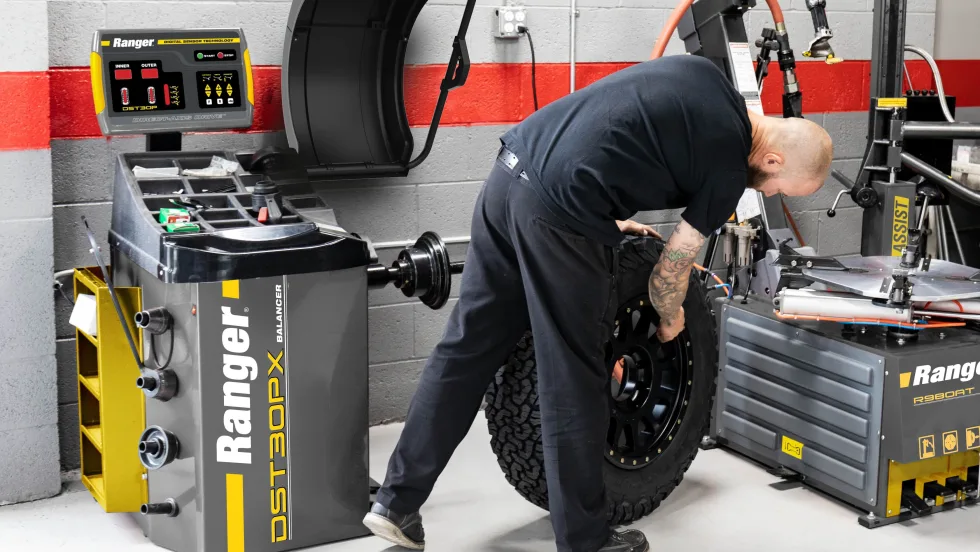
BendPak Launches Ranger DST30PX Wheel Balancer
BendPak's new wheel balancer handles tires up to 43 inches in diameter, with a reinforced design, precise weight placement, and faster service cycles.
Read More →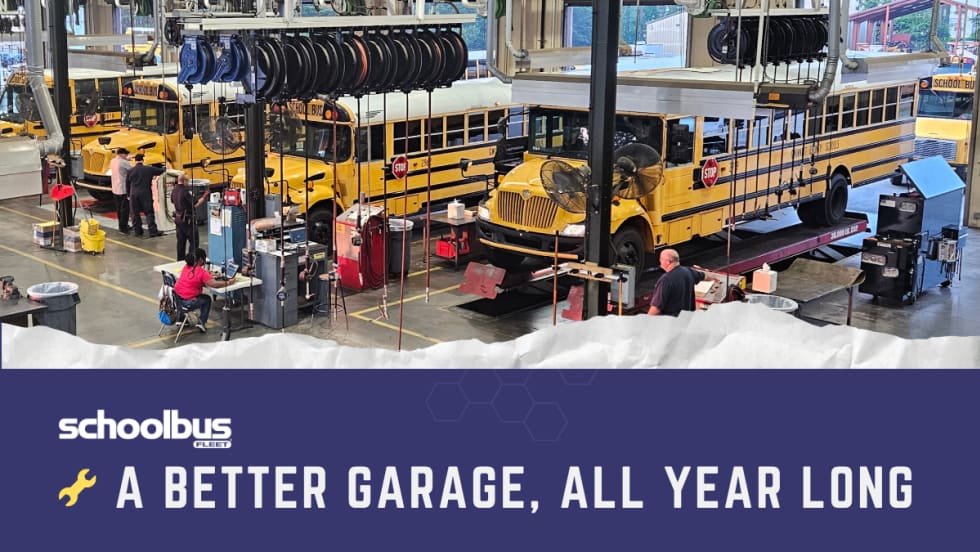
Tips for Ensuring School Bus Garages Are Safe and Warm Year-Round
Cold maintenance bays and rising heating costs? Learn how school bus garages can improve comfort with targeted heating, better airflow, and winter preparation.
Read More →
ASE Highlights School Bus Technician Certification Requirements
ASE is encouraging school bus maintenance professionals to maintain their certifications, highlighting seven specialized tests and five-year renewal requirements.
Read More →
International Adds E-Commerce Capabilities to Fleetrite.com
IC Bus customers can now browse, buy, and track shipments for more than 400,000 aftermarket parts online.
Read More →
The Most Expensive Thing You Do Before Selling a School Bus: Wait
When should you sell an aging school bus? Learn how maintenance, mileage, corrosion, specifications, and timing can affect resale value long before the auction.
Read More →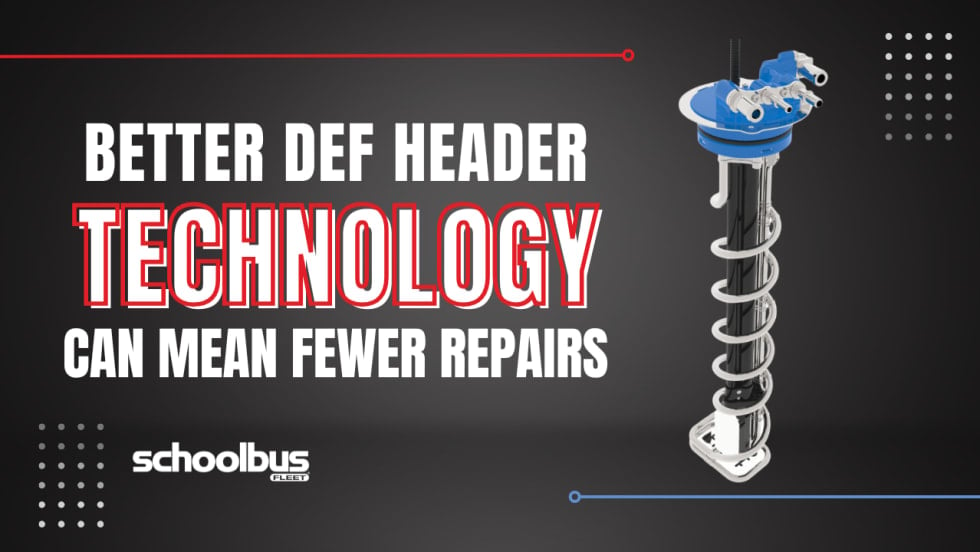
The Evolution of DEF Header Technology: What School Bus Operations Should Know at Replacement Time
See what school bus fleets should consider when replacing DEF headers to improve reliability, reduce repeat repairs, and control maintenance costs.
Read More →
The Essential Guide to School Bus Maintenance and Student Safety
Your district's buses carry students to school every day. This guide shows how predictive maintenance powered by fleet data helps keep buses reliable, drivers accountable and students safer from the first bell to the last stop.
Read More →
Kerry Brothers Grows Michigan School Bus Repair Network
The acquisition of Downriver Truck and Bus expands Kerry Brothers’ school bus maintenance footprint across southeast Michigan, adding repair capacity, diagnostic resources, and state inspection support.
Read More →
Noregon Introduces CAN Bus Diagnostic Tool, Expands JPRO Features
CAN Mentor and the latest JPRO update aim to simplify vehicle network diagnostics and improve repair efficiency for technicians of all experience levels.
Read More →
Cummins on Smarter, Simpler Engine Innovation
Cummins discusses its first-ever gasoline engine for school buses, EPA 2027, and why bus fleets still want durable, simpler internal combustion options.
Read More →