




Year started: 2014
School buses: 450
Students: 35,000
Districts served: 20, and one board of developmental disabilities
Transportation staff: 465
Area of service: 2,825 square miles
Collaborative Shares Data, Saves Money
The Ohio Shared Services Collaborative received a $1.76 million Straight A grant from the Ohio Department of Education to help school districts save money through shared services and bus rerouting.
by Kathryn Fleming, Editorial Assistant
November 3, 2016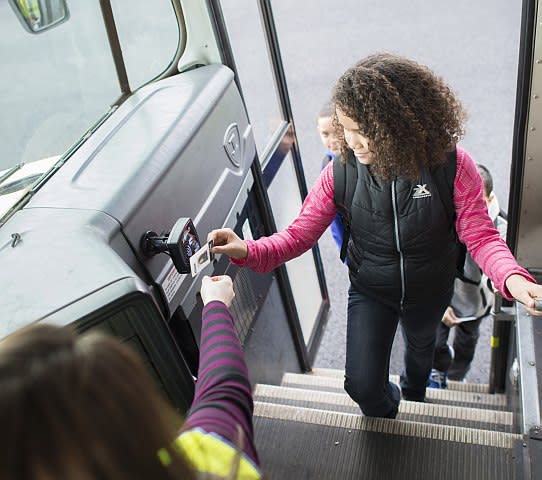
Organizers in the Ohio Shared Services Collaborative equipped school buses with RFID readers, and issued RFID cards to students to record when they get on and off the bus. Data from the Zonar Z Pass system helps districts determine how to plan routes most effectively.
7 min to read
Organizers in the Ohio Shared Services Collaborative equipped school buses with RFID readers, and issued RFID cards to students to record when they get on and off the bus. Data from the Zonar Z Pass system helps districts determine how to plan routes most effectively.
When Muskingum Valley Educational Service Center (ESC) joined with other school districts to form the Ohio Shared Services Collaborative (OSSC), it planned to reduce fleets by 5% and cut operating costs by 2%, with a goal of saving $4 million over five years. The plan was supported by a five-year, $1.76 million Straight A grant from the Ohio Department of Education. The organizers used the money to buy GPS and RFID equipment and create software to help them improve routes and share services.
Now, after two years of work with 20 school districts and one board of developmental disabilities, the plan has been so effective that organizers are hoping to expand it to an additional 55 districts.
The consortium has been able to avoid any major pitfalls mainly because of the care that was taken in initial planning, according to David Branch, superintendent of Muskingum Valley ESC. The organizers took into account the opinions of people who would be affected by the changes.
“Our consortium developed talking points for school board members, superintendents, and bus supervisors before GPS ever went on school buses,” Branch says. The consortium was initially driven by the Muskingum Valley ESC, with help from the Ohio Valley, Jefferson County, and East Central Ohio educational service centers, and the Ohio Mid-Eastern Regional Education Service Agency.
The consortium leaves the day-to-day control of school buses to individual school districts and instead focuses on analyzing data and designing routes to help districts improve their school bus systems. Because it has information about all the school districts, the consortium can recommend ways for them to combine their routes or facilities.
Shared goals
The majority of the districts in the OSSC are rural, meaning school buses have to travel long distances to pick up few students. Buses that drive longer distances cost more, so districts need to shorten or combine routes, serving more students with fewer buses. Saving money on transportation allows school districts to put that money back into the classroom.
“The more efficient we can make those bus routes, the better it is for the school bus, because it’s less wear and tear on the school bus; the better it is for the school district, because they’re saving money; and the better it is for the student riding the bus, because they don’t have as long a bus ride,” Branch explains.
Avoidable costs from inefficient routes have gone up over time, making it doubly important for school districts to lessen these costs.
“Enrollments have declined over the past 10 years, but the cost of transportation has steadily increased,” explains Dr. Michael Fuller, director of the Center for Data and Innovation at Muskingum Valley ESC. Collaborating with other districts is key because “there’s nothing within the district itself that’s going to entirely solve this problem,” he adds.
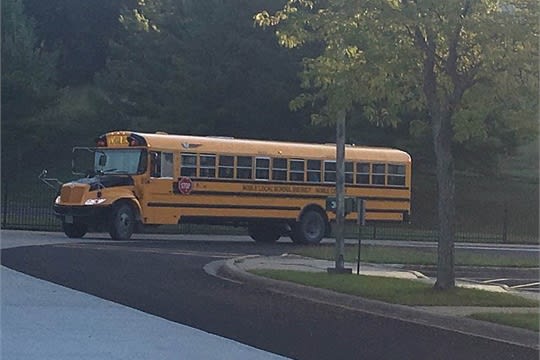
The Ohio Shared Services Collaborative is projecting an average savings ranging from $242,000 to $376,000 in 25% of its districts so far. Shown here is a school bus for Noble Local School District, which is one of the participating districts.
Data and analysis
With the help of the grant and the collaboration of multiple districts, the consortium can monitor student ridership to find out how many buses are actually needed and whether routes can be shortened, as well as create simulations to check feasibility of shared services and facilities.
To gather data, the consortium installed GPS units on 450 buses, allowing them to track routes more effectively, as well as track idle time. The organizers also equipped the buses with RFID readers and issued 35,000 RFID cards to students to record when they get on and off the bus. Looking at the data from the Zonar Z Pass system helps districts determine how to plan routes most effectively.
Most districts plan bus routes based on all the students in the district, but the consortium determines route plans on the basis of who actually rides the bus, Fuller says. Planning routes based on actual ridership leads to more efficient routes.
The consortium worked with teams at universities to develop custom-made software to fit the needs of the school districts, such as the OSSC Routes & Riders application, which allows scheduling within and across districts.
“Some of what we need to do hasn’t been done before, so we have to build it,” Fuller adds. “It’s not something that’s already prepackaged and ready to go.”
Results
The consortium is already showing significant cost savings, with more expected as the project continues.
“We are projecting in 25% of consortium districts thus far, an average savings ranging from $242,000 to $376,000,” Branch says. If the remaining 75% of districts are equally successful, the consortium will easily exceed its goal of $4 million in savings. Route analysis has been completed in 25% of districts, leading to five to seven reduced routes, and reduced idle times have resulted in $50,831 in annual savings.
One benefit beyond cost savings is an increase in safety, Branch notes. The RFID technology means that districts always know who’s on a bus.
“If there’s a bus accident, we can know in a matter of minutes who are the passengers on that bus,” he explains. RFID technology can help parents, too: The RFID system means they can sign up for the option to receive text messages notifying them when their children get on and off the bus. In addition, drivers know that GPS devices monitor their speed, which encourages safer driving practices.
“Enrollments have declined over the past 10 years, but the cost of transportation has steadily increased,” explains Dr. Michael Fuller, director of the Center for Data and Innovation at Muskingum Valley ESC. Collaborating with other districts is key because “there’s nothing within the district itself that’s going to entirely solve this problem,” he adds.
Data and analysis
With the help of the grant and the collaboration of multiple districts, the consortium can monitor student ridership to find out how many buses are actually needed and whether routes can be shortened, as well as create simulations to check feasibility of shared services and facilities.
To gather data, the consortium installed GPS units on 450 buses, allowing them to track routes more effectively, as well as track idle time. The organizers also equipped the buses with RFID readers and issued 35,000 RFID cards to students to record when they get on and off the bus. Looking at the data from the Zonar Z Pass system helps districts determine how to plan routes most effectively.
Most districts plan bus routes based on all the students in the district, but the consortium determines route plans on the basis of who actually rides the bus, Fuller says. Planning routes based on actual ridership leads to more efficient routes.
The consortium worked with teams at universities to develop custom-made software to fit the needs of the school districts, such as the OSSC Routes & Riders application, which allows scheduling within and across districts.
“Some of what we need to do hasn’t been done before, so we have to build it,” Fuller adds. “It’s not something that’s already prepackaged and ready to go.”
Results
The consortium is already showing significant cost savings, with more expected as the project continues.
“We are projecting in 25% of consortium districts thus far, an average savings ranging from $242,000 to $376,000,” Branch says. If the remaining 75% of districts are equally successful, the consortium will easily exceed its goal of $4 million in savings. Route analysis has been completed in 25% of districts, leading to five to seven reduced routes, and reduced idle times have resulted in $50,831 in annual savings.
One benefit beyond cost savings is an increase in safety, Branch notes. The RFID technology means that districts always know who’s on a bus.
“If there’s a bus accident, we can know in a matter of minutes who are the passengers on that bus,” he explains. RFID technology can help parents, too: The RFID system means they can sign up for the option to receive text messages notifying them when their children get on and off the bus. In addition, drivers know that GPS devices monitor their speed, which encourages safer driving practices.
Next steps
Encouraged by their success so far, the consortium members hope to grow their organization. They plan to provide alternate route ideas to the remaining 75% of their districts and develop shared routes to common locations. They also plan to expand their data with new studies, finish a study on sharing buses, and begin one about sharing facilities and personnel.
The organizers believe their expertise would be valuable beyond the districts they currently work in, and they hope the Ohio Department of Education will help them expand their consortium to a further 55 districts in southern and eastern Ohio.
“We’re ready to expand,” Branch says. “We’re hopeful that in the biannual budget they’ll find a way to help those school districts in southeast and central Ohio accomplish that goal of saving money through transportation of students.”
Subscribe to Our Newsletter
More Management
STA Acquires Sunrise Transportation
Student Transportation of America expands in Illinois and Connecticut through Sunrise's fleet of nearly 1,000 vehicles.
Read More →
EPA Opens $180M DERA Funding Round for Diesel Upgrades
The 2026 Diesel Emissions Reduction Act program seeks applications from eligible organizations to accelerate the retirement of legacy diesel vehicles.
Read More →
HopSkipDrive’s CareEngine Targets the ‘Exceptions’ in Student Transportation
The new platform works alongside districts’ existing transportation management systems to coordinate specialized rides, automate last-minute changes, and turn ride data into operational improvements.
Read More →


The Right Ride for Every Student: Navigating the New Student Transportation Ecosystem
How should districts blend school buses with small-vehicle transportation and other options? EverDriven CEO Mitch Bowling discusses safety, costs, partnerships, and strategy.
Read More →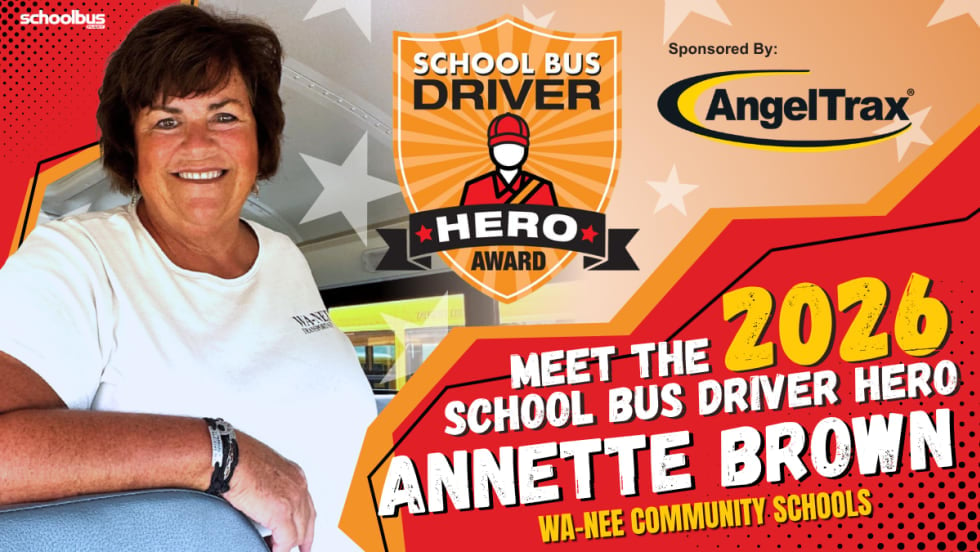
Annette Brown Always Takes the Extra Time: Meet Our 2026 School Bus Driver Hero
For more than 30 years, the Wa-Nee Community Schools driver has treated students like family, combining safety, compassion, and servant leadership to make a lasting difference on and beyond the school bus.
Read More →
How to Build a Better Driver Training Program
Ready to boost up your school bus instructor training? Here’s how to pick the right talent and improve recruitment, retention, and safety.
Read More →
CALSTART and Forth Combine to Form Catalyst Mobility
The new name represents a renewed vision for the nonprofit focused on advancing clean, equitable, and affordable transportation solutions that move people and goods.
Read More →
What Makes a Great School Bus Driver Trainer?
Choosing the right school bus driver trainer takes more than experience. Learn six keys to selecting and developing trainers and evaluating program effectiveness.
Read More →
School Bus Contractors Expand Through New Deals, Acquisitions & Partnerships
STA's Canadian division acquires Ontario-based G&L Stevenson Transport; Durham School Services adds a new district in California; First Student expands in New Jersey; and Minnesota Coaches rebrands and acquires Halo Transportation.
Read More →
Logan Bus Company Rolls Out AI Phone System for NYC School Bus Families
A summer pilot found that AI agents could handle most routine calls, freeing up time for customer service staff to focus on emergencies and complex family concerns.
Read More →