




Bus washing made easy
Today’s systems include features that enable users to maintain a spotless fleet quickly, all while reducing water and energy consumption.
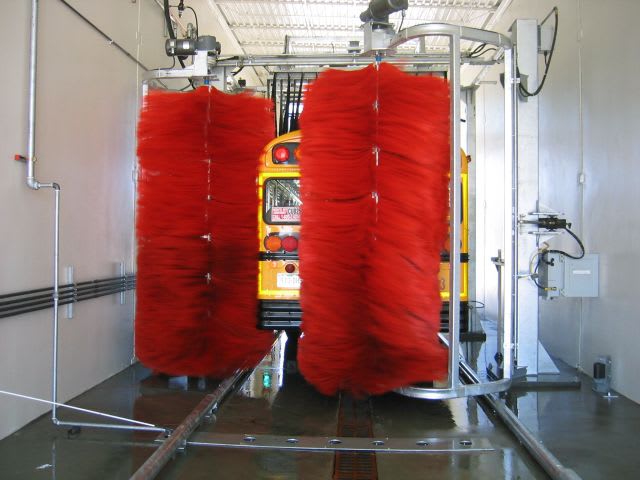
Ross and White Co.’s popular combination brush and touchless system includes a wraparound brush design.
Keeping the school buses in your fleet clean doesn’t have to be a big job. Bus wash systems make it easy for any driver to wash a bus, and they can help cut down on the costs associated with energy and water consumption.
SBF spoke with representatives from four companies specializing in bus wash systems about what features will keep buses clean without any extra hassle. Officials say that such systems should be upgradable, as well as easy to install and use.
Awash Systems Corp.
Awash Systems Corp.’s Powerbrush2O uses only 5 gallons of water per minute — about 12 fewer gallons per minute than the average garden hose, President Jack Jackson says. Additionally, only five minutes are needed to wash a school bus using the system.
“In today’s world, water is becoming such a major cost and having an environmental impact,” he explains. “Because the Powerbrush only uses 5 gallons a minute, it would only take 25 gallons to wash a school bus. If you used a regular hose that whole 30 minutes [it would take to clean a bus], you’re going to use 540 gallons of water.”
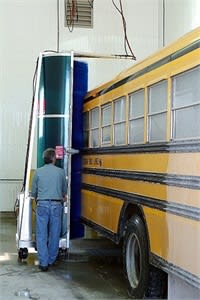
Awash’s Powerbrush2O uses only 5 gallons of water per minute and can wash a bus in only five minutes, according to President Jack Jackson.
The Powerbrush2O requires 16 square feet of space, and it can be easily moved and stored following use. That way, “the space becomes versatile. You can use it for anything you want: oil changes, engine repair, etc. It saves space and you don’t need to have a dedicated wash bay,” Jackson adds.
He also points out that using the Powerbrush2O can extend the life expectancy of a bus. The brush removes oxidation from the paint and metal, whereas a touchless wash system can leave behind dirt and grime, according to Jackson.
And, “because you’re using a brush, you need less chemicals,” he says.
Ross and White Co.
Ross and White Co.’s most popular wash system is a combination brush and touchless system, according to President and CEO Jeff Ross.
The system is equipped with two brushes that wash the sides and rear of the bus, as well as a high-pressure wash for the front of the bus and a high-pressure wheel wash system.
The benefits of the system include a “15-year warranty on hot dipped galvanized structural components, 5-horsepower top and bottom supported brushes, wraparound brush design, and stainless steel high- and low-pressure pumps,” Ross explains.
“As budgets drive the engine for most school districts, a system with long life, low maintenance costs and high wash quality is important,” he says.
To cut costs, Ross suggests that operators avoid systems with a chemical contract.
“Many systems are sold with a contract for chemical,” he says. “As most systems incorporate some form of touchless wash, the chemicals for the wash system are not only important, but also the highest ongoing cost of washing. School districts that buy such systems think they are buying the system with the least cost, but in reality wind up paying much more for a system with a chemical contract.”
[PAGEBREAK]

NS Wash Systems’ Big Mini bus washing system can be adapted to include the company’s Air Wiper drying system, which provides a high-pressure air stream that strips off water.
NS Wash Systems
NS Wash Systems’ Big Mini bus washing system, released just last year, is energy efficient and easy to install, CEO Thomas Ennis says.
“You can hook it up with a water hose and you can plug it in,” Ennis explains. “It has two side brushes that wash the side of the bus, and the top [of the bus] gets done by the scrubber curtain.”
The Big Mini is powered by two 1-horsepower motors and uses minimal water. Also, it can be quickly adapted using a variety of other NS Wash Systems’ products.
“And we have the ability to put brushes on it or we use lambs cloth, which is a synthetic type fur and it actually polishes the vehicle rather than brushes it clean,” Ennis says. Wheel washers can also be added to the system.
Additionally, NS Wash Systems’ new dryer system, called the Air Wiper, can be used with the Big Mini.
The Air Wiper provides a high-pressure air stream that strips water off the bus before a squeegee removes the excess water. The Air Wiper “keeps the nozzle the proper distances from the vehicle so we’re getting a very good dry vehicle,” Ennis says.
Belanger Inc.
Belanger Inc.’s wash system for buses uses fully boxed I-Beam supports extruded from aircraft-grade aluminum, with a yield strength of over 40,000 psi and elongation rating over 6 percent, according to Marcus McLaughlin, a member of the company’s marketing team.
“This means the ‘backbone’ of a Belanger Bus Wash is able to withstand repeated operational stresses, is compatible with all common wash chemicals and is inherently corrosion resistant,” he explains.
Also, because Belanger’s wash system is drive-through, “if you can drive the bus, you can wash it — quickly and safely,” McLaughlin says.
The company’s hybrid friction/touchless wash recycles 85 percent of wash water and utilizes just 50 gallons of fresh water per wash.
“In terms of fresh water use, that’s like washing a bus in a 6-foot bathtub,” he says.
Belanger Inc.’s hybrid wash system for buses recycles 85 percent of wash water and utilizes just 50 gallons of fresh water per wash.
The system’s wash wheels and oscillating roof mops are driven by PowerMeter™ sealed electric motors, which use 60 percent less energy than the motors used in most wash systems, according to McLaughlin.
“Because efficient wash equipment deserves powerful control, our Conserva™ controller shuts off power and water in less than one second between buses — for the ultimate in conservation,” he adds.
“Clean, well maintained buses speak volumes about your district, while bolstering the resale value of your fleet,” McLaughlin says.
More Maintenance
The Essential Guide to School Bus Maintenance and Student Safety
Your district's buses carry students to school every day. This guide shows how predictive maintenance powered by fleet data helps keep buses reliable, drivers accountable and students safer from the first bell to the last stop.
Read More →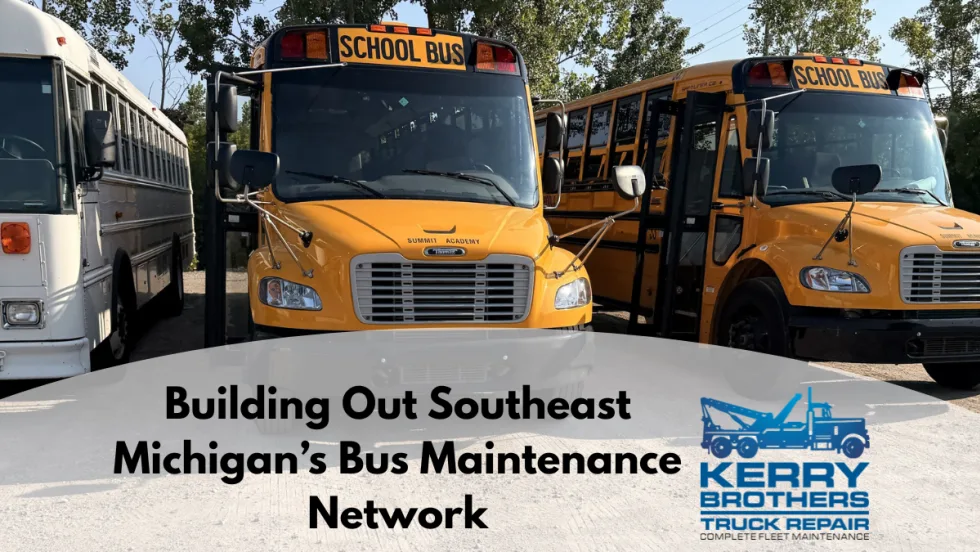
Kerry Brothers Grows Michigan School Bus Repair Network
The acquisition of Downriver Truck and Bus expands Kerry Brothers’ school bus maintenance footprint across southeast Michigan, adding repair capacity, diagnostic resources, and state inspection support.
Read More →
Noregon Introduces CAN Bus Diagnostic Tool, Expands JPRO Features
CAN Mentor and the latest JPRO update aim to simplify vehicle network diagnostics and improve repair efficiency for technicians of all experience levels.
Read More →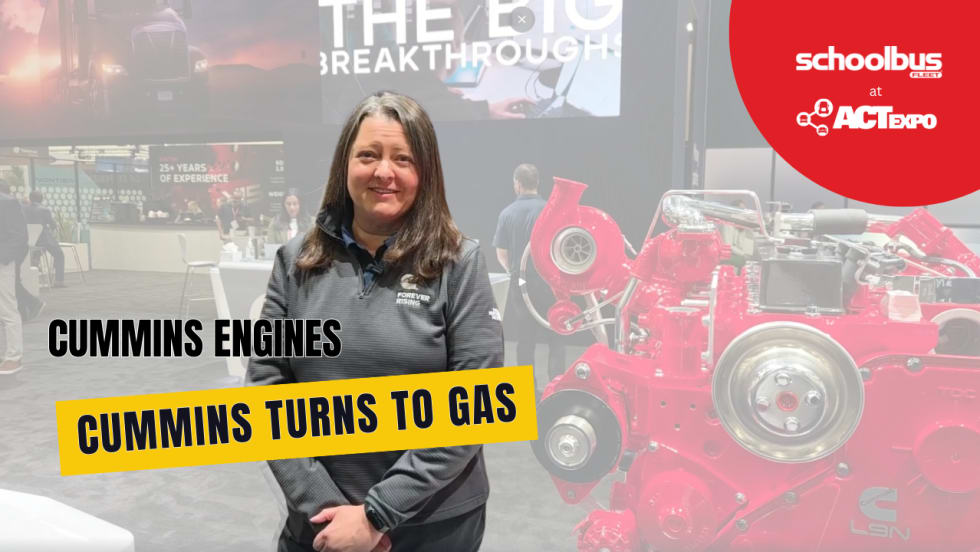
Cummins on Smarter, Simpler Engine Innovation
Cummins discusses its first-ever gasoline engine for school buses, EPA 2027, and why bus fleets still want durable, simpler internal combustion options.
Read More →
Report: 72% of Diesel School Buses Now Use Advanced Low-Emission Engines
New data shows advanced low-emission diesel technology continues expanding across school bus fleets, even as electric bus adoption gains momentum.
Read More →
Vampire Tools' CAIMAN 7.5-Inch Multi-Purpose Screw Extractor Long-Nose Pliers with Crimper
Vampire Tools introduced the VAMPLIERS Caiman 7.5-inch multi-purpose pliers, combining screw extraction, cutting, crimping, and gripping functions into a single tool designed for fleet maintenance professionals.
Read More →
How Advanced Diagnostics Helps Bus Fleets Stay Ahead of Repairs
Chat with Noregon’s Kevin Smallhorn at ACT Expo about bus diagnostic tools, telematics integration, CNG maintenance support, and strategies to help reduce downtime and improve uptime.
Read More →
How School Bus Fleets are Getting Ahead of Breakdowns
Don’t let bus downtime wear you down. Here’s how bus operators are shifting from manual processes to AI-powered, data-driven maintenance systems for improved reliability and safety.
Read More →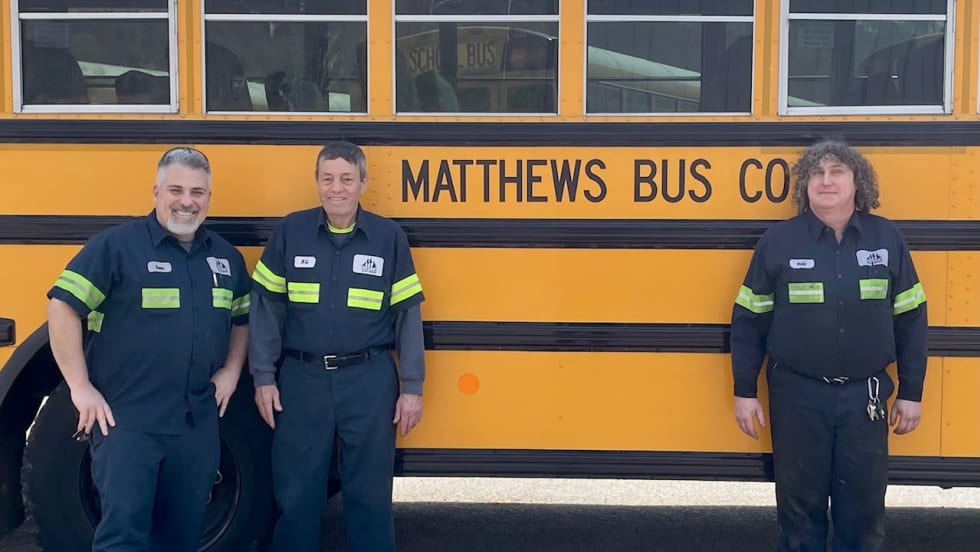
Pennsylvania School Bus Maintenance Team Praised for Dedication to Safety
Matthews Bus Company’s West Jefferson received a letter of commendation from the Pennsylvania State Police for their fleet inspections.
Read More →
From Chaos to Clarity: How School Districts Are Running Leaner Transportation Operations
Covering 38 routes on a Friday afternoon. Buses idling while routes overlap. Parents calling nonstop about late arrivals. Sound familiar? This whitepaper explores how district transportation leaders solved these exact problems — and what measurable results followed.
Read More →