




Bus Briefs
Missouri governor aims to require seat belts in buses JEFFERSON CITY, Mo. — Gov. Matt Blunt said he will work to enact a requiremen...

Missouri governor aims to require seat belts in buses
JEFFERSON CITY, Mo. — Gov. Matt Blunt said he will work to enact a requirement that lap-shoulder seat belts be installed in all newly purchased school buses in the state. The governor’s announcement exceeded recommendations from the School Bus Safety Task Force, which he assembled in the wake of three accidents in the spring. Among other recommendations, the panel suggested that school districts consider buying new buses equipped with lap-shoulder belts, but it stopped short of calling for a mandate.
School Bus Watch training program rolled out in Ohio
WARREN, Ohio — The state’s first School Bus Watch training session was held in late August at a local middle school. State Director of Pupil Transportation Pete Japikse and Terry Thomas, CEO of Community Bus Services Inc. in Youngstown, Ohio, led the event, which provides drivers with information on how to prevent and report terrorism and other threats in the pupil transportation industry. Graduates of the course can use a special hotline to contact emergency response personnel.
Fuel deal keeps South Carolina fleet on the road
COLUMBIA, S.C. — The South Carolina Department of Education struck a deal in early September to have diesel fuel shipped in by barge. The department said it was within a few days of exhausting its fuel reserves due to Hurricane Katrina-related disruptions in Gulf Coast oil operations. Amerada Hess Corp. agreed to sell the department as much as 75,000 gallons of fuel per day on an emergency basis. The company receives fuel by barge at its Charleston terminal.
California air board votes down bus emissions rule
SACRAMENTO, Calif. — The California Air Resources Board voted 5 to 3 to reject a proposal to tighten school bus emissions standards, according to the Los Angeles Times. The rule, which was suggested by the South Coast Air Quality Management District, would have required southern California school districts with fleets of more than 15 buses to buy the cleanest burning vehicles available when replacing or adding to their fleet.
Arizona expands school bus idling program
PHOENIX — A program aimed at reducing children’s exposure to diesel emissions has expanded to include more than 50 school districts throughout the state. The Arizona Department of Environmental Quality’s (ADEQ) School Bus Idling Program began last fall as a pilot project, with seven districts initially participating. The program calls for drivers to turn off their buses at schools or other locations while waiting to pick up students.
Michigan sees rise in bus inspection pass rate
EAST LANSING, Mich. — Nearly 350 more school buses passed state inspections during the 2004-05 school year than the prior year. Eighty-five percent of the 17,718 buses tested were approved, up from 83 percent for the 2003-04 school year. The number of vehicles that inspectors “red-tagged” — which requires a bus to be taken out of service immediately until defects are repaired — dropped from 12.5 to 11 percent. About 4 percent of the buses were “yellow-tagged” for less serious defects. Complete inspection results for public and private fleets can be found at www.michigan.gov/msp.
More Safety
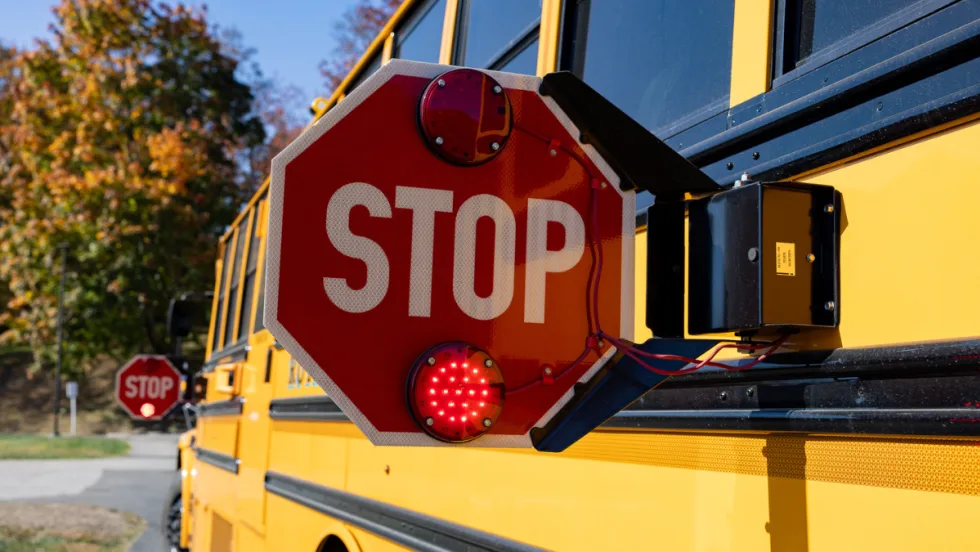
Illegal School Bus Passing Drops 24% in New York Districts
With fewer than 5% of citations involving repeat offenders, Westchester County officials said enforcement, education, and community partnerships are helping change driver behavior.
Read More →
School's Back. Here's What Happened to Traffic, Speeding & Distraction
What happens to traffic when school resumes? New data analysis examines changes in distracted driving, congestion, and speeding around schools.
Read More →
Geotab Expands Fleet Safety Tools With Video Coaching, Risk Insights
New safety and video capabilities aim to help fleet managers assess risk, support drivers, and take targeted action through video coaching, red-light violation detection, and more.
Read More →

How to Build a Better School Bus Driver Training Program
Is it time to strengthen your driver training? Here’s how to pick the right talent and improve recruitment, retention, and safety. This video is brought to you by IC Bus.
Read More →
Recent School Bus Accidents Leave 2 Dead, 2 Injured
Four school bus crashes in Florida, Illinois, and Georgia highlight risks in transportation lots, at bus stops, and during student loading and unloading.
Read More →
When Every Second Matters, Clarity Keeps Routes Moving
From routine delays to urgent incidents, strong communication practices help drivers, dispatchers, schools, and families respond with confidence.
Read More →
What Happens When a School Bus Catches Fire — and What Can Help
School bus fires are rare but can be devastating. Learn how advances in fire suppression and asset protection help fleets detect fires earlier, reduce damage, and improve safety.
Read More →
Geotab Launches Tool to Help Fleets Investigate Road Incidents
Geotab Investigations combines telematics data, video, documents, and other evidence to help fleets reconstruct incidents, resolve claims, and determine what happened.
Read More →
Texas Sixth Grader Wins 2026 National School Bus Safety Poster Contest
Sai Darshana Yekolu of Moseley Middle School in Prosper, Texas, was named the newest winner for her artwork, bringing the theme of “Safe Rides, Everyday Heroes” to life.
Read More →
Doing More With Less: How Transportation Directors Can Prioritize Safety Amid Budget Uncertainty
With diesel prices soaring and nearly one-third of transportation directors expecting budget cuts, maintaining student safety has never been more challenging. Download this guide to learn how leading districts are prioritizing risk, funding critical safety technology, and building stronger budget cases with data.
Read More →