




Bright ideas to make sure drivers buckle up
It’s up to each school bus driver to wear his or her seat belt at all times while operating the bus, but we know from seeing occasional reports that there are some drivers who aren’t always buckling up. With that in mind, transportation supervisors have to reinforce the importance of driver seat belt compliance, and they have to monitor that compliance.


Thomas McMahon is executive editor of School Bus Fleet.
When a school bus driver in Hamburg, Iowa, attempted to make a left-hand turn on Aug. 19, it was anything but routine.
The driver was not wearing his seat belt, police said, and he fell out of his seat. With no one behind the wheel, the bus, understandably, went out of control.
According to the Fremont County Sheriff’s Office, the bus left the roadway, went onto a resident’s property, and crashed into her two-car, wood-framed garage. The garage was destroyed, and the resident’s car and riding lawnmower were damaged.
Fortunately, there were no students on the bus at the time. The sheriff’s office did not report any injuries.
The 61-year-old school bus driver was cited for failure to wear a seat belt and failure to maintain control.
Of course, it’s up to each school bus driver to wear his or her seat belt at all times while operating the bus. But we know from seeing occasional reports like the one above that there are some school bus drivers who aren’t always buckling up.
With that in mind, transportation supervisors have to reinforce the importance of driver seat belt compliance, and they have to monitor that compliance.
One tool that has proven to be helpful in making sure that drivers buckle up is fluorescent seat belts. They may not be the most aesthetically pleasing color choices, but they enhance the visibility of the driver’s shoulder belt from outside of the bus.
In some states, bright seat belts for drivers are included in school bus specifications. In Delaware, for example, school bus driver seat belts are spec’d in fluorescent green or orange. State director Ron Love has told us that these conspicuous colors make it easier for supervisors to see that their drivers are wearing their belts.
In July, Iowa updated its school spec rules in a variety of areas. One of the changes was a requirement for new school buses to have fluorescent seat belts for drivers.
Fluorescent seat belts for school bus drivers are also a state spec in North Carolina. Another initiative in the state that has helped ensure that bus drivers buckle up involves a sticker and a hotline.
In 2008, the North Carolina Department of Public Instruction (DPI)’s transportation services department activated a hotline for students to call to report bus drivers not wearing their seat belts, as well as those who use their cell phone while driving. In the school districts that participate in the program, a sticker is placed in buses encouraging passengers to report violations to a number that goes to the DPI transportation office.
State director Derek Graham told us recently that calls to the hotline have greatly decreased in the past few years, which seems to indicate that the program is working.
Graham came up with the idea after the Huntsville, Alabama, crash in 2006 in which a school bus plunged off of an overpass, killing four students. The investigation of that accident found that the bus driver was not wearing his seat belt, and he was ejected from the bus before it plummeted from the overpass.
As Graham pointed out, school bus drivers’ decision to buckle up doesn’t just affect their own safety — it is essential to the safety of their students.
More Safety
School's Back. Here's What Happened to Traffic, Speeding & Distraction
What happens to traffic when school resumes? New data analysis examines changes in distracted driving, congestion, and speeding around schools.
Read More →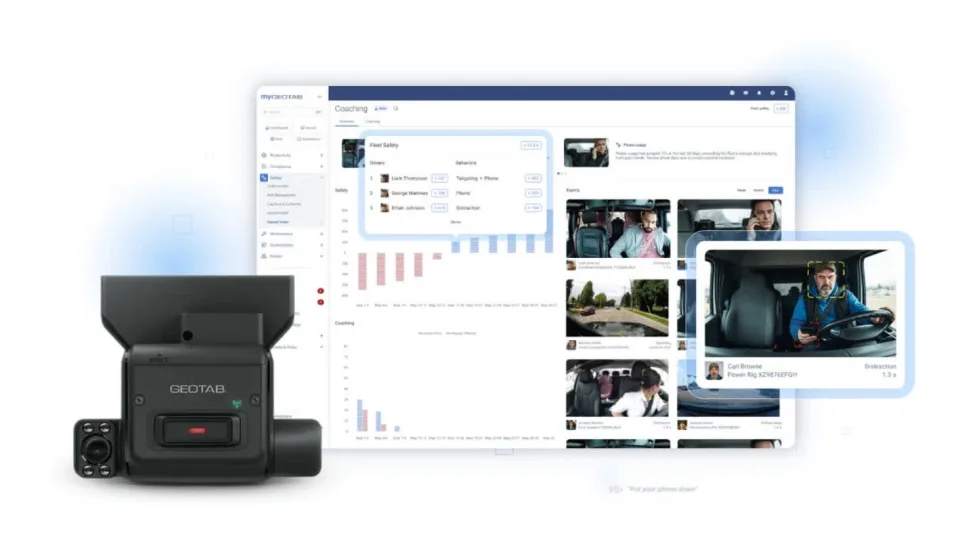
Geotab Expands Fleet Safety Tools With Video Coaching, Risk Insights
New safety and video capabilities aim to help fleet managers assess risk, support drivers, and take targeted action through video coaching, red-light violation detection, and more.
Read More →
How to Build a Better School Bus Driver Training Program
Is it time to strengthen your driver training? Here’s how to pick the right talent and improve recruitment, retention, and safety. This video is brought to you by IC Bus.
Read More →

Recent School Bus Accidents Leave 2 Dead, 2 Injured
Four school bus crashes in Florida, Illinois, and Georgia highlight risks in transportation lots, at bus stops, and during student loading and unloading.
Read More →
When Every Second Matters, Clarity Keeps Routes Moving
From routine delays to urgent incidents, strong communication practices help drivers, dispatchers, schools, and families respond with confidence.
Read More →
What Happens When a School Bus Catches Fire — and What Can Help
School bus fires are rare but can be devastating. Learn how advances in fire suppression and asset protection help fleets detect fires earlier, reduce damage, and improve safety.
Read More →
Geotab Launches Tool to Help Fleets Investigate Road Incidents
Geotab Investigations combines telematics data, video, documents, and other evidence to help fleets reconstruct incidents, resolve claims, and determine what happened.
Read More →
Texas Sixth Grader Wins 2026 National School Bus Safety Poster Contest
Sai Darshana Yekolu of Moseley Middle School in Prosper, Texas, was named the newest winner for her artwork, bringing the theme of “Safe Rides, Everyday Heroes” to life.
Read More →
Doing More With Less: How Transportation Directors Can Prioritize Safety Amid Budget Uncertainty
With diesel prices soaring and nearly one-third of transportation directors expecting budget cuts, maintaining student safety has never been more challenging. Download this guide to learn how leading districts are prioritizing risk, funding critical safety technology, and building stronger budget cases with data.
Read More →
Walton County Schools Adds Gatekeeper Stop-Arm Enforcement System
The Florida district will deploy Gatekeeper’s updated Student Protector technology, which now incorporates AI to improve video evidence.
Read More →