




Breaking News from around the Industry
Industry reacts to terror attacks WASHINGTON, D.C. -- It was the worst attack on U.S. soil since Pearl Harbor and has shattered America’...

Industry reacts to terror attacks
WASHINGTON, D.C. -- It was the worst attack on U.S. soil since Pearl Harbor and has shattered America’s sense of invulnerability, but opinions differ in the school transportation industry about the appropriate response to the Sept. 11 terrorist attacks. “Unfortunately, I think it’s something we’re going to have to consider from this day forward,” said Mike Martin, executive director of the National Association for Pupil Transportation (NAPT). The NAPT hopes to have a workshop on anti-terrorism strategies at this year’s conference, scheduled Nov. 10-15 in Nashville, Tenn. In Oceanside, Calif., just south of the Camp Pendleton Marine Corps Base, school buses that transport students to and from the four schools on the base were subjected to full searches and bomb-sniffing dogs, according to John Farr, transportation director at Oceanside Unified School District. “The security was greater than it was during Desert Storm,” he said. Farr said that his drivers received in-service training in late August on how to deal with a bus hijacker. The basic rule, he said, is to stay calm and cooperate with the hijacker. “Don’t be a hero,” he said. Farr’s sentiments were echoed by Gina Gregory, a driver for Certified Transportation in Rancho Santa Margarita, Calif. “Basically, we’re told to do what they say and stay calm for those on board,” she said. “Pray that we never find out” is how several other people responded to SBF’s inquiries about whether school transportation programs are prepared for a terrorist situation on a bus. But others said that we need to look at the whole gamut of training and response mechanisms. “If someone is willing to hijack a plane, then why wouldn’t they hijack a school bus?” asks Barry Brooks, transportation supervisor at Minot Public Schools in Minot, N.D. “Remember, they want to cause terror, and a hijacked school bus filled with children would cause terror.” “This not the time to hide our heads,” says Linda Barnwell, owner of Educational Transportation Consulting in Mesa, Ariz. “It is a time to prepare real emergency plans that can be distributed to school personnel, students, parents and to the community.” But not everyone agrees that school districts and contractors can train their staffs for an actual confrontation with a terrorist. “I am not sure that anyone can develop and train to the actual emergency,” says Augie Campbell, transportation director at Aurora Public Schools in Aurora, Colo. “When the emergency happens, we rarely are presented with a situation that takes into consideration our weather, staff attendance, equipment availability or level of training and emotions that the on-site participants will be displaying, especially in the first stages of the declared situation.” Campbell was not alone in his assessment, with others suggesting that emphasis on anti-terrorism training could detract from the fundamentals. “We can get so involved in doing all sorts of other stuff that we lose sight of what we are really supposed to be doing,” says Mark Obtinario, owner of Cowlitz Coach in Castle Rock, Wash. “If we do a good job of training for the general disasters, we should be prepared for the more unusual disasters the new millennium has brought us.” And what should students know about how to respond to terrorism? One driver trainer in San Jose, Calif., believes that students should be given some instruction. “I have always been a stickler in my training classes regarding hijacking, but, unfortunately, it is only for the drivers and not the passengers,” says Trish Tice, a driver instructor at Oak Grove School District. “The feeling with the administrators is that it would cause more grief than it is worth.”
How you can help
Of course, the American Red Cross always accepts blood donations, whether or not there’s an immediate crisis. For more information, call (800) 448-3543 or visit www.redcross.org. Information about cash contributions can also be obtained at the Website. The United Way of New York and the New York Community Trust have established the September 11 Fund. Contributions will be used to help respond to the intermediate and longer-term needs of the victims, their families and communities affected by the terrorist attacks. More information: http://september11fund.org/epledge/sept11.cfm. Donations to the Salvation Army are also welcome. For more information, call (800) SAL-ARMY or visit www.salvationarmy.org
More Safety
FMCSA Names New Chief Safety Officer: What School Bus Operators Should Know
Steve Dowling is set to lead the federal agency's efforts to advance commercial motor vehicle safety and reduce crashes, fatalities, and injuries on the nation's roadways.
Read More →
New Study Finds School Zone Speed Safety Cameras Cut Speeding Violations 97%
A Florida university's research demonstrates that Verra Mobility's automated enforcement changes driver behavior and significantly improves school zone safety.
Read More →
What Changed in DOT’s New National Roadway Safety Strategy?
The federal agency's new plan shifts its focus to safer people, roads and vehicles, with a new three-pronged approach instead of five. One outlined action even addresses a key industry concern around illegal school bus passing.
Read More →
Are Autonomous Vehicles Ready to Safely Navigate School Bus Stops?
NHTSA is accelerating autonomous vehicle deployment through new safety standards and commercial approvals. See why school transportation leaders are watching.
Read More →
NFL Star Lomas Brown Kicks Off New Illegal School Bus Passing PSA
Just in time for the back-to-school season, the former Detroit Lions offensive tackle took time to record a video encouraging motorists to slow down around school buses.
Read More →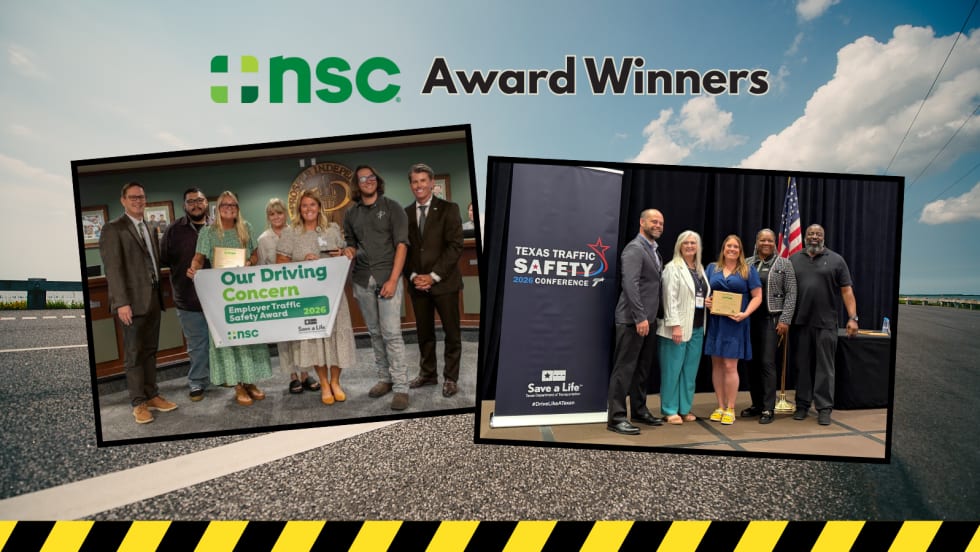
How Two Texas Districts Built Award-Winning Safety Programs
Learn how Prosper ISD and Rockwall ISD earned National Safety Council honors through hands-on training, safety culture, and strategies that reduced transportation incidents.
Read More →
NHTSA Releases 10-Year Review of Fatal School Bus Crashes
The latest federal analysis reinforces the safety of school buses while identifying where school-age pedestrians and other motorists remain most at risk.
Read More →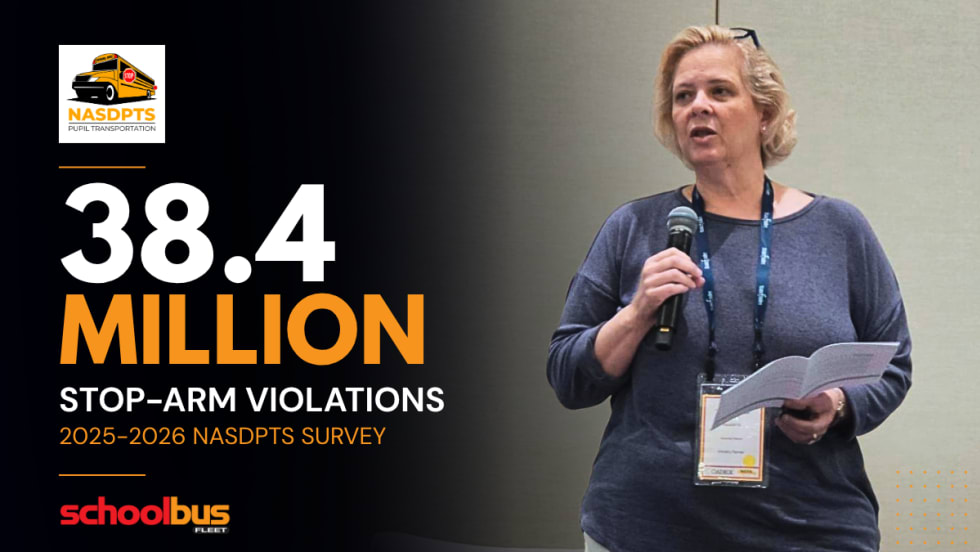
2026 NASDPTS Survey: Data Shows Further Reduction of Illegal Passing
New data is in! School bus stop-arm passings are down to 38.4 million violations per year, about a 2.3% decrease from last school year — but passings on the right side of the bus are higher than ever.
Read More →
Another School Bus Fatality Reported in Monsey, New York
A 7-year-old girl died after being struck by a school bus in Rockland County, New York while crossing the street. Here's what we know.
Read More →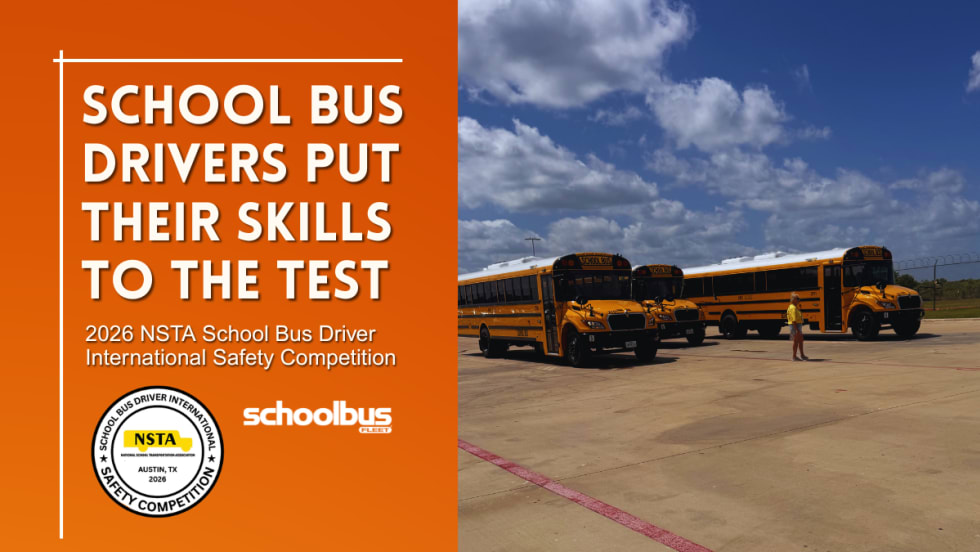
NSTA Announces 2026 School Bus Driver International Safety Competition Winners
Drivers from across the U.S. and Canada showcased their safety and driving skills, with two defending champions successfully retaining their titles.
Read More →