




Related: School Bus Fires Highlight Need for Preventive Measures
Automated Fire Suppression Offers Early Detection, Minimal Maintenance
Fire suppression technology can help boost safety by enhancing the speed of fire detection, reducing overall vehicle damage, and minimizing maintenance operations.

Sadiah Thompson・Assistant Editor
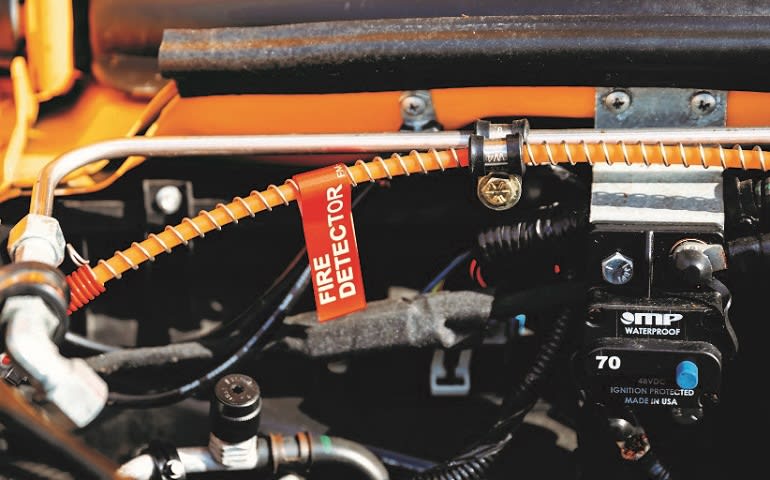
Photo courtesy Fogmaker North America
5 min to read
Photo courtesy Fogmaker North America
Fire suppression systems have been an equipment option for transit and school buses for years. But, the decision to mandate the systems on school buses is heating up — especially given the National Transportation Safety Board’s (NTSB’s) recent recommendation to require the systems on all school buses.
Even before the NTSB’s recommendation, states and pupil transporters had been making strides in adding fire suppression on their buses for additional student protection in case of a thermal event.
Currently, New Jersey and Georgia require the technology on all of their special-needs buses. Meanwhile, Nevada requires it on all of the state’s school buses.
In 2016, National Express, the second largest school bus contractor in the U.S., began adding Fogmaker’s fire suppression systems to its entire fleet.
More recently, Mobile County (Ala.) Public Schools also announced its plans to deploy the supplier’s systems on all 100 of its special-needs school buses, and it eventually plans to add the system to its remaining 600 buses.
More school transportation operations are looking to adopt fire suppression technology, and many suppliers offer systems that can help enhance speed of fire detection, reduce overall vehicle damage, and require minimal maintenance.
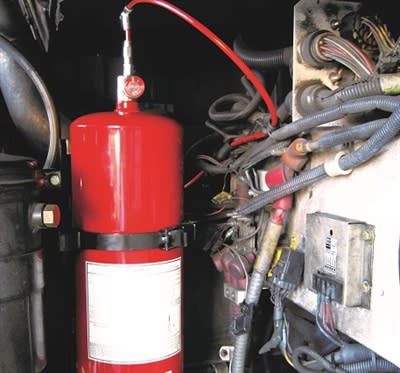
Photo courtesy Firetrace
Targeted Approach
Kent Tyler, executive vice president of Fogmaker North America, says fire suppression systems are designed to target three key aspects of a fire: oxygen, heat, and fuel.
To efficiently target all three, suppliers note the importance of having automated systems that require no electrical input or additional action from the school bus operator.
“Automatic systems typically actuate and suppress fires long before an operator can realize a fire has occurred and manually actuate a suppression system,” says Marc Dinovo, the senior applications manager engineer for Firetrace.
Fogmaker’s high-pressure water mist design allows the system to deploy in any circumstance, a school bus overturning being one example, Tyler says.
The same goes for Firetrace’s system, which contains a linear pneumatic fire detection tube that can expel nitrogen — creating a pressure differential that can initiate the discharge of the system’s fire suppressant.
Fire-Gator also performs total engine compartment flooding, but instead uses Stat-X’s aerosol fire suppression system.
“Our Fire-Gator system works automatically for school bus applications, and the aerosol suppressant in the system is environmentally friendly, unpressurized in the ready-state, and is not harmful to the operation of the engine,” says Brian Lyons, managing partner of Fire-Gator. “Once the system detects the fire, the aerosol agent is uniformly distributed without using any pressurized tubing. The system creates its own discharge pressure that disperses the agent through its incorporated nozzle and discharge ports.”
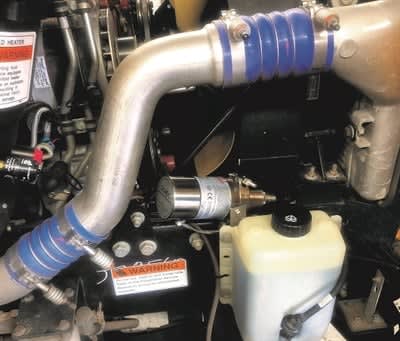
Photo courtesy Fire-Gator
Early Detection
On average, a fire suppression system can detect thermal events within about 25 to 30 seconds.
To minimize overall vehicle damage, Matthew Clapp, the OEM account manager for Kidde Technologies, says that early detection should be conducted through active alerts to drivers and consistent vehicle monitoring.
“With fire suppression, we’re trying to notify the driver as quickly as possible so they can quickly evacuate the vehicle and get students safely off the bus,” Lyons adds. “Fire-Gator can signal out to the bus shop from the vehicle’s OnStar, and the system also has the ability to offer hub protection whenever it’s deployed.”
In addition, Clapp says some districts have requested that suppliers add automatic engine shutdown as a feature for post-fire detection.
“From a fire suppression perspective, Kidde Technologies always recommends shutting the engine off,” Clapp says. “If one of the sources of the fire is a fuel or oil spray, the last thing you want is to continue to have the engine running to continue to provide fuel for the fire.”
While the automatic engine shutdown feature depends on the supplier, Clapp says some districts are hesitant to implement it — underlining their concerns about rendering buses immovable at potentially dangerous locations, such as if a bus were stopped on a railroad crossing.
Minimal Maintenance
Even though fire suppression systems require little to no maintenance, Firetrace’s Dinovo says it is still essential for technicians to be aware of how to sustain the system. More importantly, they should know what to do after the system has been deployed for a thermal event.
“I cannot stress enough the importance of educating operators and technicians on not only how these [fire suppression] systems work, but also how to spot potential fire hazards before they have a chance to become one,” he explains. “I have seen operators ignore system warnings simply because they did not know what the warnings were for. Additionally, I have seen maintenance technicians ignore large amounts of debris, such as road gunk, grease, and oil, near ignition sources simply because they don’t perceive it as a hazard.”
Depending on the type of fire suppressant a system deploys, whether it’s a liquid- or powder-based solution, Tyler says technicians should make sure that the suppressing agent isn’t going to “eat away at their wiring harness” or cause any additional damage to the bus’s engine compartment.
For example, Fogmaker uses an aqueous film-forming foam (AFFF) that can suppress a fire. Meanwhile, Kidde Technologies uses a non-corrosive purple dry powder that allows technicians to clearly see where the powder has been distributed, making for a quick and easy cleanup, Clapp explains.
Fire-Gator seeks to cut down on maintenance time and costs by using an aerosol suppressant, Lyons says. He adds that Fire-Gator offers recommissioning services in which technicians come out to replace the system’s generators and the area of the detection wiring that has been compromised.
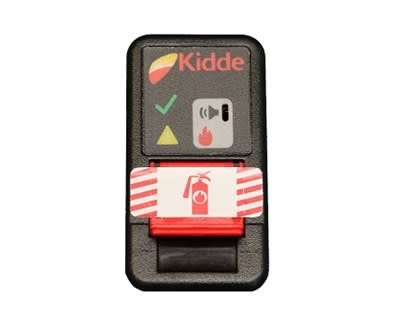
Photo courtesy Kidde Technologies
Increasing Adoption
While the NTSB’s recommendation may have reignited the discussion about fire suppression, several other legislative actions, such as the push for seat belts on school buses across the U.S., are also fueling the use and growing adoption of the technology.
In July, two federal lawmakers re-introduced the School Bus Safety Act, which aims to improve school bus safety by requiring lap-shoulder belts and other safety technology, including fire suppression systems, on buses.
“We’ve seen a lot of transportation directors and industry officials become very concerned about adding seat belts on school buses,” Fogmaker’s Tyler explains. “From a fire suppression standpoint, it will take longer to get children off a bus equipped with seat belts, so more districts are looking at fire suppression to increase the amount of time they have to evacuate students.”
Although seat belts remain a divisive issue in the school bus industry, Tyler adds, he hopes it will continue to spur the conversation on fire suppression and make school districts aware of the solution, which is designed to not only buy them time in the event of a fire, but also save lives.
Subscribe to Our Newsletter
More Maintenance
Tips for Ensuring School Bus Garages Are Safe and Warm Year-Round
Cold maintenance bays and rising heating costs? Learn how school bus garages can improve comfort with targeted heating, better airflow, and winter preparation.
Read More →
ASE Highlights School Bus Technician Certification Requirements
ASE is encouraging school bus maintenance professionals to maintain their certifications, highlighting seven specialized tests and five-year renewal requirements.
Read More →
International Adds E-Commerce Capabilities to Fleetrite.com
IC Bus customers can now browse, buy, and track shipments for more than 400,000 aftermarket parts online.
Read More →
The Most Expensive Thing You Do Before Selling a School Bus: Wait
When should you sell an aging school bus? Learn how maintenance, mileage, corrosion, specifications, and timing can affect resale value long before the auction.
Read More →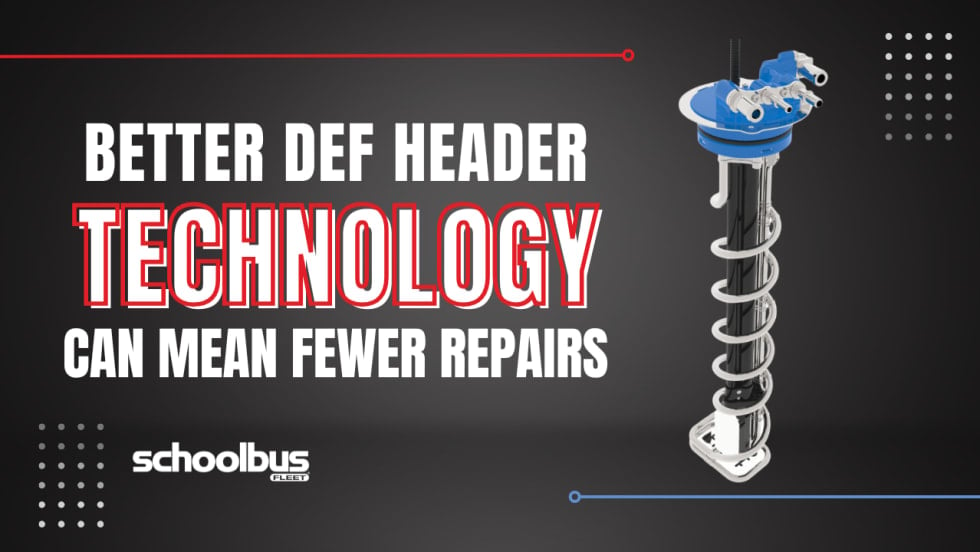
The Evolution of DEF Header Technology: What School Bus Operations Should Know at Replacement Time
See what school bus fleets should consider when replacing DEF headers to improve reliability, reduce repeat repairs, and control maintenance costs.
Read More →
Sponsored•September 8, 2026
The Essential Guide to School Bus Maintenance and Student Safety
Your district's buses carry students to school every day. This guide shows how predictive maintenance powered by fleet data helps keep buses reliable, drivers accountable and students safer from the first bell to the last stop.
Read More →
Kerry Brothers Grows Michigan School Bus Repair Network
The acquisition of Downriver Truck and Bus expands Kerry Brothers’ school bus maintenance footprint across southeast Michigan, adding repair capacity, diagnostic resources, and state inspection support.
Read More →
Noregon Introduces CAN Bus Diagnostic Tool, Expands JPRO Features
CAN Mentor and the latest JPRO update aim to simplify vehicle network diagnostics and improve repair efficiency for technicians of all experience levels.
Read More →
Cummins on Smarter, Simpler Engine Innovation
Cummins discusses its first-ever gasoline engine for school buses, EPA 2027, and why bus fleets still want durable, simpler internal combustion options.
Read More →
Report: 72% of Diesel School Buses Now Use Advanced Low-Emission Engines
New data shows advanced low-emission diesel technology continues expanding across school bus fleets, even as electric bus adoption gains momentum.
Read More →