




At the drop of a hat
Too often, transportation directors are asked to be jacks of all trades, handling their school bus duties while supervising other departments such as ...
Too often, transportation directors are asked to be jacks of all trades, handling their school bus duties while supervising other departments such as grounds and landscaping, food service or warehousing.
These extra hats are typically handed out at smaller school districts, where the responsibilities are more compartmentalized, but they can be freely distributed at larger ones. When budgets get tight, it’s not uncommon for the superintendent and school board to decide to double up on responsibilities. The unfortunate soul who now has another hat to wear is often given a small bump in salary, provided the services of an additional half-time administrative assistant and extolled for “helping the district improve its efficiencies.”
This type of “promotion” can look good on a resume and can seem quite manageable, at least on paper. But the reality is that few things in life work out as well as they do on paper. New responsibilities mean additional employees to supervise, which means more annual evaluations to fill out and, eventually, more hiring and firing. It means more reports to file. It means another budget to oversee. It means that you’ll have to get into your car and drive over to the warehouse or facilities headquarters, when you haven’t a minute to spare. You’ll also have many more vendors to accommodate, each of them wanting “just a few minutes of your time” to tell you about their improved product line.
One hat can be plenty
As you know, being a transportation director is a tremendous responsibility in itself. Most of you already wear multiple hats, whether it’s as a substitute driver, safety trainer, shop supervisor, counselor, arbitrator, mediator, negotiator, accident investigator, community relations specialist, department spokesperson, budget analyst or labor relations specialist.
Being a transportation manager means never having to say you’re too busy to help solve a problem in the bus yard and throughout the school district. Why, then, do school districts create positions overseeing multiple departments? Because school transportation managers often are among the most capable people in the school district.
They’ve learned to solve problems — involving people, equipment and facilities. They understand the importance of safety, training and proper procedures. They have essential skills in emergency response. Most importantly, they can put out fires, large and small, literal and figurative.
Stay focused on the mission
But they should not be putting out fires in the grounds/maintenance department when their experience and judgment are needed in the bus yard. When was the last time you heard about a student being killed in a shrubbery-clearing accident? Or critically injured in a food services disaster? Or maimed in the warehouse?
School bus managers are most effective when they’re focused on a single mission — safe and efficient transportation. And this can only be accomplished if they relinquish — or refuse to take on — outside responsibilities.
More Management

The Back-to-School Checklist Every Director Should Complete Before the First Bell
Help your transportation team start the school year strong with these tips for contingency planning, communication, fleet visibility, technology, and trip management.
Read More →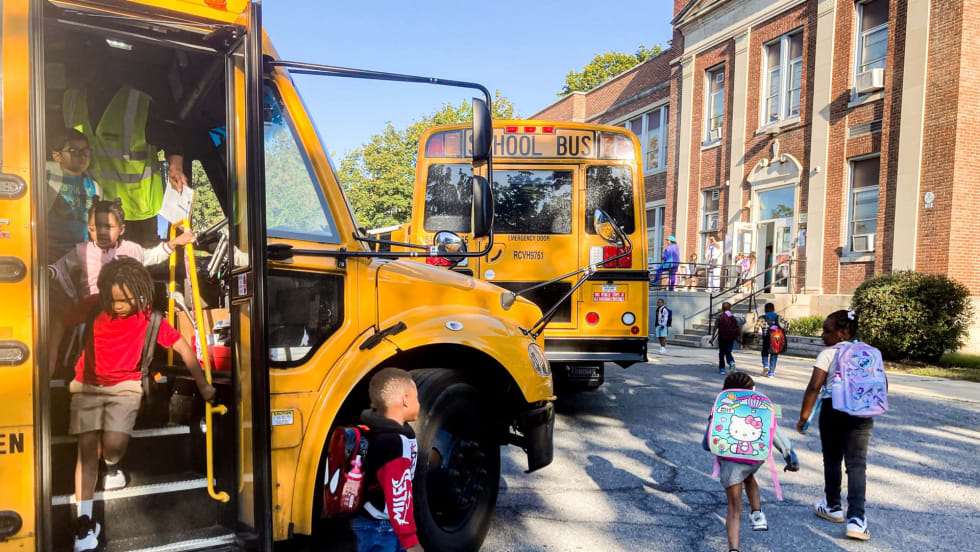
How a New York District Cut Nearly $1M in Transportation Costs While Expanding Bus Access
A data-driven overhaul with BusRight reduced Poughkeepsie City School District's planned routes from 26 to 17 while extending school bus service to about 1,200 additional students.
Read More →
Budgets Down, Enrollment Shifting: What the Data Says Districts Should Watch
School transportation departments face two converging challenges this year: tightening budgets and shifting enrollment. Most districts still address these issues separately, but the assumption that either trend will simplify operations is proving incorrect.
Read More →
These 8 School Transportation Companies Made the 2026 Inc. 5000 List
Find out which school transportation contractors, technology providers, and suppliers ranked among America’s fastest-growing private companies.
Read More →
The Link Between Emotional Intelligence and School Bus Safety
How can emotional intelligence help transportation pros navigate stress, manage change, and build stronger relationships? Listen to find out.
Read More →
What Emotional Intelligence Has to Do With School Bus Safety
In this video, discover how emotional intelligence can help transportation leaders and drivers navigate stress, manage change, and build stronger relationships. The Route is sponsored by IC Bus.
Read More →
Beyond Two-Way Radios: School Bus Communications Evolve With Push-to-Talk Over Cellular
PRYME Radio and PositionPTT join forces to advance hands-free radio use and reduce distracted driving. See how PoC compares with traditional radios on range, cost, safety, and connectivity.
Read More →
Have School Districts Adapted to Bus Driver Shortages or Simply Accepted Less Service?
According to a recent report from HopSkipDrive, many districts appear to have recalibrated what "normal" transportation service looks like.
Read More →
Reliable Transportation Linked to Better Student Outcomes, New EverDriven Study Finds
See why new research suggests transportation consistency improves student outcomes while influencing attendance, funding, IEP compliance, and family trust.
Read More →
Switzer-CARTY Enters the U.S. with New Acquisition
The Canadian contractor’s acquisition of Minnesota-based Agnes Corporation marks its first cross-border expansion into the United States and adds 350 vehicles.
Read More →