




Advances in Radio Communication Systems
An operation’s ability to communicate effectively is a major factor in the safe transportation of students. The prime means by which staff, driv...
An operation’s ability to communicate effectively is a major factor in the safe transportation of students. The prime means by which staff, drivers and attendants stay in touch with each other is the two-way radio. However, changing technology offers new methods of communication to replace older systems as well as equipment that can supplement existing systems. This metamorphosis in conventional radio systems has resulted in an increase in user options and added security during emergency situations. Here are some common examples of the changes taking place in on-board communication systems. Cell phones as backup
While two-way radio remains the standard form of communication on school buses, many districts are moving toward the use of cell phones in cooperation with radios. School bus operators are increasingly recognizing that cell phones on buses act as an added guarantee of children’s safety, providing drivers with a means of communication for use in emergencies or if two-way radio systems fail. Operators use cell phones in varying capacities. In Nashville, N.C., drivers at the Nash Rocky Mount Schools rely almost exclusively on cell phones for on-board communication. About two years ago, the district’s buses transitioned from a veritable absence of communication systems - only special-education buses had two-way radios - to cellular communication across the board, according to Binford Sloan, the district’s director of transportation. The Oceanside (Calif.) Unified School District has been issuing cell phones to drivers on special-education routes for several years. Drivers use the phones when they have to contact a student’s home or school to inform them that the bus has arrived. They also use them to call dispatch if the two-way radio is congested. Augmenting your operation’s communication system with cell phones may be a precautionary measure worth considering, especially as the phones become increasingly affordable. “With the pricing of cell phones and the price per minute of use dropping rapidly in recent years, this has become a viable system,” notes Michael Lunsford, director of transportation at Loudoun County Public Schools in Leesburg, Va., where 2,300 students are transported to and from school daily. Making the transition
Most operators transitioning to the use of cell phones do so in stages, adding phones to the two-way radio system, rather than replacing the radio system altogether. The transportation department at Tiffin (Ohio) City Schools uses Kenwood two-way radio systems on its 21 buses. The radios, for the most part, meet the department’s needs. “Our drivers can talk to each other on the radios within about 15 miles distance, which is typically everywhere we go on routes,” explains transportation supervisor Steve Anway. The district has nonetheless started adding cell phones to buses that are on duty after hours and those that go on activity trips. Cell phones can be used to contact the base when buses are out of radio range. “Bases can only receive the radios for about a 50-mile radius,” says Anway. However, he adds, radios too have their benefits. “Cell phones hit dead spots,” he says. Lori Cholodewitsch, a driver for Tiffin City, says that cell phones come in handy in sticky situations. “We carry phones on weekends or weeknights after hours, like Friday nights after a football game, when there is no one at dispatch. We would use them if there was a breakdown, a flat tire, engine failure or some other emergency,” she says. Loudoun County Public Schools are presently transitioning to a complex combination UHF-radio system consisting of conventional channels, trunked channels and cell phones. All buses that routinely service areas outside of Loudoun County and those that go on trips have two-way radios as well as cell phones. “These buses are able to call on either system [radio or cell phone],” says Lunsford. “This also gives our dispatch office or supervisory staff the ability to contact these buses wherever they are and the conversation remains private.” Loudoun County uses digital cell phones, which guarantee quality and reliable communications on the bus from virtually any location. Lunsford notes that cell phones also enable the transportation department to contact one vehicle at a time (as opposed to broadcasting to everyone over the radio), while drivers have the ability to reach emergency services from almost any location. This combination system, says Lunsford, should be able to support all of Loudoun County’s on-board communication needs for the next 20 years. The district currently uses roughly 1,600 portable and mobile radios, 100 cell phones and 300 pager/Nextel units. Dual radio-phone systems
Nextel Communications Inc., in Reston, Va., offers a special feature on its phones, making them particularly useful to school bus operators. Through Nextel Direct Connect, cell phones dually function as two-way radios. By dialing a two- or three-digit number, the user can make instantaneous contact through a cell phone with another person in the same talk group or local area. Bus drivers can be put in the same talk group, and most phones come with a directory into which all drivers’ numbers can be input. With Nextel Direct Connect, a single cell phone can be used to contact drivers, dispatch, parents and emergency help. The phone also comes with a hands-free option. Because Direct Connect works over Nextel’s digital network, the connection is clear and secure. Nextel provides special Direct Connect minute plans that are separate from cell phone minutes. However, Direct Connect can only be activated on Nextel phone units. Street supervisors and managers at Philadelphia School District use Nextel Direct Connect and say it has helped alleviate problems they had with radio communication. Before switching over to Nextel, radios were getting poor reception and waning quickly when removed from their cradles. The tall buildings in Philadelphia often obstructed reception of radio signals or created dead spots - problems common to large cities. “Reception is poor on the hand-held radios in and around most buildings,” explains Richard Ross, general manager of transportation services at the Philadelphia School District. “This is the same problem the transit police were experiencing in the subways. When they needed backup, they lost communication or the reception was too weak to decipher.” Philadelphia School District has had a two-way trunked radio communication system in place since 1989, with 10 channels, four base stations and a tower the district shares with the City of Philadelphia, which gives them an additional 100 feet of elevation for cleaner reception. Still, the problems with reception persisted. The Nextel Direct Connect system solved that problem, as the Nextel network has towers in or near most large cities that allow a range of 250 miles, as opposed to the 30- to 50-mile range enabled by most communication system towers. Ross says that the Nextel units were “a real blessing” to the Philadelphia district. “We are now sold on the technology,” he says. Depending on your communications provider, the price of a Nextel system may range from $39.99 to $79.99 a month, sometimes with a free phone. Some vendors offer corporate packages, which include bulk discounts for phones and minutes. At the Oceanside Unified School District, where Nextel systems are used almost exclusively, the transportation department pays a monthly base charge of $18 per unit, plus fees for cell phone and Direct Connect minutes. Two-way radio advances
A trunked radio system solves many of the problems users of conventional systems experience. Basically, trunking allows a large number of users to share a relatively small number of communication paths, or trunks. A computer determines the sharing of the paths; a computerized controller automatically allots channels and makes other decisions usually made by the radio user. The advantages of trunking include user privacy, faster system access, better channel efficiency and flexibility to expand. Shelby County Schools (Tenn.) experienced a vast improvement in quality and privacy when they upgraded from a conventional system to a trunked system. “If you key your microphone, you then have control of the channel, meaning no one can step on you or interrupt your transmission until you come off that key. On our old system, if you were talking and someone else keyed, it would walk all over your transmission,” says Mike Simpson, director of transportation at Shelby County. Conventional systems can also be enhanced with functions and features that make them comparable to trunked systems. Digital systems improve the voice quality over a wider area. Narrowband technology increases efficiency. Many trunking-type features such as push-to-talk ID, Emergency ID, Alert Call, Private Call and group calls are also available. Coverage and quality can often be increased in simple and inexpensive ways.
More Management

The Most Expensive Thing You Do Before Selling a School Bus: Wait
When should you sell an aging school bus? Learn how maintenance, mileage, corrosion, specifications, and timing can affect resale value long before the auction.
Read More →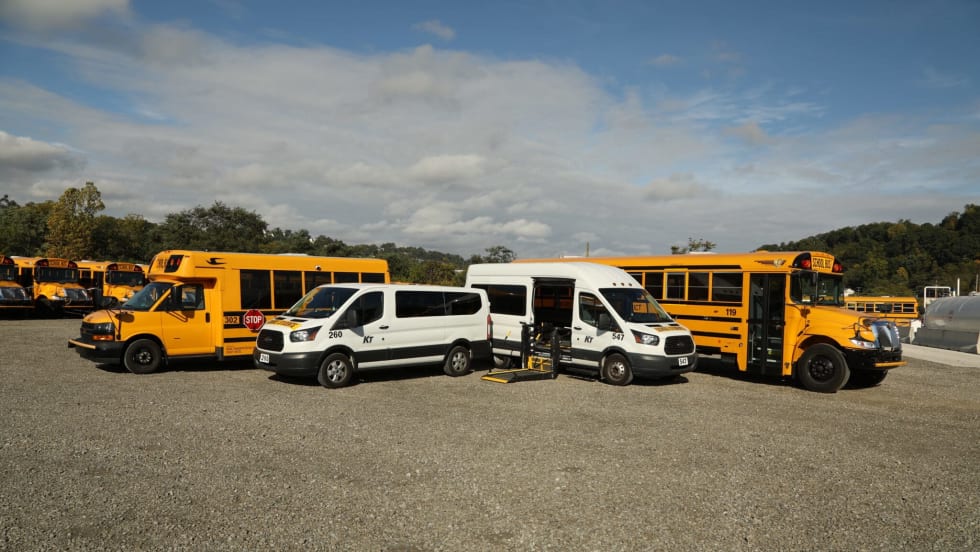
American Student Transportation Partners Acquires AJ Myers and Sons
A new deal brings a 75-year Pennsylvania student transportation provider into one of the nation’s largest private school bus contracting groups.
Read More →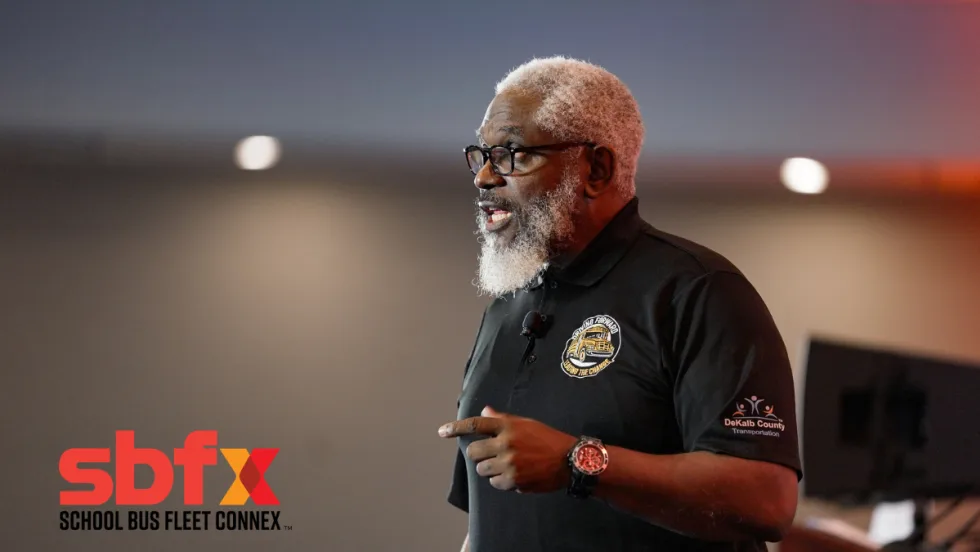
What I Brought Home From SBFX: Relationships, Leadership, and Preparing What's Next
Who could lead your transportation operation tomorrow if you couldn't? Bernando Brown explores succession planning, mentorship, and preparing emerging leaders to step up.
Read More →
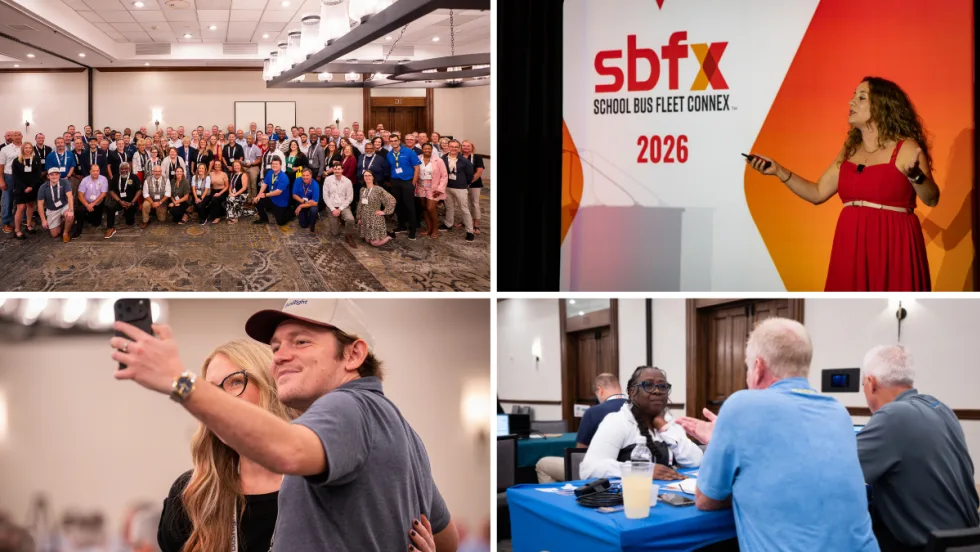
Inside School Bus Fleet ConneX 2026: Industry Leaders Connect in Scottsdale [Photos]
See highlights from SBFX 2026 in Arizona, where school bus operators and suppliers gathered for meetings, education, networking, awards, and more.
Read More →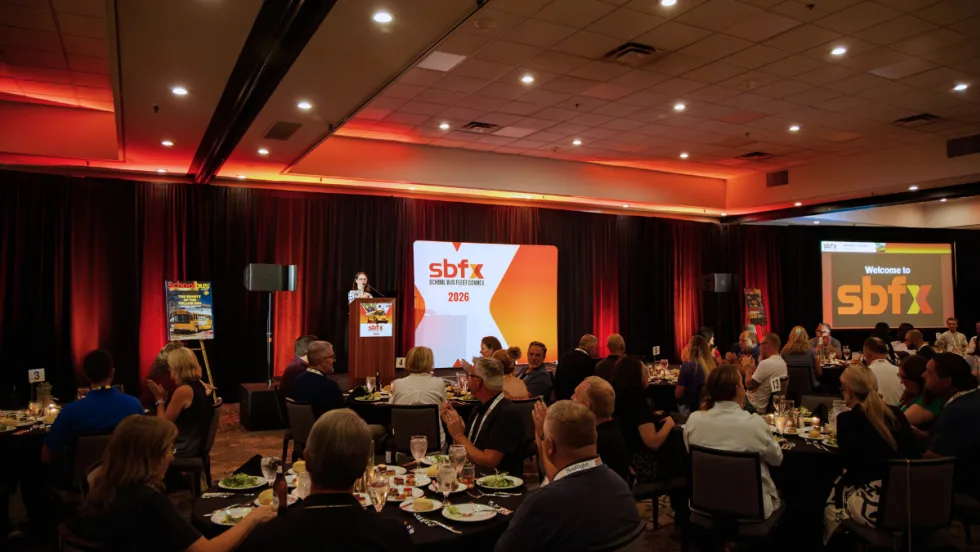
School Transportation’s Biggest Pressures and Opportunities: SBFX Attendees Weigh In
School bus operators point to rising costs, staffing, and vehicle prices as immediate pressures while identifying technology, training, and routing as opportunities for growth.
Read More →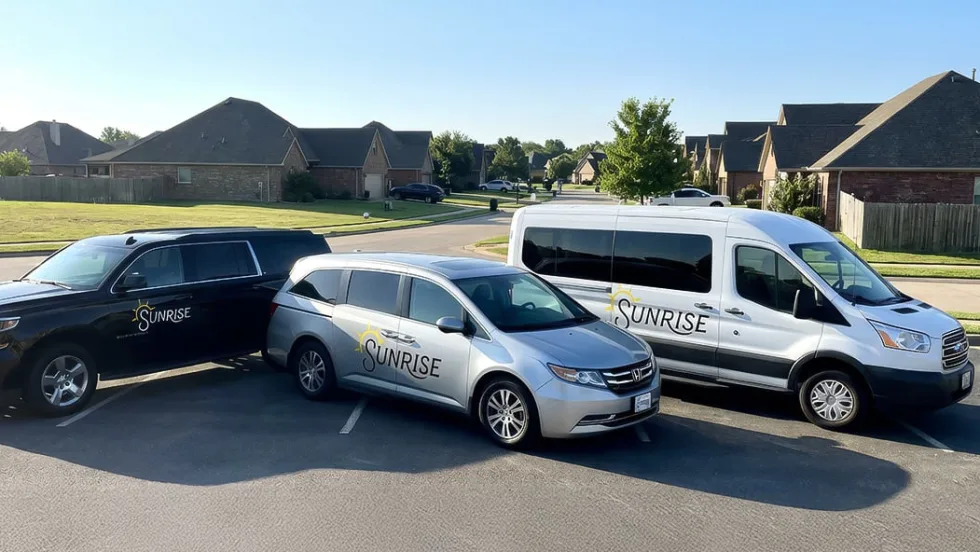
STA Acquires Sunrise Transportation
Student Transportation of America expands in Illinois and Connecticut through Sunrise's fleet of nearly 1,000 vehicles.
Read More →
EPA Opens $180M DERA Funding Round for Diesel Upgrades
The 2026 Diesel Emissions Reduction Act program seeks applications from eligible organizations to accelerate the retirement of legacy diesel vehicles.
Read More →
HopSkipDrive’s CareEngine Targets the ‘Exceptions’ in Student Transportation
The new platform works alongside districts’ existing transportation management systems to coordinate specialized rides, automate last-minute changes, and turn ride data into operational improvements.
Read More →
The Right Ride for Every Student: Navigating the New Student Transportation Ecosystem
How should districts blend school buses with small-vehicle transportation and other options? EverDriven CEO Mitch Bowling discusses safety, costs, partnerships, and strategy.
Read More →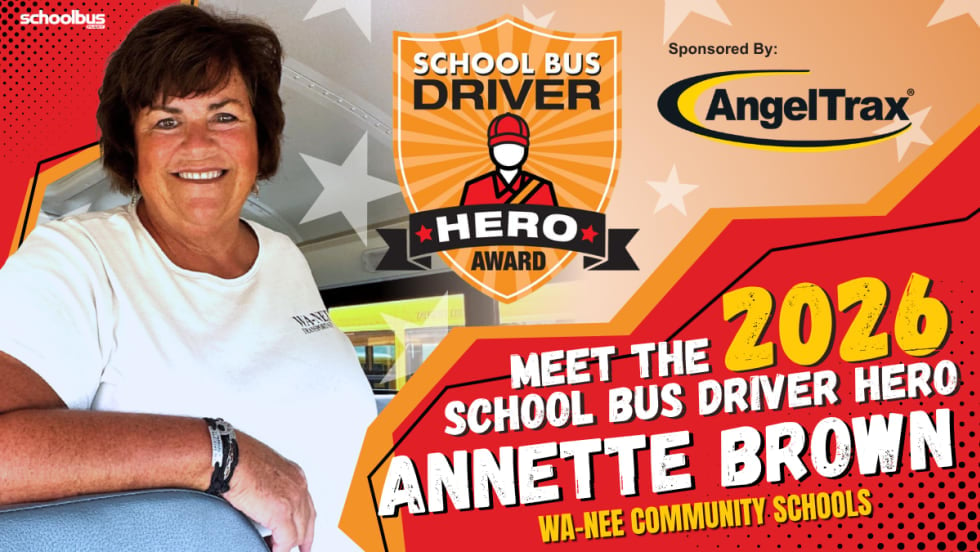
Annette Brown Always Takes the Extra Time: Meet Our 2026 School Bus Driver Hero
For more than 30 years, the Wa-Nee Community Schools driver has treated students like family, combining safety, compassion, and servant leadership to make a lasting difference on and beyond the school bus.
Read More →