




A Shining Example of School Bus Pride
A recent visit to a Southern California school district revealed the pride that the transportation team takes in their work, their fleet, and their facility.

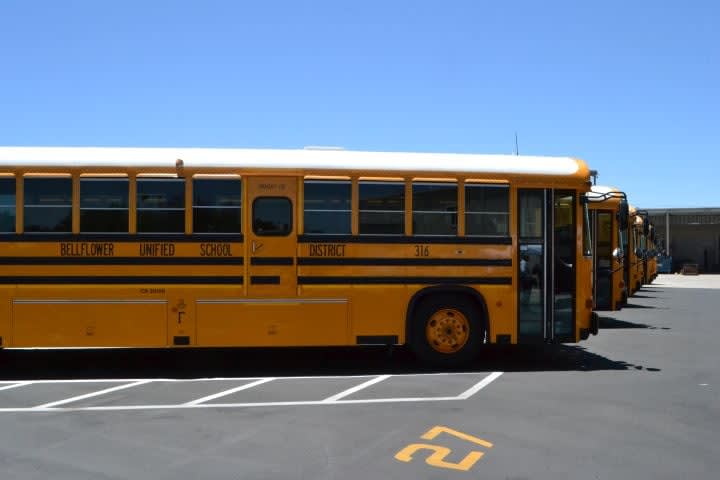
A school bus garage is not a place I ever expected to be eating a meal, but there I was, savoring a sandwich amid spacious bus bays lined with an assortment of maintenance equipment.
SBF Editor Thomas McMahon and I were visiting the transportation department at Bellflower Unified School District (USD) in Southern California in late June, and our hosts were kind enough to provide us with lunch. They had set up tables in their state-of-the-art garage, but the place was so clean that you could have eaten off of the floor (not to say that we tried it).
In last month’s issue, I shared details on two school bus operations that invited local officials to visit their facilities. Both were great examples of public awareness initiatives that promote the value of pupil transportation. The mayor of Waterloo, Iowa, said that his tour of Durham School Services’ local terminal “enlightened me about all the work that goes into getting our students to school safely.”
For me, visiting Bellflower USD was similarly enlightening. There are a number of interesting things happening at the district, which is located in Los Angeles County next to Long Beach, but what struck me most was the pride that the transportation team takes in their work, their fleet, and their facility.
After operating out of an older building that was too small for their biggest buses, Bellflower USD built a new maintenance facility from the ground up in 2003. The district had begun transitioning its fleet to compressed natural gas (CNG), so they designed the shop for safe and efficient maintenance of CNG buses. That includes a methane detection system with exhaust fans and a heating system with an enclosed flame.
Next to the school bus lot is a CNG station owned by California Clean Fuels, which brings in natural gas, compresses it, and delivers it to the slow-fill fueling infrastructure for Bellflower’s buses.
Mark Toti, transportation manager for Bellflower USD, told us that the district has an effective partnership with California Clean Fuels, which keeps its CNG equipment well maintained and ensures that the natural gas is clean.
Rick Sanchez, Bellflower’s lead mechanic, noted that one of the advantages of CNG buses is an extension in oil change intervals. Bellflower USD has had its CNG engine oil analyzed and was pleasantly surprised by the results.
“Even at 12 months, it comes back clean,” Sanchez said. “We only change the oil [on CNG buses] once a year.”
The district has also partnered with the Southern California Gas Company, engine supplier John Deere, and local colleges to provide natural gas safety and maintenance training for transportation staff.
Soon Bellflower USD will begin working with another alternative fuel: electricity. The district was recently awarded a $536,000 grant to buy two electric school buses and charging stations. The South Coast Air Quality Management District program is providing a total of $8.8 million to 16 Southern California school districts and two charter schools to fund 33 electric buses and charging stations.
Most of Bellflower’s routes cover 40 to 60 miles per day, so the electric buses’ expected range of 60-plus miles per charge should be a good fit for the operation. As with their CNG buses, they expect a reduction in maintenance costs with the electric buses compared to diesels.
Bellflower USD Superintendent Brian Jacobs said in a press release that the electric bus grant “bolsters our environmentally friendly approach to transportation that limits release of harmful emissions.”
With just one diesel and one gasoline bus remaining in Bellflower’s fleet of 28 buses total, the electric buses will complement the district’s 26 CNG models as part of a pupil transportation operation that is primarily powered by alternative fuels.
Some of Bellflower USD’s buses are now 15 years old, but you wouldn’t know it by their appearance. The transportation department recently had their older buses repainted, so they shine like new and, as I noted earlier, reflect the pride that the team takes in their fleet.
The maintenance staff also makes a point of keeping the shop clean and organized, which enhances safety and working conditions — and provides a nice dining environment for visitors.
More Management

How to Build a Better Driver Training Program
Ready to boost up your school bus instructor training? Here’s how to pick the right talent and improve recruitment, retention, and safety.
Read More →
CALSTART and Forth Combine to Form Catalyst Mobility
The new name represents a renewed vision for the nonprofit focused on advancing clean, equitable, and affordable transportation solutions that move people and goods.
Read More →
What Makes a Great School Bus Driver Trainer?
Choosing the right school bus driver trainer takes more than experience. Learn six keys to selecting and developing trainers and evaluating program effectiveness.
Read More →


School Bus Contractors Expand Through New Deals, Acquisitions & Partnerships
STA's Canadian division acquires Ontario-based G&L Stevenson Transport while Durham School Services adds a new district contract in California, First Student adds a New Jersey contract, and Minnesota Coaches acquires Halo Transportation.
Read More →
Logan Bus Company Rolls Out AI Phone System for NYC School Bus Families
A summer pilot found that AI agents could handle most routine calls, freeing up time for customer service staff to focus on emergencies and complex family concerns.
Read More →
From Intent to Impact: What I Learned About Leadership from TAPT
A Texas transportation supervisor shares lessons on self-awareness, accountability, managing stress and building trust — and why investing in leadership development matters at every stage of your career.
Read More →
NAPT Names 2026 Award Recipients, Hall of Fame Inductee
Who earned national recognition for their work in student transportation? This year, NAPT named five recipients of its 2026 awards for service, safety, and leadership, plus its newest Hall of Famer.
Read More →
2026 State of Student Transportation Report
Driver shortages. Rising costs. Growing safety expectations. More data, but not enough time to act on it. The 2026 State of Student Transportation Report reveals what transportation leaders say is putting the most pressure on their operations—and where they’re investing next. See how your priorities compare.
Read More →
How to De-Escalate an Angry Person: 5 Steps for Handling Workplace Conflict
What makes emotions run high, and how should you handle an angry colleague or parent? Follow these steps for staying calm, listening, showing empathy, and resolving conflict.
Read More →
What Readiness Looks Like This School Year
Learn about the challenges shaping the 2026–2027 school year, from persistent driver shortages and budget pressure to technology and readiness gaps. See how school districts are responding and adapting in Zonar’s 2026 Back-to-School Readiness Report.
Read More →