



A degree of difficulty
We talk often about the educational process and how it’s impacted by the quality of a school district’s transportation program, but we rarely talk abo...

We talk often about the educational process and how it’s impacted by the quality of a school district’s transportation program, but we rarely talk about the education of the people who run the program.
Is that because it’s a moot point? Or because we’ve never thought about the educational requirements of a transportation supervisor?
What I discovered in our latest school district survey is that nearly two-thirds of transportation managers have not graduated from college (see story beginning on pg. 22). That’s a surprisingly high number. I would have guessed that two-thirds had obtained at least a bachelor’s degree.
But is this a meaningful statistic? Is the possession of a college degree a valid measure of someone’s potential or competency as a school transportation manager? Or is experience more important than education? That is, is there an advantage to understanding the nuts and bolts of a transportation operation from the ground up, perhaps from the perspective of a former bus driver?
No real answers
I ask a lot of questions here but can’t provide the answers. What I do know is that the administration of a school bus program is getting more complex every year. Drawing up budgets, dealing with ever-changing HR policies, procuring buses and other equipment, preparing fuel contracts, handling community relations, dealing with sensitive issues with school boards — the versatility required of the transportation manager is extraordinary.
Regulatory burdens are not going away, either. In fact, they’re getting worse. The No Child Left Behind Act has complicated the lives of many transportation managers around the country. It’s not just the difficulty in providing the additional service created by this federal education initiative, it’s also finding room in the budget for the additional cost.
The school buses themselves are growing in complexity, with high-tech engines and transmissions along with advanced componentry. The bus garage is quickly becoming a lair of computers, flashing widgets and hand-held diagnostic tools. A transportation manager might not need to understand the intricacies of this equipment but should have a fundamental knowledge that will allow him or her to make sound purchasing decisions.
Best of both worlds?
In a best-case scenario, a transportation manager would have a college degree and experience at different levels of pupil transportation. But even those attributes wouldn’t ensure a perfect fit.
In the final analysis, a person’s success at any endeavor is based on a combination of factors, many of those not related to education or experience. The ability to deal with people is perhaps the most important factor. We all know supervisors who have solid credentials in many areas but who can’t manage a staff because they don’t understand how to motivate, persuade and, when necessary, discipline.
We also know people who are great at building strong relationships with their staffs but don’t know how to budget, meet deadlines or deal with technical issues. They’re fun to work for, but they aren’t comfortable with handling situations that require the ability to reason, strategize and plan.
I’m a big believer in on-the-job learning, but I also support a strong training program. Transportation managers wear a lot of hats and shoulder tremendous responsibilities. Whether they have a college degree is less important than the support they receive from their supervisors. That should include additional training in areas where the person might be weak or inexperienced. It might also include an educational reimbursement program that will help them obtain their bachelor’s or more advanced degree (and, hopefully, a commensurate raise!).
More Management

The Back-to-School Checklist Every Director Should Complete Before the First Bell
Help your transportation team start the school year strong with these tips for contingency planning, communication, fleet visibility, technology, and trip management.
Read More →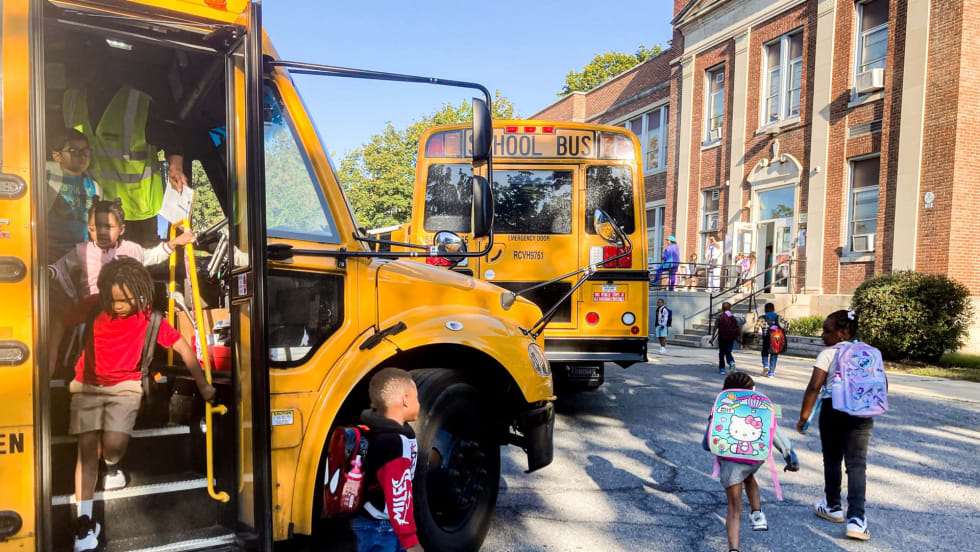
How a New York District Cut Nearly $1M in Transportation Costs While Expanding Bus Access
A data-driven overhaul with BusRight reduced Poughkeepsie City School District's planned routes from 26 to 17 while extending school bus service to about 1,200 additional students.
Read More →
Budgets Down, Enrollment Shifting: What the Data Says Districts Should Watch
School transportation departments face two converging challenges this year: tightening budgets and shifting enrollment. Most districts still address these issues separately, but the assumption that either trend will simplify operations is proving incorrect.
Read More →
These 8 School Transportation Companies Made the 2026 Inc. 5000 List
Find out which school transportation contractors, technology providers, and suppliers ranked among America’s fastest-growing private companies.
Read More →
The Link Between Emotional Intelligence and School Bus Safety
How can emotional intelligence help transportation pros navigate stress, manage change, and build stronger relationships? Listen to find out.
Read More →
What Emotional Intelligence Has to Do With School Bus Safety
In this video, discover how emotional intelligence can help transportation leaders and drivers navigate stress, manage change, and build stronger relationships. The Route is sponsored by IC Bus.
Read More →
Beyond Two-Way Radios: School Bus Communications Evolve With Push-to-Talk Over Cellular
PRYME Radio and PositionPTT join forces to advance hands-free radio use and reduce distracted driving. See how PoC compares with traditional radios on range, cost, safety, and connectivity.
Read More →
Have School Districts Adapted to Bus Driver Shortages or Simply Accepted Less Service?
According to a recent report from HopSkipDrive, many districts appear to have recalibrated what "normal" transportation service looks like.
Read More →
Reliable Transportation Linked to Better Student Outcomes, New EverDriven Study Finds
See why new research suggests transportation consistency improves student outcomes while influencing attendance, funding, IEP compliance, and family trust.
Read More →
Switzer-CARTY Enters the U.S. with New Acquisition
The Canadian contractor’s acquisition of Minnesota-based Agnes Corporation marks its first cross-border expansion into the United States and adds 350 vehicles.
Read More →