




6 Questions to Ask When Considering Joint Transportation
If transportation administrators pose these questions before entering into an agreement to share or combine their services, they will avoid a number of problems, including miscommunication among bus drivers, scheduling conflicts and disagreements about student discipline procedures.
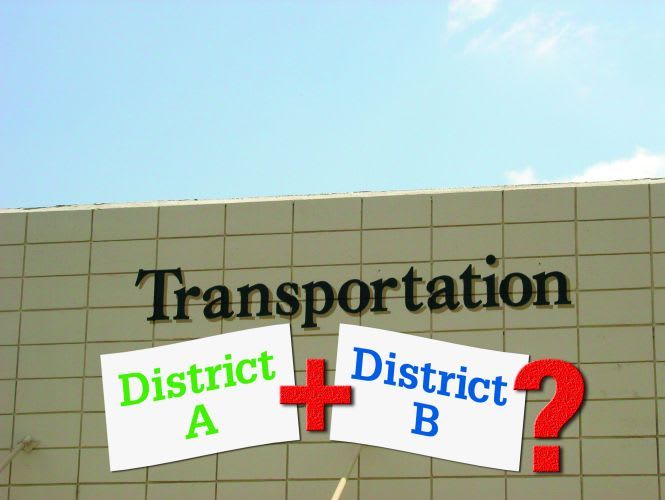
Consolidate, combine, coordinate and cooperate. If you are working in school transportation management for a school district or contractor, these are words you are starting to hear on a regular basis.
As fuel prices climb and school budgets get tighter and tighter, school administrators and, in many cases, board of education members are returning from conferences using these words as a battle cry for multiple districts or carriers to share or combine their transportation services.
Oftentimes, they are so concerned about their budgets that they rush you and your department into developing a plan without considering the true impact of it. In many cases, coordinated or combined transportation plans can actually cost more due to poor or rushed planning.
If you are apprehensive about consolidation, many people will label you as an obstructionist for not sharing in their excitement. This hesitation comes from your years of experience in knowing how to prevent the domino effect that a single change to one bus or route can have on many others. People will try to downplay your concerns as unrealistic, but you know differently.
Moreover, your legitimate questions may be viewed as stumbling blocks to hold up progress. You might even hear snappy business slogans to try to quiet you, such as “We’ll cross that bridge when we get there” which, in office speak, means that you will cross that bridge alone when you get there and have to deal with the mess created by an overzealous boss or committee.
Now don’t get me wrong — I am not against saving money. If there are two neighboring districts both transporting special-needs students to the same out-of-district school, there is no reason that this type of transportation cannot be combined.
However, trying to combine or coordinate transportation programs from multiple neighboring areas will be challenging, to say the least.
Here, I will explore questions or gray areas that can come up when attempting to arrange combined transportation with neighboring districts or carriers. These issues must be definitively addressed prior to entering into a cooperative agreement, or the potential difficulties will end up right in your lap.
1. How much territory are you trying to cover?
Anytime two or three districts consider combining transportation services, you have to ensure that the concept is not one-sided.
What I mean is, the primary objective of joint transportation is to save dollars, both in payroll and fuel, for the districts. Will this be done at the expense of the students? If students have to travel out of their way to meet transfer buses or sit on a bus waiting for other buses, the quality of the students’ rides may have become second to the carrier’s desire to save money. Keep quality of service to the students as your primary goal. Try to avoid expecting to combine services in large areas that will result in additional travel time for your students.
2. How will multiple carriers communicate?
Communication must be addressed. In most cases, individual school districts and contract carriers maintain their own two-way radio frequencies for bus-to-bus and bus-to-base communications, and they maintain different telephone numbers for their business offices. This presents huge communications difficulties when coordinating the day-to-day operations of your combined transportation plan. On paper, you can agree that three buses will meet at a certain time and place daily, but when one bus doesn’t show up, the plan will collapse. How will these buses be notified if one bus is running late or has broken down, or if a student is not attending school on a particular day? The buses cannot communicate on the radio if they do not have frequencies that match.
[PAGEBREAK]3. Will school calendars present a challenge?
This issue can present a roadblock to getting a consolidated transportation agreement off the ground.
Let’s say that two districts are going to work together on transporting students to one neighboring school. If all of the schools do not follow the same calendar, this can result in a district having to provide service on days that the others are not in service or having to provide service when they are not in session.
A very good example of this exists in my own district. Lake Shore provides a three-day Thanksgiving recess. Many neighboring districts only provide a two-day recess for that holiday. We would most likely not able to hold up our end of the bargain in a cooperative transportation agreement on the Wednesday before Thanksgiving.
Take every step to consider the impact of early dismissal days, conference and staff development days, exam schedules, holidays, summer school schedules, etc. My advice is to lay your schedules and calendars out on the table and make it clear to your superintendents and boards of education that if districts are not going to align school calendars, cooperative transportation programs are doomed to failure.
4. Who is arriving early and staying late?
Students who participate in breakfast programs, early-morning music and academic programs, and afterschool athletics must be addressed prior to creating cooperative transportation programs.
With proper planning, you may be able to develop a combined program that addresses normal bell times, or at least meets bell times within 15 minutes. However, your savings will quickly be reduced when you add the programs listed above. You may find that the students you tried to accommodate through a combined transportation program with a neighboring district need to be at school at different times on different days, or they may not ride at all on certain days.
5. Can weather be a problem?
It does not matter what part of the country you are from — we each have our own weather-related stories. With snow, ice, wind or rain, school closings will be an issue under any cooperative transportation agreement. Clear answers have to be provided on weather-related closings. Weather-related power outages could also pose difficulties when providing joint transportation.
The question of who makes the call to close and what determines a closing should be answered. It wouldn’t be prudent to have your bus travel through a district that closed due to weather to get to a district that was still open.
6. What discipline code will your students follow?
In most cases, students know and understand what is expected of them when it comes to transportation. However, there will be situations where a student who is riding another district’s bus through a cooperative transportation agreement may require discipline.
There should be clear answers for drivers as to how they discipline these students. Do they use the other district’s conduct reports? Do they have to attend discipline meetings at the other district? Is there an appeals process in place if a driver from District A did not get the correct backing in a student discipline matter from an administrator at District B? Student discipline can cause major headaches and weaken relations between districts or carriers if a plan is not mapped out in advance.
This situation can also arise with employee discipline. District A may have concerns about a driver or monitor from District B who is providing cooperative services. Is there a process in place for district representatives to pursue disciplinary concerns or action through District B, and what if District B does not agree with the concerns?
As you can see, there are many questions that have to be answered before a cooperative transportation plan can be drafted and implemented. If your supervisor wonders why you have reservations during discussions about this topic, hand them your copy of SBF and ask them to review this article. It may cause some adjustments to be made to the next meeting’s agenda.
I welcome your feedback. Send comments to mdallessandro@lakeshore.wnyric.org.
Michael Dallessandro is transportation supervisor at Lake Shore Central School District in Angola, N.Y., and a frequent contributor to SBF. His Website is www.respondsmart.com.
More Management
STA Acquires Sunrise Transportation
Student Transportation of America expands in Illinois and Connecticut through Sunrise's fleet of nearly 1,000 vehicles.
Read More →
EPA Opens $180M DERA Funding Round for Diesel Upgrades
The 2026 Diesel Emissions Reduction Act program seeks applications from eligible organizations to accelerate the retirement of legacy diesel vehicles.
Read More →
HopSkipDrive’s CareEngine Targets the ‘Exceptions’ in Student Transportation
The new platform works alongside districts’ existing transportation management systems to coordinate specialized rides, automate last-minute changes, and turn ride data into operational improvements.
Read More →


The Right Ride for Every Student: Navigating the New Student Transportation Ecosystem
How should districts blend school buses with small-vehicle transportation and other options? EverDriven CEO Mitch Bowling discusses safety, costs, partnerships, and strategy.
Read More →
Annette Brown Always Takes the Extra Time: Meet Our 2026 School Bus Driver Hero
For more than 30 years, the Wa-Nee Community Schools driver has treated students like family, combining safety, compassion, and servant leadership to make a lasting difference on and beyond the school bus.
Read More →
How to Build a Better Driver Training Program
Ready to boost up your school bus instructor training? Here’s how to pick the right talent and improve recruitment, retention, and safety.
Read More →
CALSTART and Forth Combine to Form Catalyst Mobility
The new name represents a renewed vision for the nonprofit focused on advancing clean, equitable, and affordable transportation solutions that move people and goods.
Read More →
What Makes a Great School Bus Driver Trainer?
Choosing the right school bus driver trainer takes more than experience. Learn six keys to selecting and developing trainers and evaluating program effectiveness.
Read More →
School Bus Contractors Expand Through New Deals, Acquisitions & Partnerships
STA's Canadian division acquires Ontario-based G&L Stevenson Transport; Durham School Services adds a new district in California; First Student expands in New Jersey; and Minnesota Coaches rebrands and acquires Halo Transportation.
Read More →
Logan Bus Company Rolls Out AI Phone System for NYC School Bus Families
A summer pilot found that AI agents could handle most routine calls, freeing up time for customer service staff to focus on emergencies and complex family concerns.
Read More →