




5 Top Tips for Engine Oil Selection
High-quality engine oils are key to enhancing a fleet’s efficiency. Best practices include reviewing the vehicle’s OEM manual and consulting lubricant manufacturers for guidance, as well as ensuring the oils used meet required standards.

File photo courtesy Peggy Stone
School bus fleets operate under extreme pressure and are required to be on time every time to safely transport children to and from school. For this reason, it is vital that each bus runs efficiently and reliably without breakdowns and delays to schedules to keep students safe on their journeys.
Selecting the correct engine lubricant is crucial for this, as the oil protects the internal components of the engine, preventing wear that can lead to unplanned maintenance, breakdowns, and in extreme cases, engine failure.
Consider the Big Picture
For greater efficiency and to enhance the reliability of any fleet, we often need to take a step back to see the complete picture. A crucial part of this picture that can be overlooked is the role that lubricants play in maintaining the efficiency and performance of school buses. High-quality engine oils can improve efficiency by minimizing metal-to-metal contact between moving components and reducing pumping and rotational losses.
Before selecting a heavy-duty engine oil for your fleet, we recommend following these five steps:
1. Consult the Original Equipment Manufacturer (OEM) vehicle manual. This should always be the first step when selecting any lubricant for your fleet. If you need more advice than the manual provides, reach out to the OEM for more information, as they will be able to provide a recommendation based on the engine specification.
2. Consider climate conditions. The location and climate that a vehicle operates in can have an impact on the engine oil’s performance. The temperature ranges for the optimal performance of a lubricant is denoted by its Society of Automotive Engineers (SAE) viscosity grade. Colder average climates may require lower-viscosity lubricants and multigrade oils (those with a “W” designation within the SAE viscosity grade) will ensure protection and efficiency over a broad temperature range.
This is a vital consideration as the SAE grade indicates the oil’s viscosity at both low and high temperatures. The viscosity of the oil determines its ability to flow and move around the engine lubricating the internal components. In cold conditions, if the oil’s viscosity is too high, it may resist movement and delay lubrication, resulting in increased engine wear.
3. Review the benefits of synthetic vs non-synthetic oils. With better stability and improved performance in varied weather conditions, full synthetic and synthetic blend engine oils outperform conventional oils. Full synthetic lubricants also often incorporate unique performance-enhancing additives, which deliver a superior formulation and even greater performance.
4. Seek proof, evidence of performance. Global regulations means that engine lubricants must meet strict criteria, for example American Petroleum Institute (API) CK-4 or FA-4 standards, and proof of this alongside OEM approvals is crucial.
Expert lubricant manufacturers will also provide testimonials and case studies demonstrating their products’ in-service use alongside their own manufacturer test results. These can provide valuable proof of the product’s performance, both in test conditions and the real world.
5. Ask a lubricant manufacturer for their expertise, support. Leading lubricant manufacturers invest significantly in testing the performance of their product lines so that they can provide informed recommendations for your fleet. Make use of their insight by reaching out directly for their invaluable support and guidance.

Darryl Purificati is the OEM technical liaison for Petro-Canada Lubricants, a HollyFrontier business.
Photo courtesy Petro-Canada Lubricants
Take a Holistic Approach
The wrong engine oil selection can have a significant impact on engine performance and the rate of engine wear. When considering engine lubricants, it is vital to also consider the broader role and impact of lubricants and greases on the entire vehicle.
For example, the vehicle’s drivetrain is an important component that, if neglected, can have a detrimental impact on engine efficiency. By selecting a lubricant based on the OEM’s recommendation, the vehicle can benefit from improved fuel economy. In fact, field testing has shown that an SAE 75W-90 axle gear oil can improve fuel economy by up to 2.25% compared to a SAE 85W-140 oil.
Transmission fluids also play a role in the vehicle’s overall efficiency, so it is also important to select a lubricant in line with the OEM’s recommendation that offers excellent protection and smooth performance through enhanced oxidative stability and anti-wear performance as well as anti-shudder and torque control.
The correct engine oil selection can enhance engine performance and provide it with superior protection. A knowledgeable lubricant manufacturer can support fleet managers in selecting lubricants for their vehicles to improve fleet efficiency and reliability by preventing breakdowns and delays on routes.
Darryl Purificati is the OEM technical liaison for Petro-Canada Lubricants, a HollyFrontier business.
More Maintenance
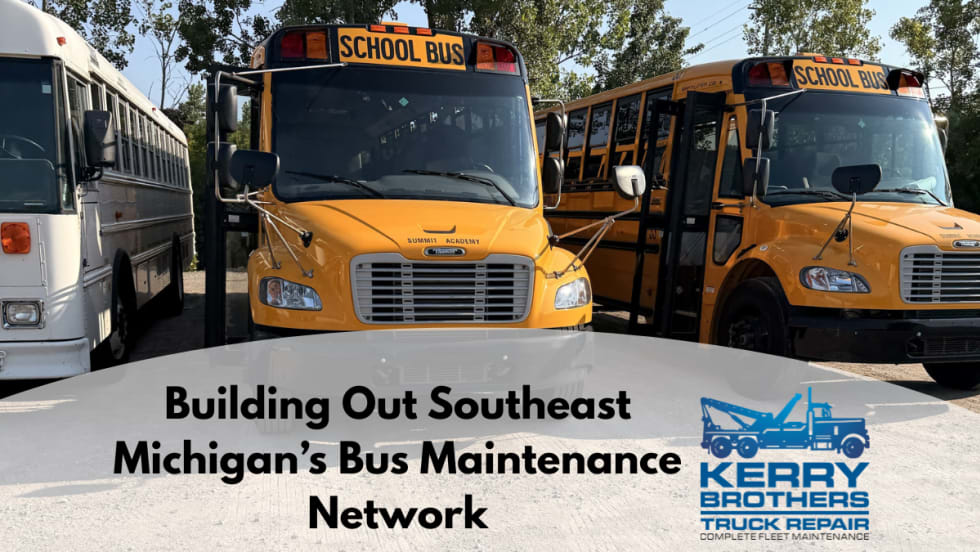
Kerry Brothers Grows Michigan School Bus Repair Network
The acquisition of Downriver Truck and Bus expands Kerry Brothers’ school bus maintenance footprint across southeast Michigan, adding repair capacity, diagnostic resources, and state inspection support.
Read More →
Noregon Introduces CAN Bus Diagnostic Tool, Expands JPRO Features
CAN Mentor and the latest JPRO update aim to simplify vehicle network diagnostics and improve repair efficiency for technicians of all experience levels.
Read More →
Cummins on Smarter, Simpler Engine Innovation
Cummins discusses its first-ever gasoline engine for school buses, EPA 2027, and why bus fleets still want durable, simpler internal combustion options.
Read More →
Report: 72% of Diesel School Buses Now Use Advanced Low-Emission Engines
New data shows advanced low-emission diesel technology continues expanding across school bus fleets, even as electric bus adoption gains momentum.
Read More →
Vampire Tools' CAIMAN 7.5-Inch Multi-Purpose Screw Extractor Long-Nose Pliers with Crimper
Vampire Tools introduced the VAMPLIERS Caiman 7.5-inch multi-purpose pliers, combining screw extraction, cutting, crimping, and gripping functions into a single tool designed for fleet maintenance professionals.
Read More →
How Advanced Diagnostics Helps Bus Fleets Stay Ahead of Repairs
Chat with Noregon’s Kevin Smallhorn at ACT Expo about bus diagnostic tools, telematics integration, CNG maintenance support, and strategies to help reduce downtime and improve uptime.
Read More →
How School Bus Fleets are Getting Ahead of Breakdowns
Don’t let bus downtime wear you down. Here’s how bus operators are shifting from manual processes to AI-powered, data-driven maintenance systems for improved reliability and safety.
Read More →
Pennsylvania School Bus Maintenance Team Praised for Dedication to Safety
Matthews Bus Company’s West Jefferson received a letter of commendation from the Pennsylvania State Police for their fleet inspections.
Read More →
From Chaos to Clarity: How School Districts Are Running Leaner Transportation Operations
Covering 38 routes on a Friday afternoon. Buses idling while routes overlap. Parents calling nonstop about late arrivals. Sound familiar? This whitepaper explores how district transportation leaders solved these exact problems — and what measurable results followed.
Read More →
2026 School Bus Fleet Vendor Directory & Buyer's Guide
Searching for the right equipment, technology, or services for your school transportation program? This industry guide brings together manufacturers and suppliers across the entire school bus market, all in one place. Download it to find the partners who can help move your operation forward.
Read More →