




5 Questions: Pam McDonald on Child Check Law, Partnerships
Pam McDonald, president of the California Association of School Transportation Officials, shares details on her efforts to help prepare operators in her state for the deadline to equip their buses with child-check reminder alarm systems.

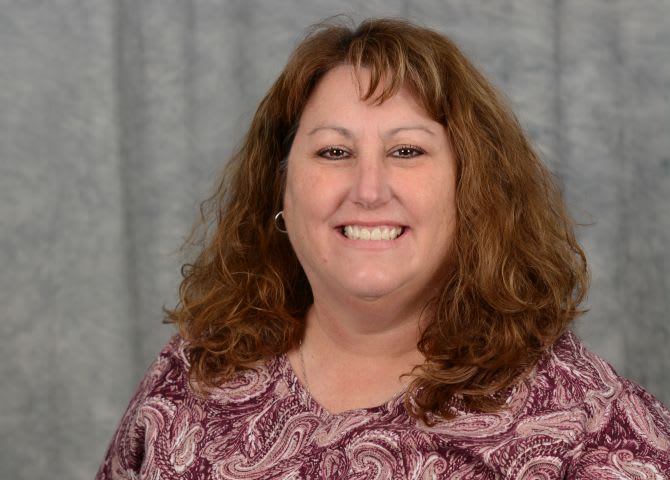
Pam McDonald, president of the California Association of School Transportation Officials, says that the state’s child check requirement will be “a great success” in ensuring student safety once fully implemented.
Pam McDonald, president of the California Association of School Transportation Officials, says that the state’s child check requirement will be “a great success” in ensuring student safety once fully implemented.
As a deadline looms in California for pupil transportation providers to equip their buses with child-check reminder alarm systems, Pam McDonald, president of the California Association of School Transportation Officials (CASTO) and the director of transportation and mechanical services at Orange Unified School District (USD), has been instrumental in getting her own district’s fleet compliant with the new requirement, and has helped state organizations and agencies communicate information about the law.
In this interview with SBF, McDonald shares details on her efforts to help prepare operators for the deadline, on her work as a re-elected president for CASTO, and on valued industry partnerships.
1. What are some top issues in school transportation in your state?
Some of the top issues are shortage of bus drivers, budget cuts, and the new child-check requirements.
There are many ways I hope to alleviate the shortage. For instance, I would like to initiate an “Each One Reach One” public awareness campaign to build up school bus drivers by providing business cards that have interesting facts about CASTO and the school bus industry.
I can also encourage many districts to consider offering evening original driver classes or posting banners around their school district to motivate people to contact the transportation departments to learn more about this incredible career option.
The child check requirement is going to be a great success, once fully implemented, to ensure student safety, although many districts are still working to fine-tune the equipment in their fleet [as of mid-January].
Additionally, although districts are always budget-conscious, the need to be more cautious has increased recently.
2. What is the latest on the child check requirement (Paul Lee School Bus Safety Law) in California, and what kind of feedback are you hearing about it?
An extension was provided to allow districts time to get all buses equipped with the system. The new deadline is no later than March 1, 2019. There is an exception [for school districts, county offices of education, charter schools, or private schools with an average daily attendance of 4,000 pupils or fewer], to Sept. 1, 2019, if they submit documentation to the California Highway Patrol (CHP) of their intent to install child safety alert systems (CSAs) no later than March 1.
Many districts were experiencing supply-and-demand issues among vendors to provide the product to meet the requirements.
I am glad to say that Orange USD’s transportation department met the requirement in August, and all 116 buses in our fleet are equipped properly.
As CASTO president, I have collaborated with the California Department of Education (CDE) and CHP on the CSAs Frequently Asked Questions that will be published on the agencies’ websites.
3. How have you dealt with issues that plague the school transportation industry, such as driver shortage and tight budgets, at your school district?
We had to increase non-busing zones, work closely with the special education department to reduce transportation costs, reorganize our management staff, and fund the bus replacement program every two years (instead of yearly).
4. What are you currently working on with CASTO?
I am implementing situational leadership training, publishing the third edition of the book “Access & Mobility, A Guide for Transporting Students With Disabilities in California” to provide updates on the latest standards, re-establishing three school bus roadeos, and continuing our partnerships with the CHP, Department of Motor Vehicles, and the CDE.
5. What were some highlights of 2018 for you?
I am honored to have been re-elected as CASTO’s president [McDonald also served as president for two terms from 2009 through 2011] and being trusted with the responsibility to grow and position the organization for success. Helping to host CASTO’s 50th anniversary conference in 2018 was another great success. As the California Association of School Business Officials (CASBO’s) Transportation Professional Counsel State Chair, I cherish the relationships and partnerships all of these organizations have with one another, including the Orange County Department of Education and the CDE.
I also appreciate school transportation [industry] vendors, CASTO, CASBO, National Association for Pupil Transportation members, National Association of State Directors of Pupil Transportation Services, and the School Transportation Coalition. These organizations have allowed me to feel comfortable in this family environment, where we all bleed yellow together.
More Management

How to Build a Better Driver Training Program
Ready to boost up your school bus instructor training? Here’s how to pick the right talent and improve recruitment, retention, and safety.
Read More →
CALSTART and Forth Combine to Form Catalyst Mobility
The new name represents a renewed vision for the nonprofit focused on advancing clean, equitable, and affordable transportation solutions that move people and goods.
Read More →
What Makes a Great School Bus Driver Trainer?
Choosing the right school bus driver trainer takes more than experience. Learn six keys to selecting and developing trainers and evaluating program effectiveness.
Read More →


School Bus Contractors Expand Through New Deals, Acquisitions & Partnerships
STA's Canadian division acquires Ontario-based G&L Stevenson Transport while Durham School Services adds a new district contract in California, First Student adds a New Jersey contract, and Minnesota Coaches acquires Halo Transportation.
Read More →
Logan Bus Company Rolls Out AI Phone System for NYC School Bus Families
A summer pilot found that AI agents could handle most routine calls, freeing up time for customer service staff to focus on emergencies and complex family concerns.
Read More →
From Intent to Impact: What I Learned About Leadership from TAPT
A Texas transportation supervisor shares lessons on self-awareness, accountability, managing stress and building trust — and why investing in leadership development matters at every stage of your career.
Read More →
NAPT Names 2026 Award Recipients, Hall of Fame Inductee
Who earned national recognition for their work in student transportation? This year, NAPT named five recipients of its 2026 awards for service, safety, and leadership, plus its newest Hall of Famer.
Read More →
2026 State of Student Transportation Report
Driver shortages. Rising costs. Growing safety expectations. More data, but not enough time to act on it. The 2026 State of Student Transportation Report reveals what transportation leaders say is putting the most pressure on their operations—and where they’re investing next. See how your priorities compare.
Read More →
How to De-Escalate an Angry Person: 5 Steps for Handling Workplace Conflict
What makes emotions run high, and how should you handle an angry colleague or parent? Follow these steps for staying calm, listening, showing empathy, and resolving conflict.
Read More →
What Readiness Looks Like This School Year
Learn about the challenges shaping the 2026–2027 school year, from persistent driver shortages and budget pressure to technology and readiness gaps. See how school districts are responding and adapting in Zonar’s 2026 Back-to-School Readiness Report.
Read More →