




5 Questions: Barry Sudduth on Professional Development, Driver Shortage
Barry Sudduth discusses his goals as president of NAPT and his work at Virginia's Stafford County Public Schools.

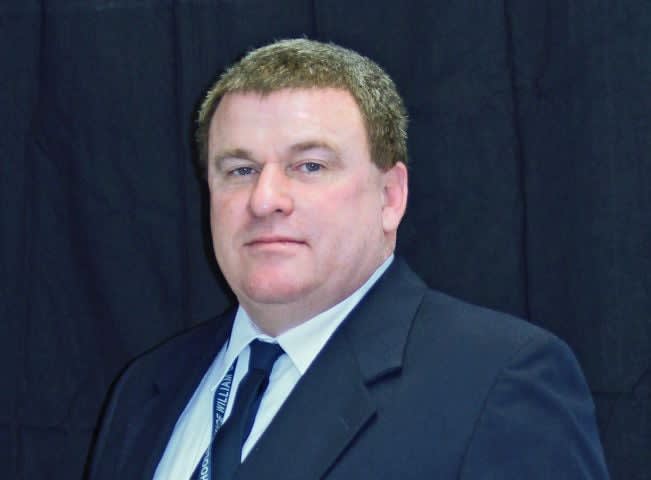
Barry Sudduth, the new president of the National Association for Pupil Transportation, says that the school bus driver shortage may be easing somewhat, but it remains the most pressing challenge for many transportation administrators.
Barry Sudduth, the new president of the National Association for Pupil Transportation, says that the school bus driver shortage may be easing somewhat, but it remains the most pressing challenge for many transportation administrators.
As the new president of the National Association for Pupil Transportation (NAPT), Barry Sudduth aims to keep providing resources to help school bus leaders deal with the challenges of the job. Here, he discusses his NAPT goals and his work as executive director of fleet and transportation services at Stafford County Public Schools in Virginia.
1. What are your goals as president of NAPT?
My immediate and overarching goal as the president of NAPT is to forge ahead with our strategic plan developed in 2015. It is imperative that NAPT stay focused on the needs of school transportation professionals and continue offering resources that directly impact their day-to-day functions. One such resource that NAPT offers is the Apollo program. Apollo provides transportation professionals the ability to easily maintain data pertinent to their operation and share that data with other, similar organizations from across the country to see how they stack up.
I also want to continue to encourage folks to participate in our Professional Development Series (PDS) courses to help them excel in our profession. One of the best moments for me in Columbus [at the NAPT conference] was when someone thanked me for encouraging them to continue in the PDS program. My conversation with this person occurred over three years ago, so it was exciting for me to know that they had not only taken several courses but had also achieved a couple of professional certifications.
2. What were some other key takeaways from the conference?
Personally my biggest takeaway was being with so many people who are all striving for the same goal, excellence in pupil transportation. The NAPT board and staff work very hard to offer a diverse, comprehensive program, and to see it all come together is exciting. In addition to the dozen-plus PDS courses available, all of which were at or near capacity, we offered sessions on everything from effective leadership and management styles to utilizing federal funding to improve fleets … and so much more.
Another takeaway was the emphasis on technology and clean buses. Each of the three [large] OEMs introduced their version of an electric bus. Many of the vendors were offering new or updated technologies to help transportation departments route buses, track fleets, or monitor student behaviors on the bus.
3. What’s been the feedback so far on the School Bus Driver Safety and Risk Index?
Feedback on the School Bus Driver Safety and Risk Index has been positive. We offered a dedicated session at our conference in Columbus on the index, and it was at capacity.
With the driver shortage that many of us are facing, administrators need all the help we can get in not simply filling driver seats, but filling those seats with quality employees who are the best fit for the job. In speaking with attendees during the conference session, many of them felt a tool such as this would help them in the hiring process and even save money by not training someone not fit for the job.
My department was one of the test subjects for the School Bus Driver Safety and Risk Index. My staff was amazed at how well the index reflected their own personal traits.
4. What are some of the top issues for pupil transportation in your state?
In the forefront would be the driver shortage. In speaking with other transportation administrators, it seems that the driver shortage may be easing some, but it is still the biggest issue they face. Along with the shortage, many divisions struggle with a high call-out rate for drivers, which only compounds the issue more. I have colleagues in smaller districts that have no coverage in the office or shop some days because everyone is driving. This creates a bad situation if an accident or a breakdown occurs.
McKinney-Vento transportation is also creating some challenges among transporters in the state. Many districts are having to cross one and maybe two county or city lines to pick up students covered under the McKinney-Vento Act. This is creating more of a strain on the already shrinking driving pool.
5. Your department started using Twitter recently. What prompted that?
One of the prevailing complaints that I received throughout the years is that transportation services does not communicate well with the community. One of my goals in Stafford County is to make every effort to ensure that there are effective communication tools in place for students and parents. In the past, we used a system that placed calls to parents, but usually by the time they got the call the late bus had arrived. Last year, a parent app was introduced so that parents knew if a bus was running late, and this year I decided to add Twitter to do late bus notifications. All of our schools have Twitter accounts, so I thought this would be a good time for transportation services to jump on board.
More Management
EverDriven Launches Route Consolidation Calculator to Estimate Diesel Savings
As diesel prices hit record highs, the largest alternative transportation provider says a 10% route consolidation could save a 120-route district more than $78,000 a year in fuel alone.
Read More →
Zum Secures Continued Financing Support for School Bus Expansion
Generate Private Credit has financed approximately $75 million in school bus deployments across three states, supporting more than 500 buses as Zum expands across the county.
Read More →
Beyond Discipline: A Different Approach to Student Behavior on the Bus
After implementing a dean of students program in Oregon, North Clackamas is seeing positive improvements. Here’s how it worked. The Route is brought to you by IC Bus.
Read More →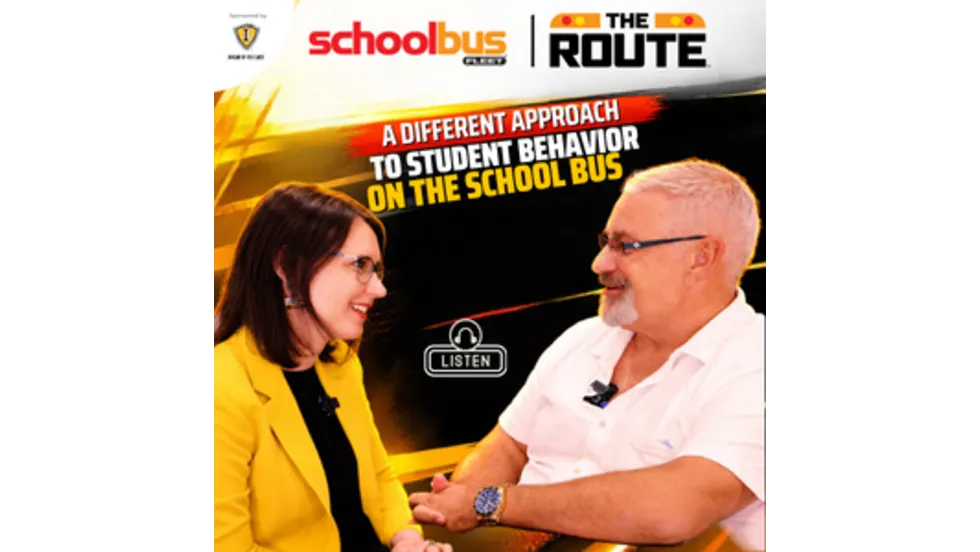
A Dean of Transportation's Different Approach to Student Behavior on the School Bus
After implementing a dean of students program in Oregon, North Clackamas is seeing positive improvements on the bus. Here’s how it worked.
Read More →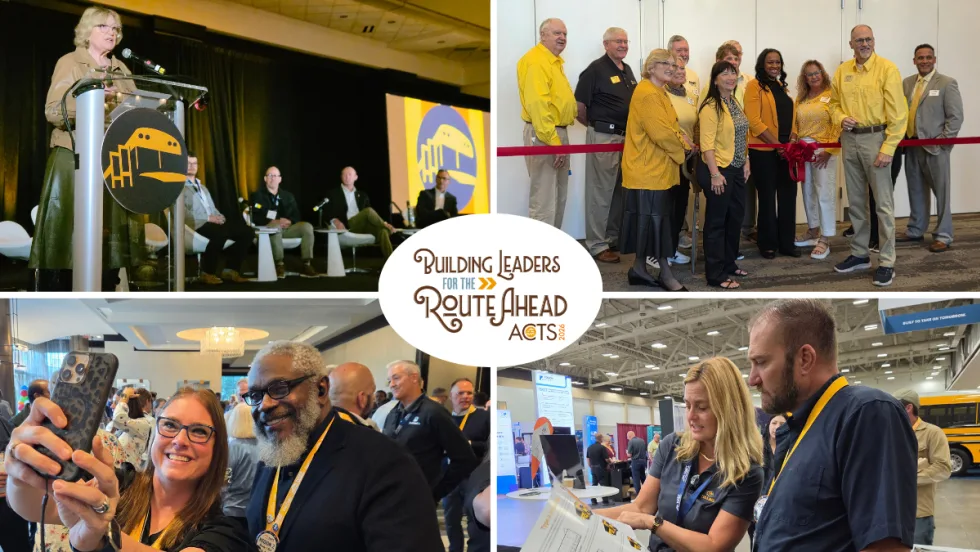
Inside NAPT ACTS 2026: Highlights from Louisville
From federal updates and student behavior strategies to new school bus technology and industry awards, see highlights from NAPT ACTS 2026 in Louisville.
Read More →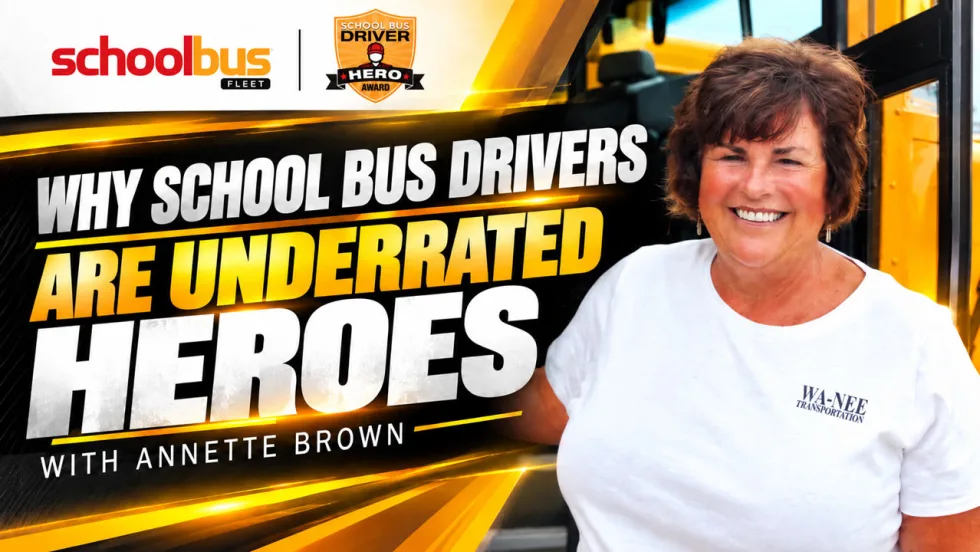
Meet the 2025 School Bus Driver Hero Winner: Annette Brown
We caught up with Wa-Nee Community Schools' Annette Brown on site at SBFX, where she was named the 2026 School Bus Driver Hero Award winner. Hear about her reaction, what she loves most about being a school bus driver, and more!
Read More →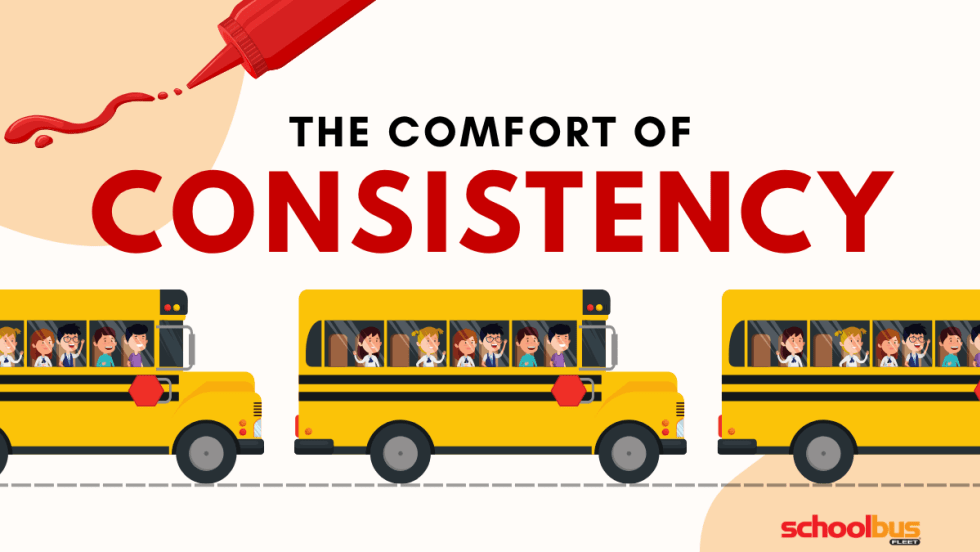
Predictability Is Like Ketchup (According to 6-Year-Olds)
To students, a different school bus can feel like a full-blown crisis. One driver reflects on why familiar routines, showing up on time, and being reliably boring matter more than we think.
Read More →
Samsara Launches Free Driver Rewards Program
The new Driver Perks program gives eligible professional drivers access to discounts and offers without adding a cost for participating fleets.
Read More →
How Tax-Exempt Municipal Leases Can Help Finance School Buses
Let’s explore school bus financing options, including municipal leases, vendor payable accounts, and balloon payments, and how they can help stretch fleet budgets.
Read More →
Nominate Rising School Transportation Pros Under 40!
We’re searching for the next generation of leaders making an impact across the K-12 student transportation industry to recognize as SBF’s 2027 Trailblazers. Nominations are open now!
Read More →