




Related: Preventive Maintenance Checklist
3 Tips for Optimal Tire Maintenance
Maintaining proper inflation and consistently completing thorough visual inspections and rotations go a long way toward extending tire life.
by Staff
July 9, 2020
Photo courtesy Cooper Tire
4 min to read
With tires presenting a significant expense for school districts, it is important to have solid maintenance practices in place to get as much use out of them as possible.
Phil Mosier, the manager of commercial tire development for Cooper Tire, points to several factors that contribute to tire wear-and-tear.
“Every school district will be different as to how hard they are on their bus tires — the type of roads, obstacles encountered, weather conditions, and how the driver operates the bus, all come into play to determine a tire’s life,” he said.
School transportation is a tough application for tires, but with proper selection and maintenance practices, the tires on buses can reach their full potential in miles and in retreads, he adds.
Mosier shared with School Bus Fleet three tips to help ensure tire maintenance success:
1. Maintain Proper Inflation.
The number-one tip for longer tire life, hands-down, is maintaining proper inflation.
“That is key to a good tread footprint and even tread wear,” Mosier says.
The appropriate inflation figure should be determined by a scale weight by axle and then using a load/inflation table. For example, typically on a Blue Bird school bus, inflation levels for an 11R22.5 Load Range G are set at 105 psi. However, bus owners should plan to do their own inflation figure calculations for each bus model as the details vary, Mosier says.
It is also important to note, he adds, that mismatched inflation pressure on dual assemblies is a substantial contributor to faster tire wear.
“In an 11R22.5 tire size mounted in a dual assembly with the same new tread design, you would assume that they are the same size with the same circumference,” Mosier explains. “But, at just 5 psi difference in inflation, the lowest inflation tire will have a circumference that is 5/16 of an inch smaller.”
During every rotation cycle, the smaller circumference tire must scuff ahead to keep up with the tire with more inflation. These tires rotate around 500 times per mile, so simple math means 500 multiplied by 5/16 of an inch translates to 156.3-inches per mile, or 13 feet per mile, Mosier says.
“Imagine dragging a tire 13 feet every mile, with a full load of students in the bus,” he adds. “How many feet is that per day or per year? That illustrates clearly why you will see increased tire wear with improper pressure.”

Phil Mosier, the manager of commercial tire development for Cooper Tire, notes that mismatched inflation pressure on dual assemblies is a substantial contributor to faster tire wear.
Photo courtesy Cooper Tire
2. Thorough Visual Inspections Are Crucial.
Mosier’s second tip addresses the need for performing thorough visual inspections.
Begin by looking at the sidewall facing out, he advises.
“It’s not uncommon to find some scuff or scrub marks, typically on the right-side tires due to right-hand turning where curbs are present, but what you’re really looking for is cracks, bulges or bubbles, and cuts,” he says.
Next, inspect the crown or tread area.
"Look for any road hazards such as nails, screws, or metal,” Mosier says.
He also recommends checking for cuts, chunking (missing sections of tread), or tearing that reveals the cords or belt package.
Lastly, inspect the inner sidewall when finished with the tread area, again checking for any cuts or bubbles.
“If you see anything that is compromising your tire, it should be removed from service,” he adds.
3. Rotate Tires Regularly.
Mosier’s third tip for optimal tire maintenance is to conduct regular tire rotations. Regular rotations can help get more miles out of every tire, putting off replacement.
“You really have to stay on top of rotations, especially in the positions where irregular tread wear can occur,” he says.
One of the things that happens when there is a change in the direction of the rotation, or when cross-rotating the tires, is “correcting” irregular wear areas, Mosier explains. Changing the direction of the rotation tends to even out heel/toe wear on the shoulders of drive tires. Steer tires are normally rotated side to side, which again changes the direction of rotation and helps even out wear.
Following these tips will not only optimize tire life, Mosier says, but will also position the tire casings to be in good shape for retreading, which can help contain maintenance costs.
“The way to extend your budget on tires is to get the most miles, coupled with the most retreads,” he adds. “Proper tire selection is one key to doing that, but it’s the maintenance practices that [you] follow that keep your buses operating as efficiently and safely as possible."
Subscribe to Our Newsletter
More Maintenance
Sponsored•September 8, 2026
The Essential Guide to School Bus Maintenance and Student Safety
Your district's buses carry students to school every day. This guide shows how predictive maintenance powered by fleet data helps keep buses reliable, drivers accountable and students safer from the first bell to the last stop.
Read More →
Kerry Brothers Grows Michigan School Bus Repair Network
The acquisition of Downriver Truck and Bus expands Kerry Brothers’ school bus maintenance footprint across southeast Michigan, adding repair capacity, diagnostic resources, and state inspection support.
Read More →
Noregon Introduces CAN Bus Diagnostic Tool, Expands JPRO Features
CAN Mentor and the latest JPRO update aim to simplify vehicle network diagnostics and improve repair efficiency for technicians of all experience levels.
Read More →
Cummins on Smarter, Simpler Engine Innovation
Cummins discusses its first-ever gasoline engine for school buses, EPA 2027, and why bus fleets still want durable, simpler internal combustion options.
Read More →
Report: 72% of Diesel School Buses Now Use Advanced Low-Emission Engines
New data shows advanced low-emission diesel technology continues expanding across school bus fleets, even as electric bus adoption gains momentum.
Read More →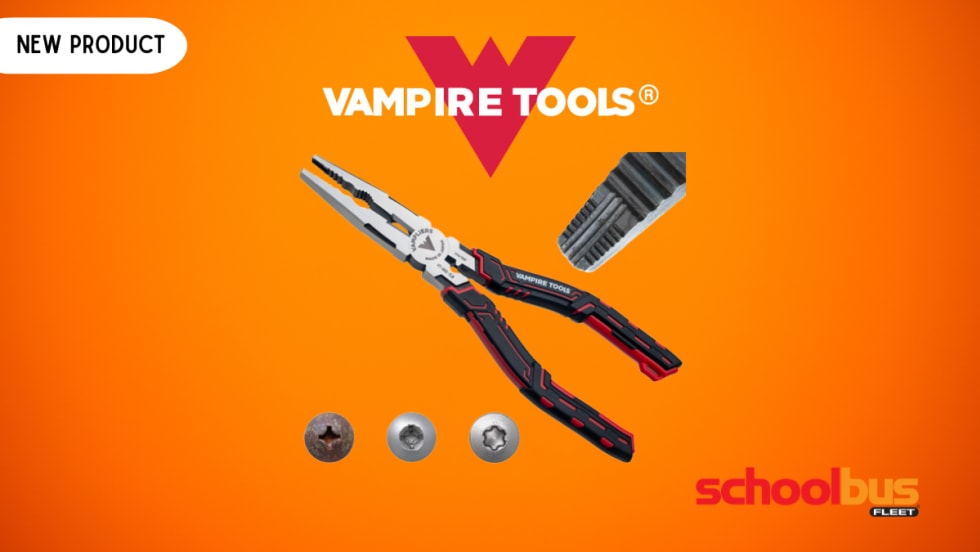
Vampire Tools' CAIMAN 7.5-Inch Multi-Purpose Screw Extractor Long-Nose Pliers with Crimper
Vampire Tools introduced the VAMPLIERS Caiman 7.5-inch multi-purpose pliers, combining screw extraction, cutting, crimping, and gripping functions into a single tool designed for fleet maintenance professionals.
Read More →
How Advanced Diagnostics Helps Bus Fleets Stay Ahead of Repairs
Chat with Noregon’s Kevin Smallhorn at ACT Expo about bus diagnostic tools, telematics integration, CNG maintenance support, and strategies to help reduce downtime and improve uptime.
Read More →
How School Bus Fleets are Getting Ahead of Breakdowns
Don’t let bus downtime wear you down. Here’s how bus operators are shifting from manual processes to AI-powered, data-driven maintenance systems for improved reliability and safety.
Read More →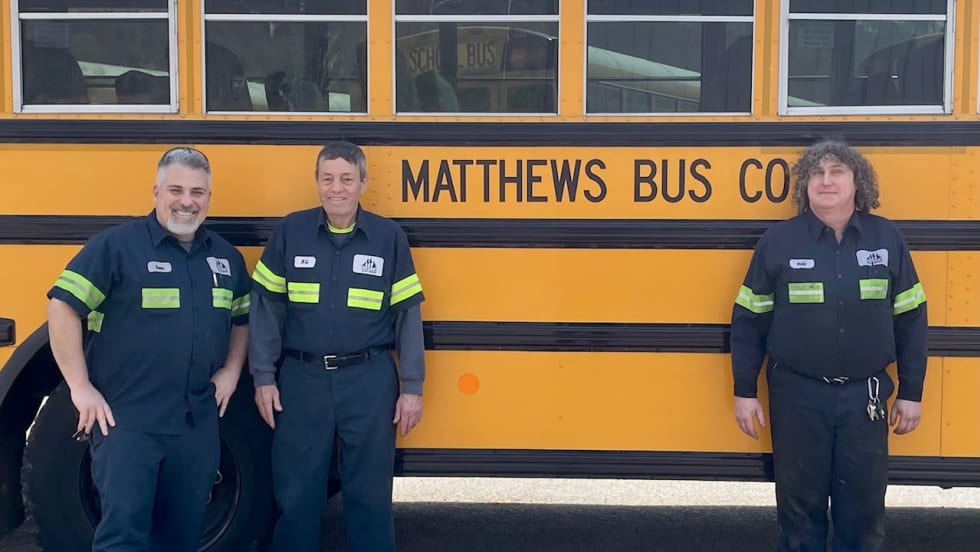
Pennsylvania School Bus Maintenance Team Praised for Dedication to Safety
Matthews Bus Company’s West Jefferson received a letter of commendation from the Pennsylvania State Police for their fleet inspections.
Read More →
Sponsored•April 16, 2026
From Chaos to Clarity: How School Districts Are Running Leaner Transportation Operations
Covering 38 routes on a Friday afternoon. Buses idling while routes overlap. Parents calling nonstop about late arrivals. Sound familiar? This whitepaper explores how district transportation leaders solved these exact problems — and what measurable results followed.
Read More →